


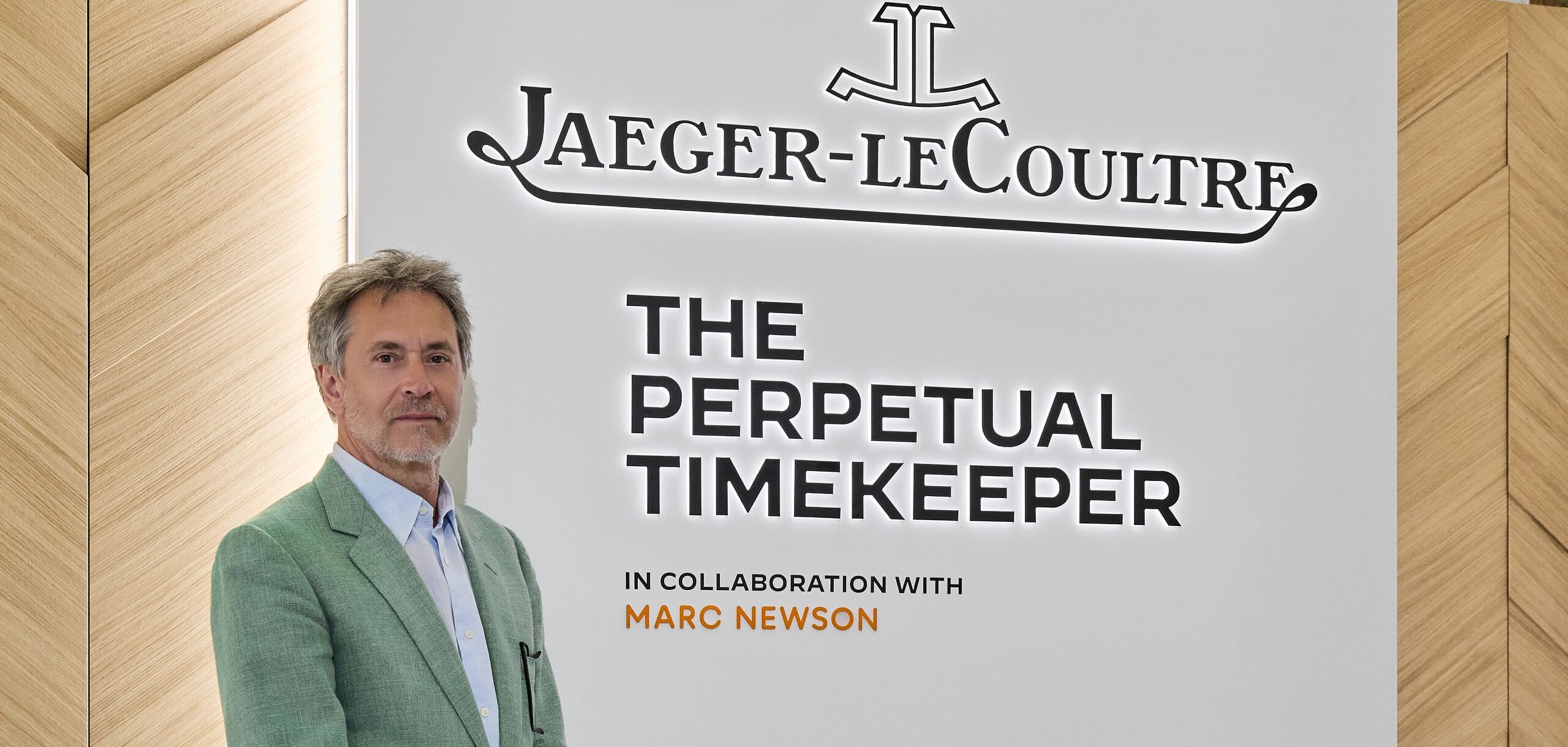
”The Perpetual Timekeeper” exhibition at Milan Design Week 2026


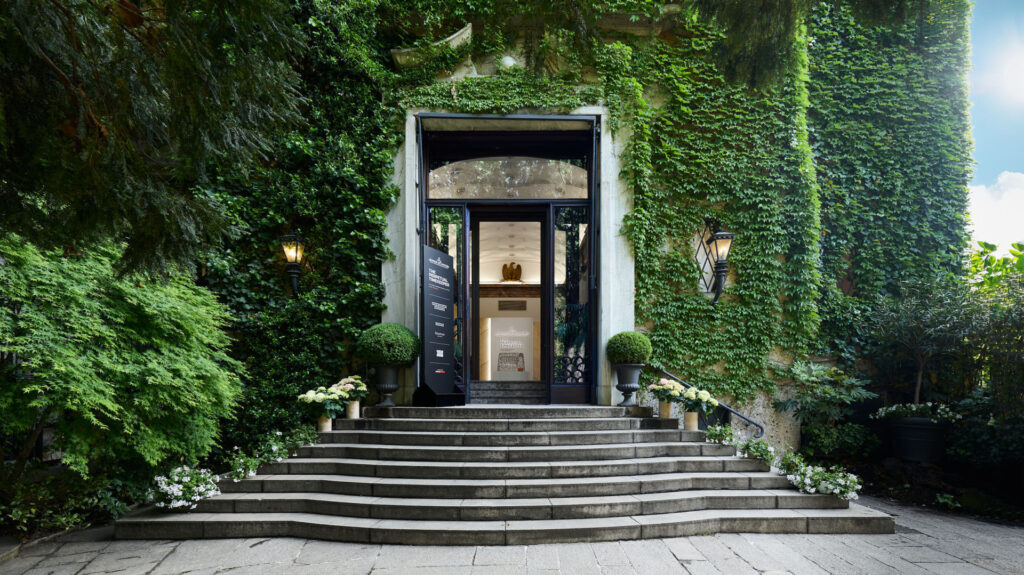
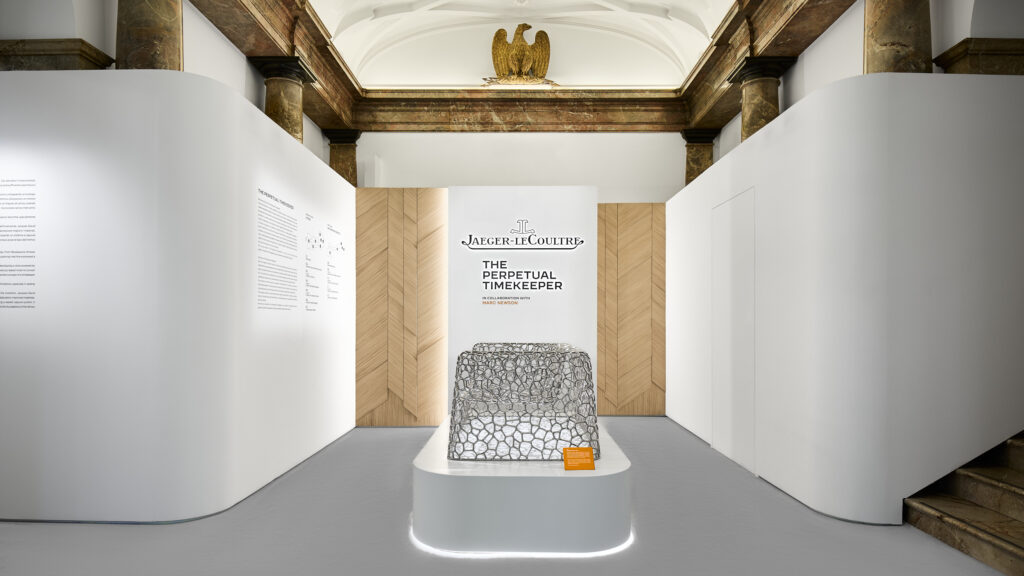
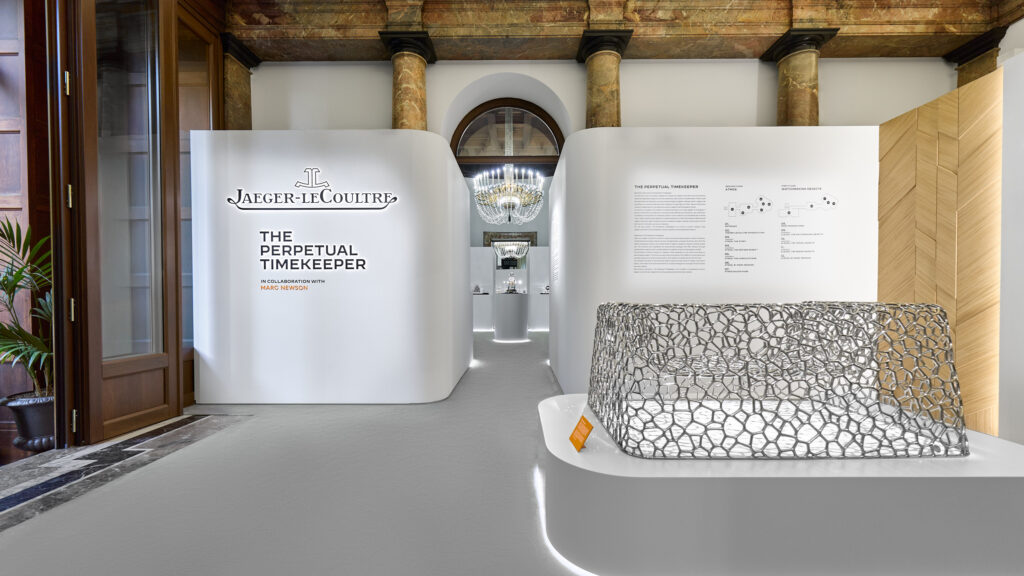
The Perpetual Timekeeper was conceived as an immersive exhibition that examined the relationship between design and everyday life through objects that “measure life’s tempo minute by minute, day after day.” Hosted at Villa Mozart from 21–26 April 2026, the showcase offered a rare opportunity to explore the Maison’s creative universe, spanning historic timekeeping objects, contemporary design, and groundbreaking horological innovation.
The exhibition guided guests through the evolution of timekeeping aesthetics, highlighted the exceptional Atmos clock, introduced five newly unveiled creations, and presented a curated selection of heritage pieces. It also celebrated the Maison’s long‑standing collaboration with industrial designer Marc Newson, whose forward‑thinking approach extended beyond horology to include several of his iconic design works.
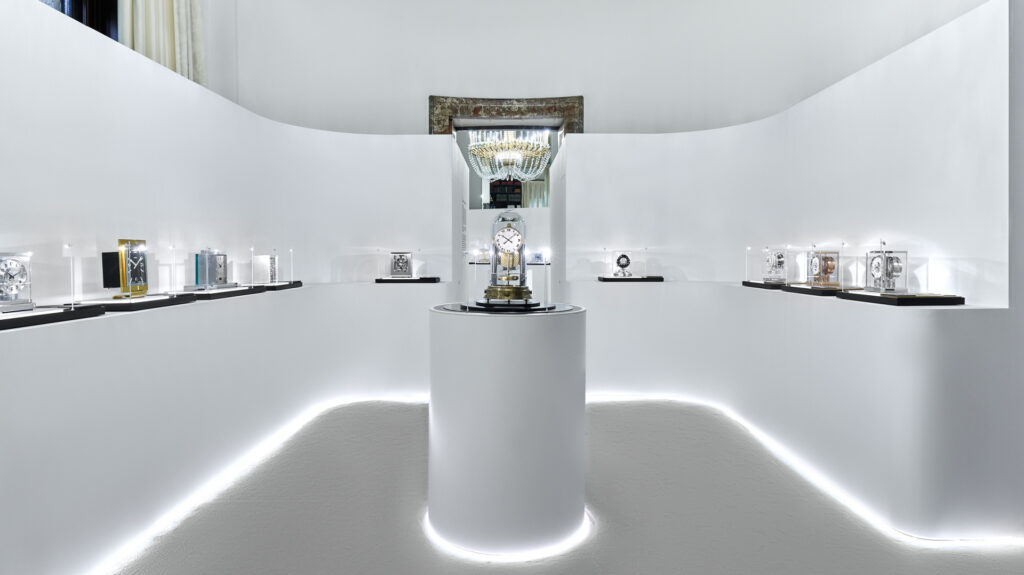
For nearly two centuries, Jaeger‑LeCoultre has built its reputation on mastering the complexities of watchmaking. As design, technology and culture shifted throughout the 20th century, the Maison broadened its creative scope, applying its expertise to a wide array of timekeeping objects. The Atmos clock—where mechanical innovation meets design culture—became a central symbol of this expanded vision. Reflecting the spirit of Milan Design Week, The Perpetual Timekeeper celebrated the intersection of craftsmanship, engineering and artistic expression. Visitors encountered an extensive display of 53 archival timekeeping objects created for travel, home and desk, alongside 32 Atmos clocks representing more than ninety years of evolution. The exhibition also revealed five new creations, including two Atmos models showcasing rare decorative crafts and three new designs developed with Marc Newson. Live demonstrations offered insight into how the Atmos achieves its signature “apparent perpetual motion,” while Newson’s furniture and design pieces added a distinctive creative dimension.
CHAPTER I — ATMOS, THE STORY
The exhibition began with the origins of the Atmos, tracing its roots to 1928 when Jean‑Léon Reutter developed a prototype capable of operating through subtle temperature changes rather than conventional winding. This early model, the Atmos 0, represented a major step toward the age‑old dream of perpetual motion.
Although initial versions faced technical challenges, their potential was undeniable. Jacques‑David LeCoultre recognized the invention’s poetic and mechanical promise and invited Reutter to collaborate, merging visionary engineering with high watchmaking expertise. Their partnership led to the Atmos I in 1932, a clock capable of running indefinitely as long as ambient temperatures fluctuated.
By 1938, the fragile mercury‑based motor system had been replaced with a sealed ethyl‑chloride capsule, greatly improving reliability while preserving the underlying Calibre 30A mechanism used in the earliest Atmos I and II models. This innovation allowed the clock to convert a temperature change of just one degree into roughly 48 hours of power, enabling it to function autonomously without manual intervention. Over time, the Atmos became a prestigious diplomatic gift, earning the title President’s Clock. Today’s Atmos Classic continues this lineage, maintaining the timeless aesthetic codes that have defined the model for generations.
CHAPTER II — ATMOS, THE MÉTIERS RARES™
The second chapter explored the Atmos as a work of art as much as a timekeeping instrument. With its slow‑moving annular balance and intricate mechanism, the clock naturally lends itself to artistic interpretation. Typically housed beneath a glass dome or crystal case, its distinctive architecture has shaped a strong visual identity that is celebrated as much as the time it displays.
Since the 1970s, Jaeger‑LeCoultre has revived the spirit of experimentation that characterised the Atmos’ earliest decades. Collaborations with master artisans have transformed the clock into a canvas for miniature painting, engraving, enamelling and other rare crafts. Contemporary designers have also reimagined the Atmos in their own creative languages, always preserving the clock’s unmistakable essence.
CHAPTER III — ATMOS, THE COMPLICATIONS
The exhibition then turned to the technical challenges of the Atmos. Its near‑frictionless mechanism produces only a minute amount of energy—“a single 15‑watt incandescent light bulb consumes the energy equivalent to 60 million Atmos clocks”—leaving little reserve for additional functions. In 1982, Jaeger‑LeCoultre’s engineers overcame this limitation with the development of Calibre 540, a movement capable of supporting complications with only a negligible increase in energy consumption.
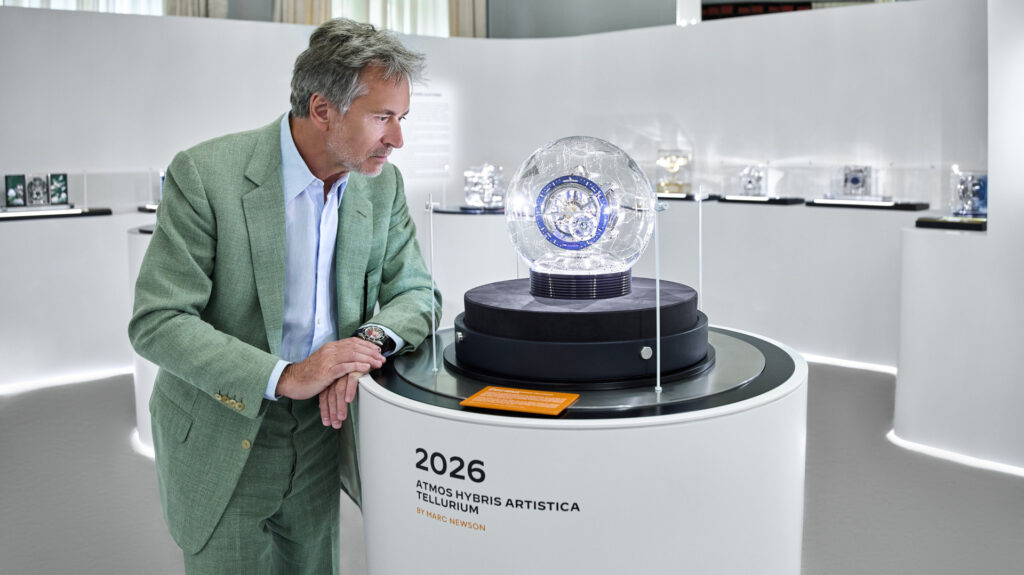
Recognising that astronomical cycles such as moon phases and seasons align naturally with the Atmos’ slow rhythm, the Maison introduced its first moon‑phase Atmos in the late 1990s. This chapter culminated with the Atmos Hybris Mechanica Calibre 590, unveiled in 2022—a contemporary tellurion that recreates the true motions of the Earth, Sun and Moon in three‑dimensional form.


CHAPTER IV — CLOCKS, THE WATCHMAKING OBJECTS
The fourth chapter highlighted the Maison’s inventive approach to clocks during the 1920s, when personal access to time was still limited. Jaeger‑LeCoultre transformed everyday objects—desk accessories, lamps, architectural miniatures—into functional timekeepers. By embedding horological mechanisms into familiar items, the Maison blurred the line between utility and craftsmanship, turning ordinary objects into refined companions.
These creations were designed to integrate naturally into their surroundings rather than stand apart as decorative showpieces. Playful, unexpected and meticulously crafted, they reflected a new way of living with time: intuitive, tactile and seamlessly woven into daily routines.
CHAPTER V — CLOCKS, THE TRAVEL OBJECTS
As mobility became a defining feature of modern life, Jaeger‑LeCoultre responded with portable clocks designed to accompany their owners on the move. These nomadic timekeepers combined technical precision with elegant design, sometimes incorporating additional functions such as barometers or thermometers.
From the 1930s onward, travel clocks were miniaturised and integrated into mirrors, leather cases or folding structures, offering both practicality and aesthetic refinement. The introduction of the Memovox alarm in 1950 transformed timekeeping by turning it into an active companion—one that could alert, guide and reassure. Adapted into watches, desk clocks and travel objects, the Memovox embodied a philosophy of time that was dynamic and responsive.
CHAPTER VI — CLOCKS, THE DESIGN OBJECTS
The final chapter explored the creative explosion of the 20th century, when new design languages reshaped architecture, graphics, transportation and household objects. Jaeger‑LeCoultre embraced this spirit of modernity, rethinking both the form and function of clocks.
The result was a series of expressive, sometimes provocative creations that served as style statements as much as timekeepers. From Art Deco table clocks to bold graphic compositions of the 1960s, each piece reflected a dialogue between mechanical precision and artistic freedom. Hands shifted off‑centre, dials rotated, proportions stretched or compressed. These objects invited curiosity and transformed the simple act of reading the hour into a richer, more engaging experience.
A major highlight of the exhibition was the unveiling of five new creations. Marc Newson, whose collaboration with Jaeger‑LeCoultre began in 2008, presented three new designs: a reinterpretation of the Atmos Tellurium, a new version of the Atmos Calibre 568 first introduced in 2016, and a new Travel Clock inspired by the Maison’s iconic Memovox alarm watches. Newson, known for his work across furniture, luggage, surfboards and even superyachts, has long been fascinated by the Atmos, describing it as “a complex and magical object.”
Alongside these pieces, two new Atmos models showcased the Maison’s dedication to preserving traditional decorative crafts. One featured miniature Grand Feu enamel painting, while the other paid tribute to the art of wood marqueterie—both produced within Jaeger‑LeCoultre’s in‑house Métiers Rares™ atelier.
The Perpetual Timekeeper ultimately expressed a unified philosophy of time—scientific, functional and artistic. Together, the Atmos and the surrounding watchmaking objects formed a coherent universe where design, mechanics and human creativity converge.
Share this article
LEAVE A COMMENT
You must be logged in to post a comment.