


WATCH ANGELS x ALPINA: a new chapter in pilot watch history


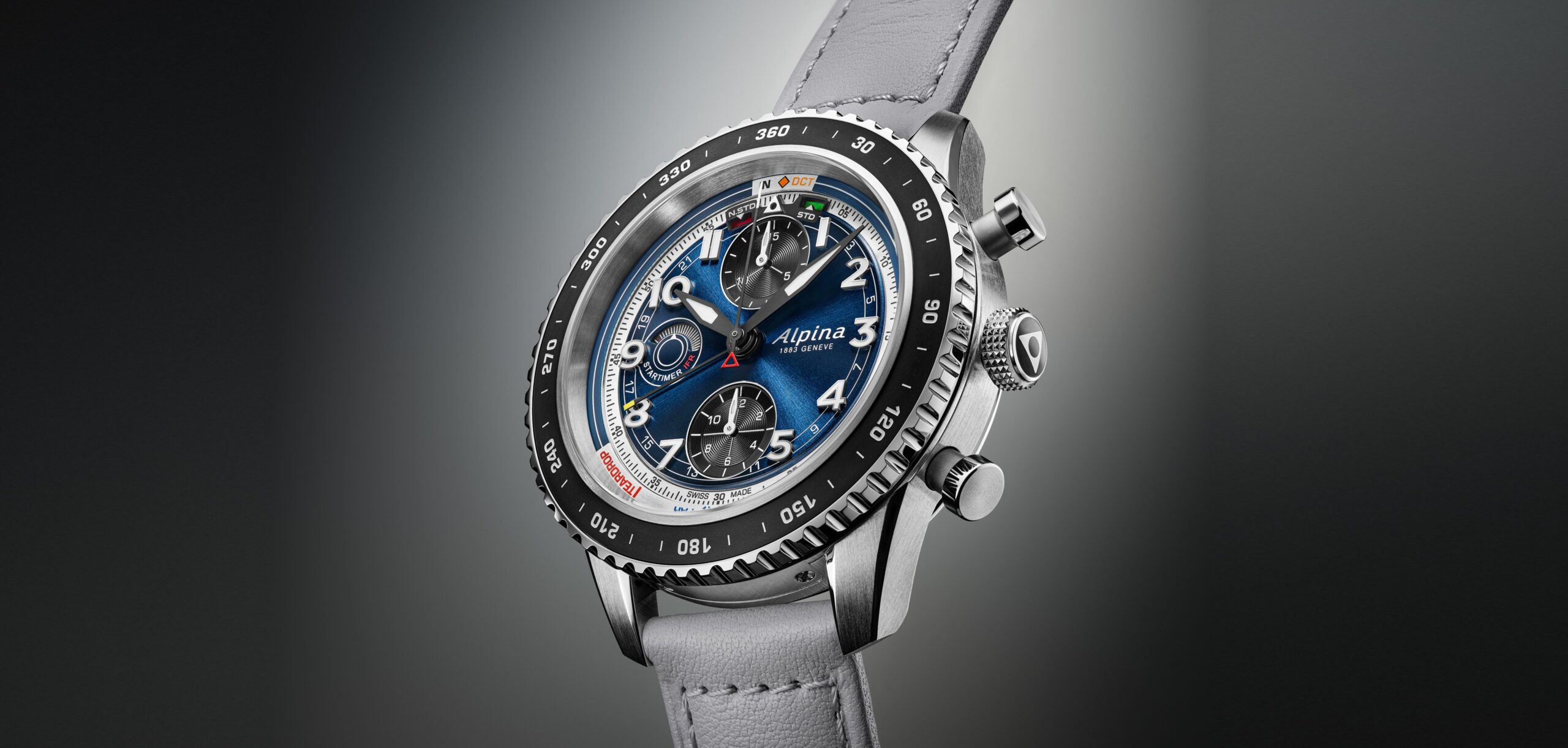
The Startimer Pilot Chronograph Automatic IFR emerges as one of the most significant aviation‑focused mechanical watches of the decade, not because it borrows the visual language of flight, but because it finally gives pilots a tool that meaningfully supports real IFR procedures. Developed by Alpina in partnership with Watch Angels and limited to just 300 pieces, the watch introduces a world‑premiere mechanical function designed specifically to help pilots determine the correct entry into a holding pattern—one of the most demanding and workload‑intensive phases of instrument flying. For decades, pilot watches have celebrated the romance of aviation; this one addresses its operational reality.
At the heart of the innovation is a fully mechanical system that allows the wearer to instantly visualize the correct holding‑pattern entry—direct, parallel, or teardrop—simply by aligning two pieces of information on the bidirectional ceramic bezel: the current heading and the assigned inbound course for the hold. Once set, the watch displays the required headings and whether the entry must be executed to the left or right. A color‑coded scale on the flange ensures that the information is readable at a glance, even in turbulent or high‑workload conditions. Unlike digital flight computers or cockpit avionics, this system is entirely analog, independent, and immune to battery failure. It is also completely separate from the movement, housed instead within the external architecture of the watch—primarily the 44.5 mm ceramic bezel and the internal flange. This separation preserves the integrity of the movement while allowing the bezel mechanism to perform its calculations mechanically, a rare feat in contemporary watchmaking.
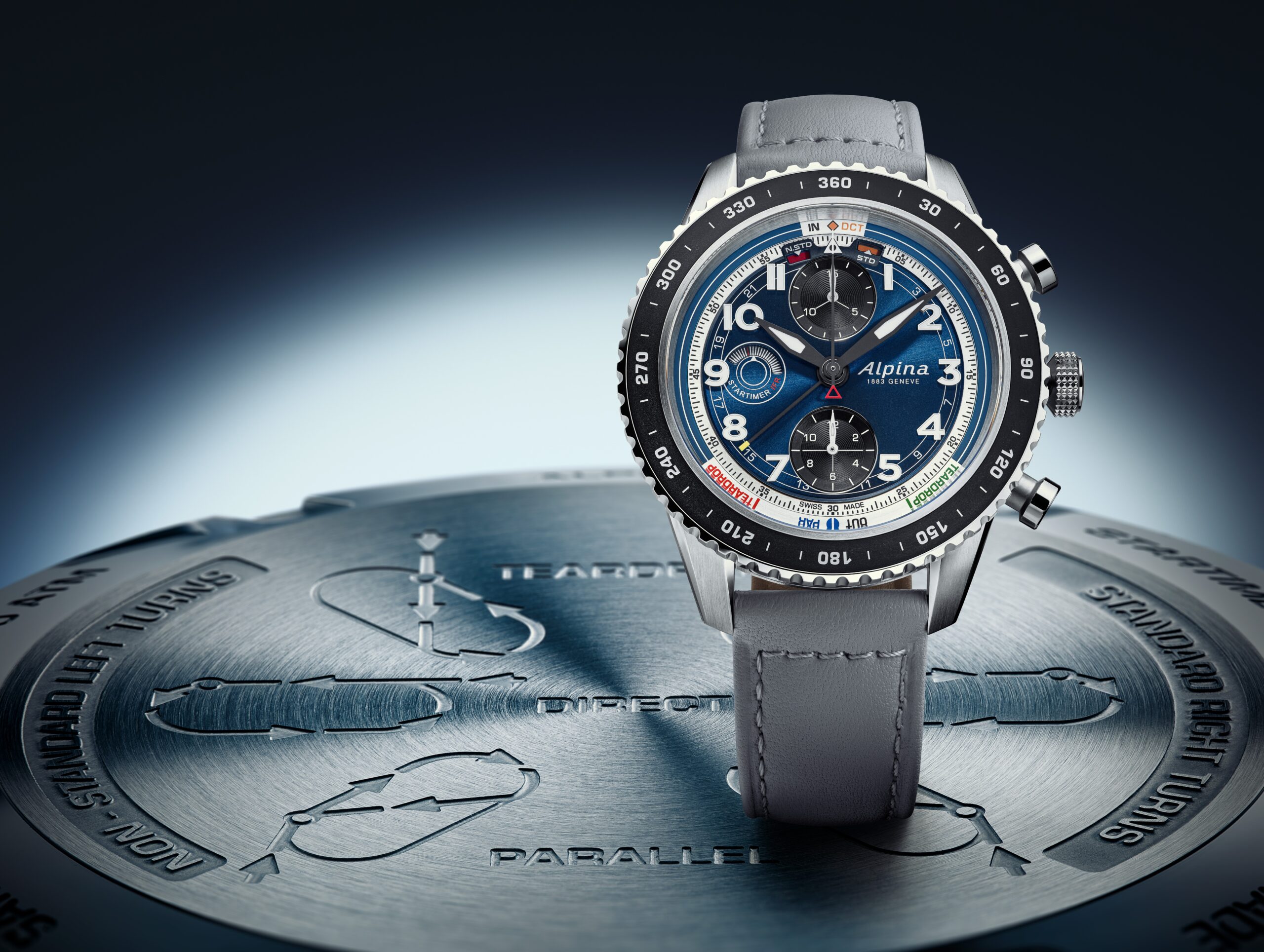
Beyond the IFR module, the watch integrates two additional functions essential to professional aviation. The first is a 12‑hour chronograph, powered by the AL‑725 automatic caliber, which beats at 28,800 vph and offers a robust 62‑hour power reserve. This chronograph allows pilots to time extended flight phases, fuel checks, or mission segments with precision. The second is a dedicated UTC hand, indispensable for cross‑border operations and international flight planning, where coordination with Zulu time is mandatory. Together, these three elements—IFR calculator, chronograph, and UTC display—form a complete mechanical flight instrument on the wrist, something few modern pilot watches can claim.
The Startimer Pilot Chronograph Automatic IFR maintains Alpina’s signature aviation aesthetic: oversized luminous hands, high‑contrast markings, and a matte dial engineered for instant legibility. The sapphire crystal is treated with anti‑reflective coating on both sides to reduce glare in bright cockpits. The stainless‑steel case is rated to 100 meters of water resistance, ensuring durability in demanding environments. The ceramic bezel is not only functional but highly scratch‑resistant, preserving clarity even after years of use. The watch is fitted with a screw‑down crown, solid caseback, and a high‑quality strap designed for comfort during long missions.
What sets this timepiece apart is not merely its technical execution but its philosophy. It is a watch created with direct input from professional pilots, engineered to solve a real operational challenge, and executed with the precision of traditional Swiss horology. It bridges the gap between the romantic symbolism of pilot watches and the practical needs of IFR flight, offering a tool that is as functional in the cockpit as it is compelling in a collector’s cabinet. With only 300 units produced, it stands as both a technological milestone and a rare artifact of modern mechanical ingenuity.
Share this article

LEAVE A COMMENT
You must be logged in to post a comment.