



Piaget Altiplano in Khaki Green: When Ultra-Thin Gets a Bold New Voice


Six Decades of Going Thinner
The Altiplano story begins with two movements that fundamentally redefined the industry. In 1957, Piaget introduced calibre 9P, a hand-wound movement measuring a record-breaking 2mm – thin enough that Piaget’s own advertising declared the brand the ‘specialist in the world’s thinnest watches.’ Three years later, in 1960, Valentin Piaget patented calibre 12P at 2.3mm, the thinnest self-winding movement of its time – a creation that fellow watchmakers initially dismissed as impossible. These two movements paved the way for the Altiplano collection, which reached a landmark with the Ultimate Concept: a watch that fused the caseback with the movement mainplate to achieve a total thickness of 2mm and earned the Aiguille d’Or at the 2020 GPHG. That is the foundation upon which these new khaki green editions are built.
 Green, But Never Superficial
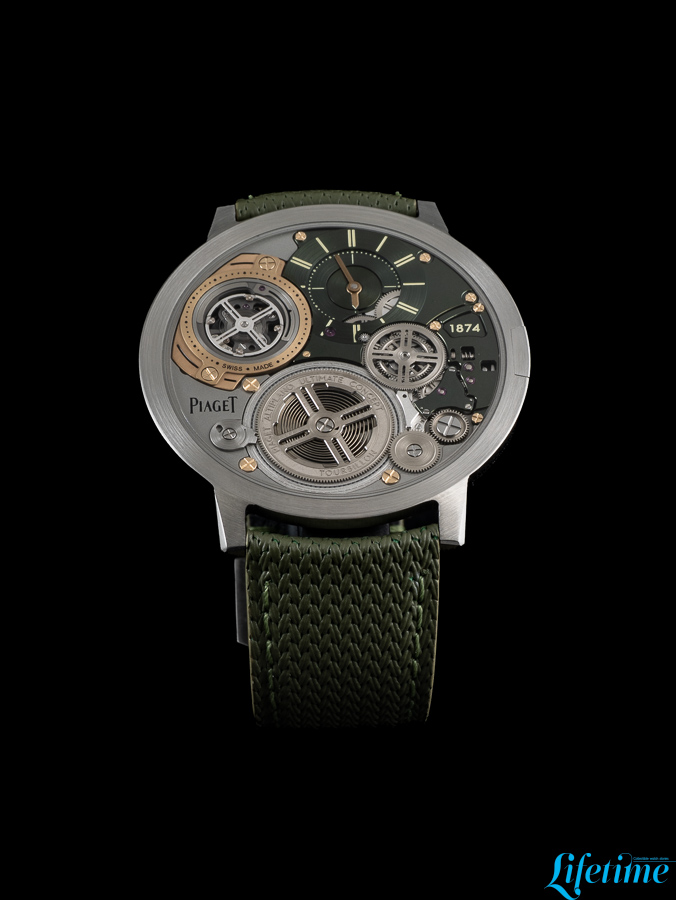
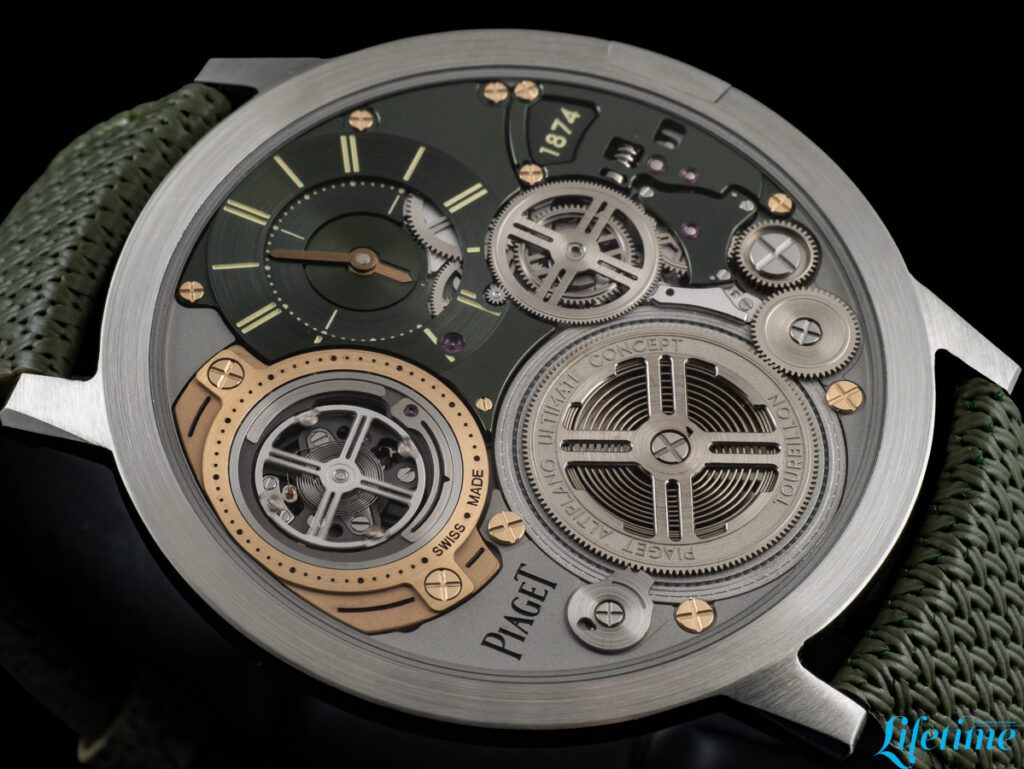
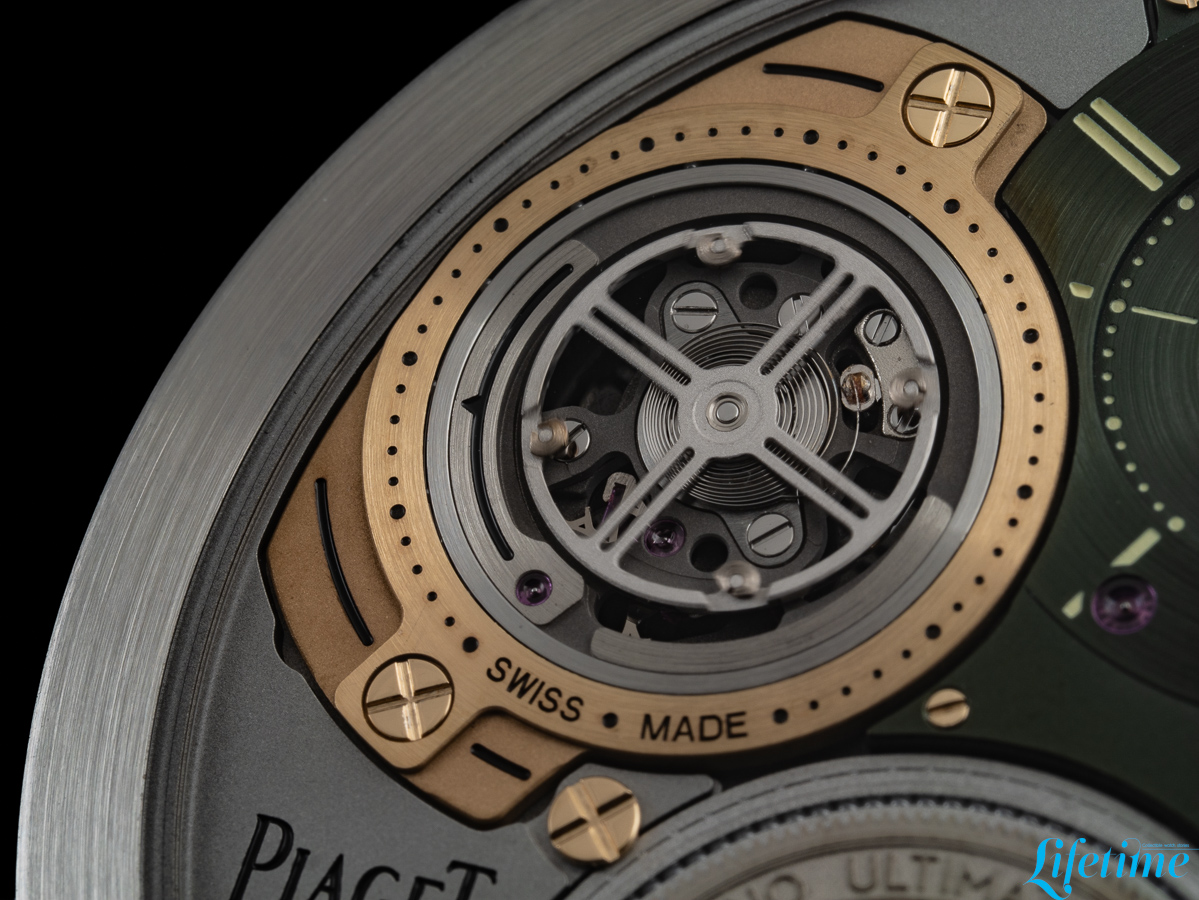
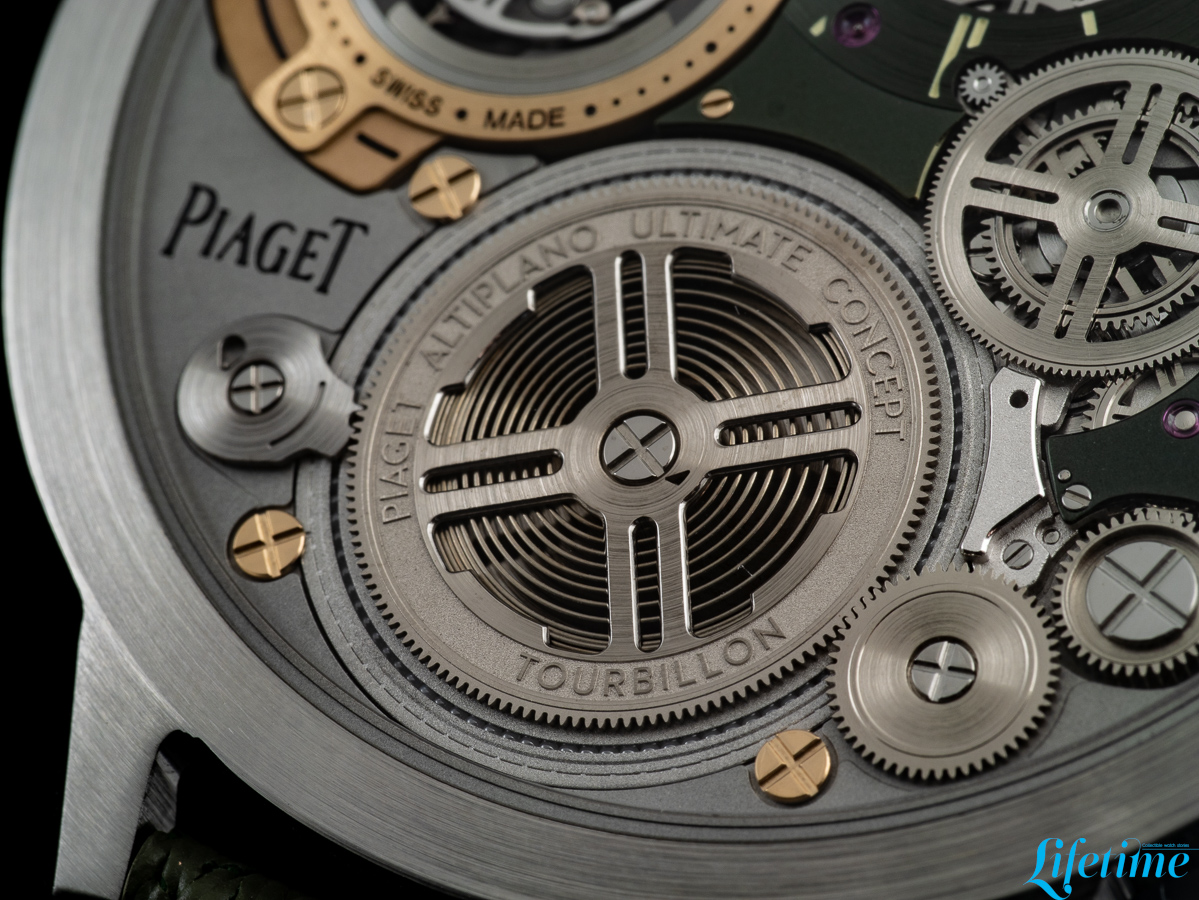
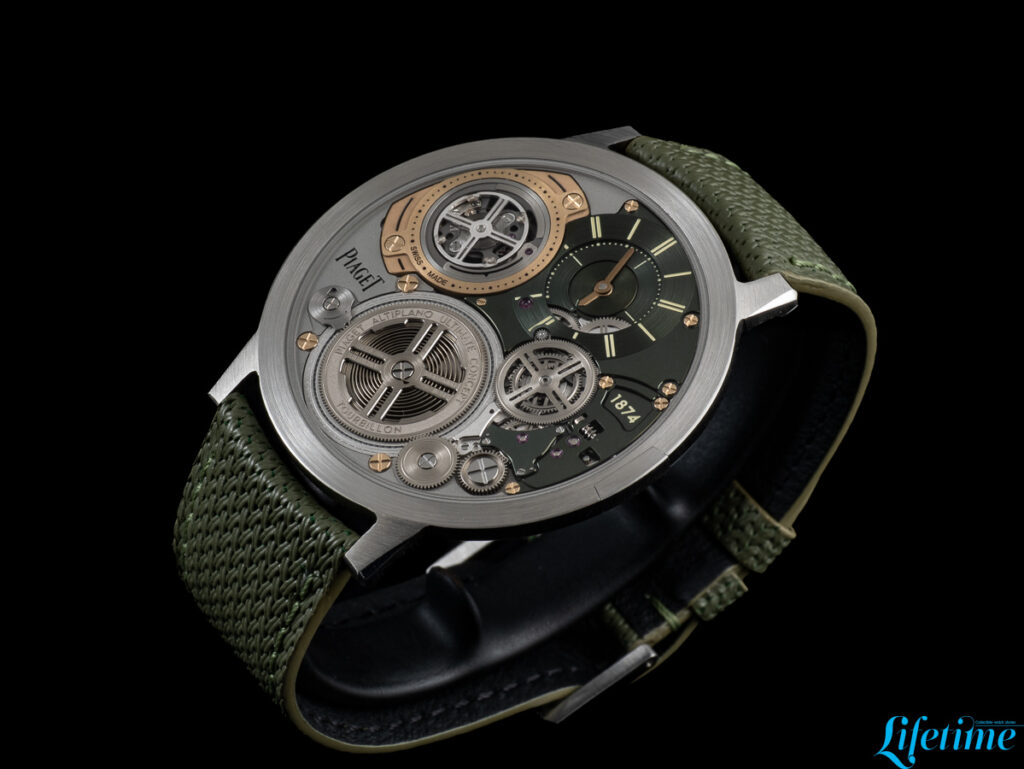
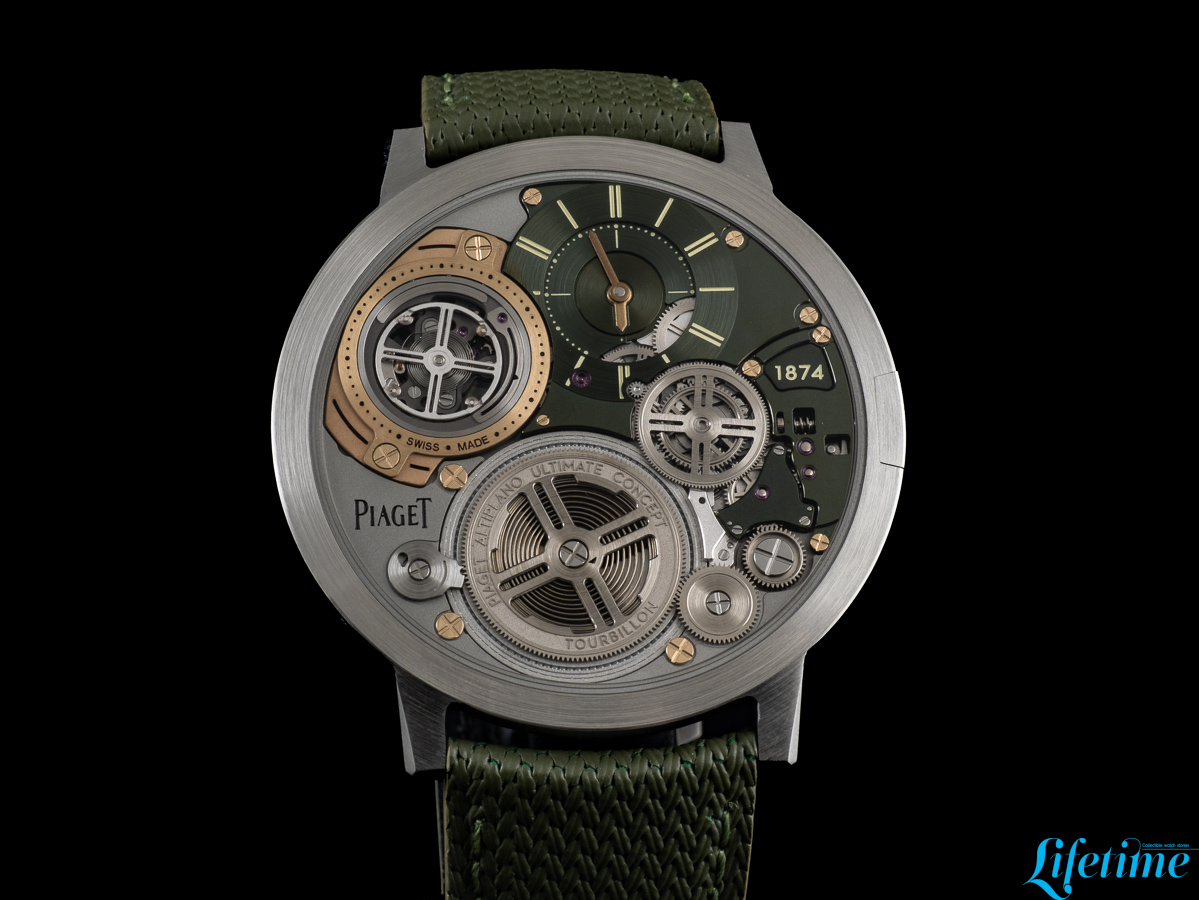
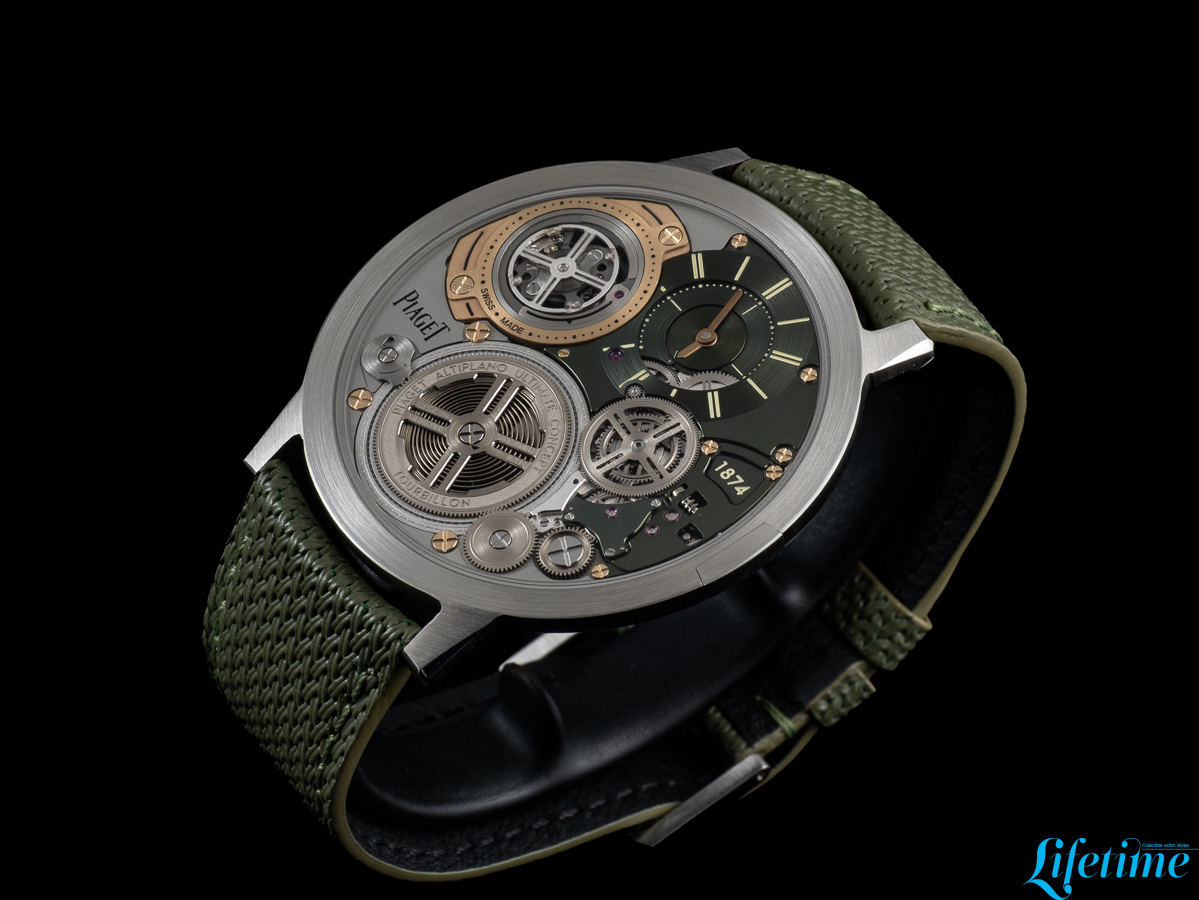
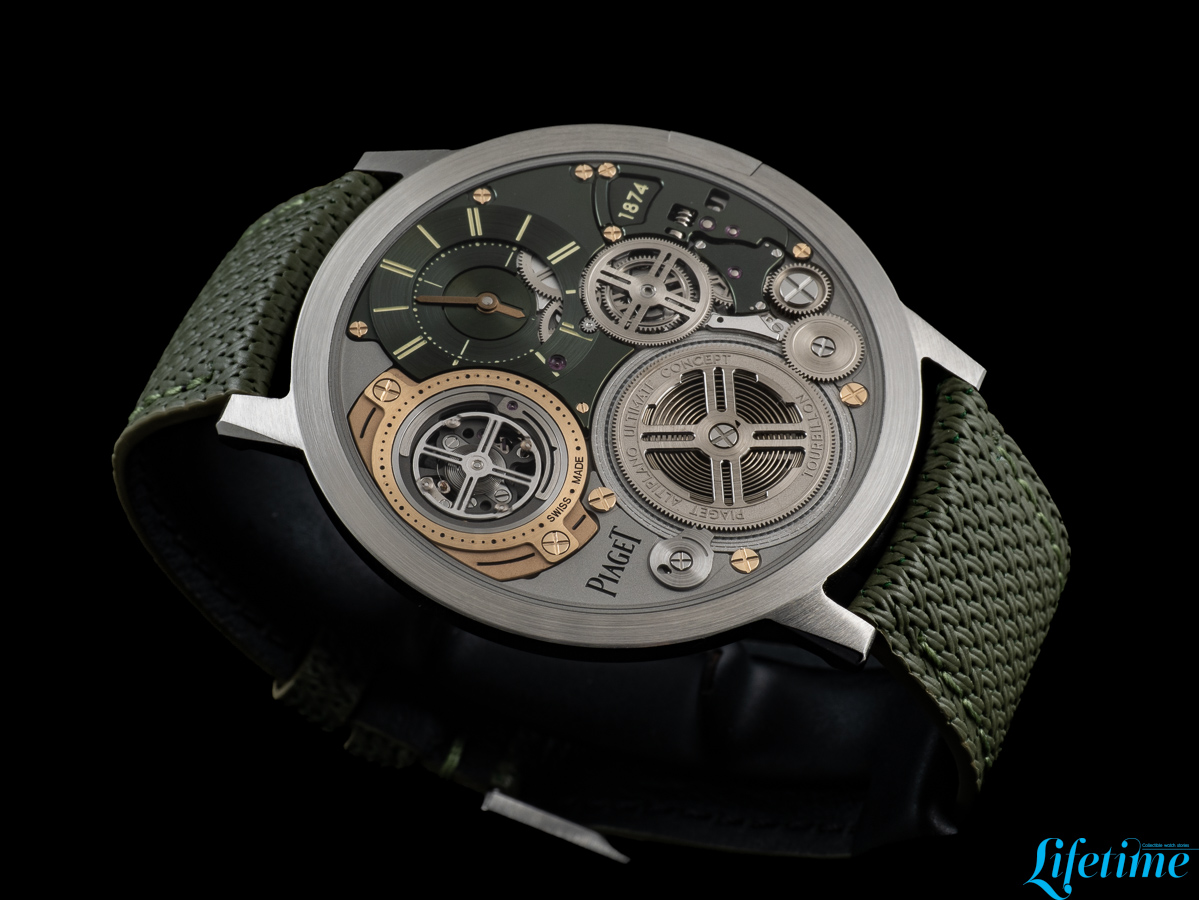
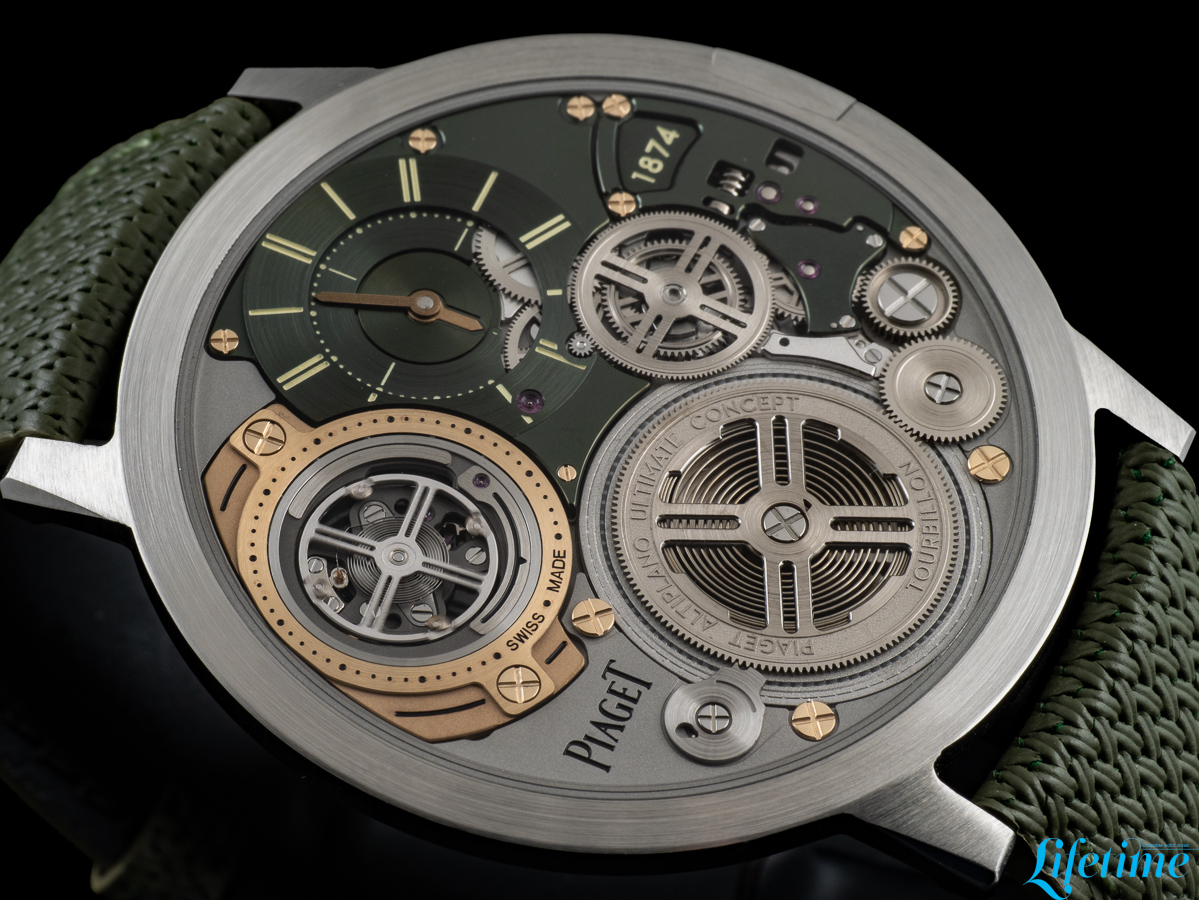
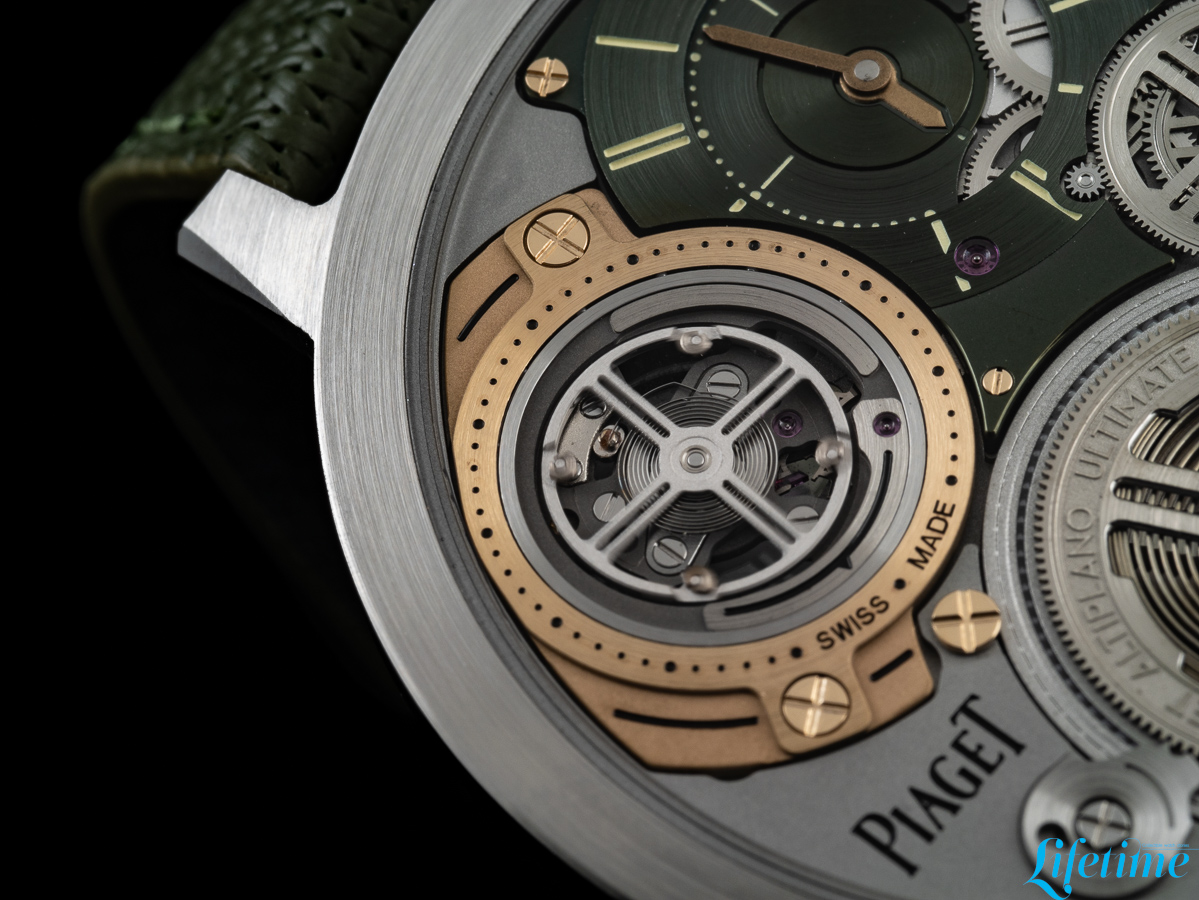
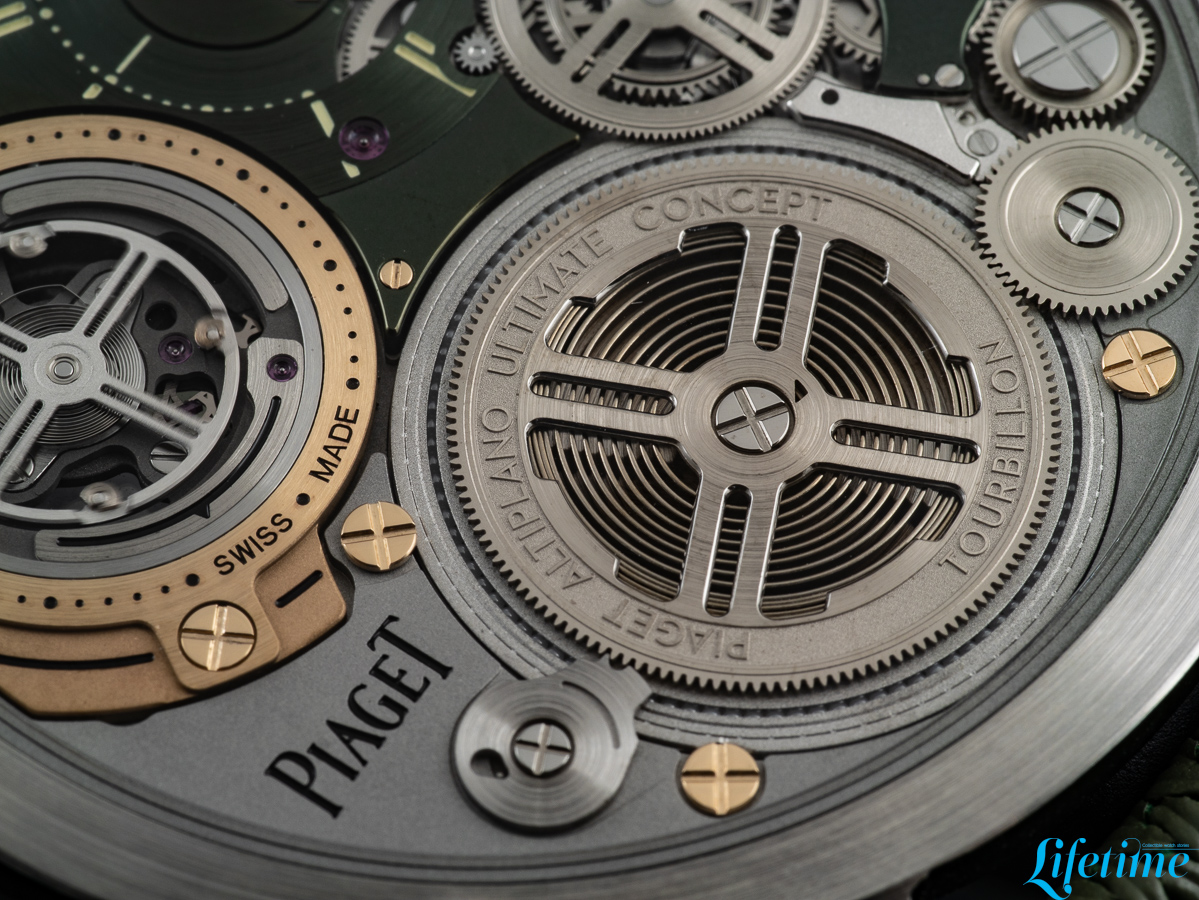
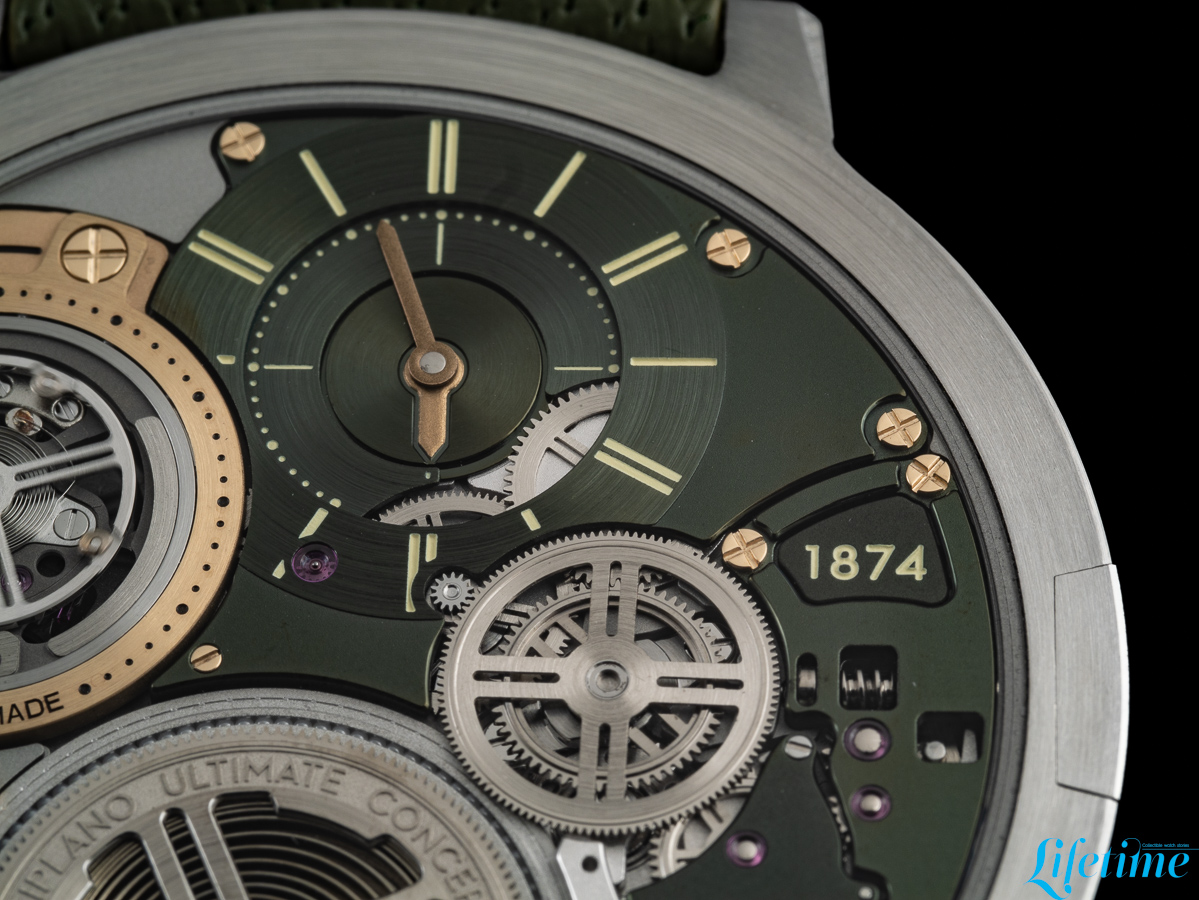
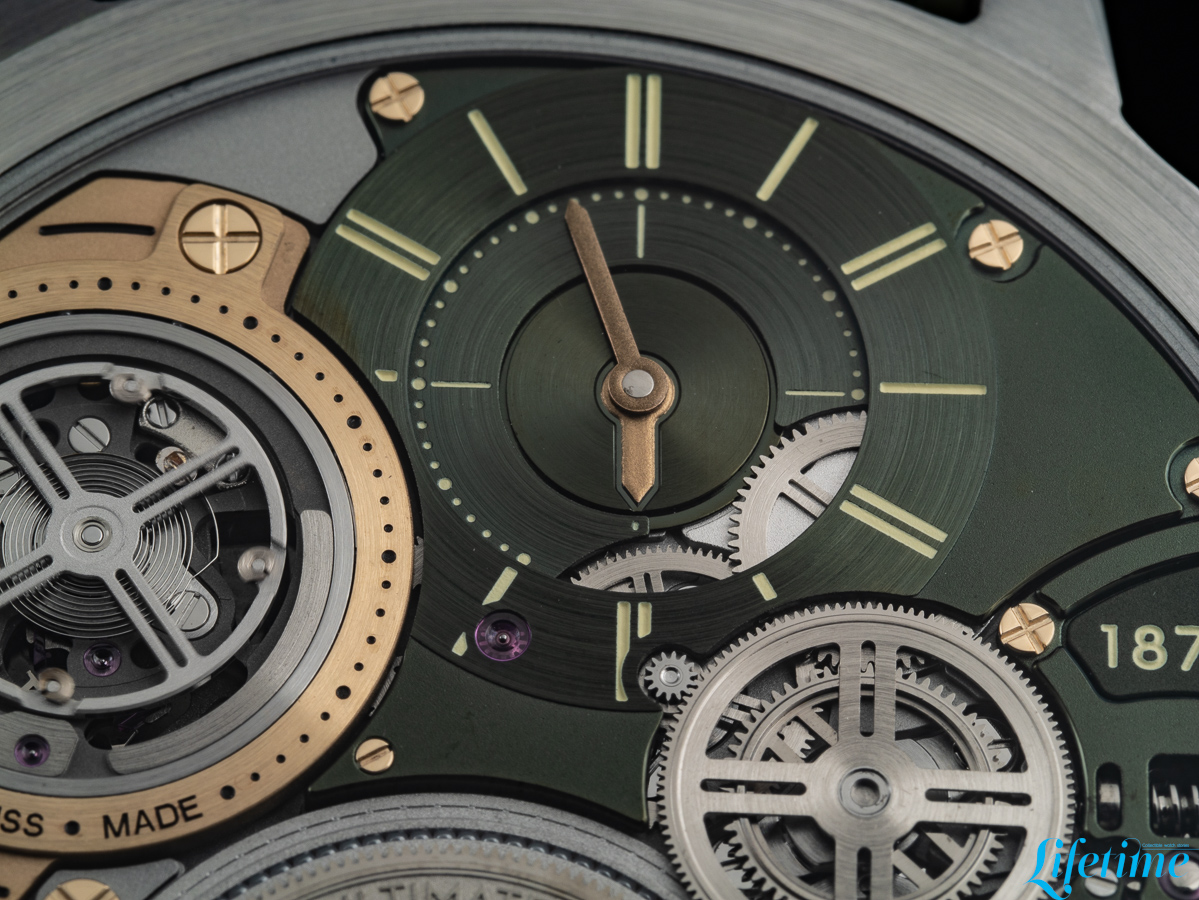
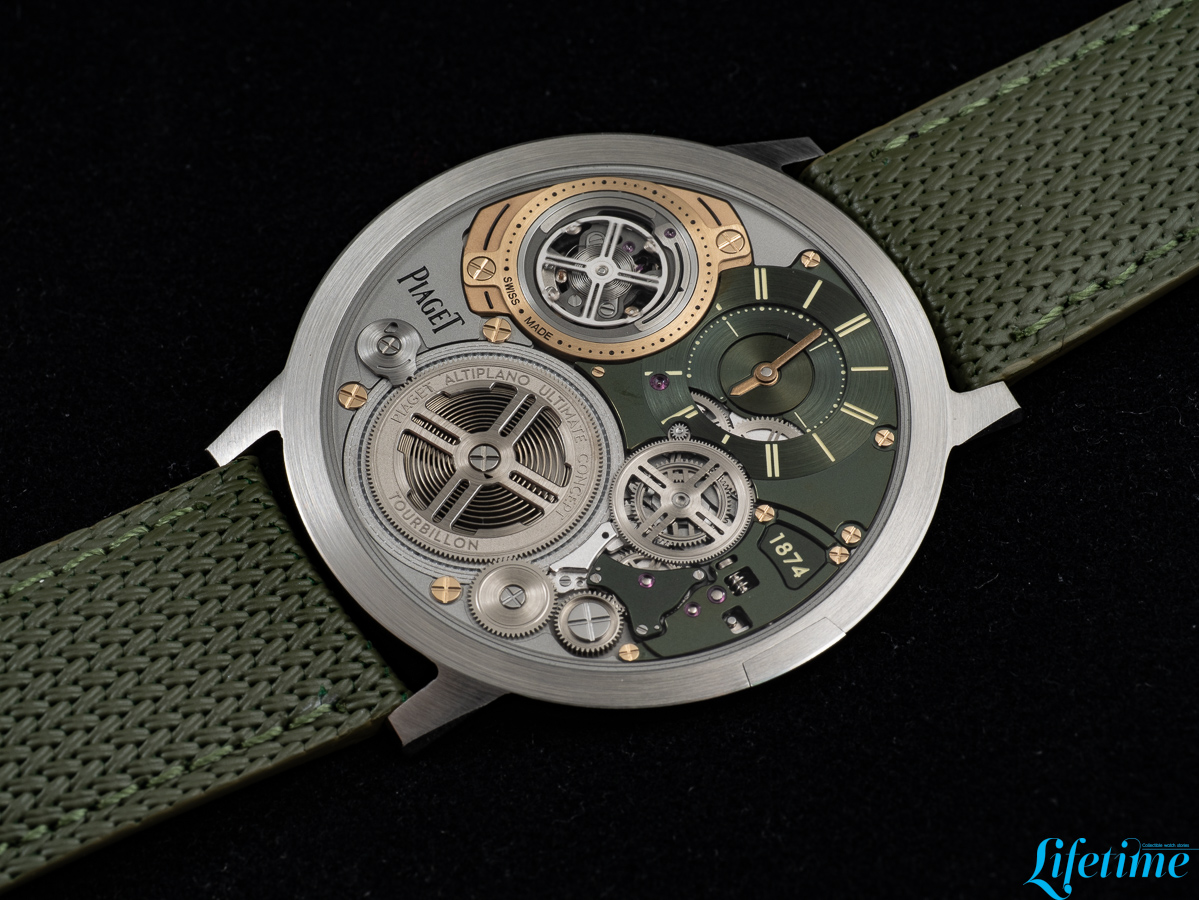
The approach to dial design on both pieces deserves attention, as neither follows convention. On the AUC Tourbillon, there is no dial in the traditional sense: the surface of the movement performs that role directly, with a khaki green coating sweeping across every bridge and plate, punctuated by polished round and bâton indices. A monobloc disc with a dedicated hour hand maintains a clean display, while the one-minute flying tourbillon occupies the 10 o’clock position, visually balanced by the exposed mainspring barrel below.
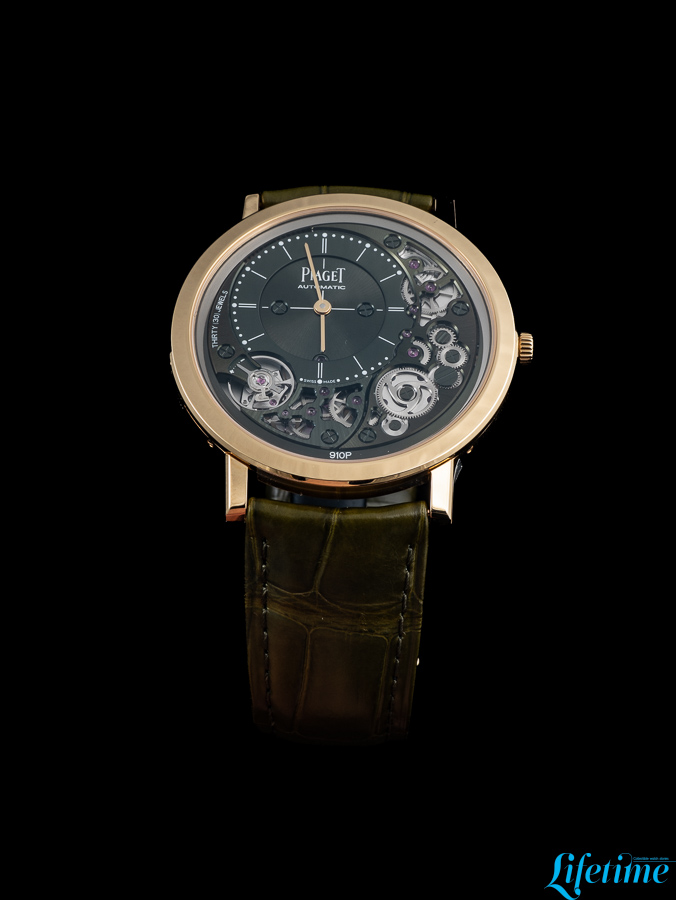
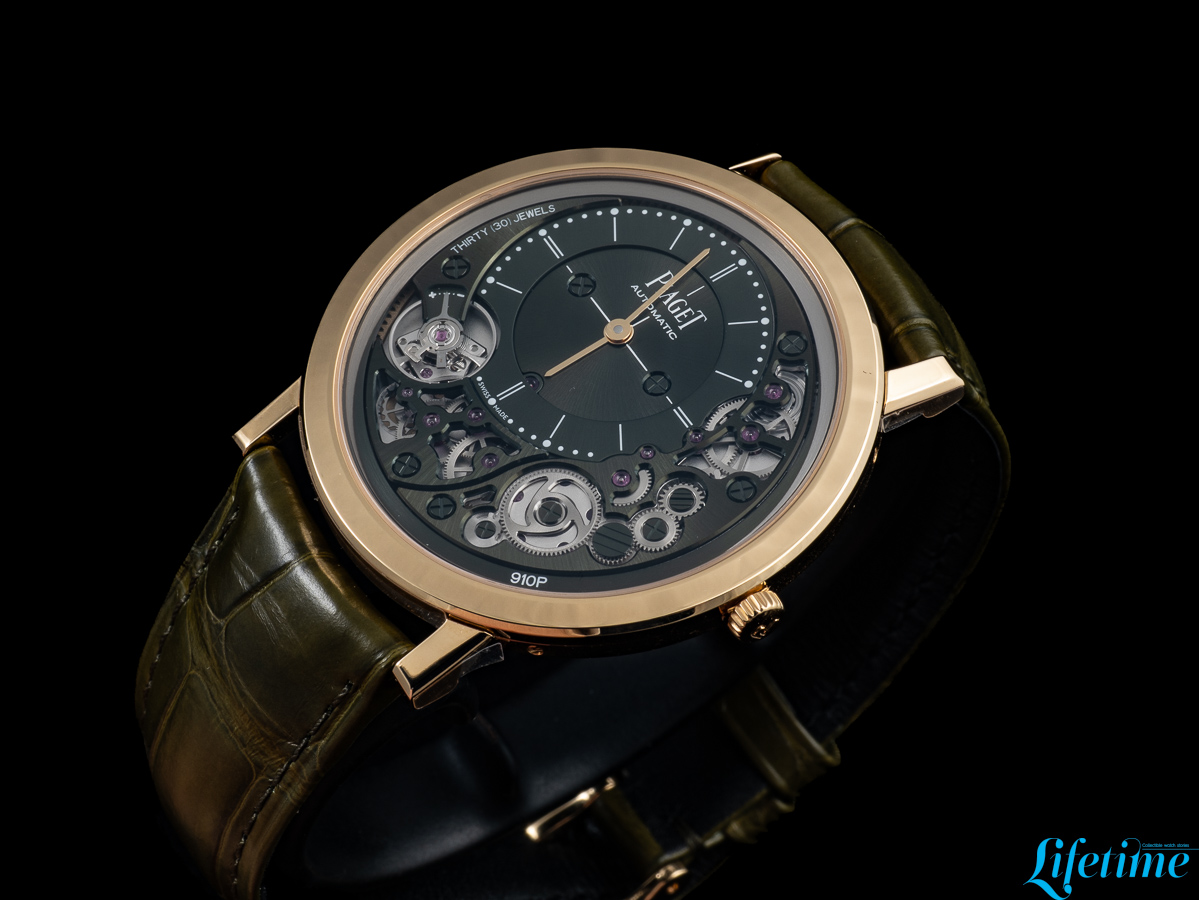
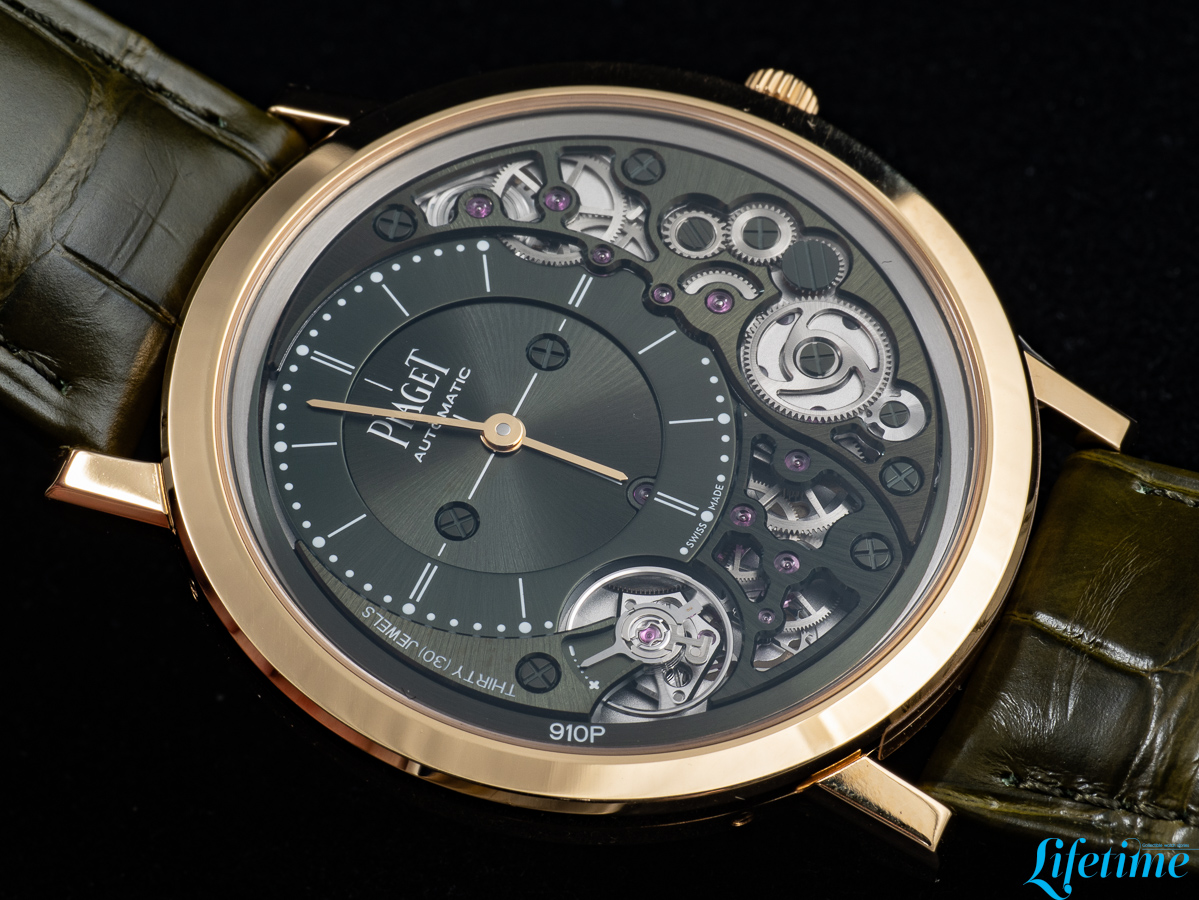
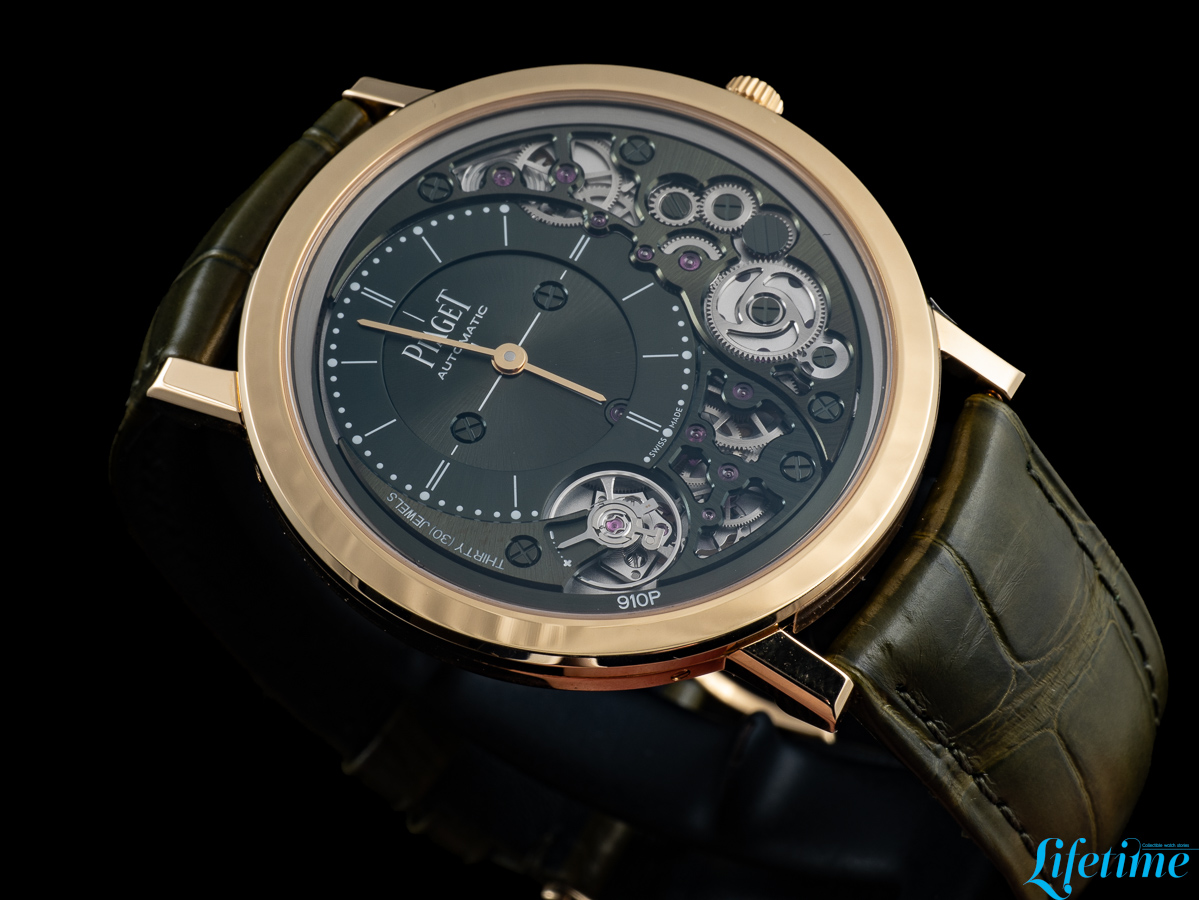
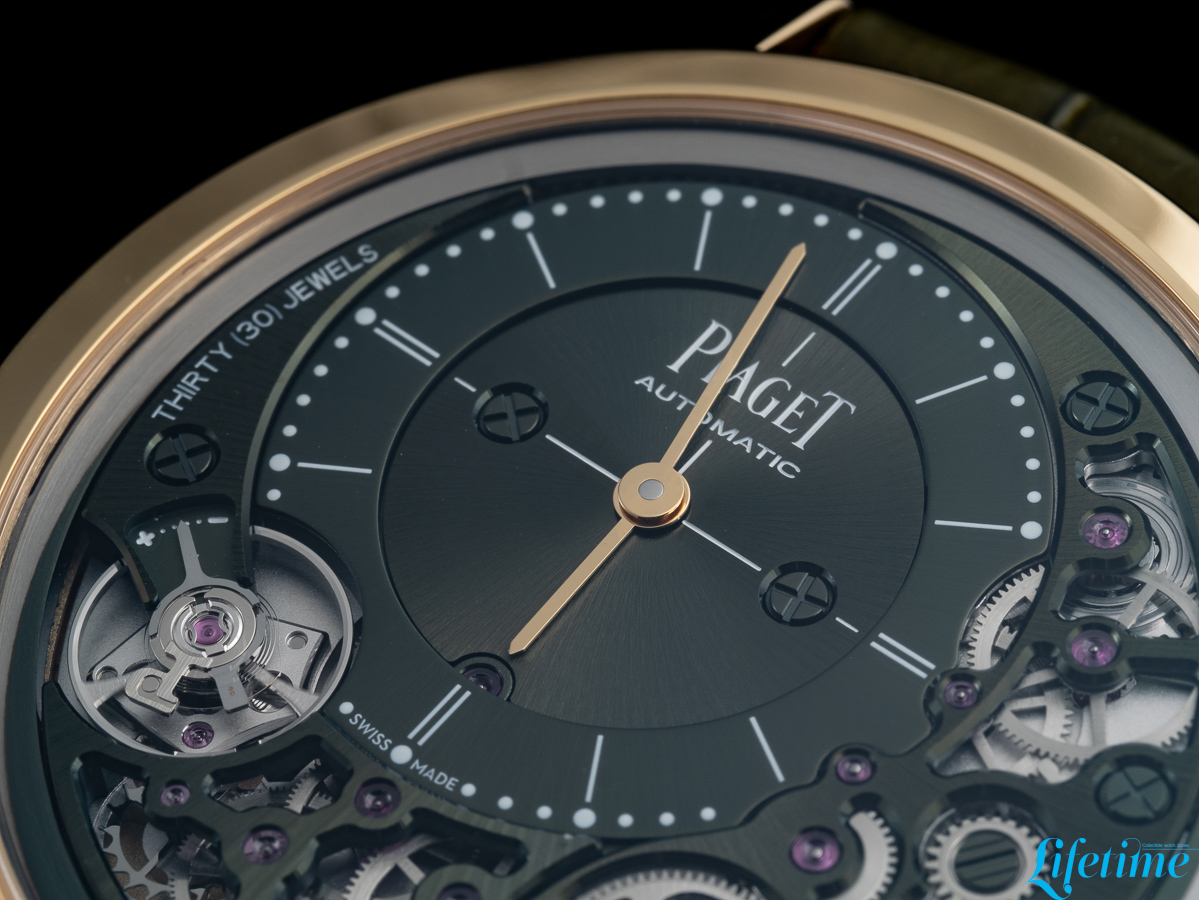
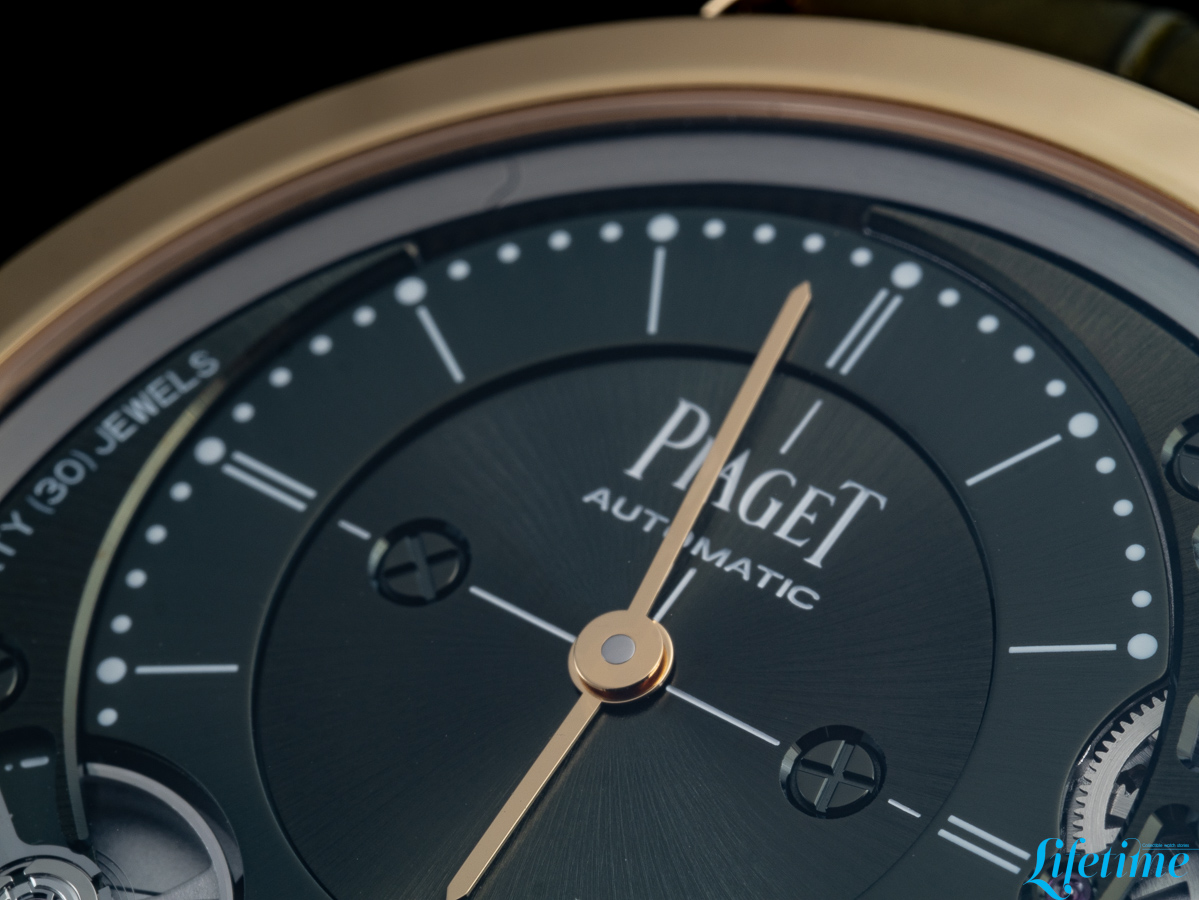
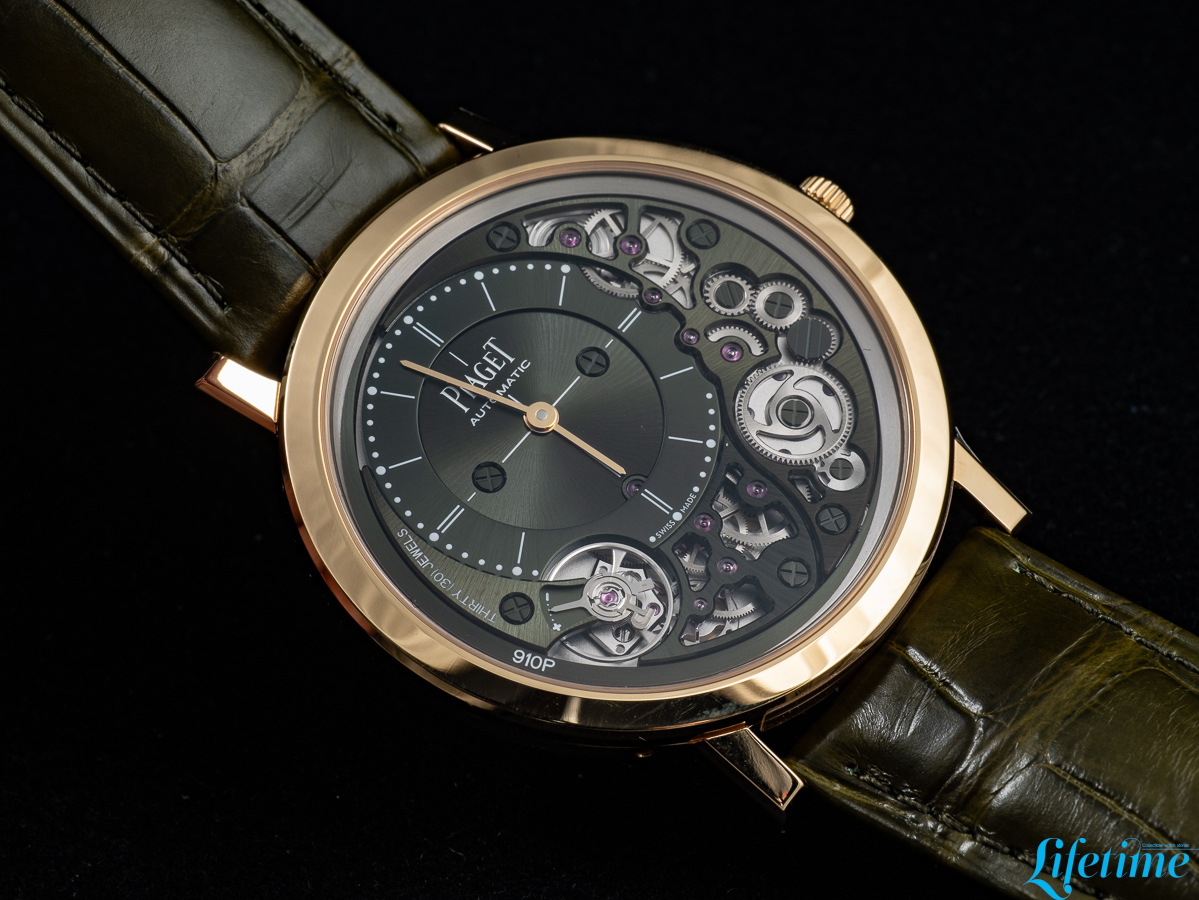
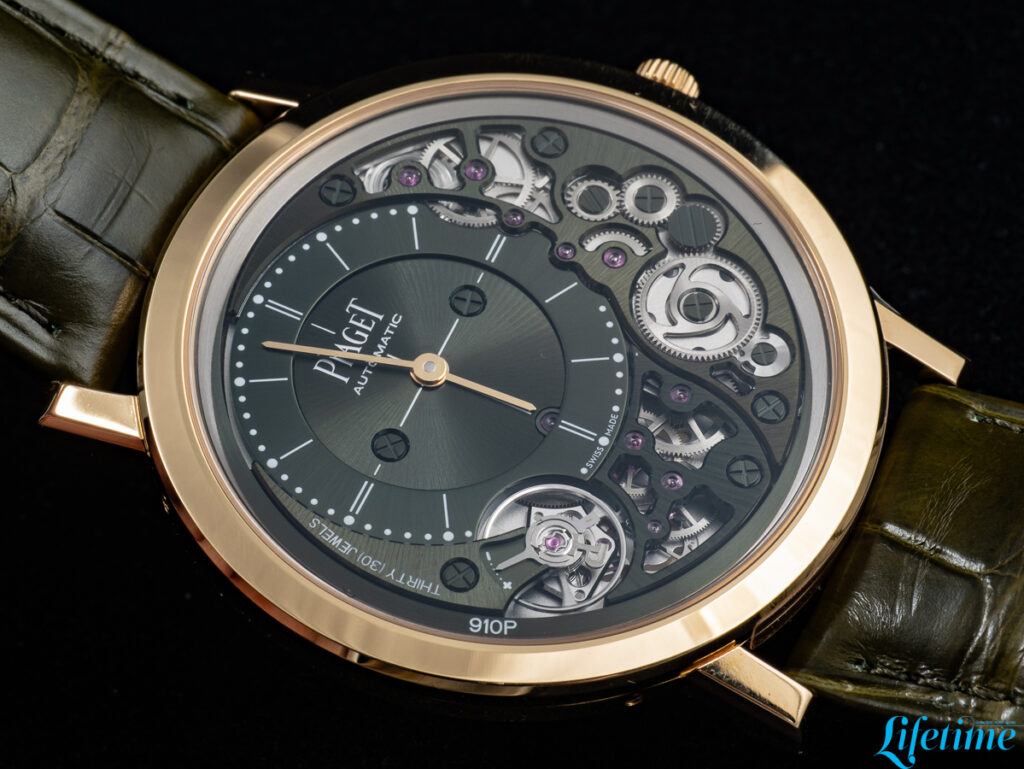 The 910P takes a coherent approach with bridges in the same khaki green, and a peripheral rotor in slate grey and green tones that adds depth without cluttering the view. Both watches also feature a subtle cross-shaped motif on the dial screws – a deliberate reference to Altiplano’s design heritage that comes across as genuinely thoughtful rather than merely ornamental.
Two Calibres, One Philosophy
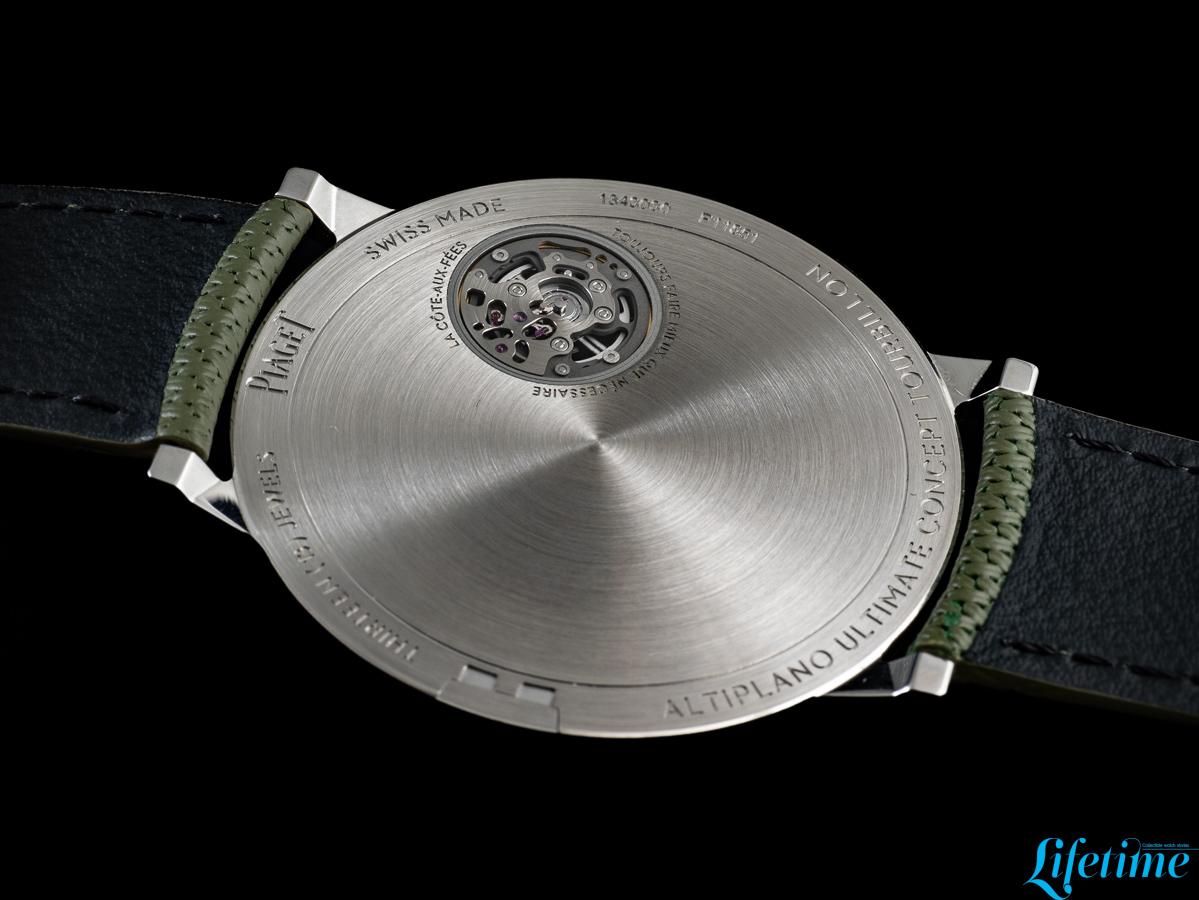
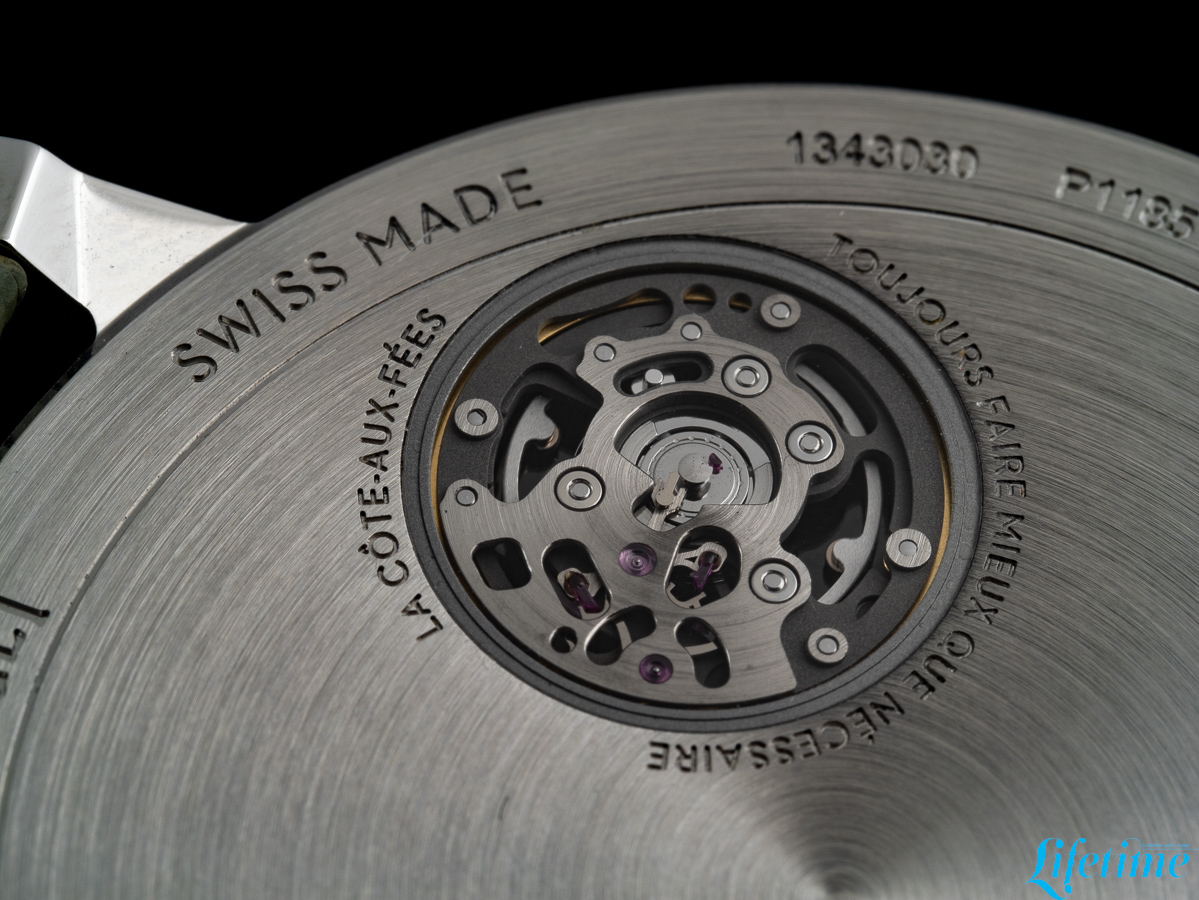
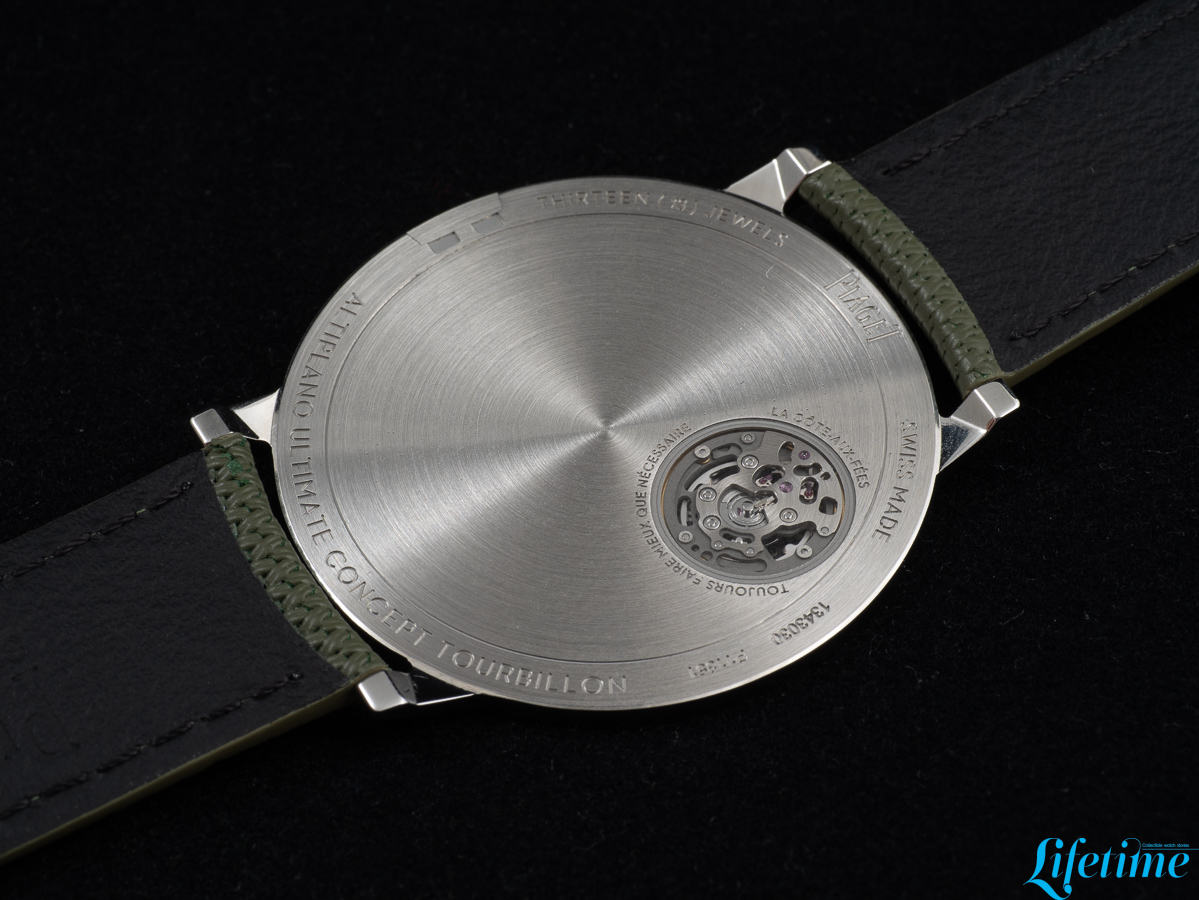
The Calibre 970P-UC powers the AUC Tourbillon, running hand-wound at 4Hz (28,800 vph) with a 35-hour power reserve, 13 jewels, and six ball bearings. What makes this movement extraordinary is its structural integration: the caseback acts as the mainplate, eliminating every redundant layer between the movement and the case. The caseback opens via a 0.16mm-thick sapphire crystal, allowing direct inspection of this integration. The satin-brushed and polished finish on the calibre 970P-UC’s bridges gives it a more refined, contemporary character compared to earlier iterations.
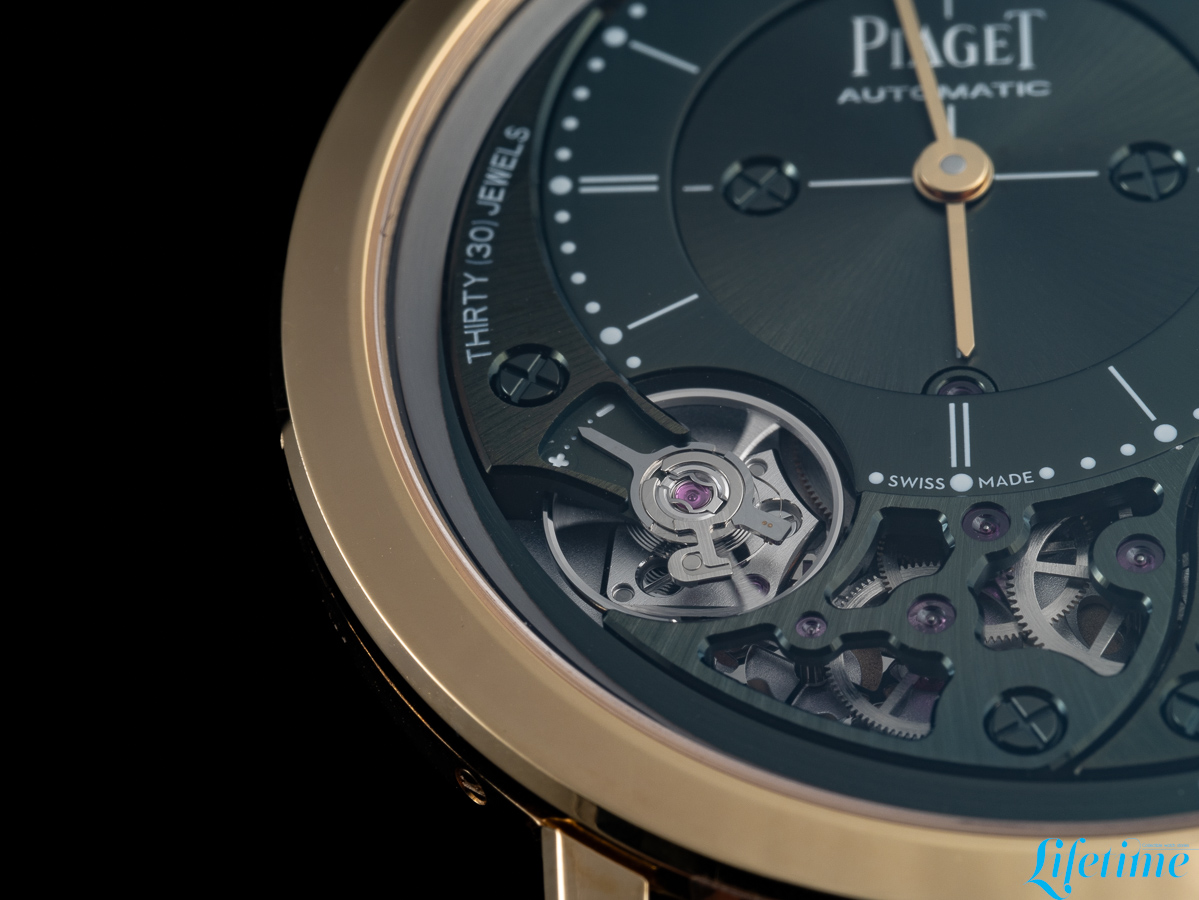
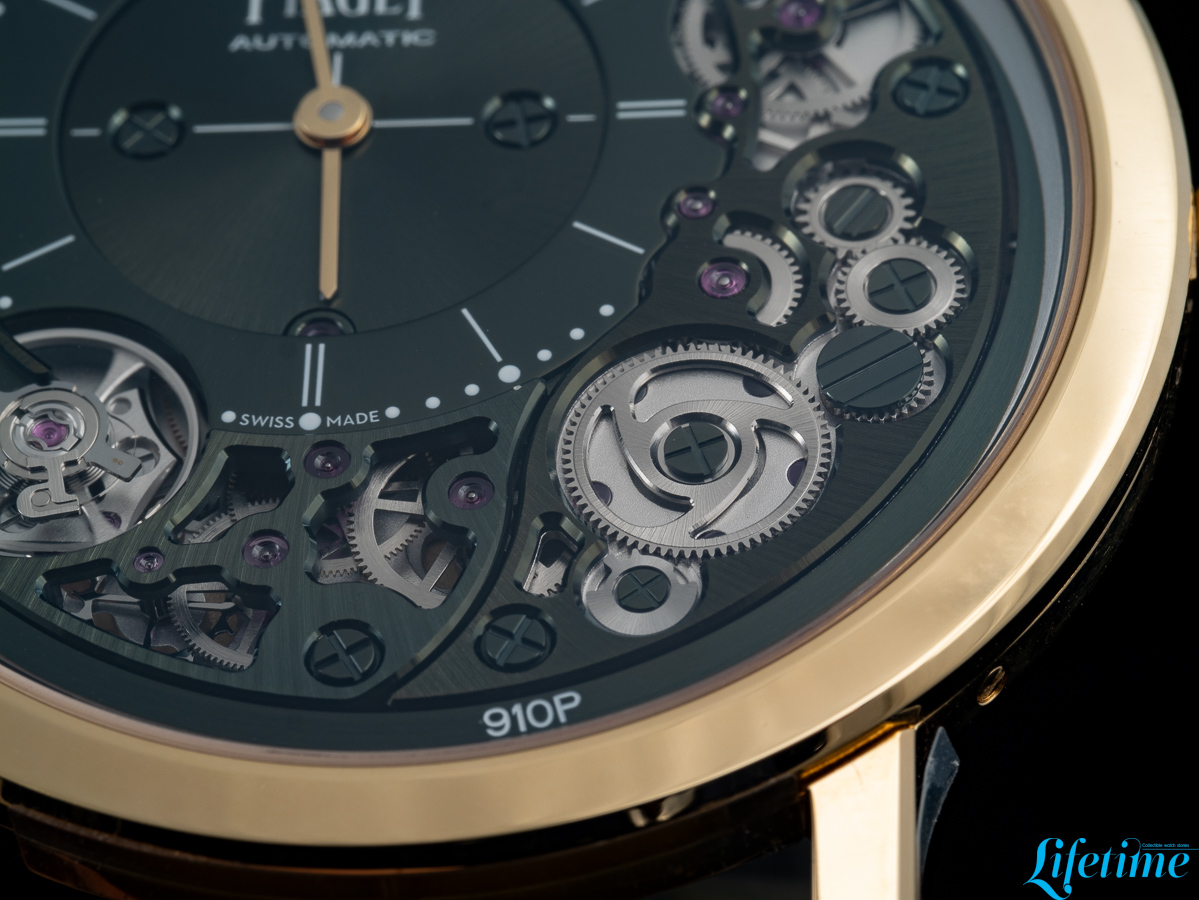
The 910P is powered by the calibre 910P – a self-winding movement with a peripheral rotor that winds from the edge of the movement rather than the centre, preserving both the view through the bridges and the overall slim profile of this timepiece. It beats at 3Hz (21,600 vph) and delivers a 48-hour power reserve – a peripheral rotor concept that, in my view, ranks as one of the smartest engineering decisions in ultra-thin watchmaking because it solves a practical issue without compromising the aesthetic.
 The Cases: Cobalt and Gold
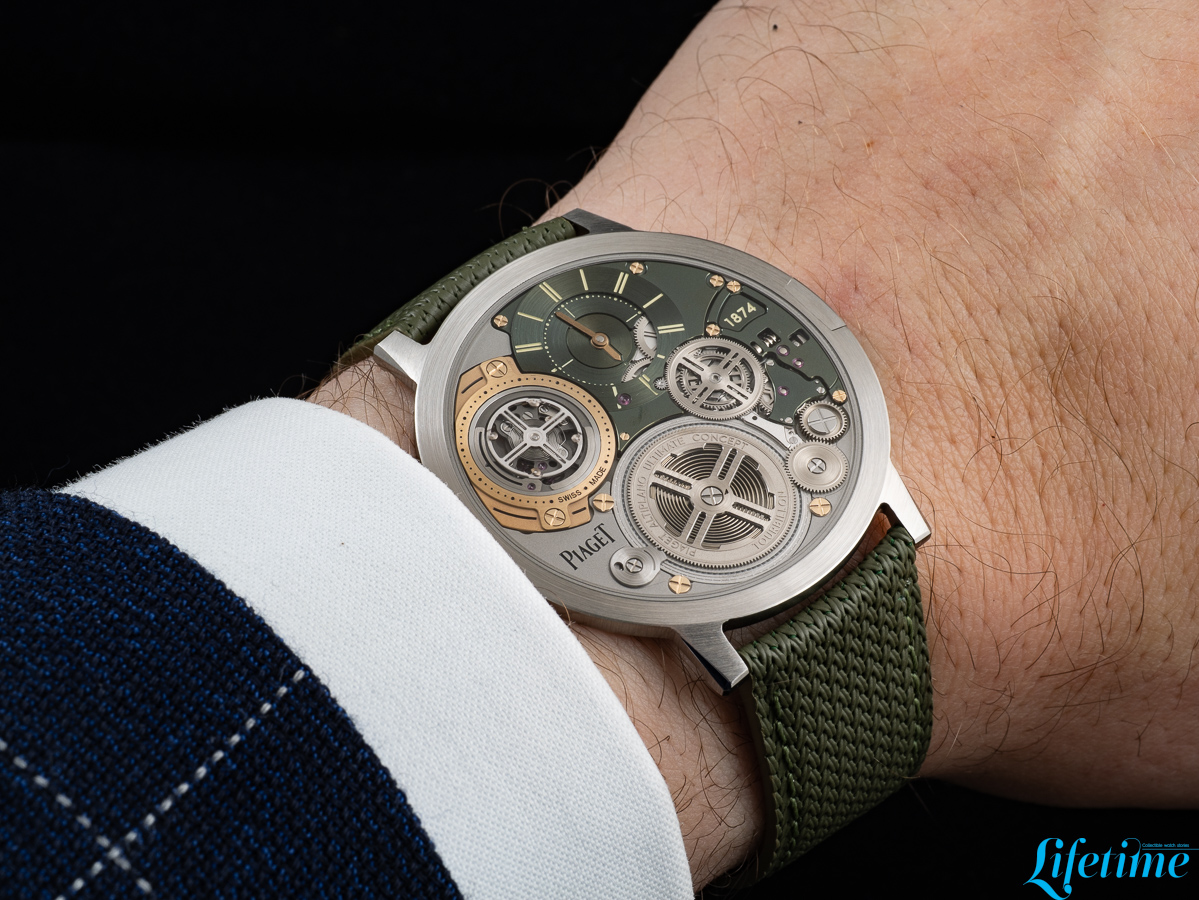
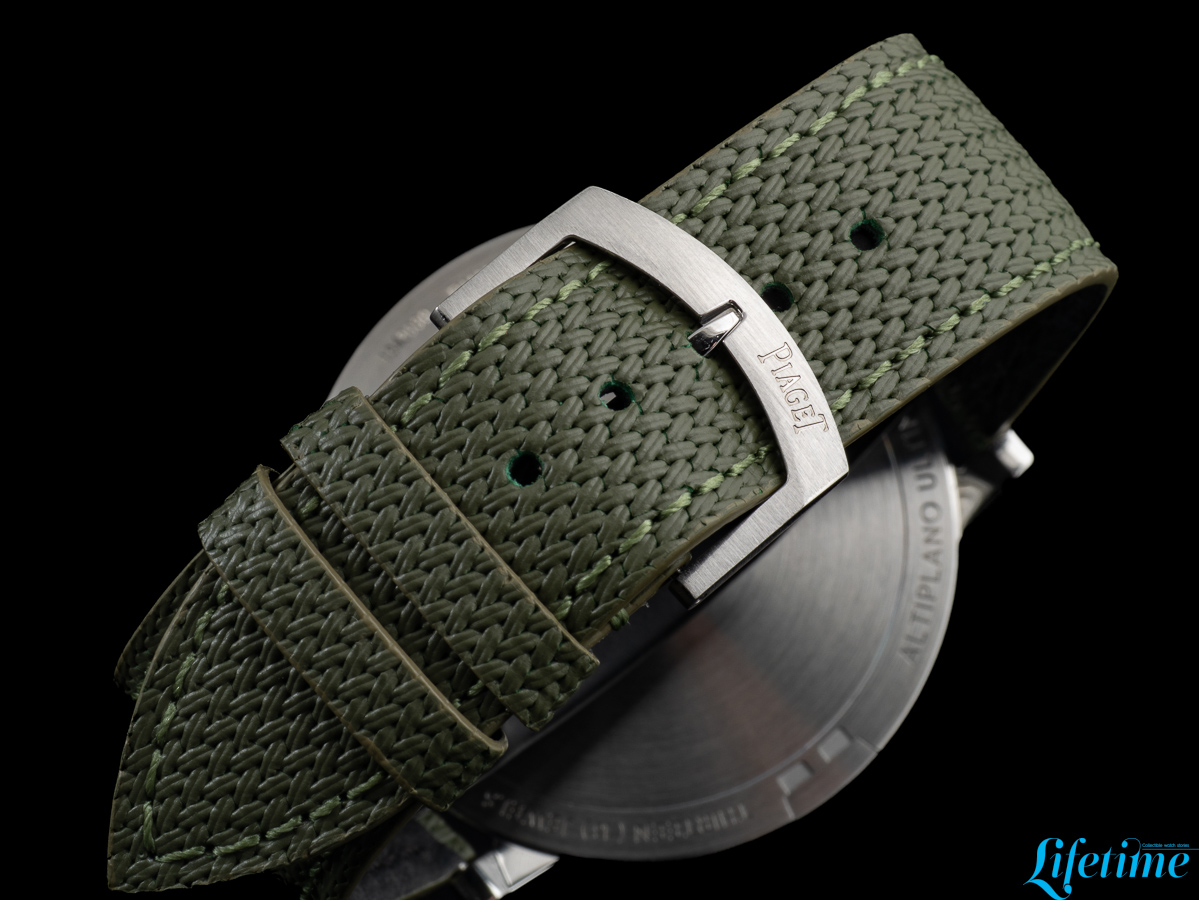
The AUC Tourbillon case measures 41.5mm in diameter and is built from M64BC cobalt alloy – a material Piaget has selected for its rigidity, which is essential given that the total thickness, including the crystal, reaches just 2mm. An anti-reflective sapphire crystal protects the dial, while a Kevlar-reinforced calfskin strap in Piaget’s new ‘Polish Mesh’ pattern finishes the look.
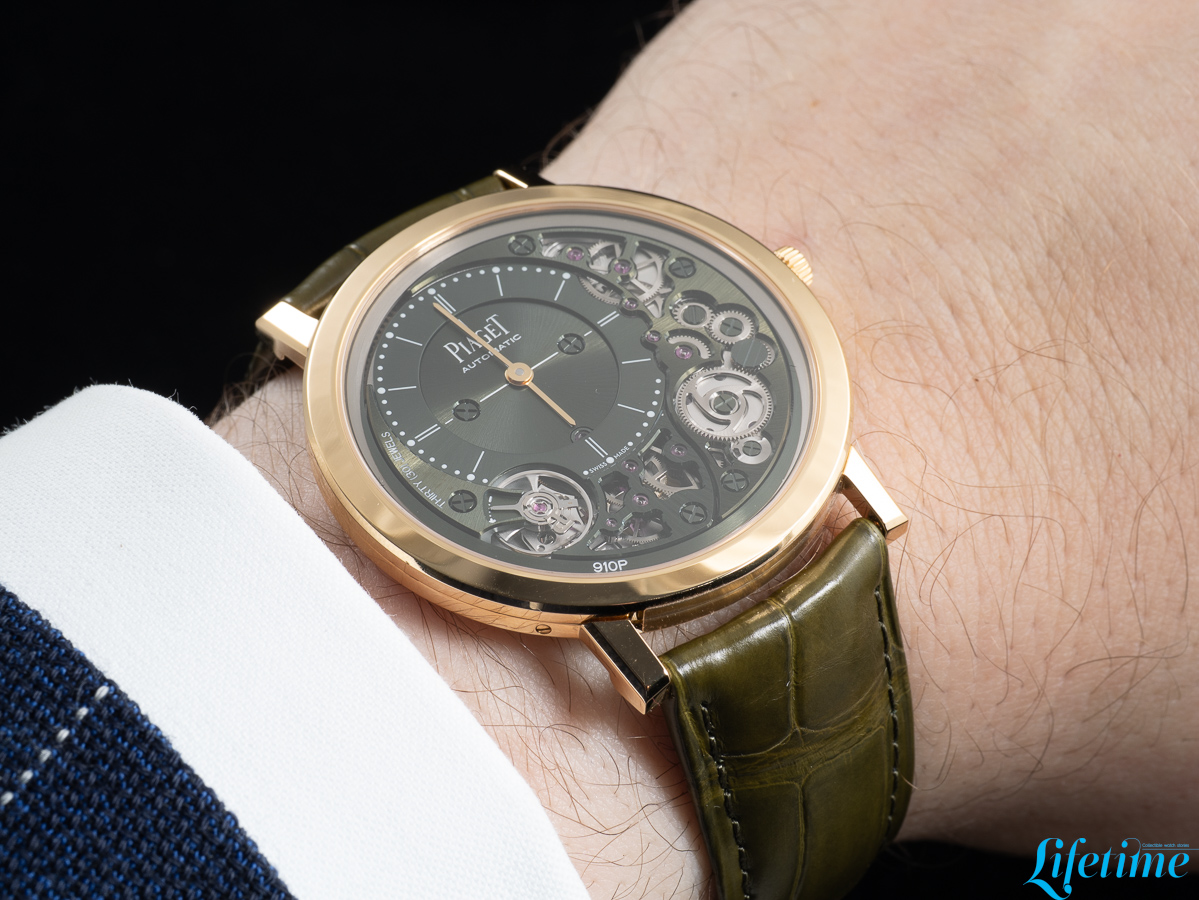
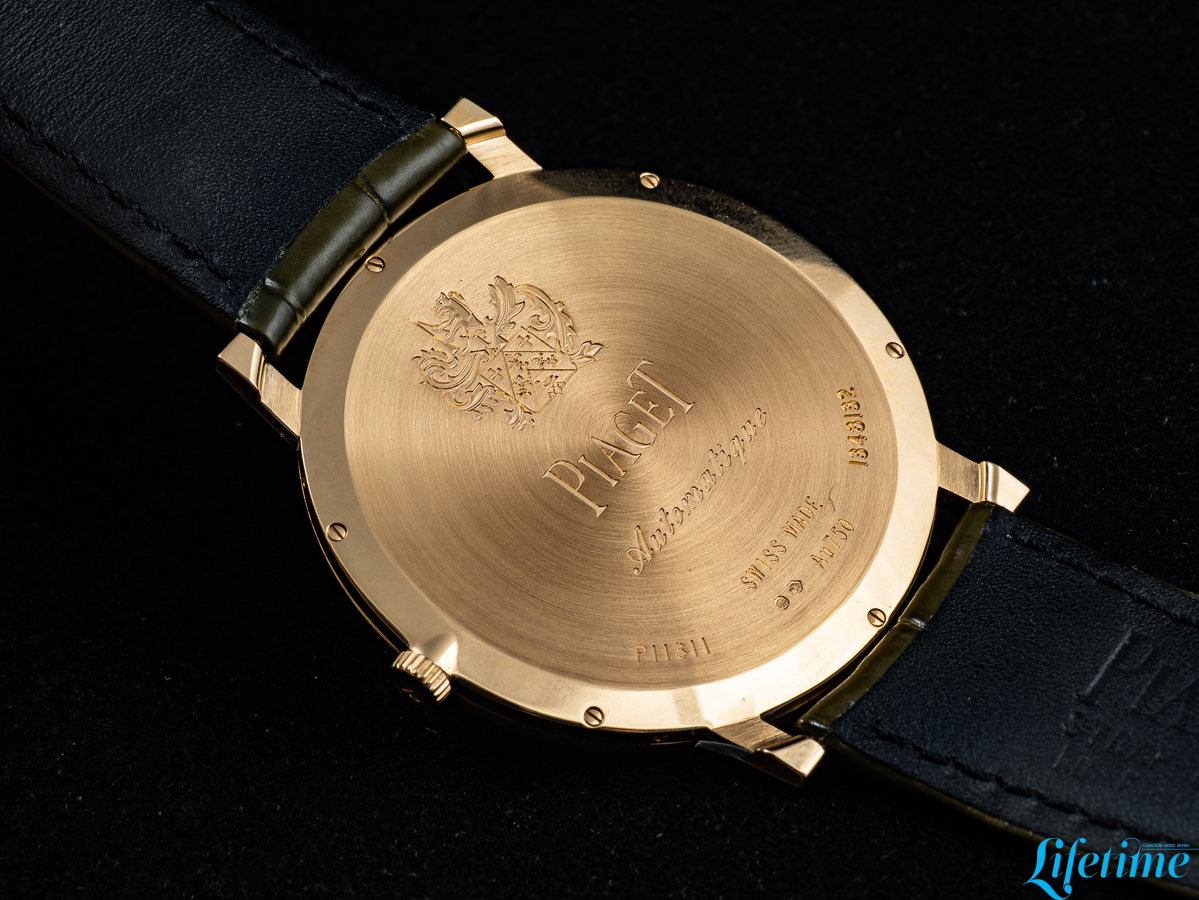
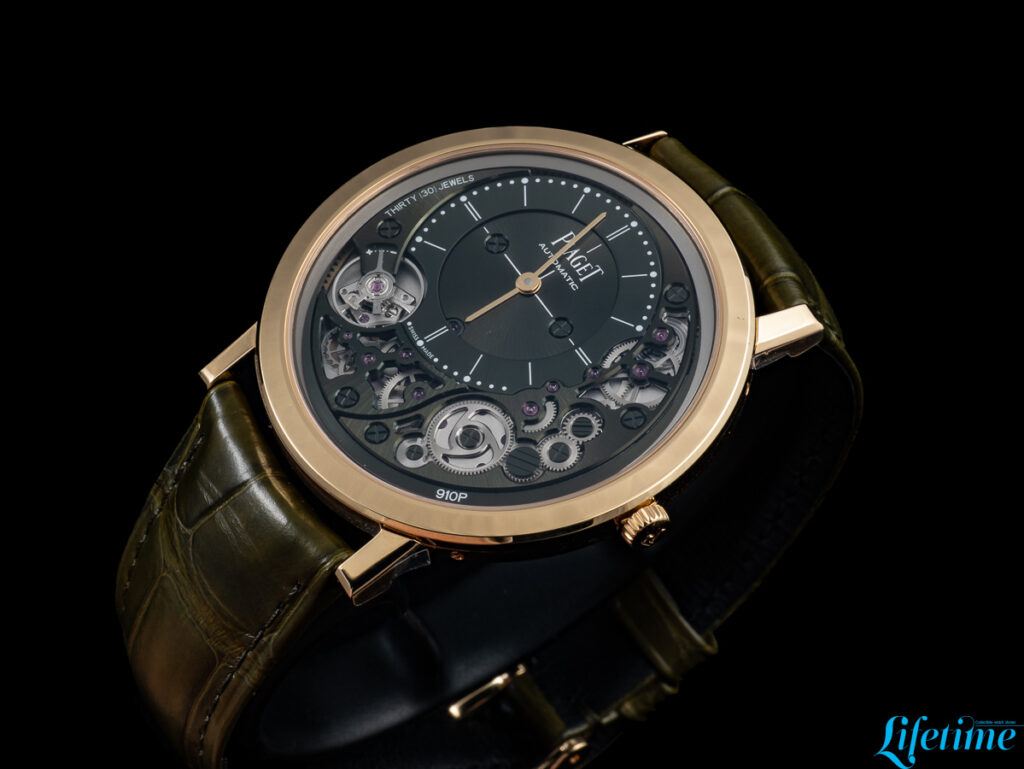 For the 910P, Piaget has turned to 18-carat yellow gold for the first time in this reference. The 41mm case has a total thickness of 4.3mm, and the solid caseback is engraved with the Piaget coat of arms. The watch is fastened with a yellow gold ardillon buckle over a green alligator strap.
The Verdict
At approximately EUR 40,500, the Altiplano 910P (ref. G0A50126) in 18-carat yellow gold offers genuine ultra-thin mechanical engineering at a price that remains remarkably competitive within its segment. The AUC Tourbillon (ref. G0A50530) sits closer to CHF 700,000 and enters Piaget’s Infinitely Personal customisation programme. Here, clients can co-create their own version by selecting finishes, engravings, and materials through a dedicated online configurator. This programme recognises an important fact: a watch at this level should feel unique to the person wearing it, and Piaget, to its credit, has always believed exactly that.
Share this article


LEAVE A COMMENT
You must be logged in to post a comment.