

Louis Vuitton x Singer: The Art of Travel


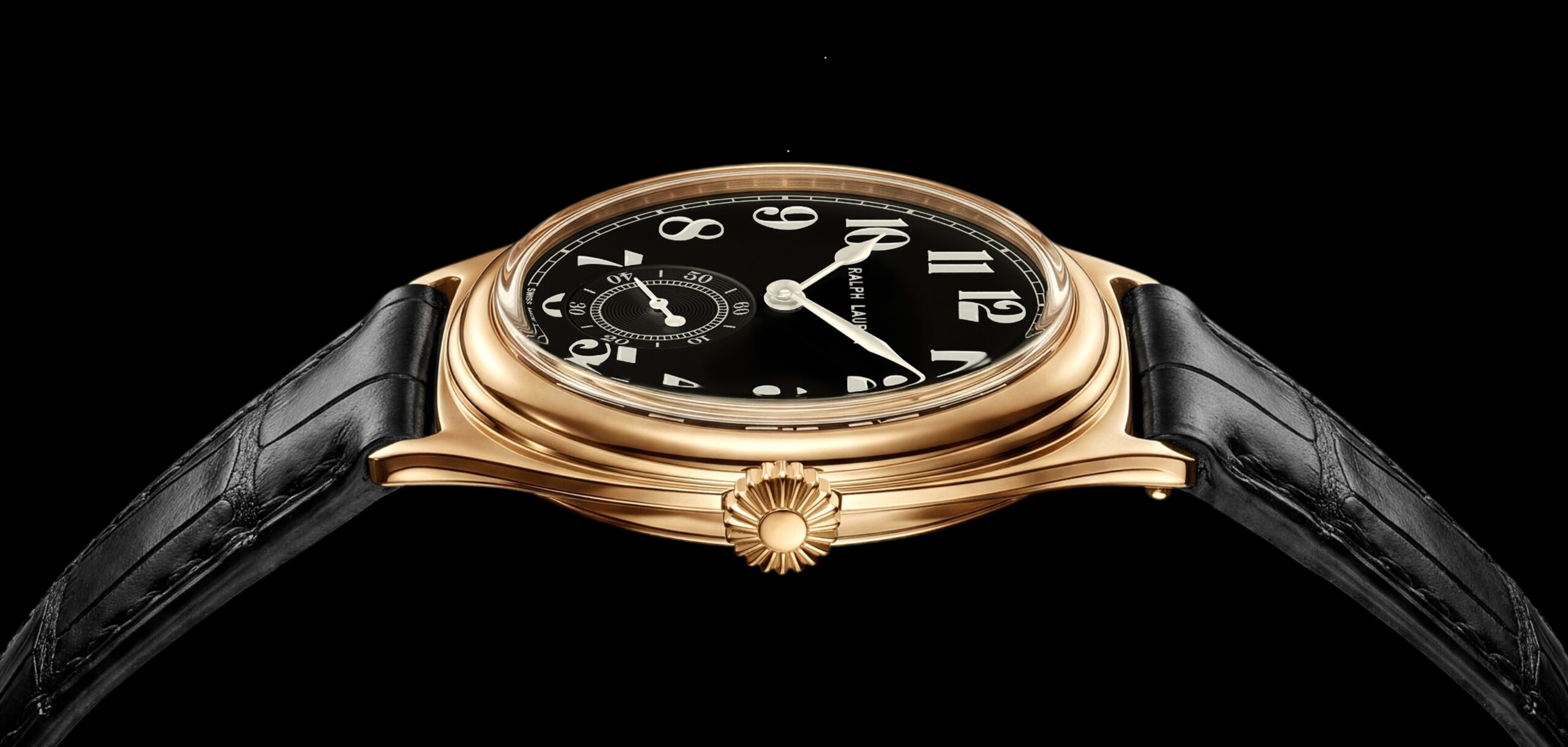
Louis Vuitton’s collaboration with Singer did not begin with a car, a concept, or even a design brief. It began with a watch. More precisely, with a question: what would a dashboard timepiece look like if it were conceived not as an accessory, but as a true piece of horology? La Fabrique du Temps Louis Vuitton answered with a mechanical instrument so considered, so self‑possessed, that it refused to remain confined to the dashboard. Detachable, sculptural and unmistakably Tambour in its proportions, the clock could leave the car entirely and sit on a desk like a travelling companion. In that moment, the project revealed its deeper potential. A single object had opened a door between two worlds—Vuitton’s culture of precision leatherwork and watchmaking, and Singer’s obsessive, analogue‑first approach to Porsche 911 restoration.
Louis Vuitton x Singer: When the Art of Travel Gains Horsepower
The seduction of this partnership lies in its symmetry. Singer’s restoration philosophy—analogue romance fortified by obsessive engineering—has always treated the Porsche 911 as a canvas for craftsmanship rather than nostalgia. Louis Vuitton, meanwhile, has spent more than a century refining the aesthetics and logistics of movement. When the Maison enters Singer’s garage, it does so not as a stylistic intruder but as another atelier fluent in the language of touchpoints, tolerances and materials.
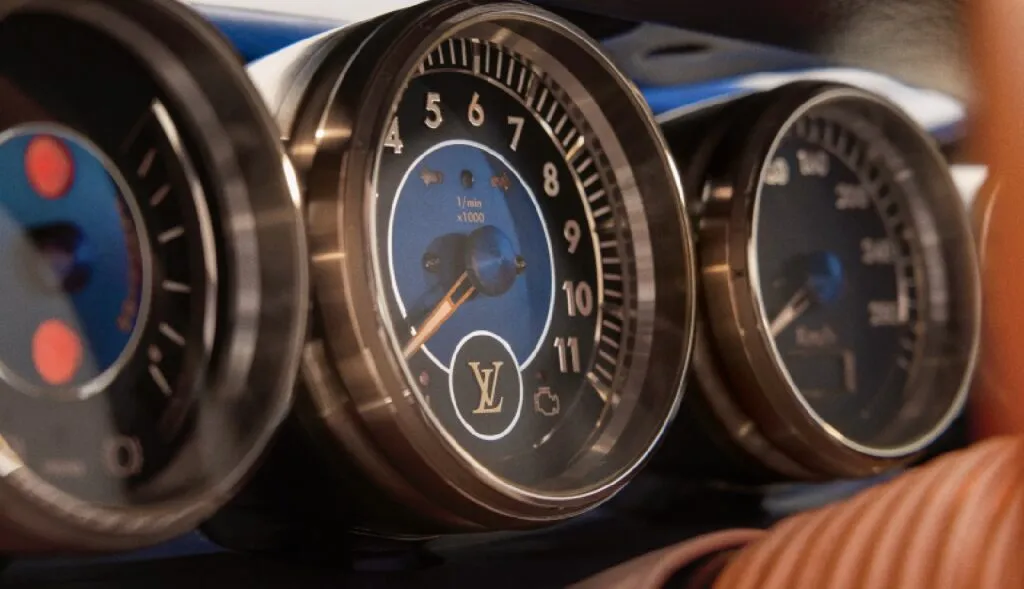
The collaboration began with a modest request: a dashboard clock. La Fabrique du Temps Louis Vuitton responded with a mechanical, detachable timepiece inspired by the Tambour, complete with twelve polished letters engraved around its bezel. But the idea refused to stay small. Vuitton’s designers reimagined the entire instrument cluster—speedometer, rev counter, auxiliary gauges—translating Tambour hands, indices and graphics into automotive form. The process took a year, and the result feels less like a transplant than a shared vocabulary expressed across disciplines.
From there, the cockpit became a proving ground for cross‑pollination. Rhodium‑plated switches replaced plastic fittings; pull‑tabs, locks and knobs were hand‑finished with techniques borrowed from watchmaking; leather edges were dyed using methods reserved for Vuitton bags; malletage embossing migrated from historic trunks to seats and luggage compartments. Even ventilation eyelets became miniature Monogram flowers. Singer’s lead designer, Octave Chany, insisted that the car remain “functional and useful”—a reminder that luxury here is not about protecting details from life, but engineering them to withstand it.
Two Cars, Two Fantasies of Escape
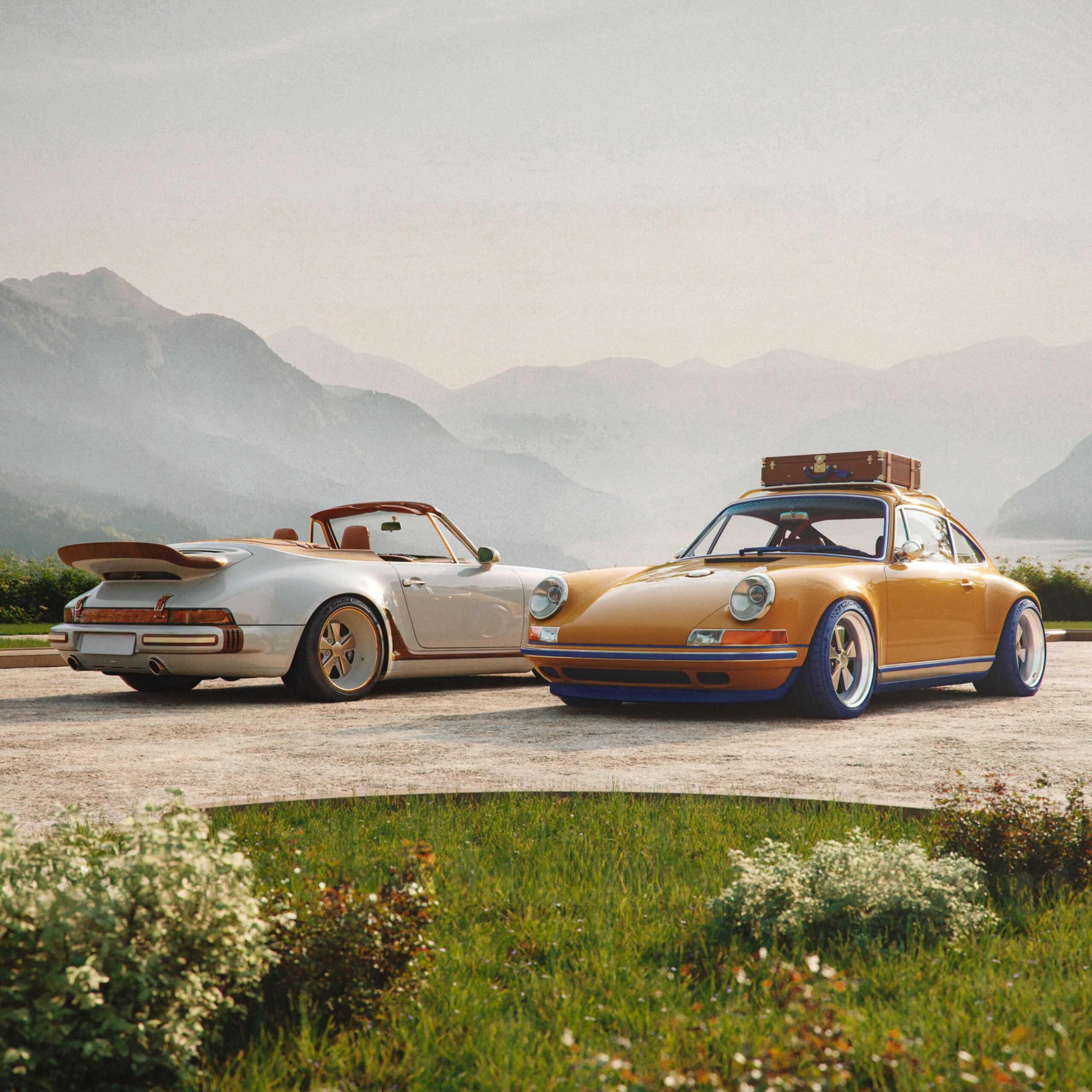
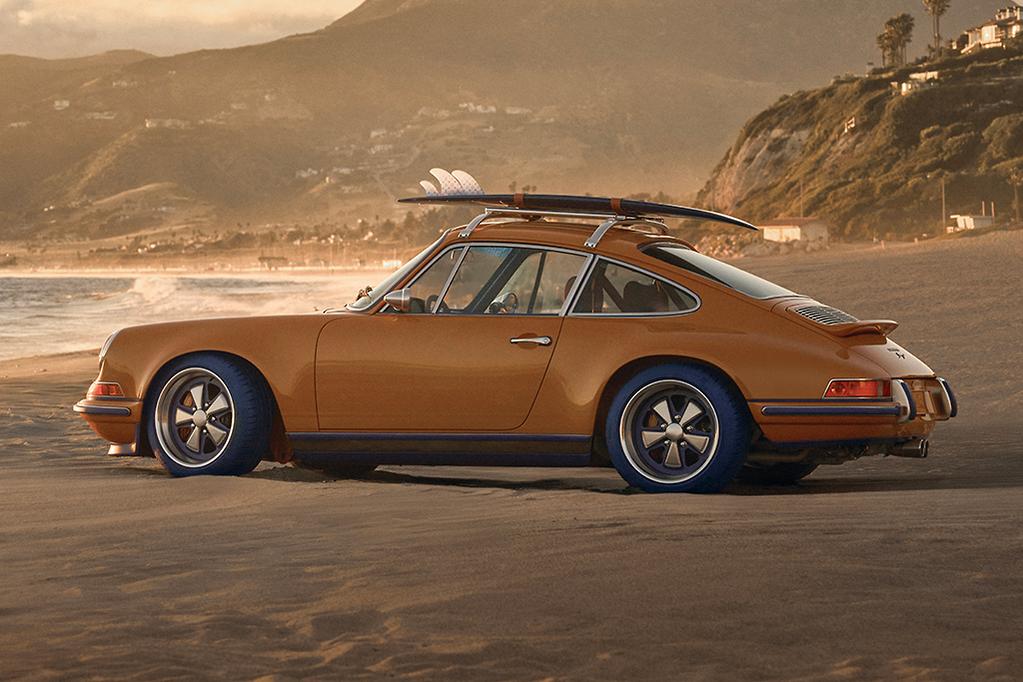
The Classic coupé is the adventurer. Its carbon‑fibre bodywork glows in saffron, punctuated with cobalt and yellow—a palette rooted in Vuitton’s visual heritage and in the cobalt‑reinforced travel trunks created for Citroën in 1924. A specially engineered roof rack carries a Vuitton trunk, skis or a handmade wood‑marquetry surfboard. Beneath the theatre lies serious machinery: Singer’s naturally aspirated 4.0‑litre evolution of the Type 964 M64 Mezger flat‑six, producing up to 390 hp through a six‑speed manual, supported by carbon‑ceramic brakes, adaptive Öhlins dampers and carbon‑fibre panels. This is not a car built for gentle touring; it is a grand‑tour wardrobe with a redline.
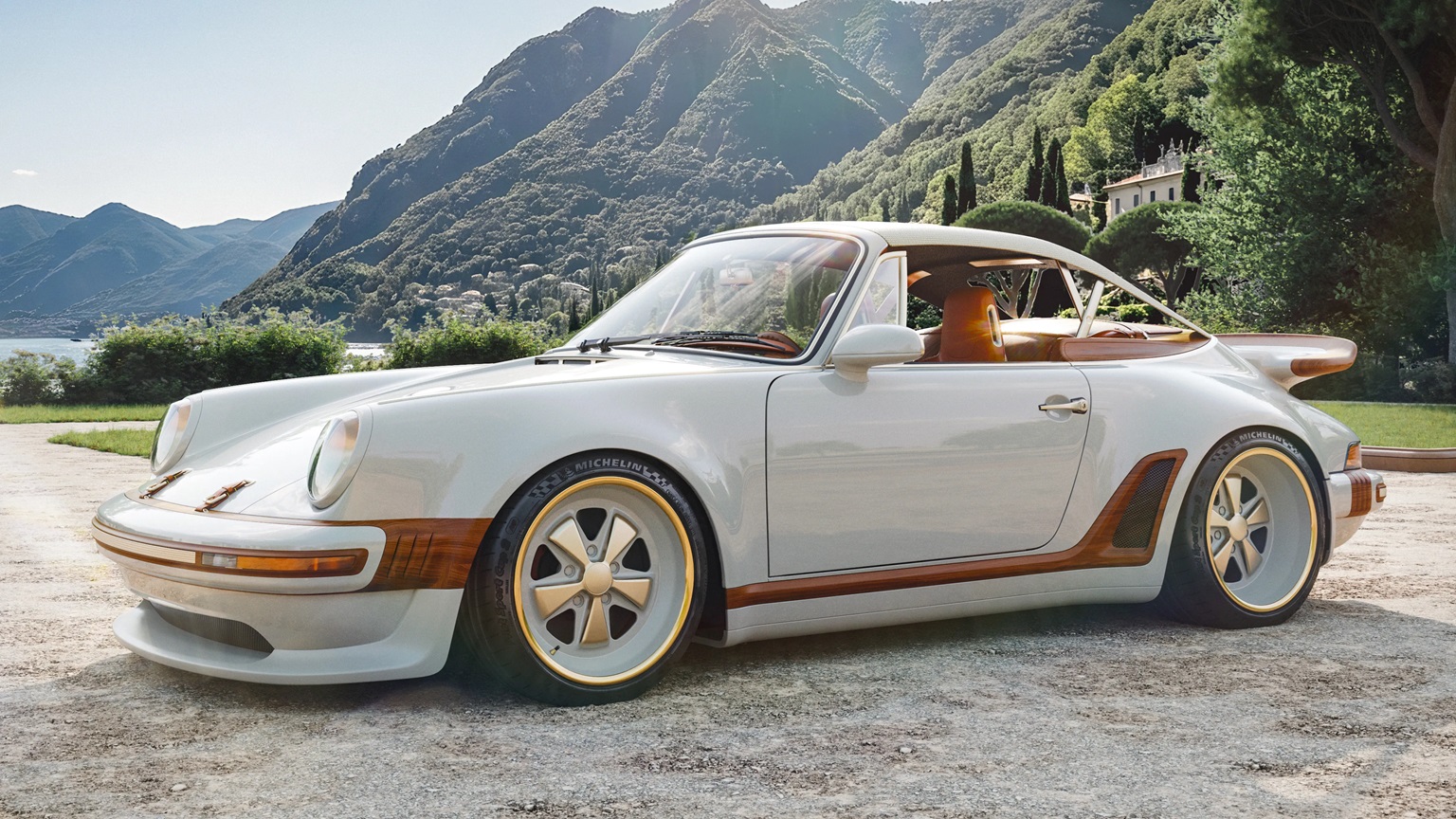
The Classic Turbo cabriolet, conceived with Nicolas Ghesquière, shifts the mood entirely. Calcaire Lutétien white—echoing Parisian limestone and Vuitton’s Pont Neuf headquarters—meets gold accents, natural leather and expanses of wood. The rear luggage compartment opens onto a teak‑inspired deck reminiscent of classic motorboats; even the gearshift trim nods to the drawstring silhouette of the Noé bag. Underneath the Riviera fantasy is a 3.8‑litre twin‑turbo flat‑six delivering up to 510 hp and 450 lb‑ft, paired with carbon‑ceramic brakes, Michelin Pilot Sport 4S tyres and a fixed whale‑tail spoiler. It is Riva elegance with a taste for boost.
Dressing the World Around the Car
Perhaps the most revealing element is everything that is not automotive. Vuitton outfits the Classic’s owner with the same precision applied to the vehicle: Millésime leather racing jackets with Monogram Flower eyelets, cotton‑and‑silk denim with contrast stitching, LV Rally driving shoes with rubber‑pad soles, perforated gloves in natural or cobalt leather. Keys receive bespoke cases; vehicle documents slip into a pochette inspired by a 1950s business sleeve. What could have become branded costume instead clarifies the collaboration’s deeper ambition: to design the journey from the object outward, creating a single, controlled atmosphere where luggage, clothing, clock and cockpit feel authored by the same hand.
Singer gives Vuitton a Porsche that must endure heat, vibration, speed and real use. Vuitton gives Singer a cultural lens through which Porsche ownership becomes less about possession and more about inhabiting a world. In an era where exclusivity is easy to announce but coherence is rare, the partnership offers something sharper: a universe so complete that every material and gesture feels inevitable.
A Century‑Old Obsession Finds a Faster Chassis
Louis Vuitton’s automotive history stretches back to the late nineteenth century, when the Maison designed trunks shaped around the awkward geometries of early cars. Through concours, rallies and bespoke luggage projects, Vuitton continued courting automotive culture throughout the twentieth century. The Singer collaboration therefore feels less like a detour than a return—heritage treated not as museum relic but as raw material.
What makes the project remarkable is its willingness to let disciplines contaminate each other. Watchmaking enters the instrument cluster; trunk‑making enters the cabin; nautical design enters the Turbo; automotive engineering forces decorative craft to become functional. When an air‑cooled 911 carries a Vuitton trunk on its roof, the symbolism becomes irresistible: one belongs to the mythology of the road, the other to the mythology of the journey. For once, it is difficult to tell which one is accessorising the other.
Unveiled globally at Monterey Car Week on 12 August 2026, the collaboration has yet to receive a confirmed wider retail release. A Hong Kong presentation or launch date also remains unannounced.
Share this article
LEAVE A COMMENT
You must be logged in to post a comment.