


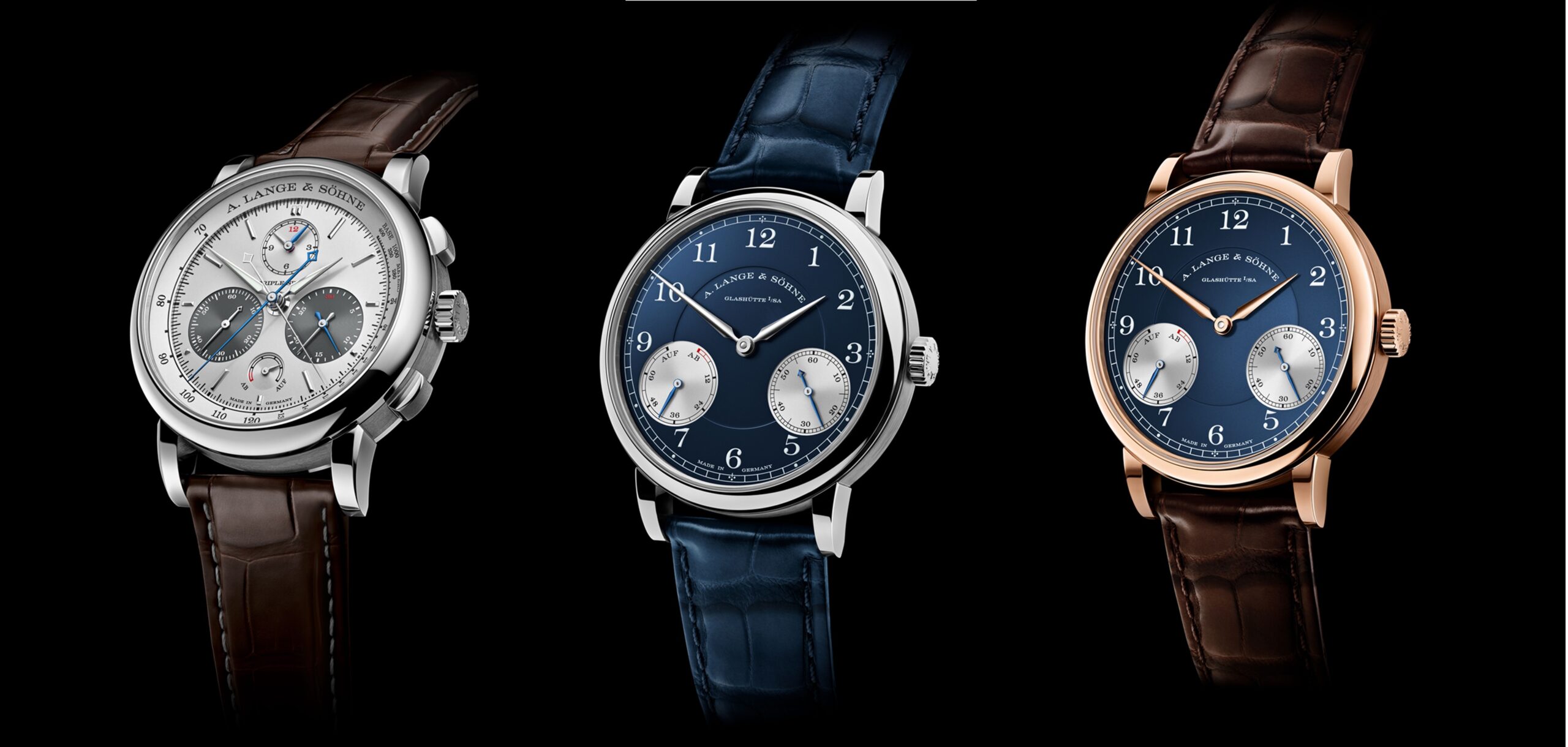
A. Lange & Söhne presents the 1815 UP/DOWN and the TRIPLE SPLIT


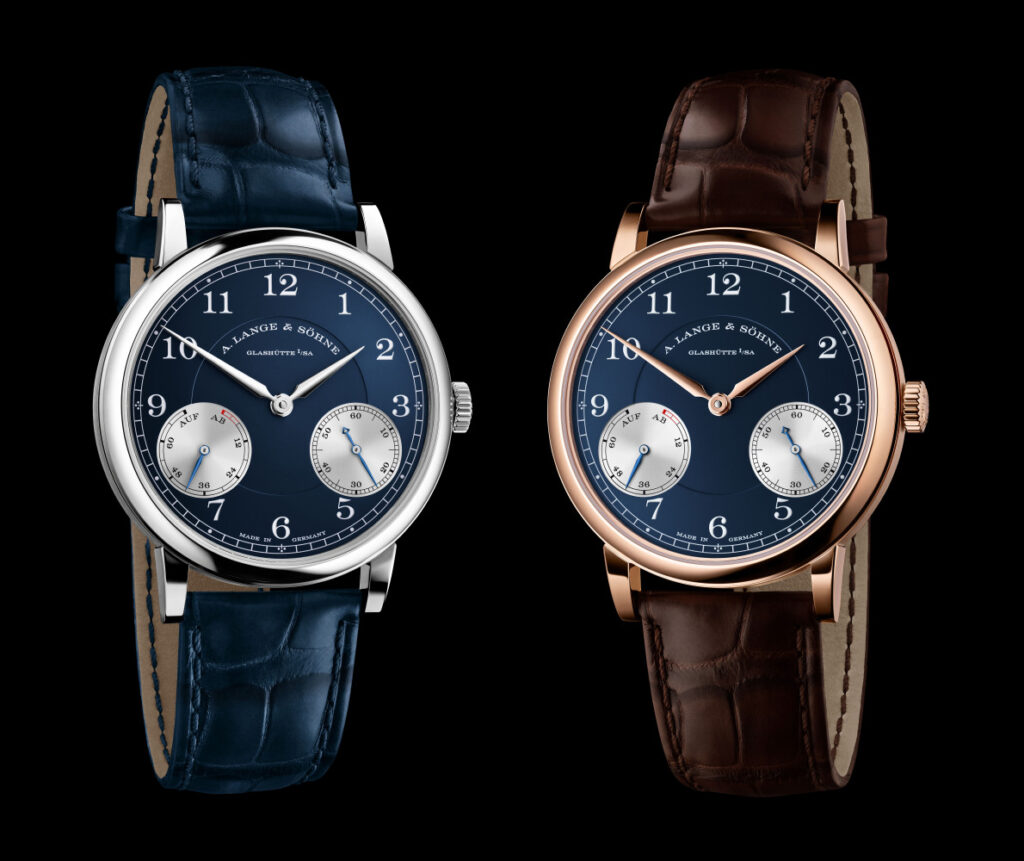
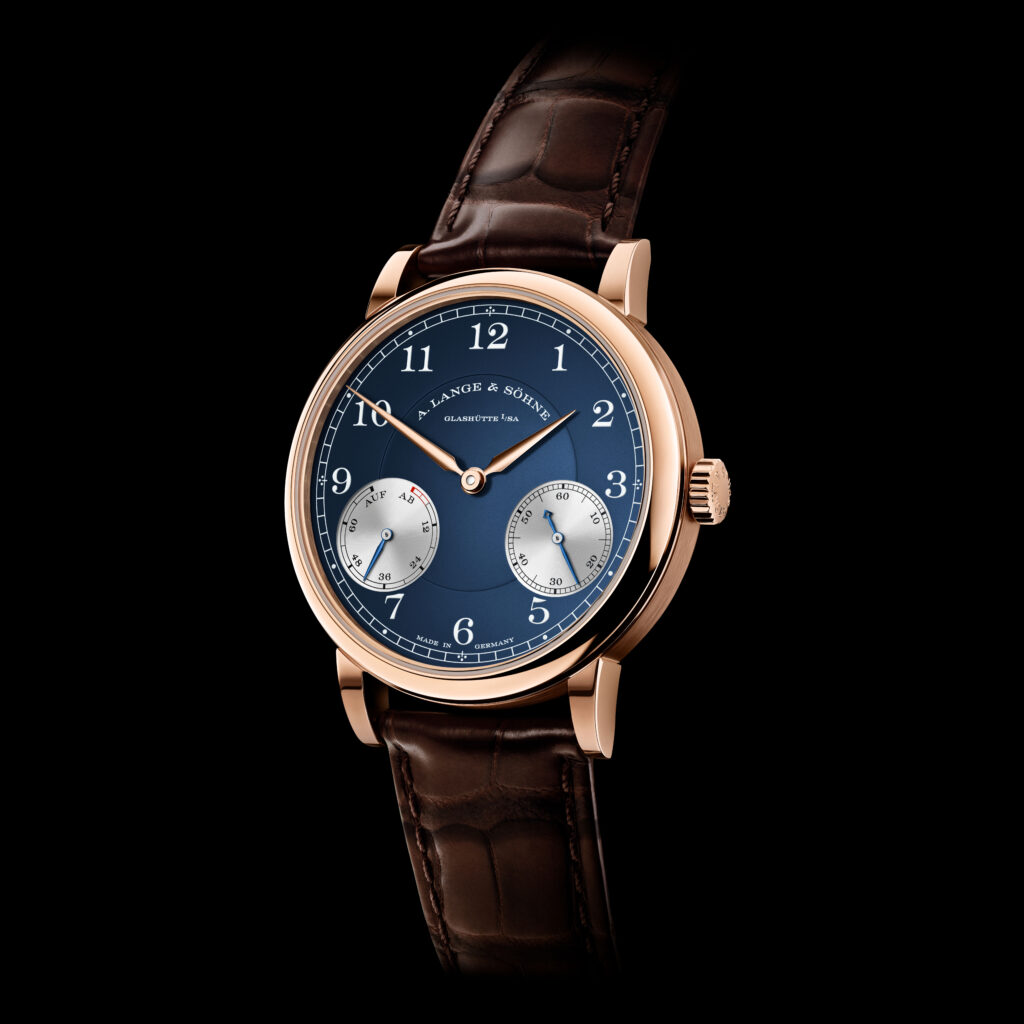
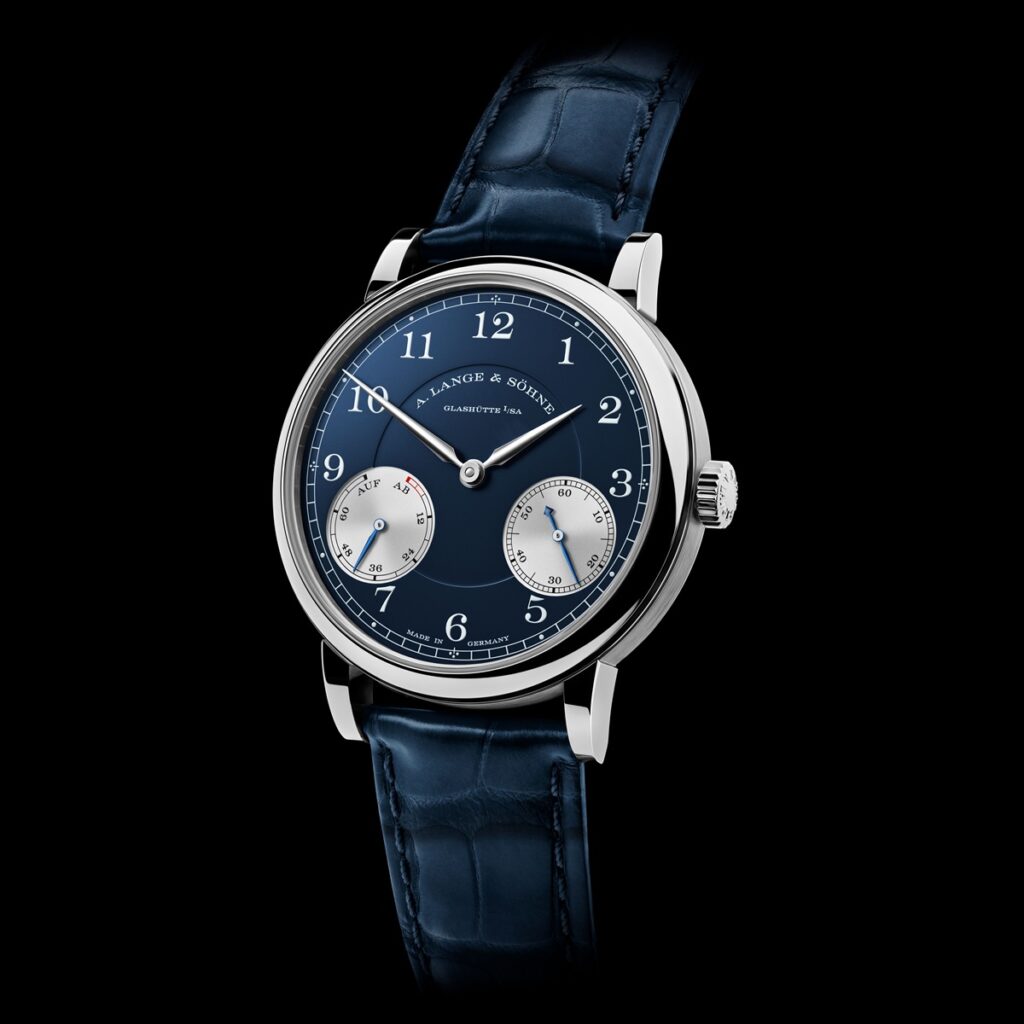
A. Lange & Söhne’s new 1815 UP/DOWN editions reaffirm the Maison’s belief that progress is achieved through continuity — through the careful evolution of ideas first articulated in the pocket watches of Ferdinand Adolph Lange. The latest references, offered in limited runs of 300 pieces each in pink and white gold, revisit one of the brand’s most emblematic displays: the UP/DOWN indicator, a power‑reserve mechanism that has long served as a hallmark of Saxon precision watchmaking. In these new models, the complication is not an auxiliary module but an integral part of the manually wound calibre, realised through a compact planetary gear system that preserves the movement’s architecture while ensuring mechanical efficiency. The result is a watch that feels both deeply traditional and quietly forward‑looking, a continuation of Lange’s pursuit of functional clarity and aesthetic restraint.
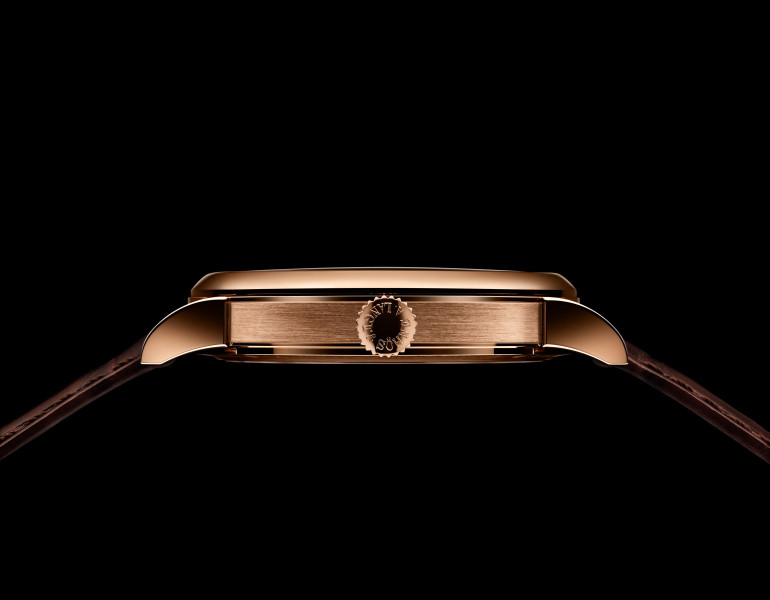
The dial expresses this philosophy with unmistakable Lange codes. A railway‑track minute scale, Arabic numerals and a recessed central segment recall historic pocket watches, yet the colour palette introduces a contemporary tension. Both the pink‑gold and white‑gold editions feature a blue main dial whose matte depth contrasts with argenté‑coloured subsidiary dials for the power‑reserve display and the small seconds. Blued hands on the auxiliary indications reinforce legibility, while the lancet‑shaped hour and minute hands echo the case metal. The proportions are deliberately modest: a 37.5‑millimetre diameter and a height of 8.7 millimetres give the watch a poised, almost pocket‑watch‑like presence on the wrist. The white‑gold version is paired with a blue alligator strap, whereas the pink‑gold model adopts a reddish‑brown tone that complements the warmth of the case.
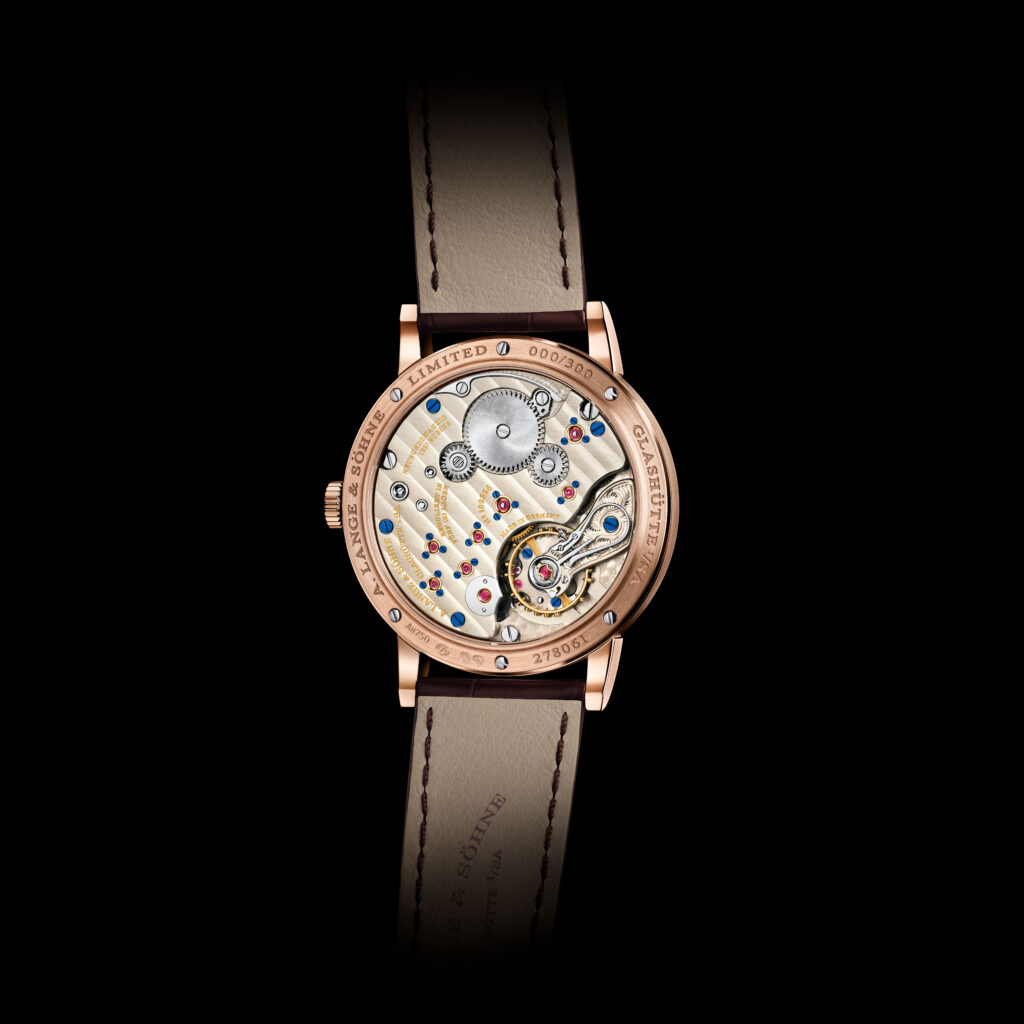
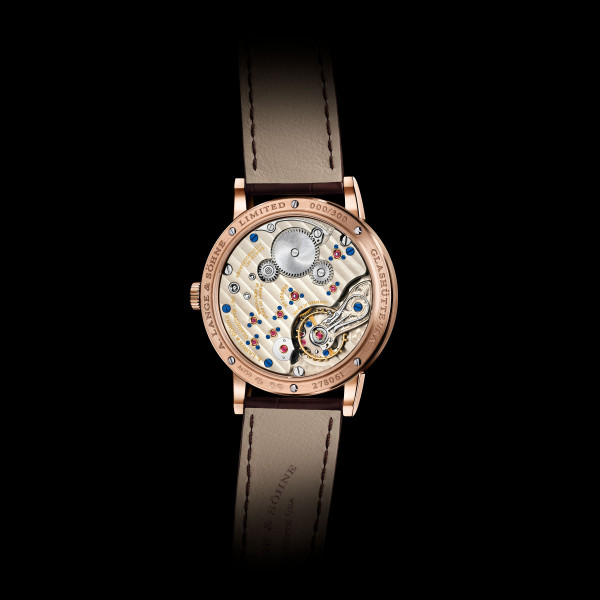
Turning the watch over reveals the calibre L051.2, a movement that embodies the artisanal vocabulary Lange has refined for decades. The untreated German‑silver three‑quarter plate, the solarised winding wheels and the seven gold chatons secured by blued screws all speak to the brand’s commitment to traditional construction. Beneath the hand‑engraved balance cock, a classic screw balance and an indexless oscillation system work in concert with an in‑house Lange balance spring to deliver stable rate performance. The movement’s 72‑hour power reserve is not merely a specification but a narrative element, made visible through the UP/DOWN display that has been integrated directly into the calibre rather than appended to it. This integration underscores the Maison’s insistence on mechanical coherence — every component must belong, both technically and aesthetically.
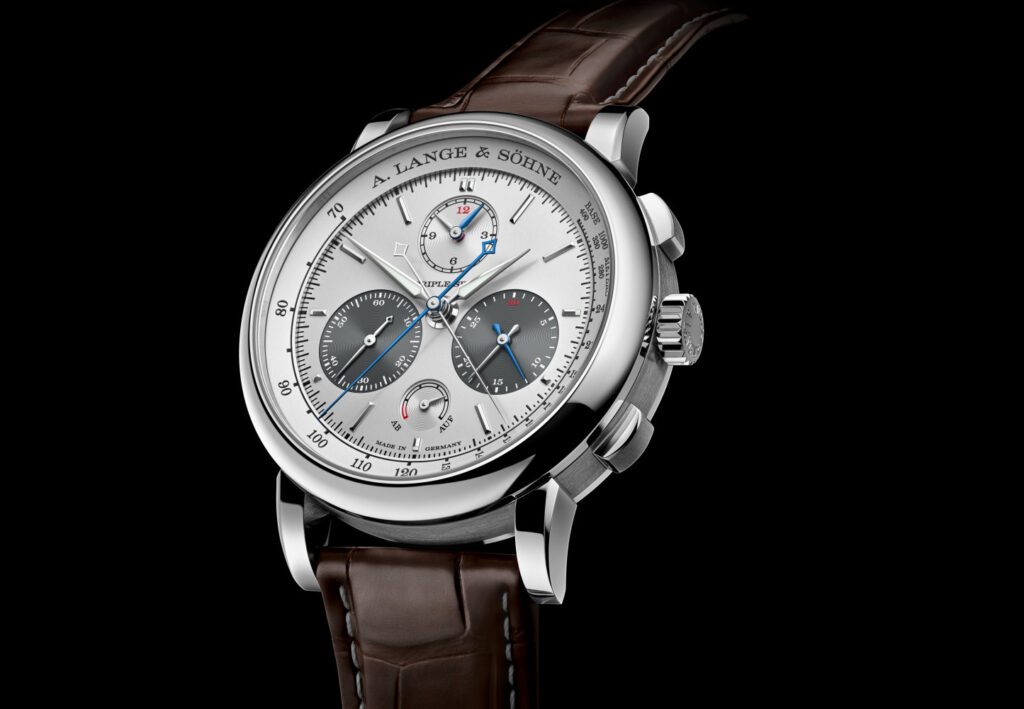
The TRIPLE SPLIT has always occupied a singular position in contemporary chronograph making, not because it is complicated — many watches are — but because its complication expands the very definition of what a mechanical chronograph can do. Since 2018, it has remained the only wristwatch capable of splitting seconds, minutes and hours, allowing comparative and intermediate measurements over a full twelve‑hour span. The new edition, limited to 100 pieces and housed in 950 platinum, continues this trajectory with a refined aesthetic: a rhodié‑coloured dial paired with darker grey auxiliary dials, a palette that underscores the watch’s technical gravitas while introducing a subtle, modern restraint. It is a chronograph conceived not merely to measure time, but to explore its layers.
The heart of the TRIPLE SPLIT lies in its extension of the rattrapante function beyond the seconds hand. By adding split‑minute and split‑hour hands, the watch opens up timing possibilities that far exceed the traditional sixty‑second window of a classic rattrapante. It can track multiple runners in a marathon, record sectional times during a vintage‑car rally, or establish total elapsed time while isolating pauses and breaks — all without interrupting the primary measurement. The flyback function adds further immediacy: a single press of the pusher at 4 o’clock halts the running chronograph, resets all hands to zero and restarts the timing sequence the moment the pusher is released. This choreography of stopping, freezing, catching up and restarting is governed by a mechanical logic that remains unmatched in its scope.
Understanding how the TRIPLE SPLIT works reveals the depth of its engineering. In passive mode, the three blued rattrapante hands rest invisibly atop their rhodiumed chronograph counterparts. Once activated, all six hands move in perfect synchrony until the rattrapante pusher at 10 o’clock is pressed, freezing the blued hands to display an intermediate time. The chronograph hands continue running, and a second press reunites the two sets, allowing them to proceed together. This mechanism demands absolute precision: each hand pair must respond instantly and independently, yet remain mechanically linked. The disengagement system patented by Lange in 2005 ensures that friction losses — inevitable when stopping rattrapante hands or advancing minute counters — do not compromise rate stability. By selectively uncoupling friction‑intensive arbors, the movement preserves consistent power delivery to the oscillation system, a necessity in a chronograph of this complexity.
The dial reflects this architecture with clarity and hierarchy. The central sweep seconds and rattrapante seconds dominate the composition, while the precisely jumping minute counter at 4 o’clock advances in crisp one‑minute increments. The hour counter at 12 o’clock is slightly smaller, balanced by the Lange‑typical UP/DOWN indicator at 6 o’clock, which tracks the remaining portion of the 55‑hour power reserve. The subsidiary seconds at 8 o’clock and the peripheral tachymeter scale complete the functional layout. In this platinum edition, the rhodié dial and grey subdials create a cool, technical harmony, punctuated by blued rattrapante hands, luminous hour and minute hands, and discreet red accents marking the chronograph’s operative zones.
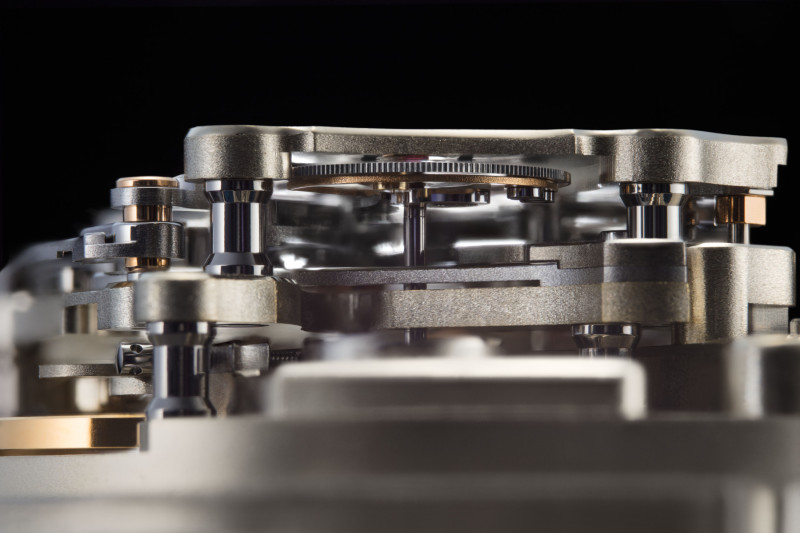
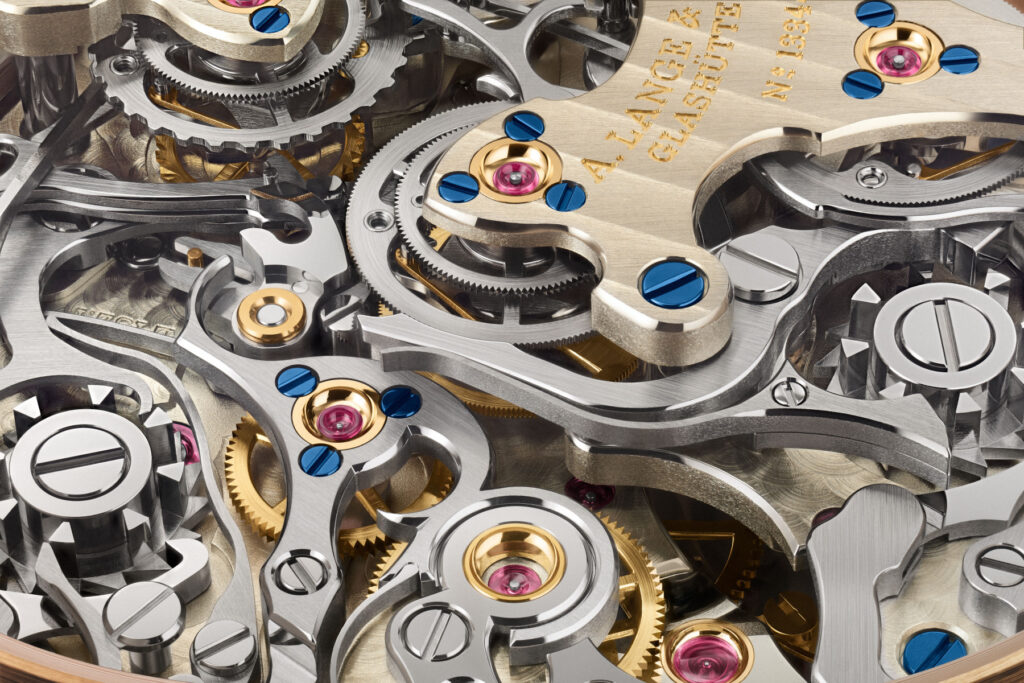
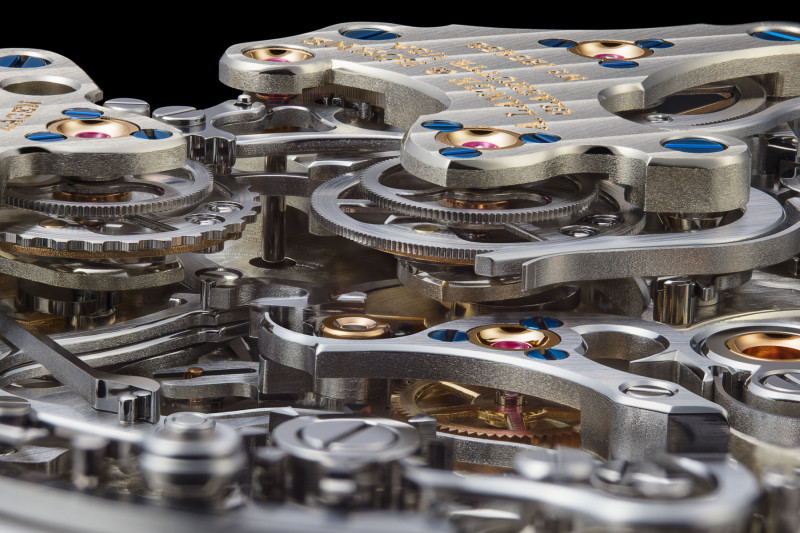
The case, at 43.2 millimetres in diameter and 15.6 millimetres in height, conveys purposeful solidity without excess. Its cool‑toned platinum pairs naturally with the dark‑brown alligator strap and matching platinum deployant buckle. Yet the true theatre unfolds beneath the sapphire‑crystal caseback, where the manufacture calibre L132.1 reveals its architectural depth. Comprising 567 components, the movement is a landscape of levers, springs, clutches and jumpers, each finished to Lange’s uncompromising standards. Straight‑grained surfaces, polished chamfers, acute internal angles, gold screwed chatons and untreated German‑silver bridges with Glashütte ribbing form a visual counterpoint to the mechanical intricacy. The hand‑engraved balance cock, a signature of the Maison, anchors the ensemble with a human touch — the mark of the watchmaker who brought the mechanism to life.
The TRIPLE SPLIT remains, as Anthony de Haas notes, in a league of its own. Its triple rattrapante mechanism is not an embellishment but a statement of intent: a demonstration that chronograph construction can still advance, still surprise, still challenge the limits of what is mechanically possible. Integrating such a mechanism into a movement height that preserves wearability required both ingenuity and discipline, qualities that define Lange’s approach to chronographs.
Both watches are to be presented at the Concours of Elegance at Hampton Court Palace, an event there watchmaking has become an increasingly prominent presence. The event’s ethos — celebrating objects created through exceptional craftsmanship, engineering rigour and artistic intention — aligns naturally with haute horlogerie, where similar values shape every calibre and case. Within this context, watchmaking enriches the atmosphere of the Concours, offering attendees a chance to engage with contemporary horological innovation while surrounded by some of the most significant cars ever built — a dialogue between two disciplines that honour time, heritage and the pursuit of excellence.
Share this article
LEAVE A COMMENT
You must be logged in to post a comment.