


Why I Miss Art Deco. A Look at Ladies’ Watches from a Man’s Perspective


There’s something inexplicably magical about these timepieces that modern watches, especially those powered by quartz movements, simply cannot replicate. For decades, ladies’ watches have sacrificed the beauty and soul of these Art Deco marvels in favour of slimmer profiles and battery-powered convenience, abandoning the fusion of mechanical ingenuity and artistic expression that defined an era.
Perhaps no watchmaker has managed to maintain this delicate balance between technical innovation and Art Deco elegance quite as well as Jaeger-LeCoultre.
Its journey through the Art Deco period has left an indelible mark on the history of watchmaking, creating pieces that transcend their utilitarian purpose to become genuine works of art. So I delved into the Maison’s creations to determine whether my assumptions were justified or whether I was looking in the wrong direction.
The Dawn of Women’s Timepieces
Before the 20th century, wristwatches were not commonly worn by women. The early 1900s saw a gradual shift, with women’s timepieces becoming more of a decorative accessory than a practical timekeeper. It was during the 1920s and 1930s that women’s watches truly flourished, often crafted to resemble fine jewellery, with subtle, elegant designs.
These timepieces reflected a unique social dynamic: the unobtrusiveness of the watch dials allowed women to project an image of timelessness, suggesting that they were not bound by temporal constraints, while actually providing them with a discreet tool to assert their place in an increasingly time-conscious world. This paradox perfectly encapsulated the complex relationship between women and their evolving social roles during this transformative period.
Since its founding in 1833, Jaeger-LeCoultre has demonstrated a commitment to creating watches for both men and women, driven by an innovative spirit regardless of the intended wearer. This forward-thinking approach positioned the manufacture perfectly to revolutionise women’s watches as the Art Deco movement gained momentum.


The Revolutionary Duoplan
The quest for miniaturisation in watchmaking has long posed a significant challenge: smaller components typically meant sacrificing reliability and precision. This fundamental compromise seemed inevitable until Jaeger-LeCoultre came up with a revolutionary solution.
In 1925, the manufacture unveiled the Duoplan calibre, featuring an ingenious two-level architecture that would change watchmaking forever. The lower level accommodated the barrel and most of the gear train, while the upper level housed the escapement. This brilliant innovation effectively doubled the available space within the movement, bringing unprecedented reliability to miniature watchmaking.
The Duoplan family eventually comprised four distinct sizes, measuring 6, 7, 9 and 11 lignes on the longer side of the rectangular movement. These became known as calibres 101, 104, 403, and 409 respectively. Beyond the architectural innovation, the Duoplan watches also introduced the early use of sapphire crystals, stainless steel cases, and what were then considered ‘high-beat’ escapements, operating at up to 21,600 vibrations per hour (3Hz).
The geometric, sleek design of the Duoplan watches perfectly embraced the Art Deco aesthetic that defined the era. With their rectangular cases, concealed crowns, and symmetrical proportions, these timepieces embodied the modernist spirit of the Roaring Twenties.
The Pinnacle of Miniaturisation: Calibre 101
Building upon the revolutionary foundation of the Duoplan, Jaeger-LeCoultre introduced the Calibre 101 in 1929 – an achievement that remains unparalleled in the history of watchmaking. This advanced iteration of the Duoplan design represents the pinnacle of miniaturisation, and holds the distinction of being the smallest mechanical movement in the world.
The scale of this achievement is difficult to overstate. Measuring just 14mm by 4.8mm, and 3.4mm thick, the Calibre 101 occupies a volume of merely 0.2cm³ and weighs barely one gram. Despite its diminutive size, with components comparable to the tip of a pencil, this mechanical marvel comprises 98 hand-assembled components and offers a power reserve of 33 hours. Such extreme miniaturisation requires exceptional skill, and only a handful of watchmakers at the Jaeger-LeCoultre manufacture have ever mastered the painstaking assembly of these microscopic movements. Each Calibre 101 requires approximately 40 hours of meticulous hand assembly, with each component custom-manufactured and individually adjusted. This makes each movement essentially unique, with only a few dozen pieces produced annually.
What’s particularly remarkable about the Calibre 101 is its longevity. Now in its fifth generation and approaching its centenary, it remains in continuous production, making it perhaps the longest-serving watch movement in horological history.
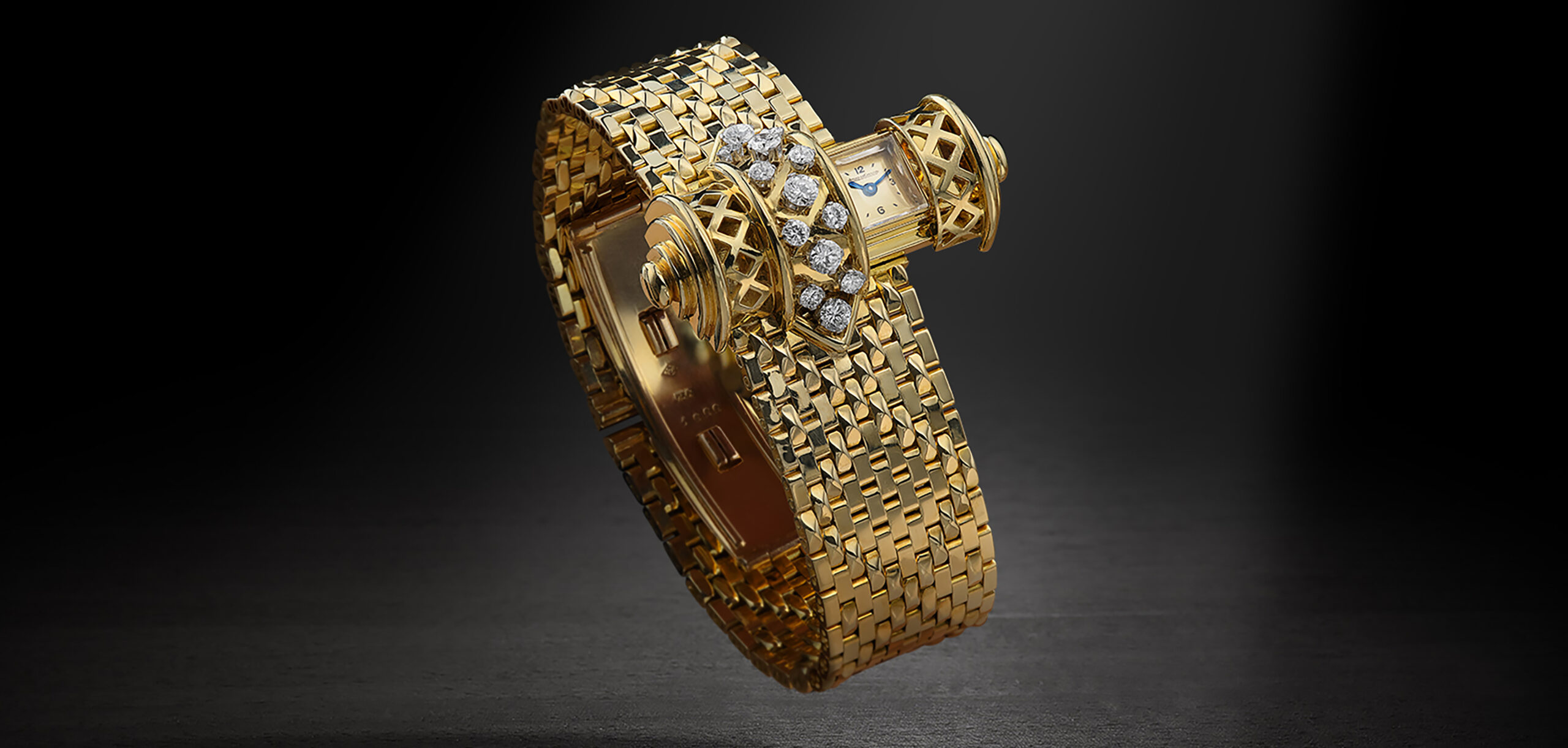
The exploration of Art Deco principles reached its zenith in Jaeger-LeCoultre’s high jewellery creations, where the Calibre 101 found its most spectacular expression. These pieces transformed timekeeping from a practical matter into an artistic statement, demonstrating the perfect combination of mechanical ingenuity and the jeweller’s craft.
One of the most notable examples was the watch worn by Queen Elizabeth II, a gift from the French President on the occasion of her coronation in 1953, highlighting the prestige these timepieces held even among royalty.
Technical Wizardry with 101 Secrets and Bangles
The latest addition to the Calibre 101 family, introduced in 2024, is the 101 Secrets in platinum. This extraordinary creation represents the pinnacle of both technical and artistic achievement, featuring 1,028 brilliant-cut diamonds with a total weight of 26.21 carats.
The assembly of such a piece begins with hundreds of hours of research, involving 15 distinct areas of expertise. Traditional techniques are combined with cutting-edge technologies, and CAD and 3D printing specialists develop prototypes after extensive consultations with designers, watchmakers, and craftspeople.
The development of the secret mechanisms is particularly challenging. The system that reveals the dial must be tiny enough to remain completely hidden within the rows of diamonds, its position known only to the wearer. When activated, a small section of the bracelet opens to reveal the time; once released, the dial disappears back into the flow of diamonds.
The platinum version of the 101 Secrets presents additional challenges, as platinum is twice as hard as gold and therefore much more difficult to craft and set with gemstones. However, the whiteness of the platinum enhances the brilliance of the diamonds, creating a scintillating effect as light catches the watch from all angles.
The 101 Bangle, first introduced in 2020 and expanded with new variations in 2023, offers another exquisite interpretation of Art Deco principles. Its design draws inspiration from the sweeping curves and bold lines characteristic of both Art Deco and 20th-century Modernism. The flexible bracelet requires no clasp to secure it on the wrist; instead, an ingenious hidden mechanism allows it to be opened and closed in one simple movement.
Art Deco Splendour: The Reverso
While the Duoplan and the Calibre 101 represented significant technical advancements, another Jaeger‑LeCoultre creation was about to become the epitome of Art Deco watchmaking – the Reverso.
Introduced in 1931 at the height of the Art Deco movement, the Reverso was originally conceived as a practical solution for polo players who needed to protect their watch crystals during matches. Its ingenious swivelling case, which allowed the dial to be flipped inwards, was protected by a patent in the same year (CH 159982).
Though originally designed for gentlemen athletes, the Reverso, with its elegant rectangular case, clean geometric lines, and distinctive horizontal gadroons, immediately captivated women as well. In fact, feminine versions of the Reverso began to appear even before the model’s first anniversary. These early versions could be worn on cordonnet bracelets or transformed into brooches, handbag clips, or pendants.
What makes the Reverso particularly fascinating is that its design was governed by the Golden Ratio – the mathematical relationship (approximately 1.618:1) long regarded as a universal signifier of beauty and harmony. This adherence to classical proportions, combined with the geometric purity of Art Deco, created a timeless aesthetic that has remained largely unchanged for over nine decades.
Modern Masterpieces: Reverso One
The Reverso’s distinctive Art Deco character has been reinterpreted many times throughout its history, always remaining faithful to its essential design codes. Among the most striking contemporary interpretations is the Reverso One collection – a bold, feminine expression of the original Art Deco spirit.
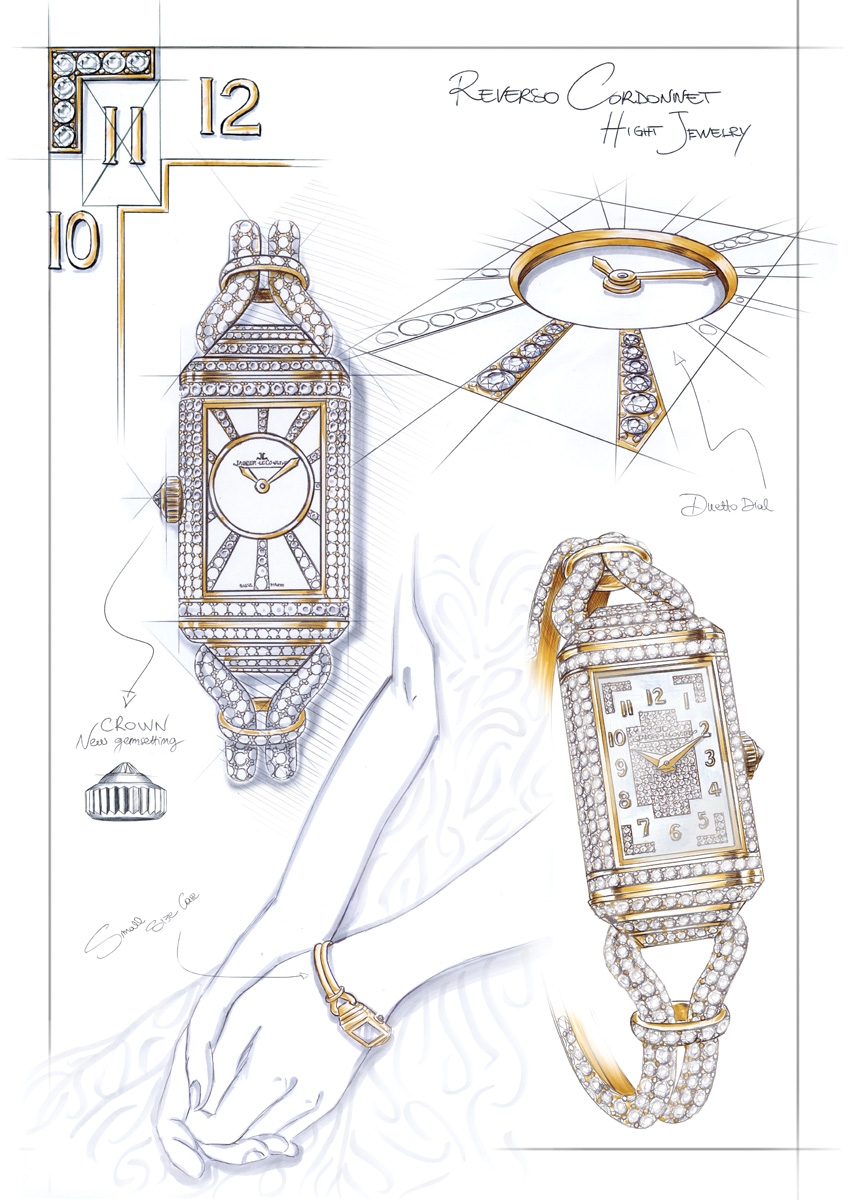
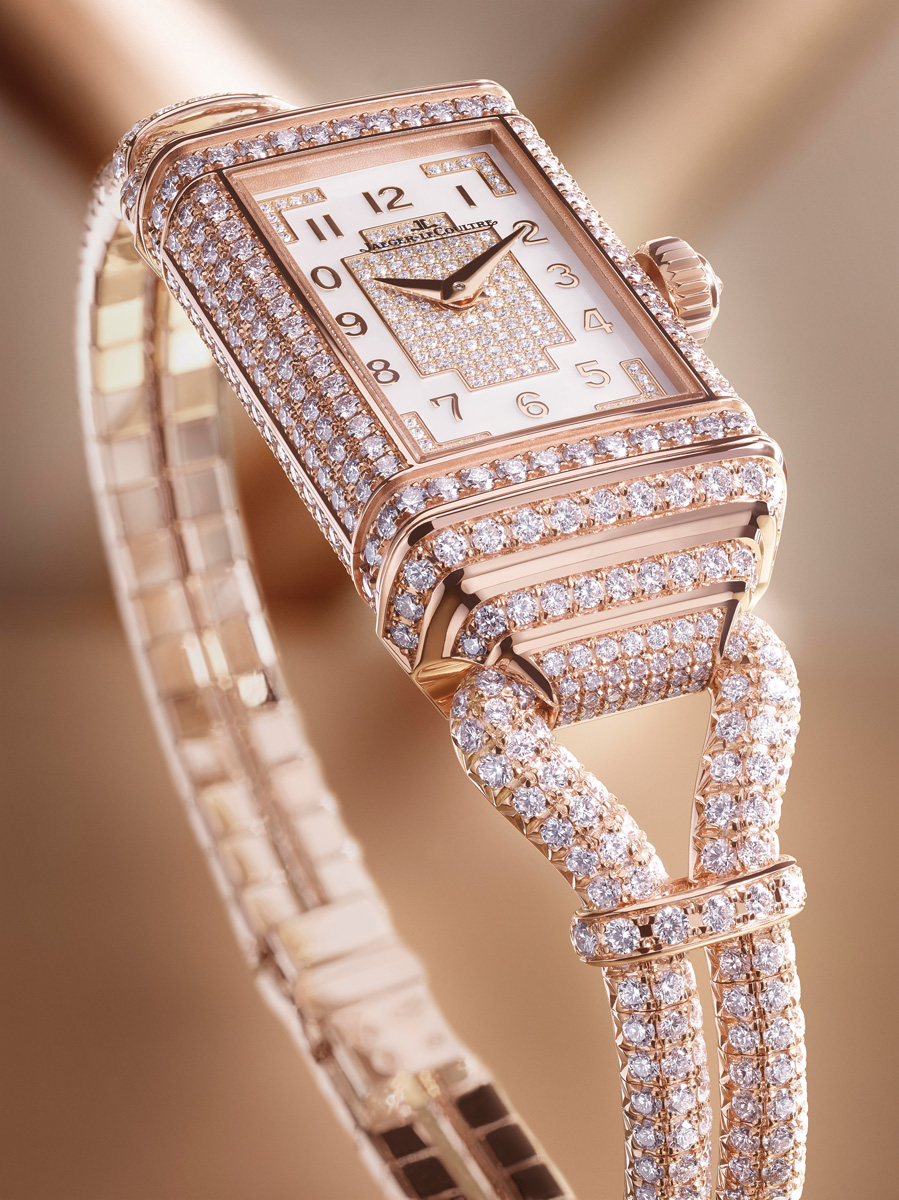
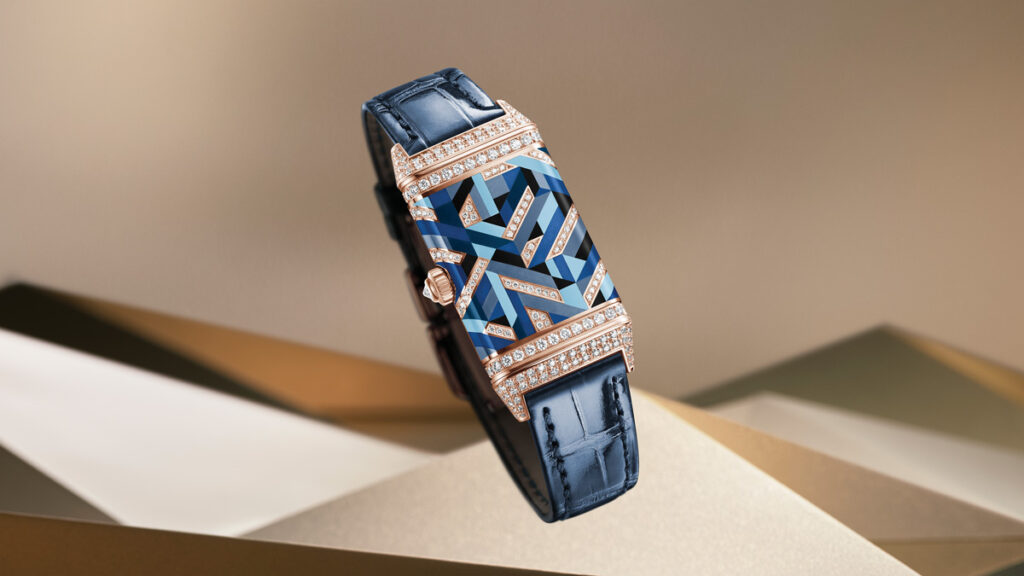
The Reverso One Duetto Jewellery is entirely in the spirit of Art Deco: it has elongated lines that lend a very feminine aesthetic to both the rectangular dial and the lozenge motif adorning the reverse face, as well as the links of the 18-carat pink gold bracelet. Launched in 2017, this watch is, unfortunately, no longer available.
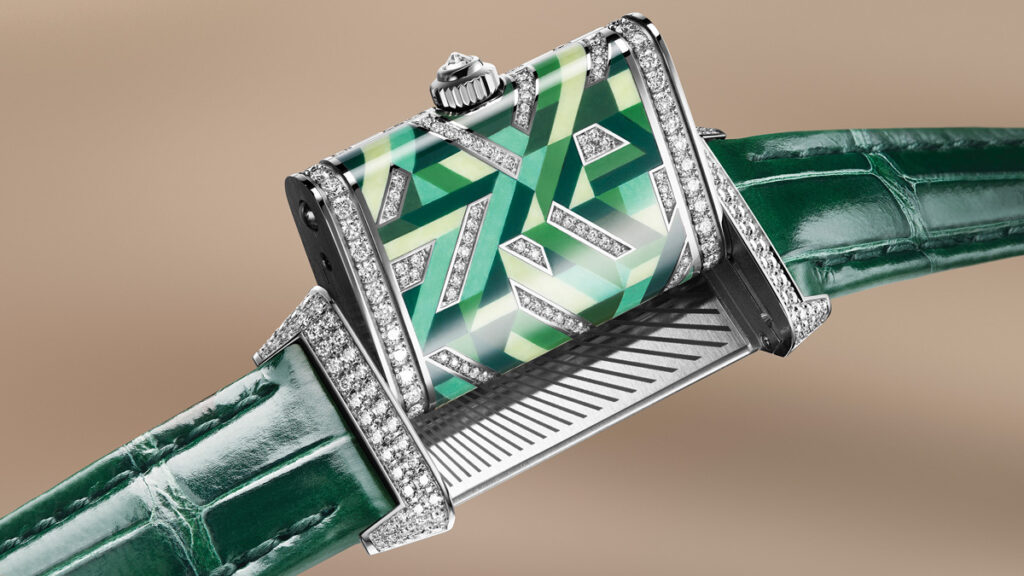
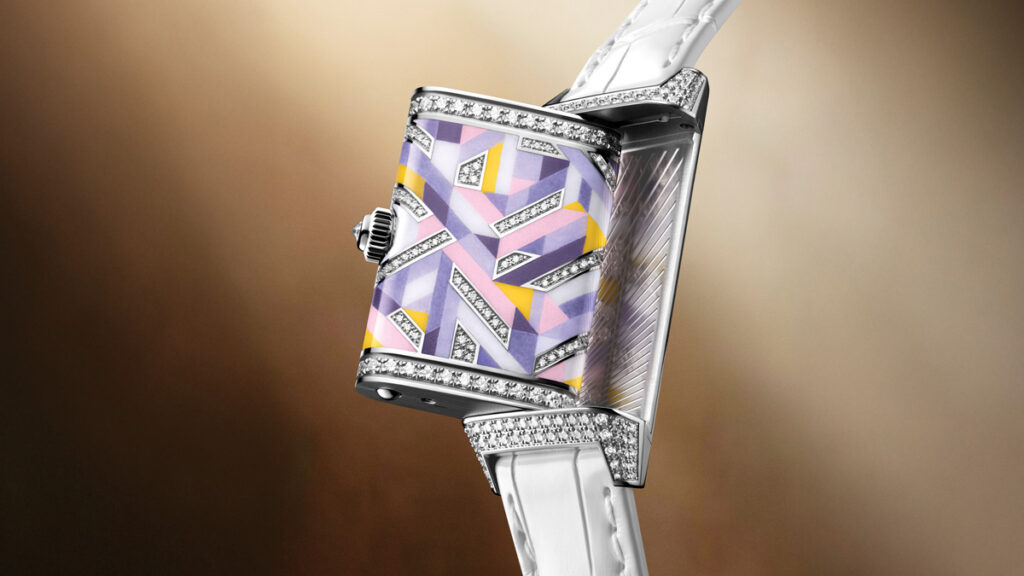
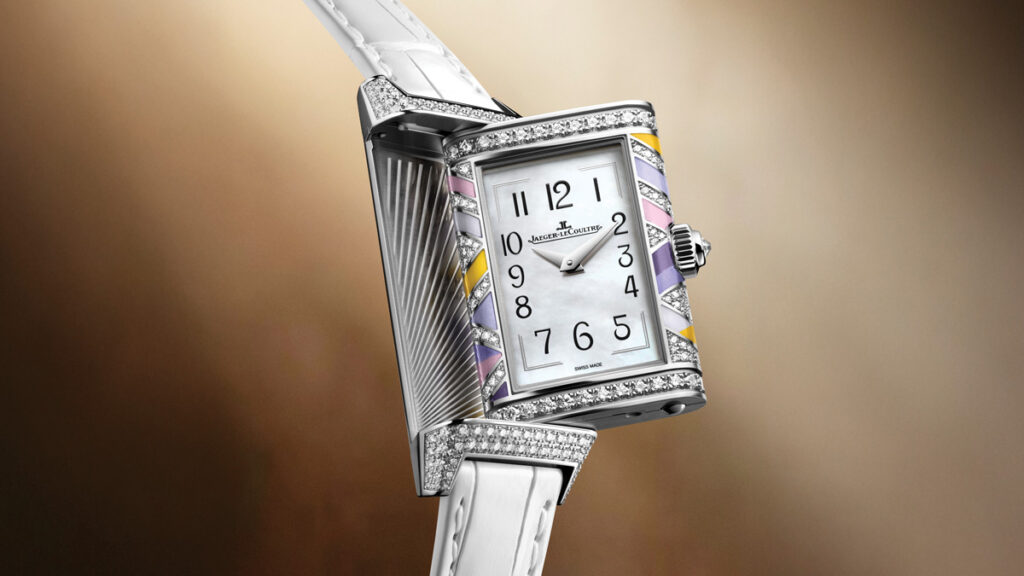
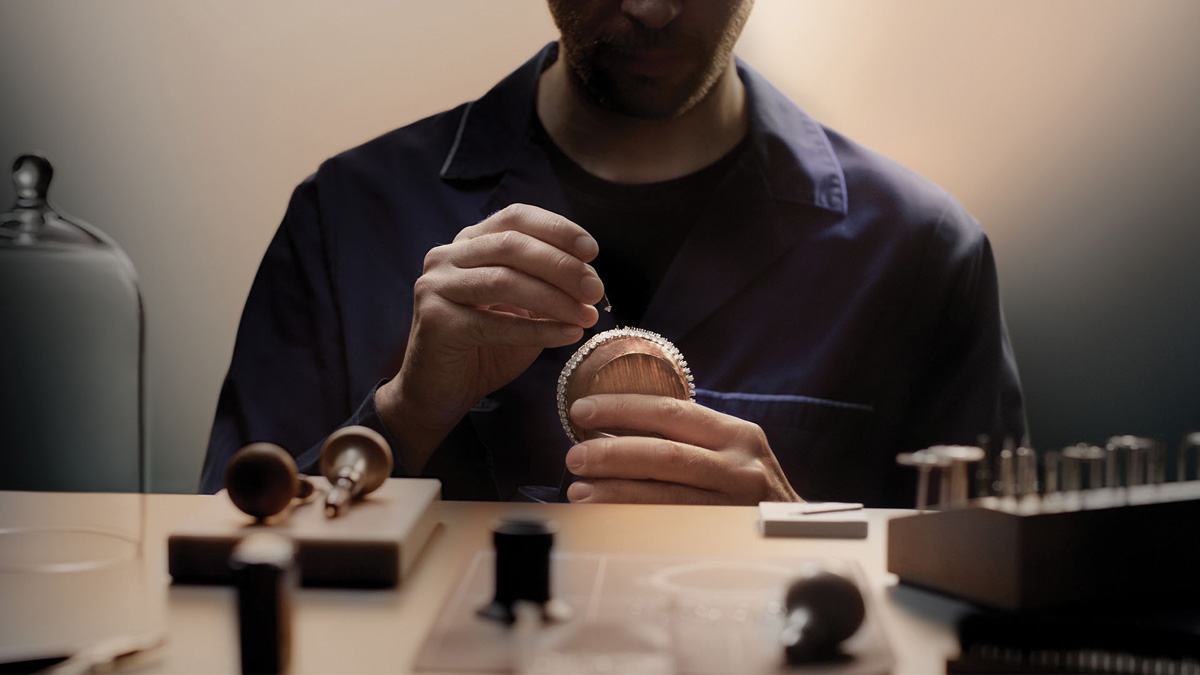
The Reverso One Precious Colours exemplifies this approach, with its lavishly decorated case paying homage to the Art Deco style. The entire caseback and sides are covered with a dazzling geometric motif, executed in miniature-painted grand feu enamel with diamond accents, creating an optical illusion of depth and movement. Creating this kind of decoration requires absolute mastery of multiple crafts. The enamelling process alone involves up to 15 firings at 800 degrees Celsius, with the enameller carefully hand-painting each geometric shape with a very fine-tipped brush. After enamelling, the case is passed to the gem-setter, who must work with exceptional precision to set each diamond without disturbing the finished enamel. The entire process represents approximately 140 hours of meticulous handwork.
The 2025 addition to the Precious Colours collection presents a palette of pastel shades in tones of grey, mauve and pink, with some subtle touches of yellow. These last two colours are the least predictable when subjected to the high temperatures required for the grand feu enamelling process, making this watch not only a magnificent example of Jaeger-LeCoultre’s mastery of the decorative crafts, but also my personal favourite variant.
Another extraordinary example is the Reverso One Cordonnet Jewellery, which reinterprets a design first seen in 1933. Its simple black cord, the ‘little black dress’ of watch bracelets, which epitomised the refined elegance of the Art Deco period, has been transformed into a supple braid of gold and diamonds. This remarkable timepiece features the ingenious Duetto system, with two different dials set back-to-back, allowing the watch to be reversed to reveal a jewelled face for evening wear.
The Reverso Secret Necklace is the perfect expression of timeless elegance, transforming the design icon into a graceful and exquisitely feminine sautoir (or long necklace). The cordonnet (a fine or small cord) has been reinterpreted as a supple chain of intricate diamond-set links and polished onyx beads, from which a richly gem-set Reverso dial is suspended. Two pendants featuring polished onyx charms add a final touch of refinement to this elegant new way of wearing the time.
A Legacy of Artistry
What distinguishes Jaeger-LeCoultre’s approach to Art Deco watchmaking is the harmonious integration of technical innovation and artistic expression. Unlike many manufacturers who separate these disciplines, La Grande Maison brings all crafts together under one roof at its manufacture in Le Sentier.
The Métiers Rares® (Rare Handcrafts™) atelier is home to extraordinary craftspeople, watchmakers, jewellers, enamellers, engravers, and gem-setters, who work in close collaboration, exchanging ideas and sharing creative energy. This integration ensures that technical considerations inform artistic decisions and vice versa, resulting in timepieces where form and function achieve perfect balance. This commitment to integrated craftsmanship mirrors the Art Deco philosophy itself, a movement characterised by the unity of art and industry, where function informed aesthetics, and beauty emerged from utility rather than ornamentation for ornamentation’s sake.
The Enduring Appeal of Art Deco Timepieces
Nearly a century after Art Deco reached its zenith, Jaeger-LeCoultre continues to draw inspiration from this influential aesthetic movement. The clean geometry, bold symmetry, and harmonious proportions that defined the era remain as captivating today as they were in the 1920s and 1930s.
What makes these timepieces truly special is their mechanical heart. Unlike quartz watches, which sacrifice soul for convenience, these exquisite creations contain living mechanisms – tiny universes of gears, springs, and wheels working in perfect harmony. With its 98 components occupying less space than a thumbnail, the Calibre 101 represents not just technical achievement but also philosophical depth – a reminder that complexity and beauty can coexist even in the smallest of spaces. For women who appreciate horology in its most technical, precious, and spectacular form, these Art Deco-inspired timepieces offer something beyond mere timekeeping or adornment. They represent the perfect synthesis of engineering with artistry, precision with beauty, and tradition with innovation.
My grandmother’s watch may have been modest compared to these high-jewellery masterpieces, but it embodied the same spirit: the union of mechanical excellence and artistic expression that defined an era. As contemporary watchmaking increasingly rediscovers the value of this approach, Jaeger-LeCoultre’s Art Deco legacy reminds us that true luxury is not just about precious materials or technical specifications, but about the poetry of time itself, captured in miniature mechanical marvels that dance on the wrist.
I must conclude my journey with an utterly satisfying conclusion: the current state of affairs reveals an entire panoply of shapes and forms that follow the desired state of mind initiated by the Roaring Twenties and kept alive by that watchmaker of watchmakers – Jaeger-LeCoultre.
Share this article


LEAVE A COMMENT
You must be logged in to post a comment.