

Van Cleef & Arpels at the fine art and antique fair, TEFAF 2026


Since 2013, Van Cleef & Arpels has been a regular exhibitor at TEFAF Maastricht (The European Fine Art Foundation), one of the most influential fairs in the global art market. Each year, this prestigious event draws collectors, art enthusiasts, and major public and private institutions from around the world. From March 14 to 19, leading international galleries presented masterpieces across a wide range of artistic disciplines—from renowned paintings to exceptional antiques.
Alongside these works, the Maison is showcasing around 40 historical pieces from its Heritage collection, illustrating its contribution to 20th‑century decorative arts. This curated selection, available for purchase, highlights two of Van Cleef & Arpels’ defining strengths: transformable design and gemological mastery.
Created in 2007, the Heritage collection brings together vintage creations crafted by the Maison between the 1920s and the 1990s, all intended for sale. Today, it includes roughly 150 pieces spanning Jewelry, High Jewelry, and precious objects. It differs from the patrimonial Collection, which consists of pieces owned by the Maison and reserved for exhibitions worldwide.
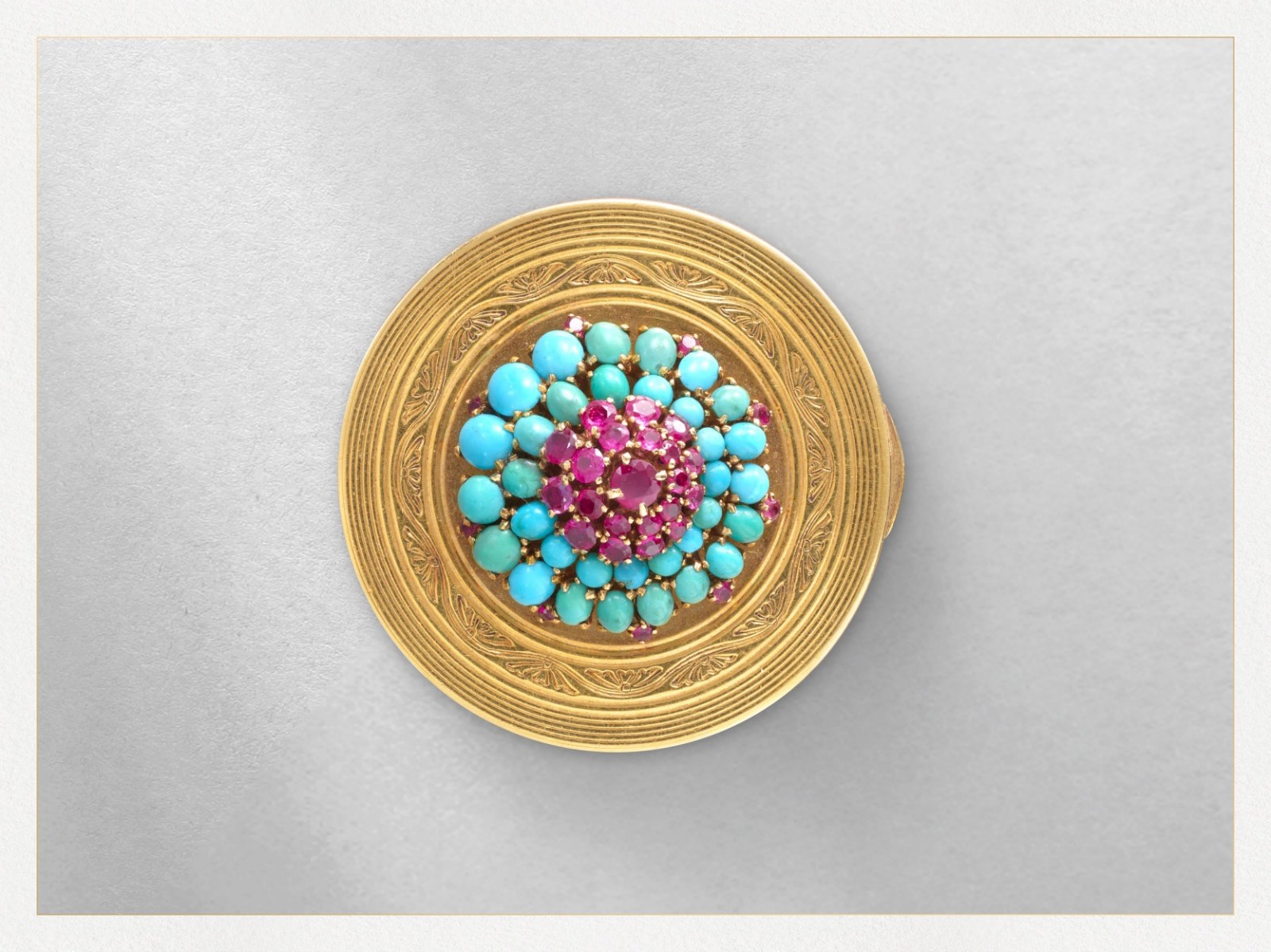
Box, 1944 — Yellow gold, turquoises, rubies
Van Cleef & Arpels has long been known for designing precious objects that elevate everyday life. The Maison emphasized practicality through its beauty compacts, which were created to hold various personal items. This 1944 box continues that tradition while reflecting the aesthetic of its era. With platinum reserved for wartime needs, yellow gold regained prominence, as seen here. The engraved metal recalls 18th‑century pill and snuff boxes. A ruby heart framed by two rows of turquoise showcases the Maison’s love of bold color pairings. The halo motif echoes the goldwork, adding depth and richness to the design.
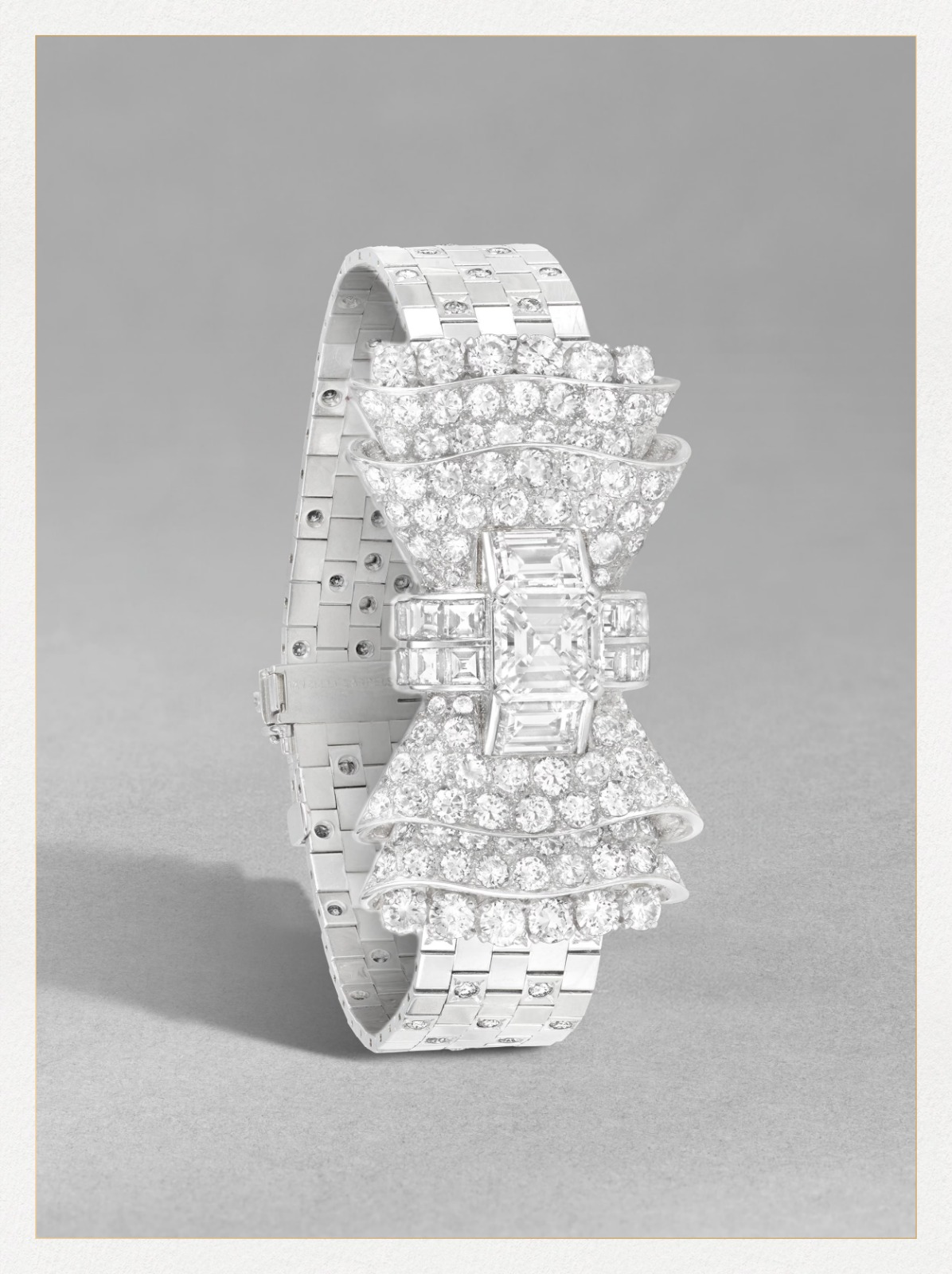
Bracelet, 1947 — Platinum, diamonds
This platinum and diamond bracelet reflects the signature style of the Ludo designs introduced in 1934, which evoke a jeweled belt blending Art Deco geometry with couture influences. Its supple briquette weave—composed of meticulously assembled square links—demonstrates the Maison’s technical finesse. The central bow motif, crafted from diamonds of various cuts, recalls Van Cleef & Arpels’ long‑standing desire to recreate the fluidity of fabric in precious materials. The interplay of volume and delicacy, along with the resurgence of white jewelry in the late 1940s, defines this elegant piece.
Aigrette clip, 1955 — Platinum, osmior, diamonds
Nature has always been a central source of inspiration for Van Cleef & Arpels. This clip resembles a stylized bouquet, crafted in platinum and osmior—an alloy patented by the Maison in 1932. The spiraling structure features baguette‑cut diamonds that evoke leaves swaying in the wind, while brilliant‑cut diamonds glimmer like dewdrops. This contrast of shapes and textures is characteristic of 1950s white jewelry and brings the piece to life.
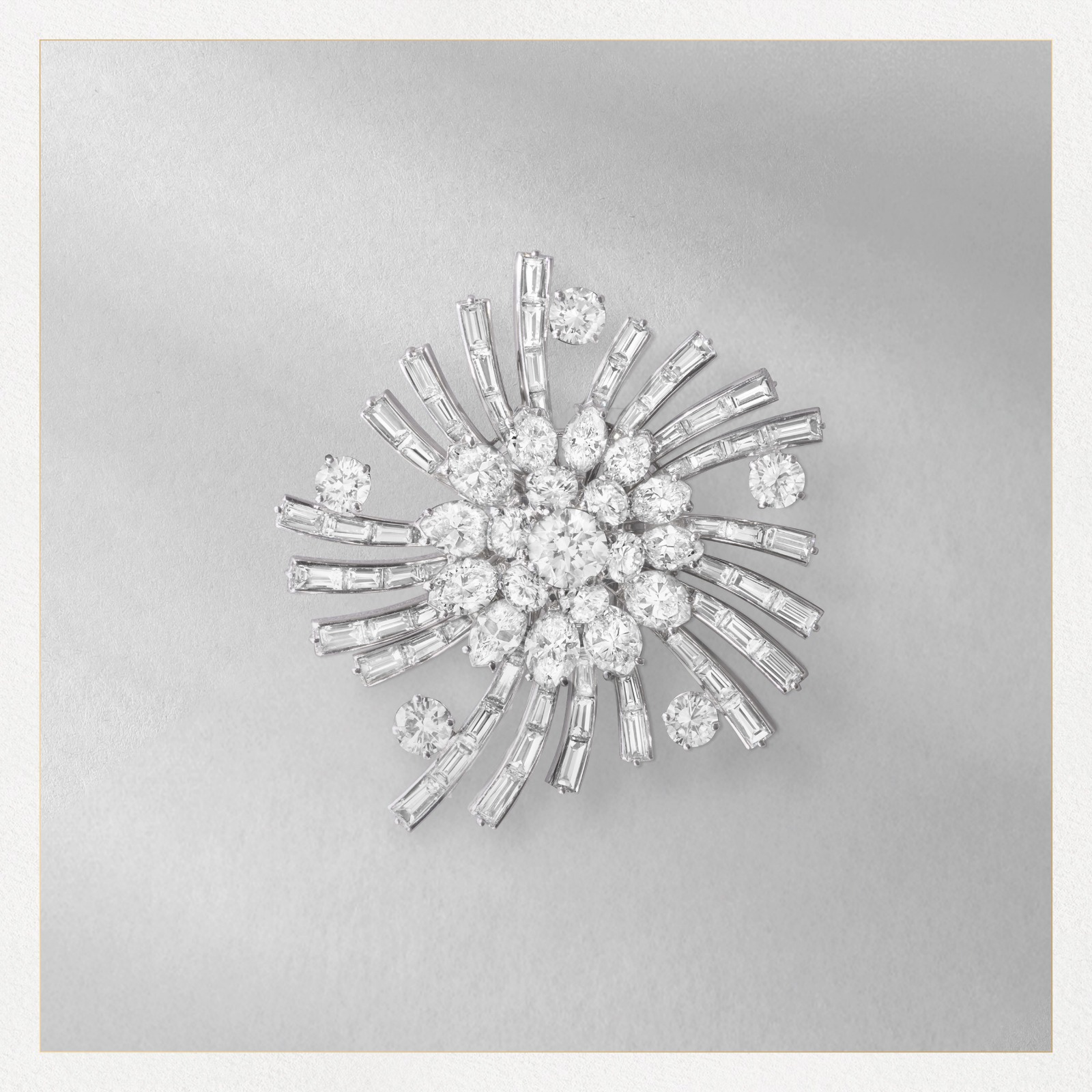
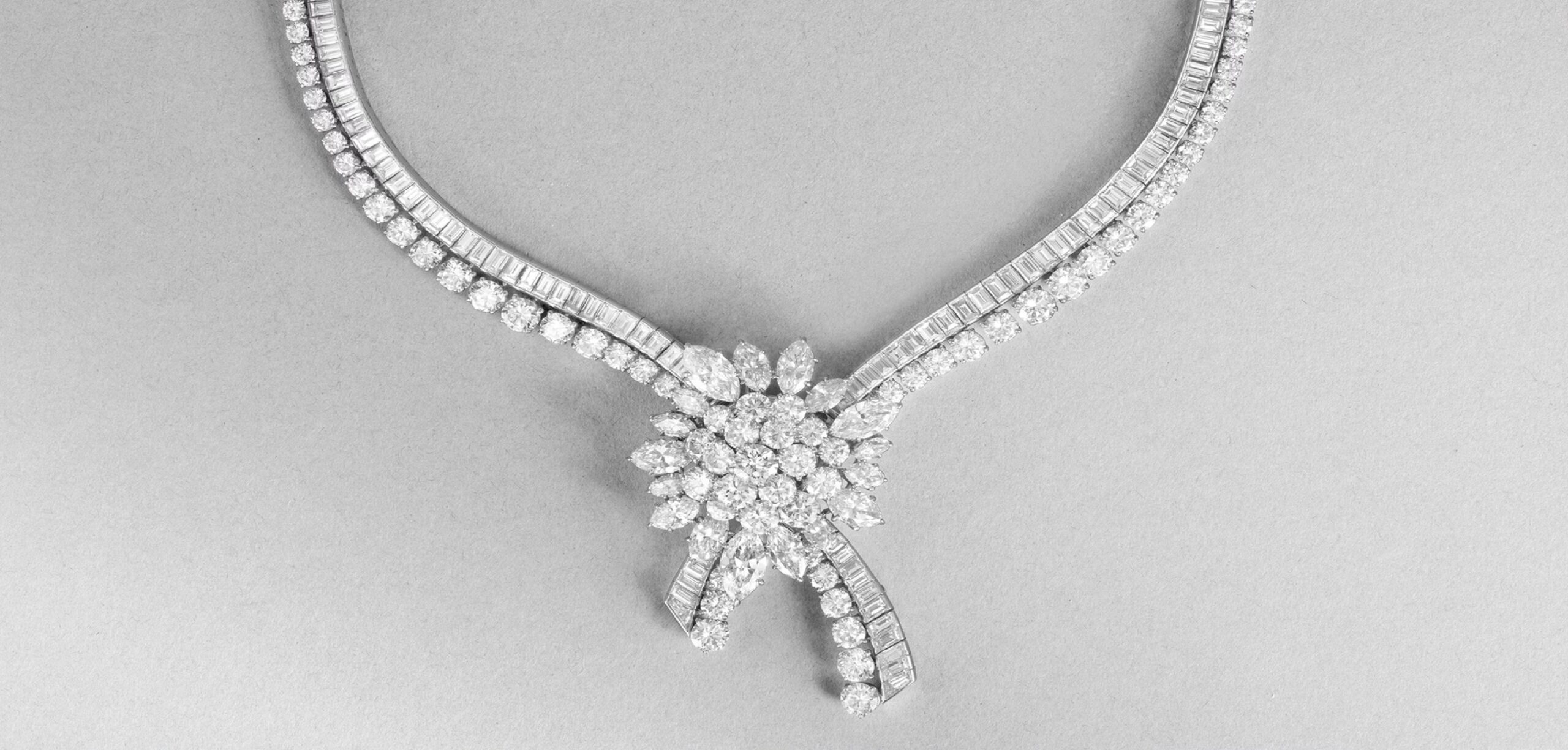
Stalactite necklace with detachable clip, 1963 — Platinum, diamonds (cover photo)
Transformability is one of the Maison’s hallmark techniques, and this 1963 necklace exemplifies it. The pendant can be removed, worn separately as a clip, or paired with two additional ribbon‑shaped elements that complete the lower section. Two rows of diamonds—one baguette‑cut, the other brilliant‑cut—create a sleek structure that contrasts with the dramatic central motif. The arrangement of stones suggests frost‑touched petals, echoing the Maison’s enduring fascination with nature. The detachable ribbon elements also reference couture, a theme central to Van Cleef & Arpels since the 1920s. This piece is a quintessential example of 1960s evening High Jewelry, combining versatility with rich artistic influences.
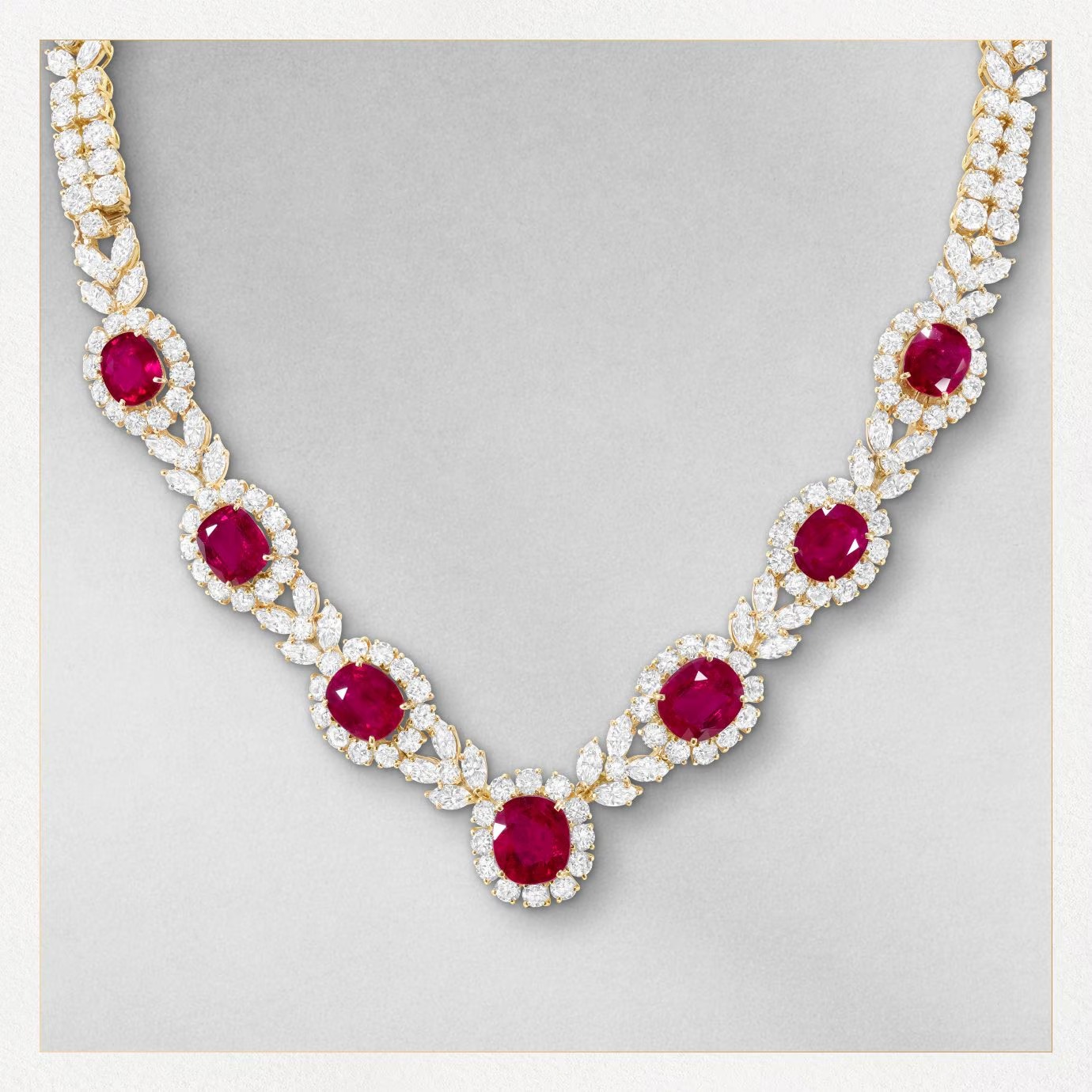
Bracelet, 1974 — Yellow gold, rubies, diamonds
The 1970s and 1980s marked a return to bold, colorful jewelry. These two pieces reflect that trend while demonstrating Van Cleef & Arpels’ continued engagement with historical styles. Both feature ruby‑and‑diamond centerpieces inspired by the 18th‑century “daisy” motif—a colored central stone encircled by diamonds. This design underscores the timeless appeal of floral themes in jewelry and their importance within the Maison’s creative heritage.
Share this article
LEAVE A COMMENT
You must be logged in to post a comment.