


The World’s First Practical Waterproof Wristwatch goes to auction


Sotheby’s Important Watches Live Sale in Geneva on November 9 will feature this historic timepiece, with an estimate exceeding one million Swiss francs (approximately 1.3 million USD). Having braved more than ten hours in the icy English Channel and emerged unscathed, the watch now embodies Rolex’s groundbreaking waterproof innovation and Gleitze’s pioneering spirit.
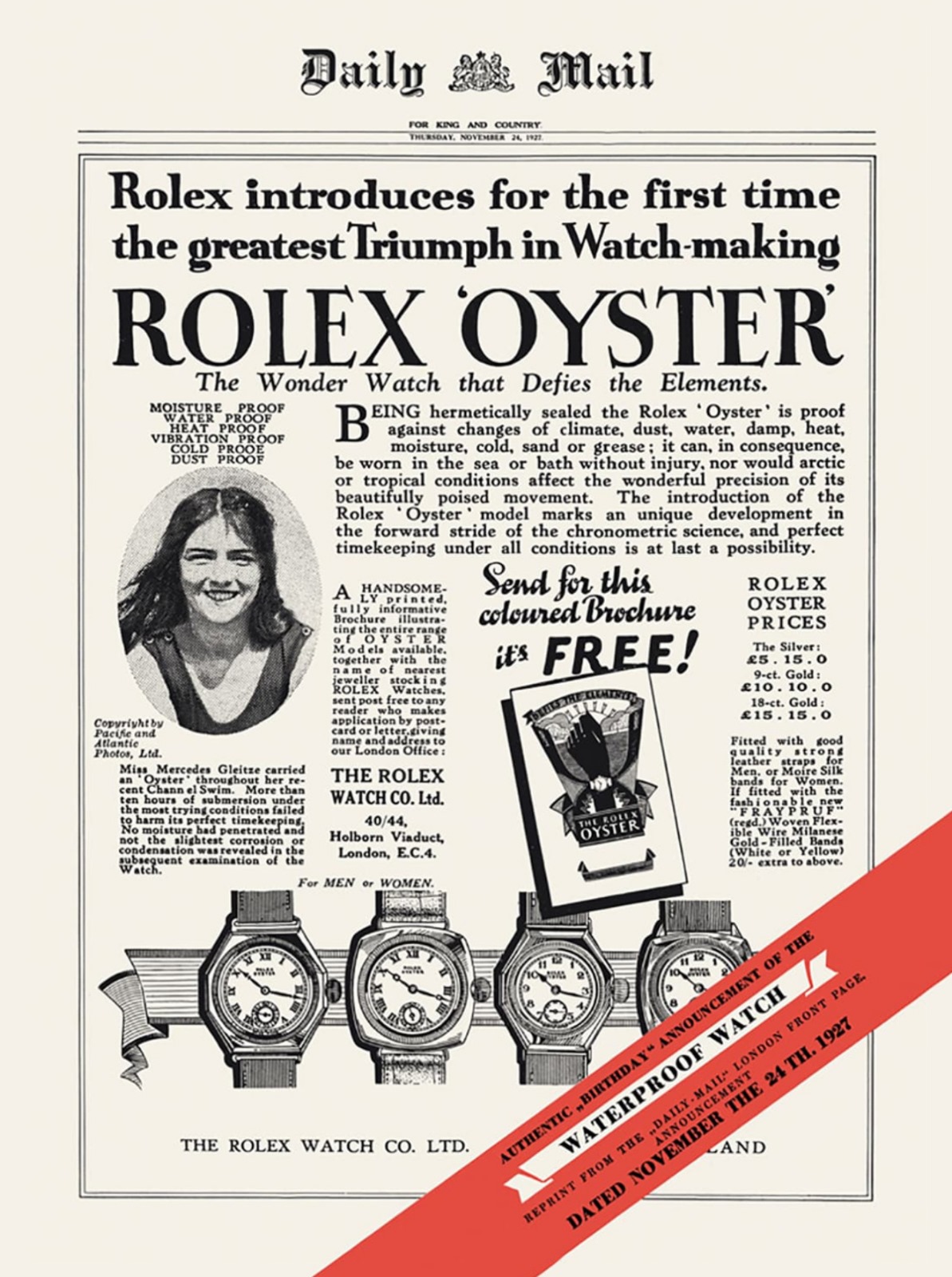
The tale of Rolex is inseparable from the spirit of human endeavor. From the very beginning, founder Hans Wilsdorf recognized that a timepiece’s reputation would be best forged by aligning it with record-setting feats. His very first ambassador was Mercedes Gleitze, the young British secretary who, in 1927, wore a Rolex Oyster while becoming the first woman from her country to conquer the English Channel.
Twenty-six years old and undeterred by the icy currents between France and Great Britain, Gleitze spent over ten hours swimming the Channel with her Oyster strapped to her wrist. When she emerged, the watch emerged unscathed—its mechanisms still running flawlessly—and overnight Rolex’s waterproof design became a household story.
News of that triumph spread rapidly. Hans Wilsdorf seized the moment, taking out a full-page ad in London’s Daily Mail to announce “the debut of the Rolex Oyster and its triumphant march worldwide.” Mercedes Gleitze thus became Rolex’s inaugural Testimonee, embodying both daring achievement and the promise of truly waterproof performance.
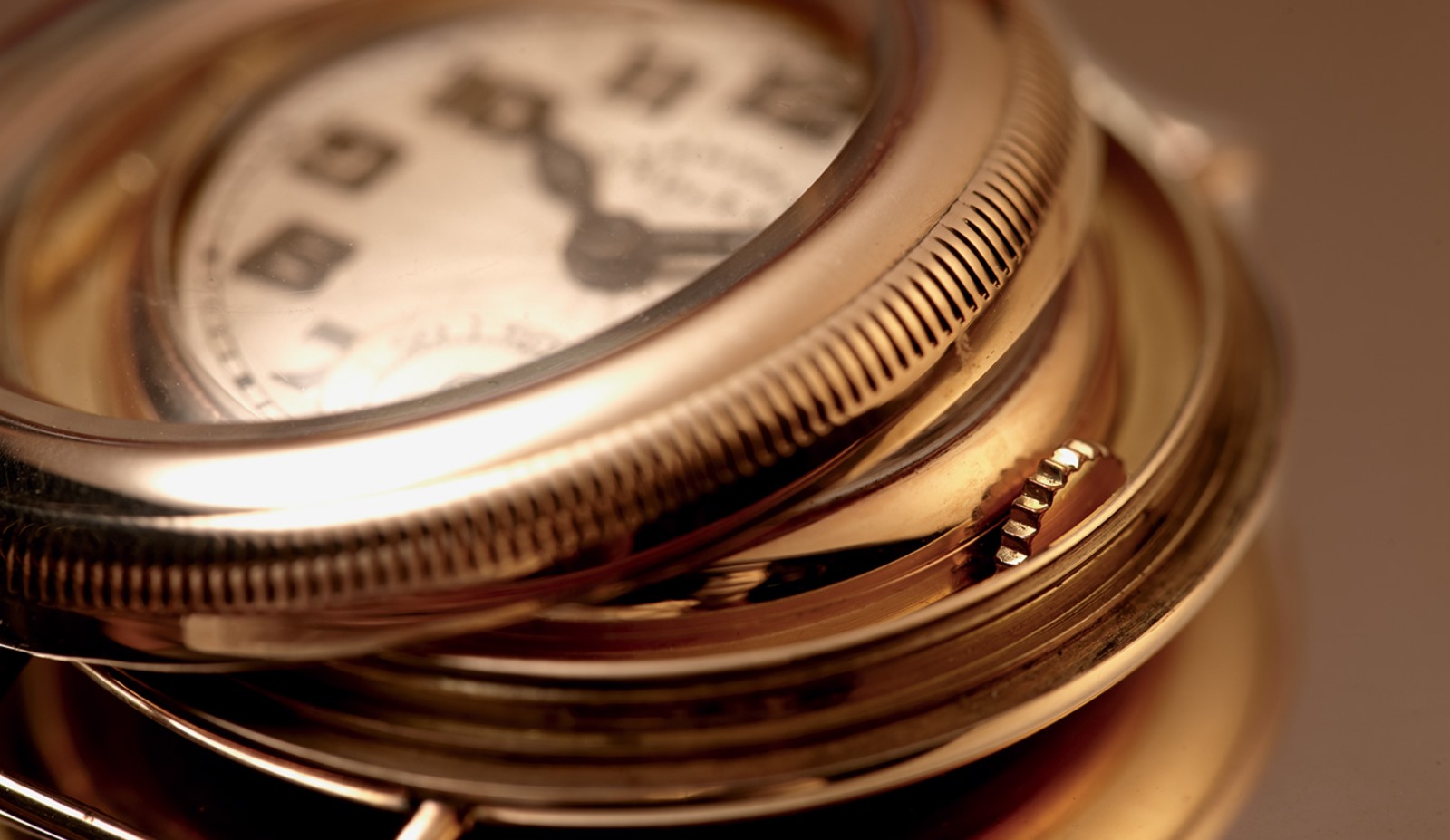
At the time, wristwatches were novel curiosities—fragile miniatures of the reliable pocket watch, easily jarred by life’s day-to-day challenges and scorned by men as mere fashion accessories. Wilsdorf, however, saw their potential for a dynamic new century. He staked his fledgling London-based company (founded in 1905) on reinventing the wristwatch, determined to protect its intricate movement from dust and moisture.
Rolex’s first serious foray into waterproofing came in 1922 with the “Submarine,” a watch enclosed in a second protective shell. Though ingenious, the design required daily dismantling to wind the movement, which weakened its seals and proved impractical. Undeterred, Wilsdorf pushed on.
By 1926, Rolex had perfected a single-case solution: the Oyster. Named for its locked-down, shell-like construction, this model featured both a screw-down caseback and bezel, plus a patented screw-in winding crown. Secured against water ingress, the Oyster could be submerged and still tick away. Shop windows even displayed Oysters in bowls of water, letting passersby witness its resilience firsthand.
As Rolex’s reputation for rugged reliability grew, Wilsdorf backed up every marketing claim with real-world trials. In the 1930s, engineers developed factory tests to verify each case’s waterproof integrity. Explorers, mountaineers, and aviators soon carried Oysters into extreme climates and remote landscapes, proving their worth under hardship.
Then came the self-winding Perpetual rotor mechanism, which used the wearer’s own movements to keep the watch wound. No longer needing to unscrew the crown daily, the Oyster became even more impervious to the elements. This innovation laid the groundwork for decades of evolution.
In the 1950s, as recreational scuba diving and deep-sea exploration took off, Rolex introduced the Submariner—a diver’s watch built on the Oyster’s heritage. The ultimate test arrived in 1960, when an experimental Oyster accompanied the bathyscaphe Trieste to the ocean’s deepest trench. Less than forty years after Mercedes Gleitze’s Channel swim, the Rolex Oyster had gone from conquering surface waters to exploring the abyss.
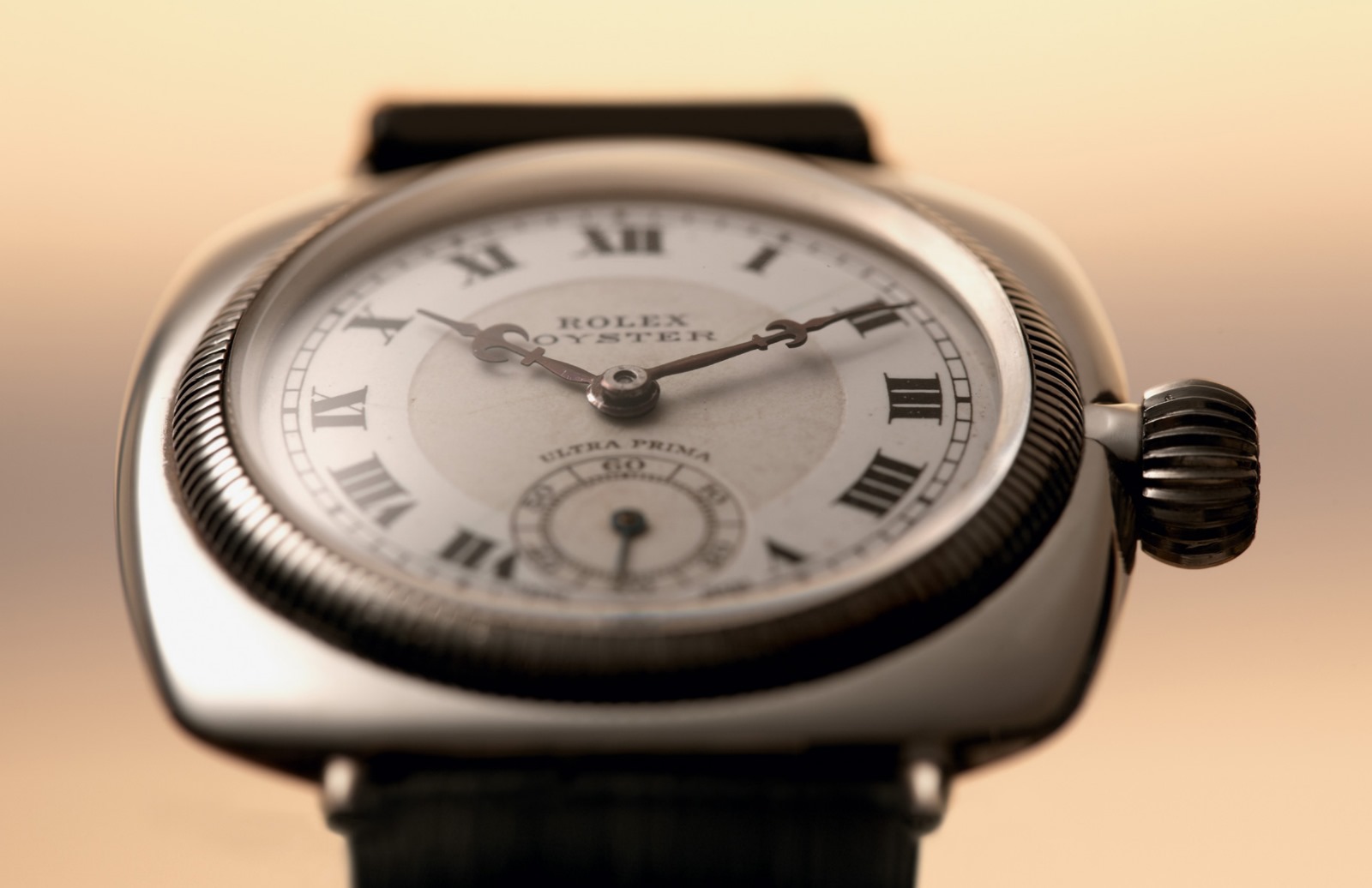
After 25 years away from the spotlight, the legendary Oyster, the first diving watch in history – will once again surface at Sotheby’s Important Watches Live Sale in Geneva on November 9. Estimated at over one million Swiss francs (around 1.3 million USD), this legendary timepiece, which endured more than ten hours in frigid waters and emerged in perfect working order, stands as a testament both to Rolex’s pioneering waterproof technology and to Mercedes Gleitze’s remarkable endurance.
Share this article


LEAVE A COMMENT
You must be logged in to post a comment.