


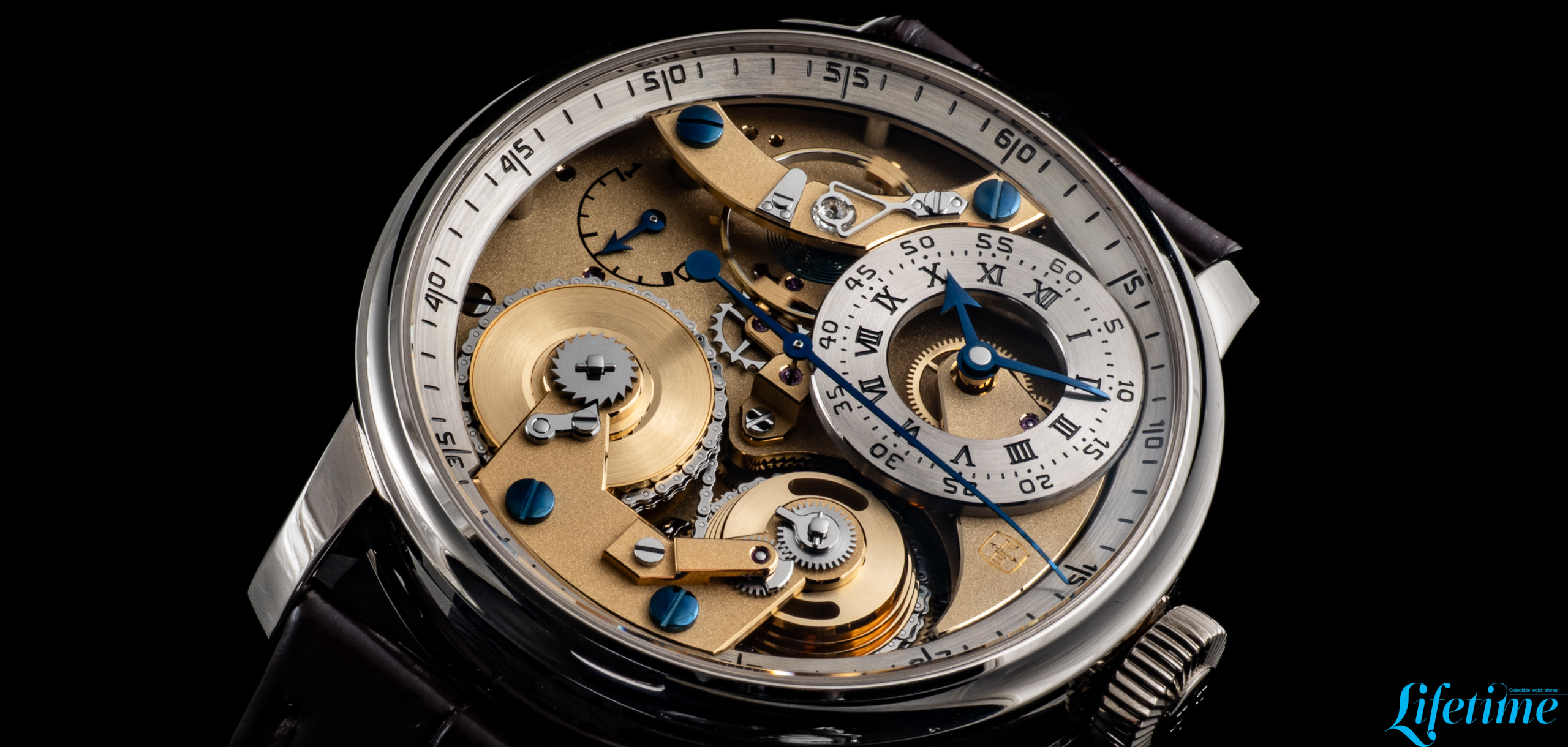
Ferdinand Berthoud Naissance d’une Montre 3: Where Handcraft Becomes Chronometric Testimony
When faced with a timepiece that requires 11,000 hours of dedicated labour, one cannot help but question the justification for such an investment. The answer lies not in the watch itself, but in what its creation preserves: knowledge that cannot be digitised, skills that take years to acquire, and traditions that define excellence through difficulty rather than efficiency. Chronométrie Ferdinand Berthoud's Naissance d'une Montre 3 is the result of a six-year collaboration between the manufacture and Chopard artisans, representing the third chapter of an initiative launched to safeguard endangered watchmaking crafts. This is no marketing exercise. The watch provides documentary proof that contemporary tolerances and historical techniques can coexist, that COSC chronometer certification can be achieved using a Guillaume balance and fusée-and-chain, and that 18th-century regulating systems can operate with precision in 2026.


The painstaking task of selecting the favorites of 2023.
As a watch enthusiast and journalist, I am often asked: “Which one is your favorite?“. With my face blushing at the sight of the pieces that I love the most, my heart pounding at the sight of horological complications, and my mouth drooling over exceptional finishes, it is hard to pinpoint my favorite every year. As a (sometimes) pragmatist, I understand why certain watches are loved, desired or bought more than others. It is like asking the mom or dad of a family with several children which is their favorite child – in theory, all of them are, but they might still recognize that they have a favorite.