

JAEGER-LECOULTRE INTRODUCING THE COLLECTIBLES VI


Taking place in June, the event aligns with the Season—the traditional stretch of late spring and early summer when London becomes a hub for prestigious social, cultural, and sporting gatherings that draw an international audience. This capsule brings together a carefully curated group of seven rare Reverso watches produced between 1931 and 2003, accompanied by five landmark creations from the mid‑20th century, a period often regarded as the height of fine watchmaking.
THE COLLECTIBLES PROGRAMME
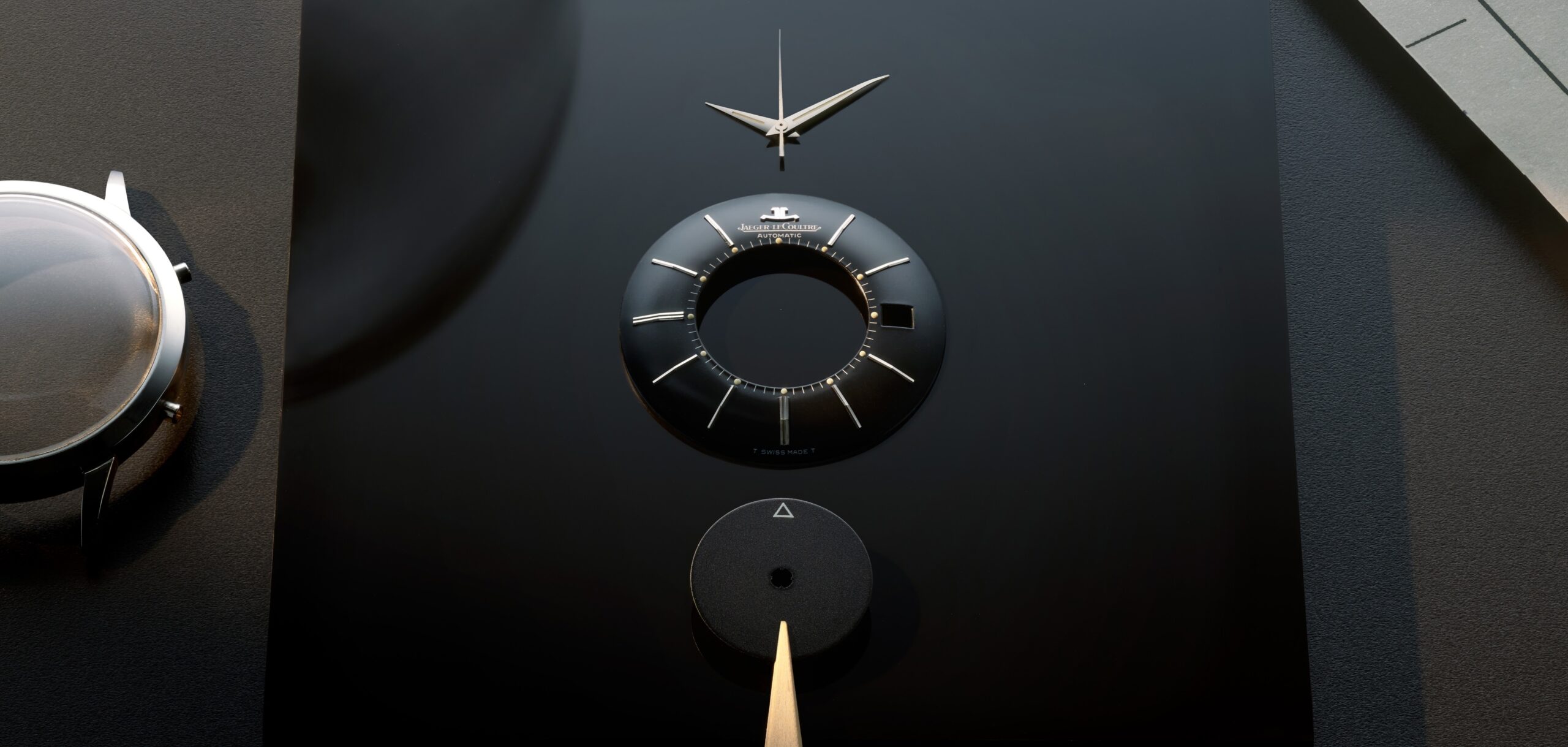
The Collectibles, Jaeger‑LeCoultre’s in‑house initiative, is devoted to locating, restoring, and offering exceptional vintage timepieces of museum calibre from the golden era of horology. Celebrating nearly two centuries of innovation, the programme showcases the Maison’s heritage through a selection of 17 historically significant models—from the Duoplan and Reverso to the Geophysic, Futurematic, and Memovox Polaris—spanning the mid‑1920s to the early 1970s.
Released in exclusive capsules around the world, these watches invite collectors to become the next caretakers of their stories. This preservation effort is made possible by Jaeger‑LeCoultre’s dedicated restoration atelier—one of the very few maintained by a watch Manufacture. Here, ten master watchmakers painstakingly revive each piece, servicing movements, recreating components by hand, and sourcing original parts from the Maison’s exceptional archival stocks, all while safeguarding each watch’s authentic character and patina. Once restored and certified to museum standards, every timepiece is ready to continue the journey that began in the Vallée de Joux.
REVERSO: THE ICONIC REVERSIBLE WATCH
The seven Reverso models featured in the sixth Collectibles capsule demonstrate the richness of the Reverso’s evolution from its 1931 debut through the early 2000s. Originally engineered as a sports watch—built to withstand the rigours of polo—the Reverso quickly captured the imagination of tastemakers across many fields. It evolved continuously while preserving its unmistakable Art Deco identity.
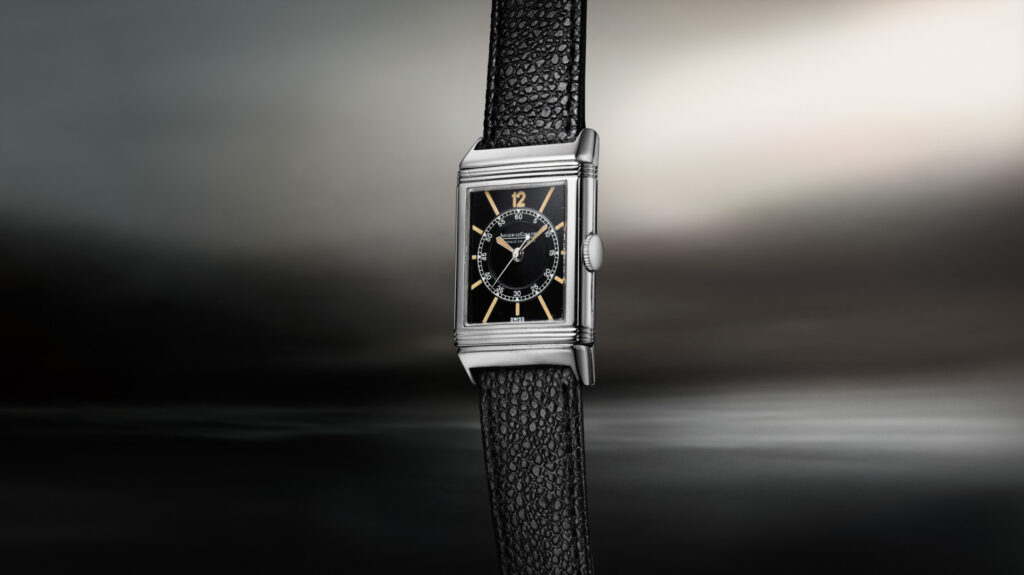
In the 1930s, LeCoultre & Cie distinguished itself by introducing black dials at a time when silver and white dominated the industry. Described as “the dial of the future” in the 1934 Spécialités Horlogères catalogue—the first catalogue produced after Jaeger and LeCoultre joined forces—these high‑contrast dials were reserved for only a handful of early Reverso references. Three of the watches in this capsule feature these rare dials: the Reverso 1931, the Reverso 1931 Dame, and the Doctor’s Reverso.
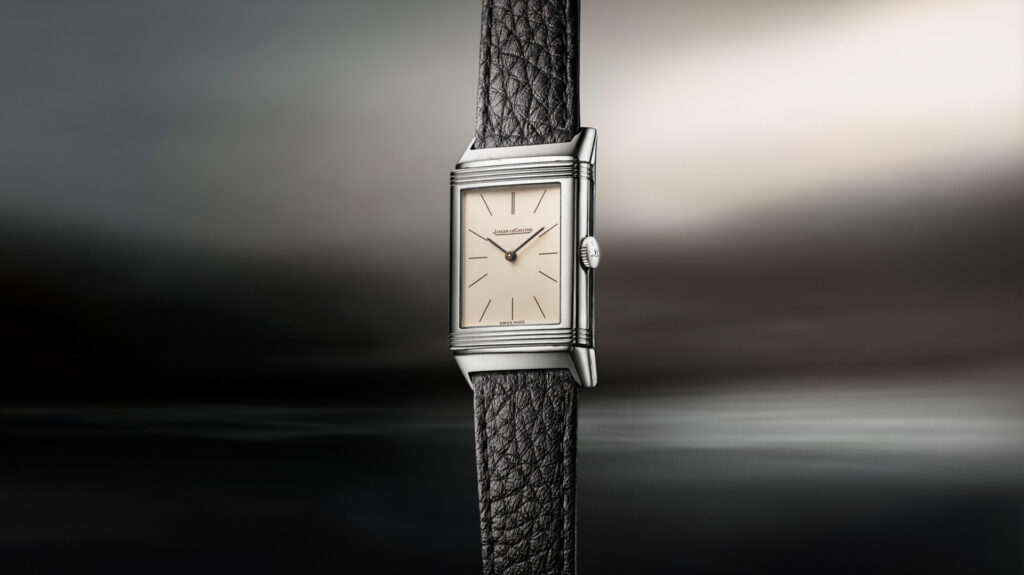
Reverso 1931
This model features the striking black dial with a railroad minute track and elongated trapezoidal markers. It is powered by the Tavannes Calibre 063, a practical early solution before Jaeger‑LeCoultre introduced its own shaped movements in 1933. It comes fitted with a hand‑crafted black calfskin strap.
Reverso 1931 Dame
Housed in a steel case and driven by the Tavannes Calibre 051, this version shows how quickly the Reverso adapted to different audiences. Its dial replaces the men’s minute track with corner brackets and refined Art Deco details echoed today in the Reverso One line. It is paired with a hand‑crafted black calfskin strap.
1938 Reverso Central Seconds (“Doctor’s Reverso”)
Set in steel and equipped with the Manufacture Calibre 411, this model reflects the growing functional sophistication of the Reverso. Its central seconds hand, marked in five‑second increments aligned with elongated hour markers, was designed for precise pulse‑taking—earning it the enduring nickname “Doctor’s Reverso.” It is offered with a hand‑crafted black calfskin strap.
1941 Two‑Tone Reverso
This rare model combines steel with 18K yellow gold, an innovative pairing that increased durability while preserving the elegance of gold. Powered by the Calibre 438, it features a small‑seconds display at six o’clock—a signature introduced in 1933. It comes with a hand‑crafted light‑brown calfskin strap with cream stitching.
1972 Reverso Corvo
Produced in only 200 pieces, the Corvo marks a turning point in Reverso history. At a time when tastes shifted toward utilitarian watches and the quartz crisis loomed, Giorgio Corvo recognised the design’s enduring appeal. He acquired the last 200 unused Reverso cases and fitted them with the mechanical Calibre 840. The watches reportedly sold out within a month in Italy, proving the Reverso’s lasting allure and paving the way for its revival. This model features a silver dial in a steel case and retains the manual‑winding Calibre 840, paired with a hand‑crafted black calfskin strap.
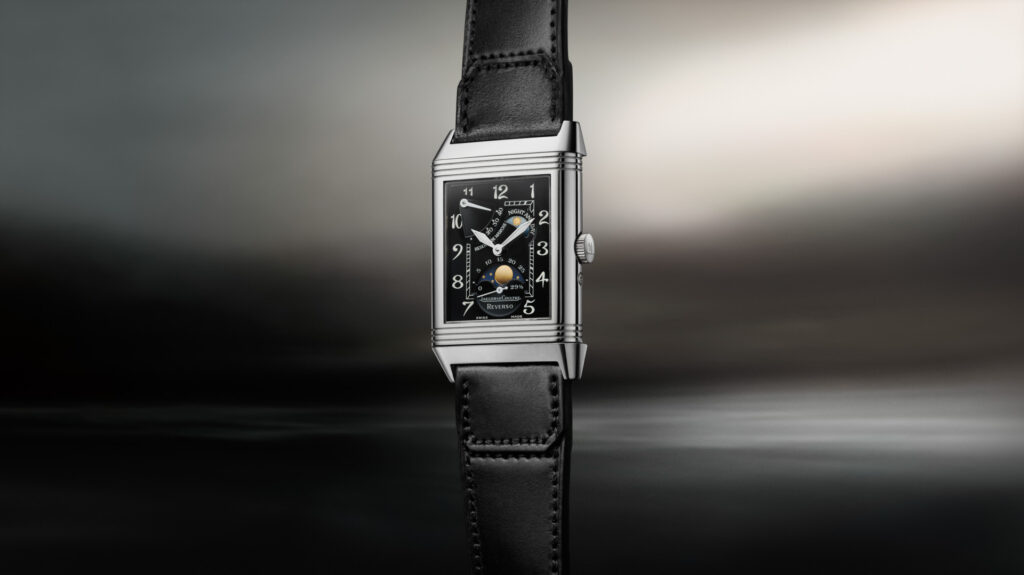
2000 Reverso Sun Moon
Crafted in 18K white gold, this model reflects the renewed passion for mechanical watchmaking in the 1990s. Powered by the manual‑winding Calibre 823 (introduced in 1999), it displays a 24‑hour sun‑track disc, a moon‑phase at six o’clock, and a power reserve at eleven. The sapphire caseback reveals the movement and its distinctive pistol‑shaped bridge. It is paired with a hand‑crafted black Cordovan strap by Casa Fagliano.
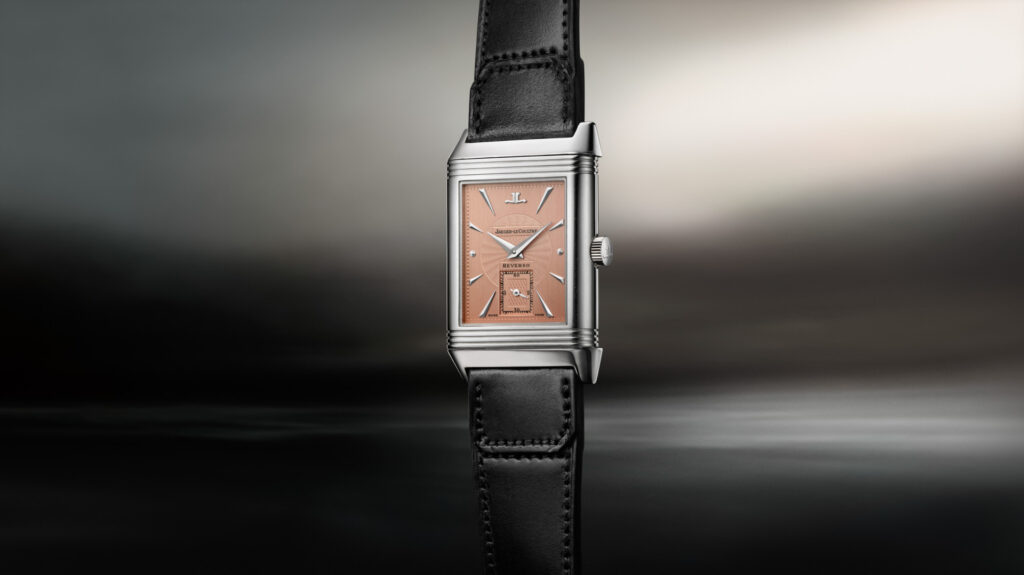
2003 Reverso Art Deco
This piece illustrates how sapphire casebacks encouraged new artistic expressions within the Reverso line—particularly skeletonisation. Introduced in 1995, this 2003 example showcases a hand‑decorated skeletonised Calibre 822, visible through the open caseback. The 18K white gold case frames a salmon‑toned solid silver dial with hand‑guilloché patterns and applied trapezoidal indexes. Archival records suggest no more than ten pieces were produced per month due to the extraordinary craftsmanship required. It is paired with a hand‑crafted black Cordovan strap by Casa Fagliano.
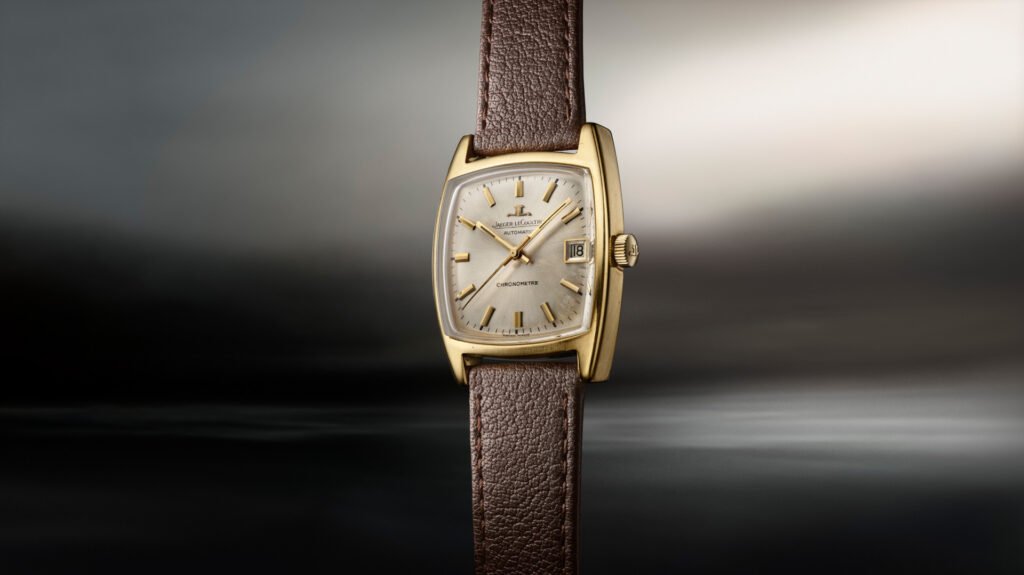
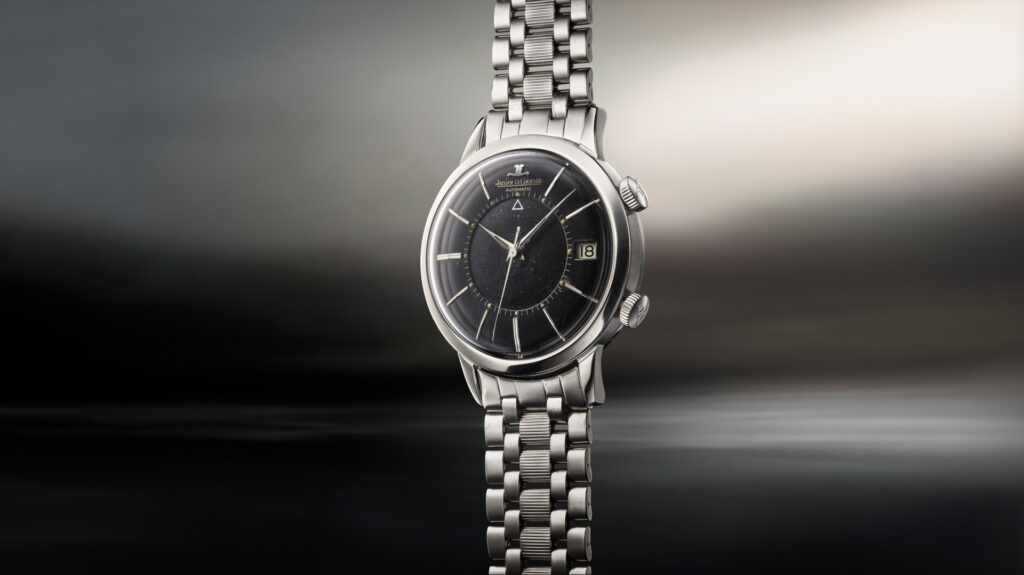
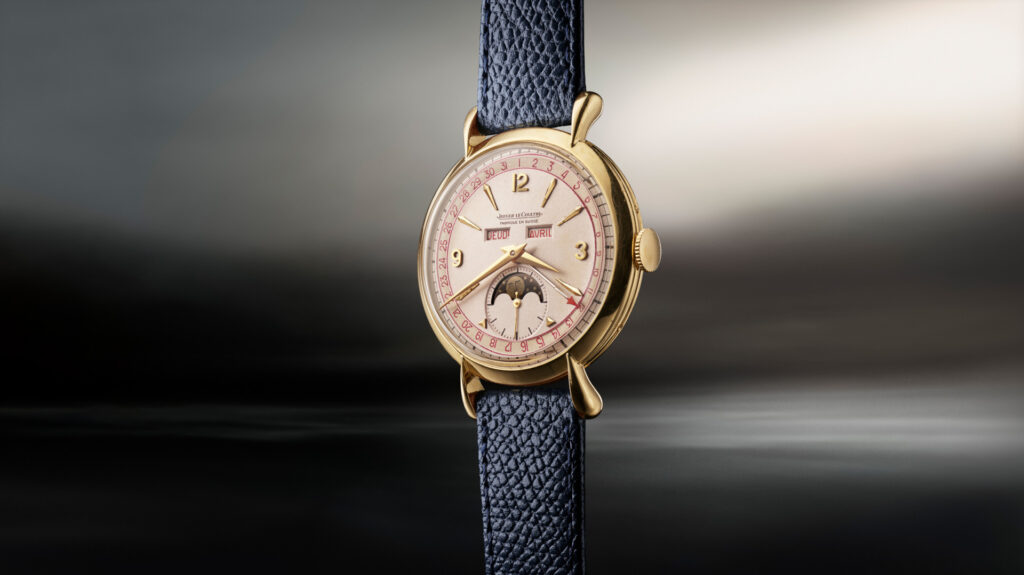
Alongside the seven Reverso models, the capsule includes five additional watches that highlight the breadth of the 17 models featured in The Collectibles. Each represents a milestone for both Jaeger‑LeCoultre and 20th‑century watchmaking, showcasing innovations that embody the Maison’s pioneering spirit.
Share this article

LEAVE A COMMENT
You must be logged in to post a comment.