


How Breguet Reimagines the Tourbillon for 2026


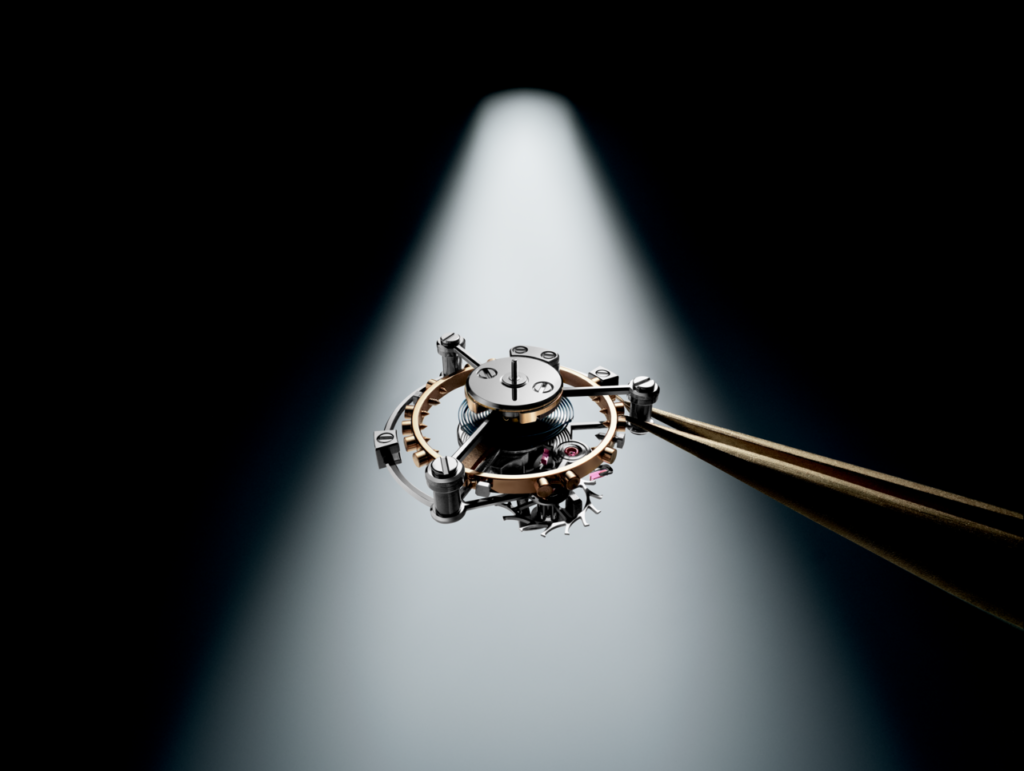
In 2026, Breguet marks this anniversary not with nostalgia, but with a suite of creations that reinterpret the Tourbillon’s purpose for a new century. The original document notes that the Tourbillon was conceived to “mix up all vertical positions and ultimately achieve higher average accuracy.” That deceptively simple idea has become the foundation of an entire philosophy of watchmaking—one that Breguet continues to evolve.
A Revolution Born in Exile
The Tourbillon’s story begins not in a workshop, but in political upheaval. Forced to leave Paris during the French Revolution, Breguet spent years in Switzerland refining ideas that would later redefine precision timekeeping. Upon returning to Paris in 1795, he unveiled inventions that reshaped horology: the sympathique clock, the souscription watch, and eventually the Tourbillon regulator.
The document recounts that between 1796 and 1829, Breguet and his team produced only 40 Tourbillons—each a scientific instrument as much as a luxury object.
Today, the complication is ubiquitous, but its origin remains singular.
The 2026 Collection: Heritage Reimagined
Classique Tourbillon 7357: The Purist’s Tribute
The new Classique Tourbillon 7357 is positioned as the spiritual successor to the 1989 Ref. 3350—the first modern Breguet Tourbillon wristwatch. The movement, now Calibre 187B, preserves the historic 2.5 Hz frequency and hand‑wound architecture while integrating modern materials such as Nivachron® and silicon.
The document describes the model as “pure Breguet, in its most essential form.”
Its restrained 35 mm case, hand‑guilloché surfaces, and Bleu de France accents create a watch that feels both classical and contemporary.
Classique Tourbillon Sidéral 7255: Astronomy in Motion
The Sidéral 7255 is Breguet’s first wristwatch with a flying Tourbillon—a construction that removes the upper bridge, leaving the cage suspended like a celestial body. The mysterious display, achieved through sapphire gears, amplifies the illusion.
The document explains that the Tourbillon’s etymology once referred to a “material system animated by rotational motion,” linking it to planetary mechanics.
The Sidéral embraces this lineage with a black aventurine enamel dial that evokes the night sky.
Limited to 50 pieces, it is the most astronomical interpretation of the Tourbillon Breguet has ever produced.
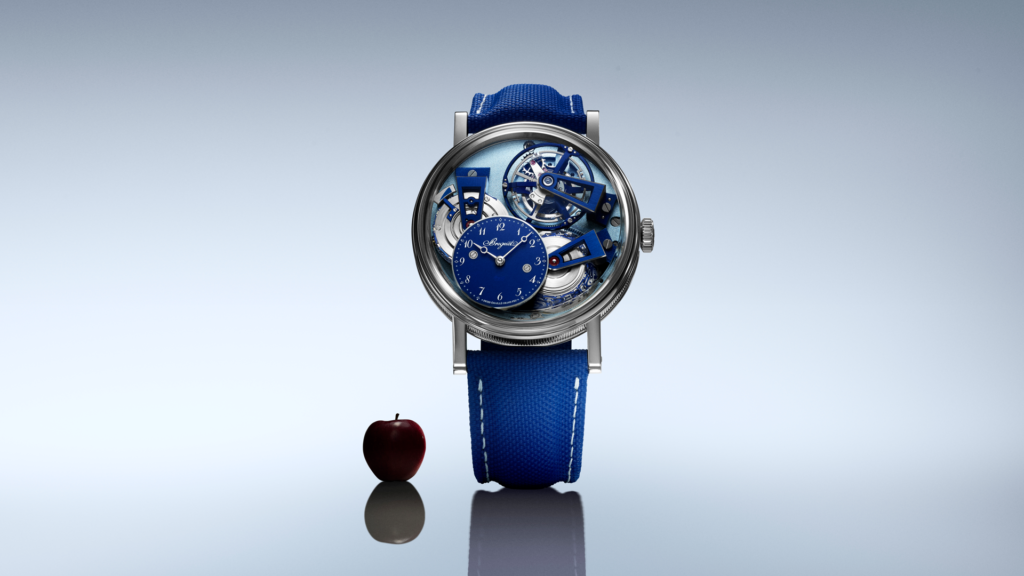
Tradition Tourbillon 7047: Two Geniuses, One Mechanism
The Tradition 7047 unites Breguet’s Tourbillon with Leonardo da Vinci’s fusee‑and‑chain constant‑force system. In 2026, the model appears in a striking Bleu de France monochrome palette, with even the fusee chain treated in blue.
The document highlights the chain’s engineering: capable of withstanding a tensile force equivalent to six kilograms.
This is mechanical art at its most unapologetically technical.
Limited to 25 pieces, the 7047 is the collection’s most avant‑garde offering.
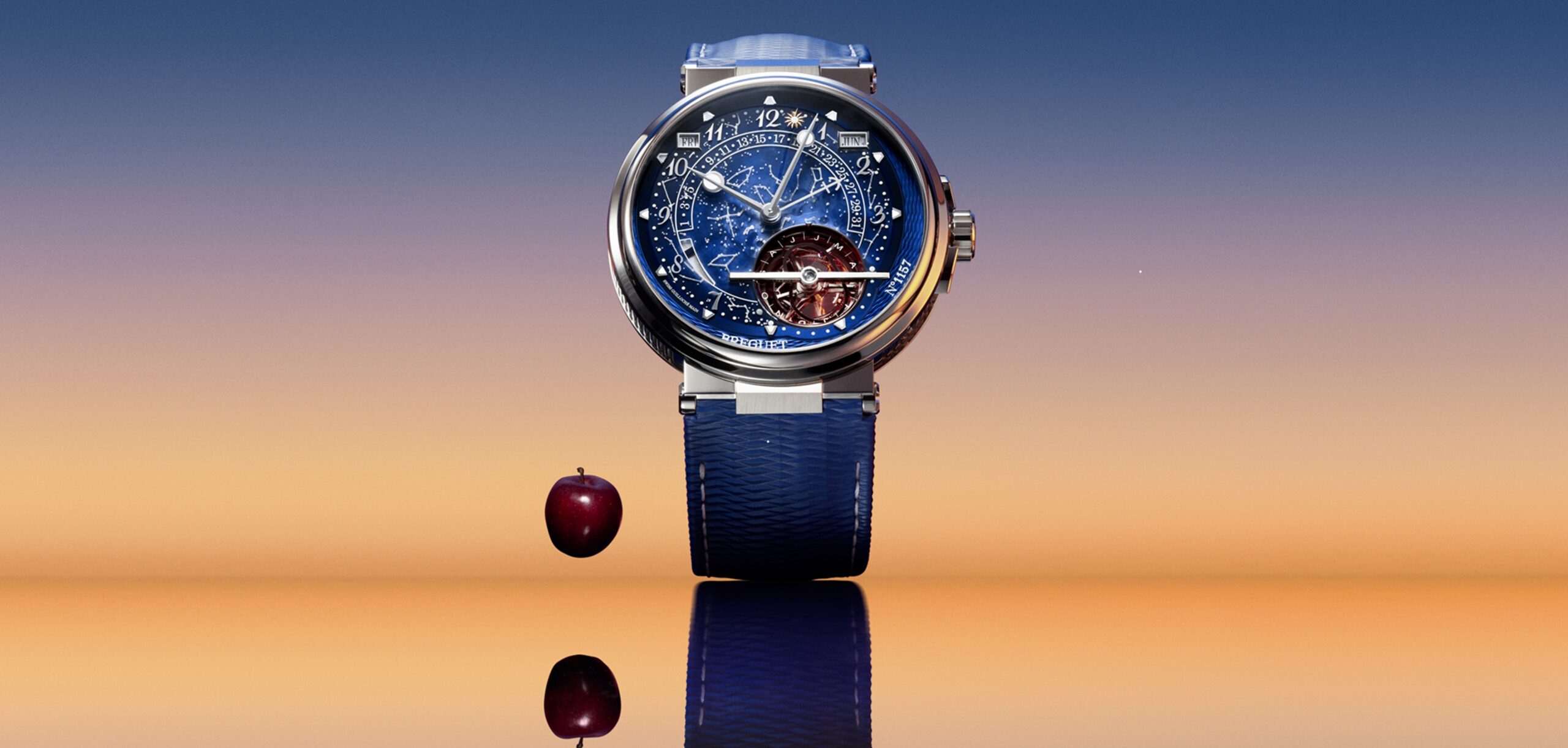
Marine Tourbillon Équation Marchante 5887: The Sky of 1801
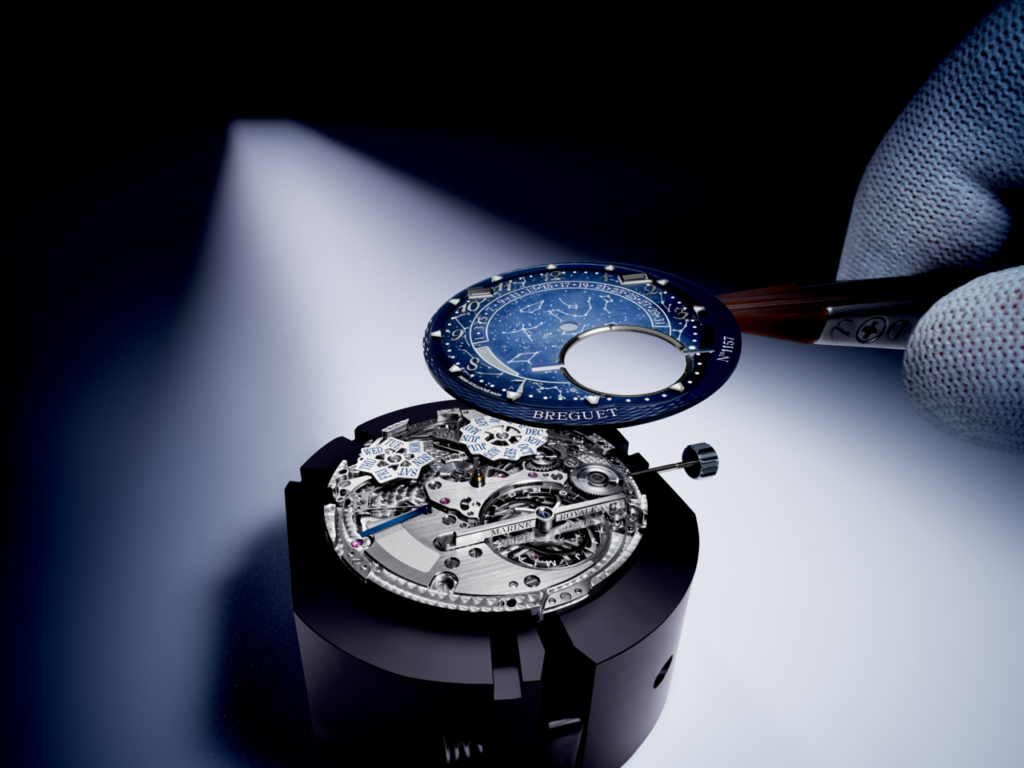
The Marine collection pays tribute to Breguet’s role as Horloger de la Marine Royale. For 2026, the Équation Marchante 5887 receives a dial depicting the exact sky over Paris at midnight on 26 June 1801—the moment the Tourbillon patent was granted.
The document notes that the equation of time represents the difference between mean solar time and true solar time, which can vary by up to ±16 minutes annually.
This complication, paired with a Tourbillon, creates a watch that is both a scientific instrument and a historical tribute.
Each of the 25 pieces can be personalized with a sky chart from any date and location, turning astronomy into bespoke craftsmanship.
Why the Tourbillon Still Matters
The Tourbillon was never meant to be decorative. It was a scientific solution to a practical problem: gravity. Yet its elegance—its hypnotic rotation—has made it one of watchmaking’s most emotionally resonant complications.
Breguet’s 2026 collection demonstrates that the Tourbillon is not a relic. It is a living idea, capable of reinterpretation through new materials, new aesthetics, and new scientific contexts.
Across the Classique, Sidéral, Tradition, and Marine lines, Breguet shows that innovation and heritage are not opposing forces. They are two halves of the same rotation—much like the Tourbillon itself.


Share this article

LEAVE A COMMENT
You must be logged in to post a comment.