


Cartier: THE BAIGNOIRE WATCH MEETS THE CLOU DE PARIS


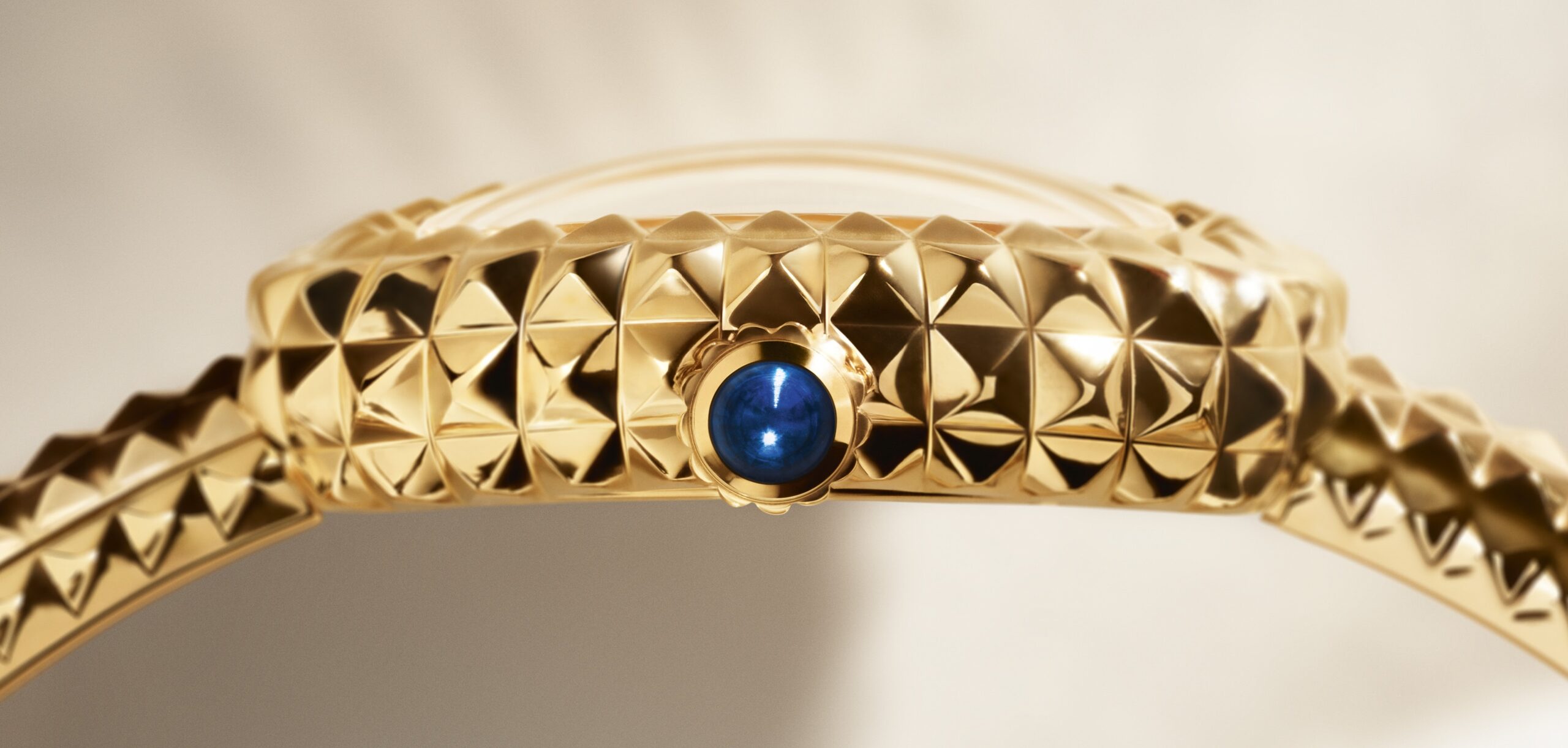
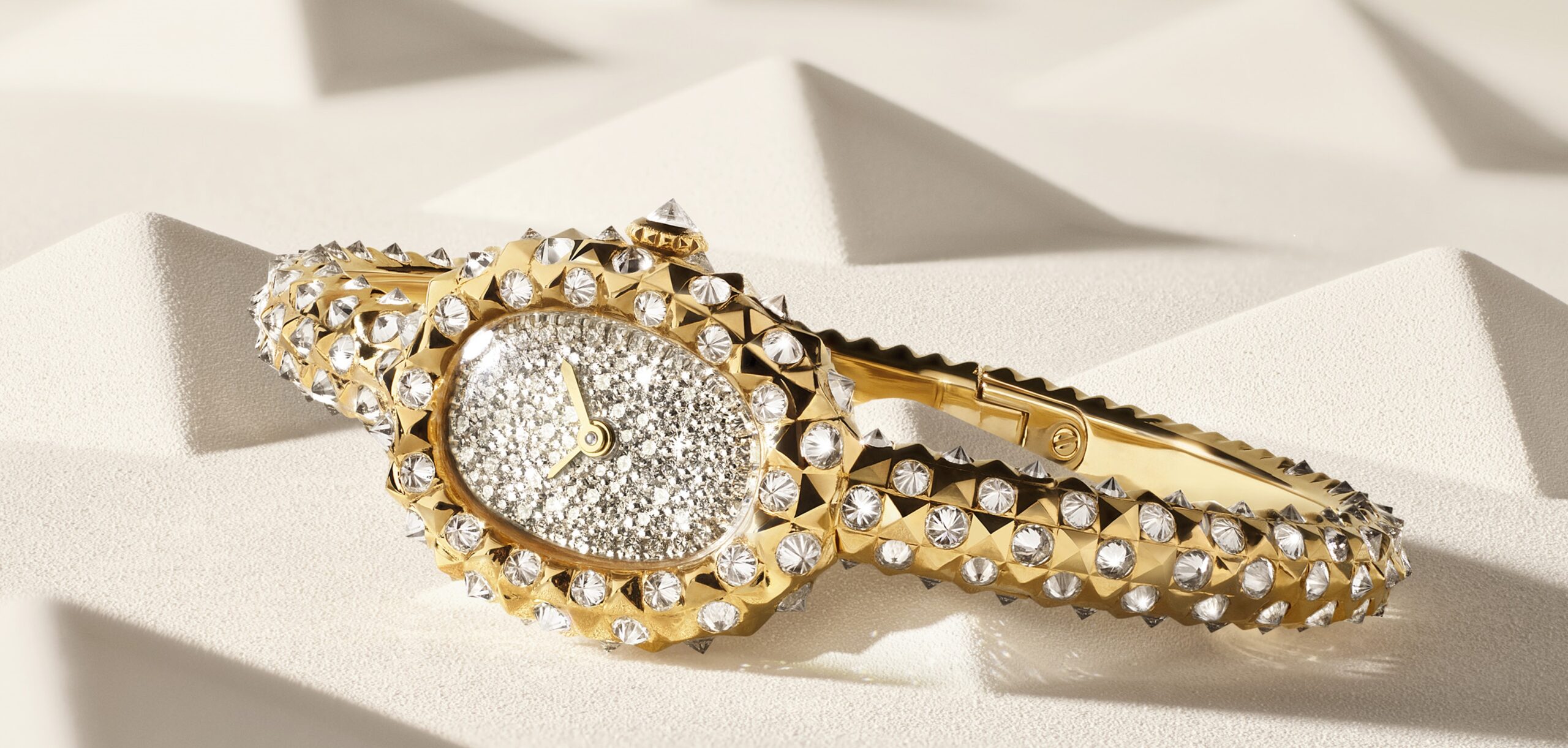
The latest Baignoire Clou de Paris edition becomes a technical study in how a jewellery motif can be engineered across a watch’s entire architecture. The Maison’s watchmakers and jewellers approached the project by rethinking the oval geometry of the Baignoire bangle model, ensuring that the Clou de Paris relief could be applied seamlessly from bracelet to case to dial without compromising structural coherence or functional tolerances.
The oval, historically defined by its continuous curvature, required recalibration. Each pyramid-shaped stud introduces micro‑variations in height and angle, meaning the watch could not simply receive a textured overlay. Cartier adjusted the curvature radius and thickness distribution so the motif would remain consistent across convex and concave surfaces, preserving uniform light reflection and preventing distortion.
The monochrome construction in 750/1000 yellow gold allowed the relief to be machined as a continuous surface, avoiding breaks that would occur with multi-material assemblies. Even the yellow‑gold push-buttons were engineered to sit flush within the relief, matching the bracelet’s profile so that the tactile experience of the Clou de Paris remains uninterrupted.
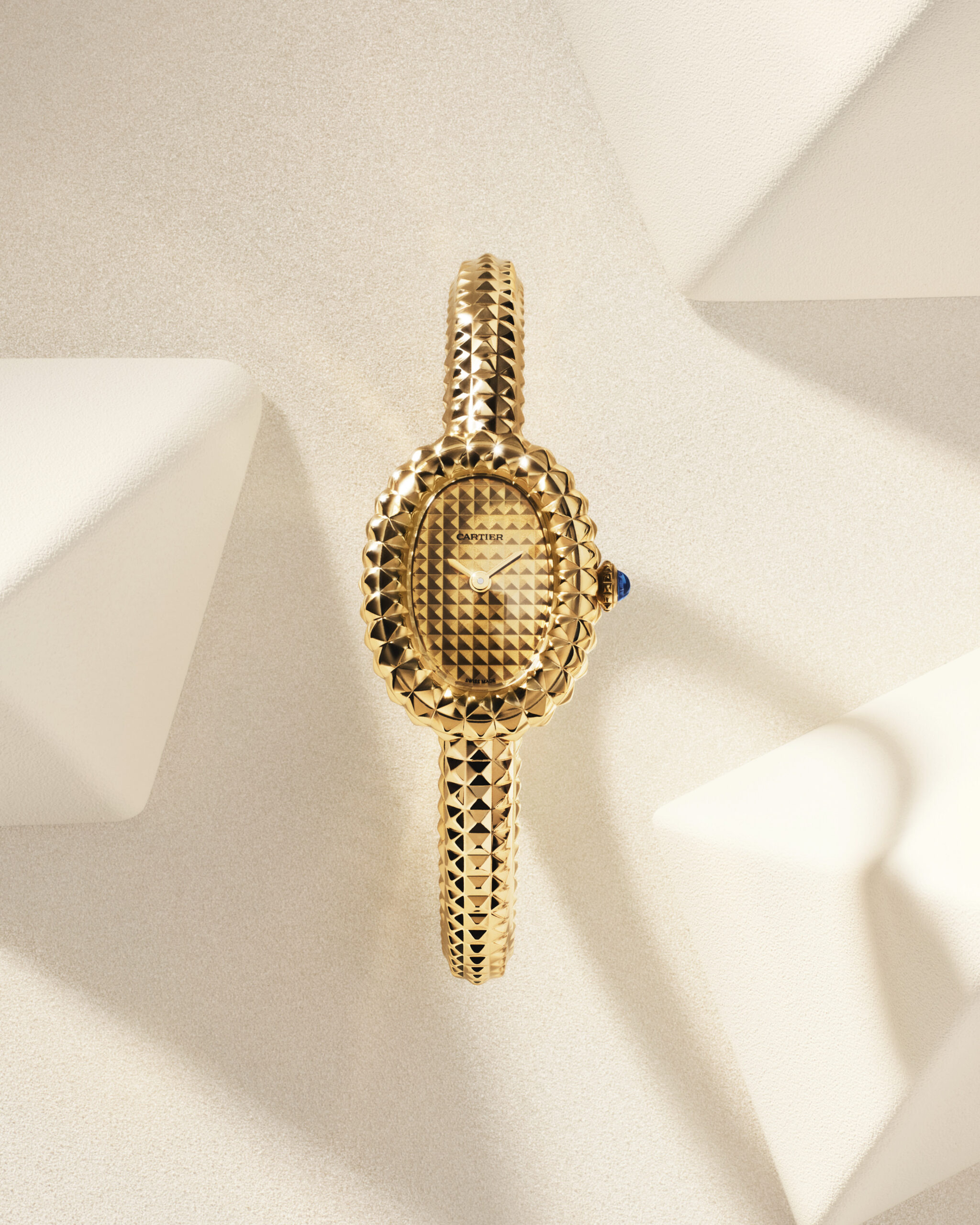
The dial required its own structural considerations. Rather than a flat plate, it becomes a micro‑engraved surface that continues the Clou de Paris geometry. Relief height is controlled with extreme precision to avoid interference with the hands’ rotation and the quartz calibre’s tolerances. Cartier applies its signature and minute track using micro‑printing techniques adapted for uneven surfaces, ensuring legibility without disrupting the motif.
The polishing phase—Cartier’s coup d’éclat—is a technical feat in itself. Each stud must retain its sharpness, so jewellers polish facet by facet, avoiding any rounding or flattening that would compromise the geometry. This directional, manual process preserves the architectural crispness of the motif and ensures that the watch reflects light with controlled brilliance.
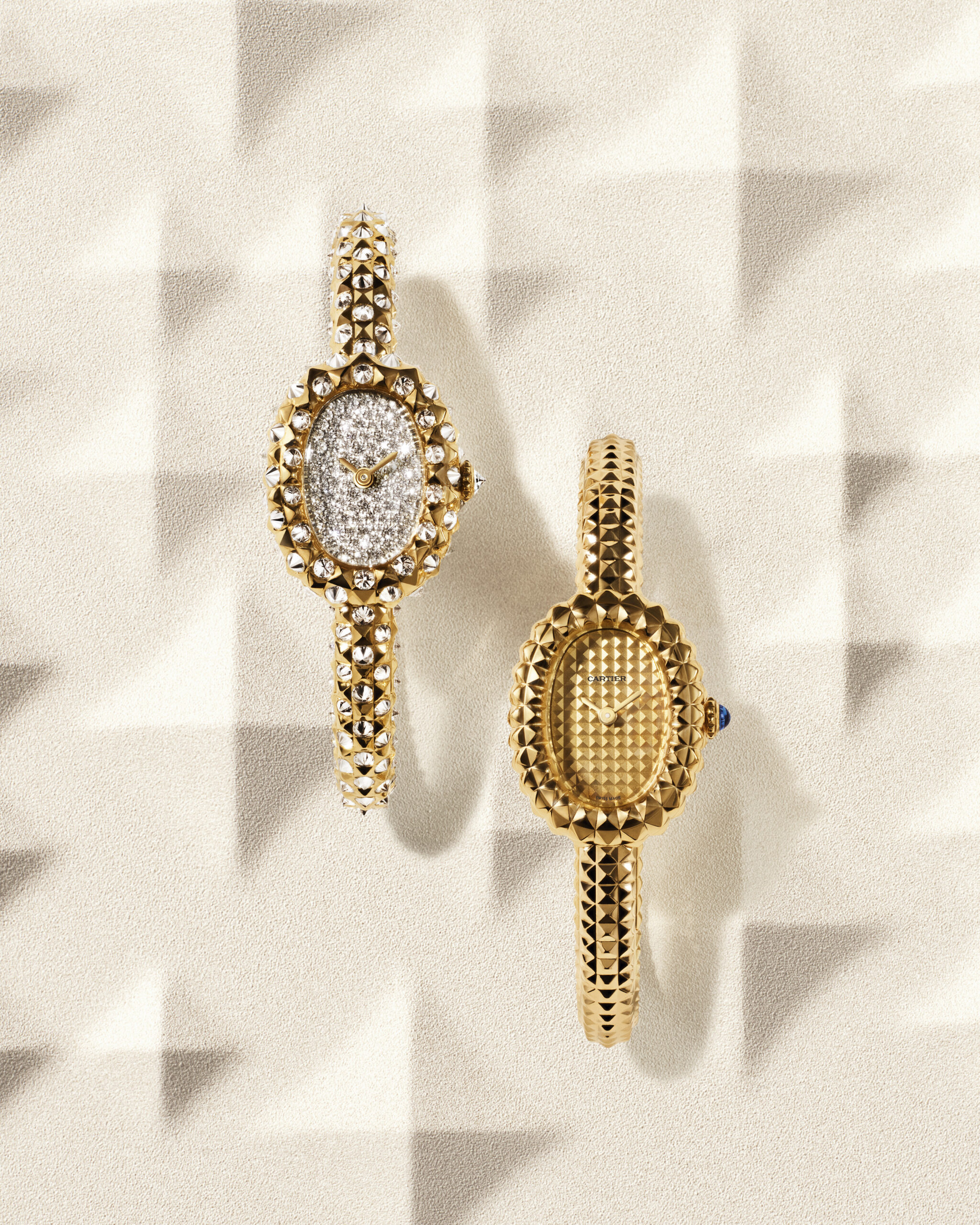
The ultra‑precious edition introduces advanced gemsetting techniques. The dial features 100 brilliant-cut diamonds in a snow setting, creating a continuous reflective field that adapts to the underlying relief. On the case, 171 brilliant-cut diamonds are inverted-set, their softened tips harmonising with the Clou de Paris geometry. This requires re‑engineering each stud to host a stone without fracturing the pattern. Across the watch, gemsetting and geometry interact as a single engineered surface, producing a coherent volumetric identity.

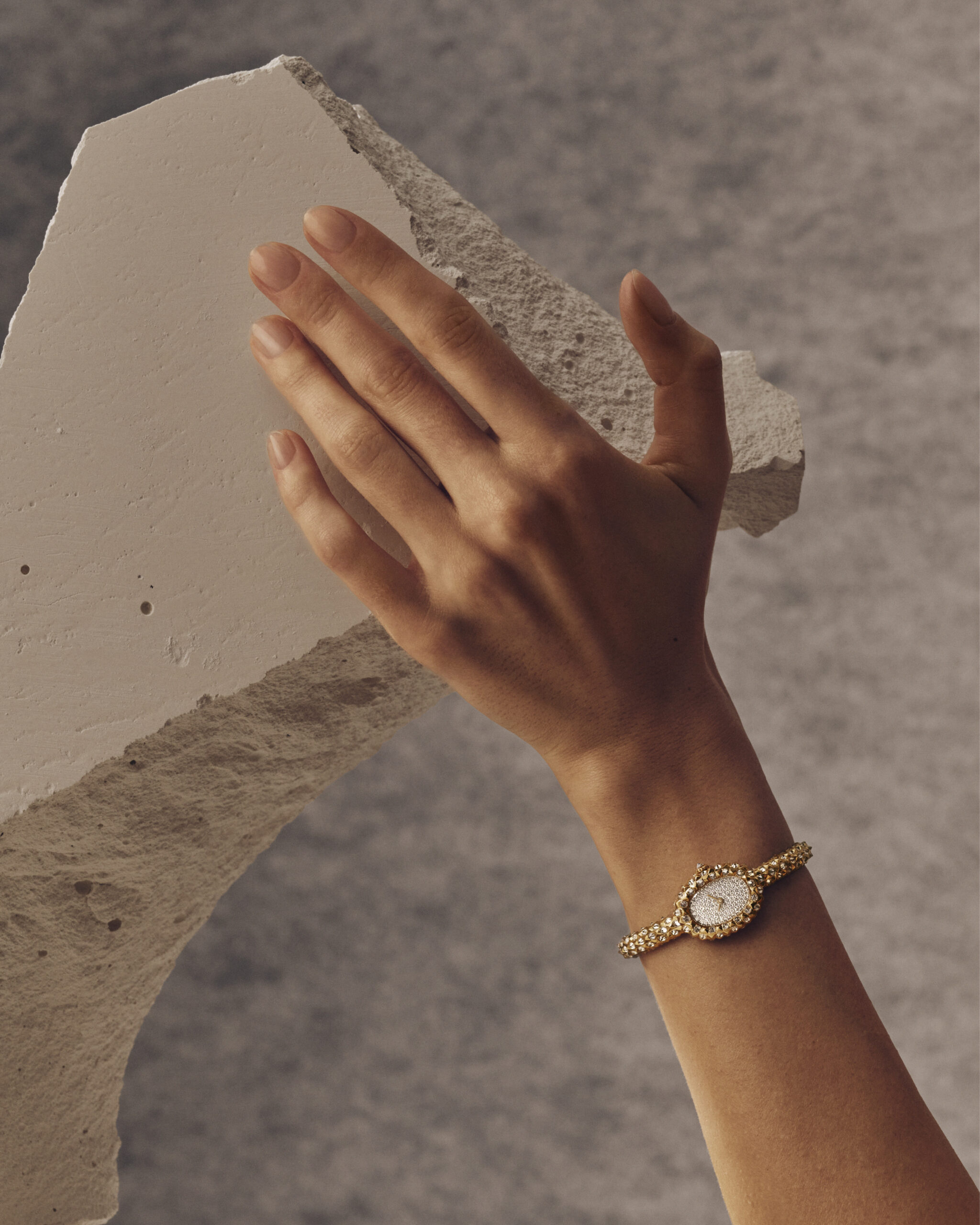
The collection includes several configurations, each expressing a different technical interpretation of the Baignoire. The yellow-gold bangle model with golden dial is available in sizes 15, 16 and 17, powered by a quartz movement. The diamond bangle edition, set with 171 diamonds on the case and bracelet and 100 on the dial, comes in sizes 15 and 16, with dimensions of 24.6 × 19.3 mm and a thickness of 7.5 mm, water-resistant to 3 bar.
A yellow-gold version with a diamond-set dial pairs the motif with a black patent calfskin strap, measuring 24.6 × 18.7 mm and 7.2 mm thick. The larger Baignoire, with grained silvered dial and high-autonomy quartz movement, measures 36 × 26 mm and 8.6 mm thick. A black lacquer edition, also in yellow gold, features a shiny black alligator strap, with dimensions of 31.4 × 23.1 mm and a thickness of 7.3 mm, water-resistant to 3 bar.
Through this reinterpretation, Cartier demonstrates how the Baignoire can evolve through technical innovation while remaining faithful to its identity. The integration of the Clou de Paris motif across curved surfaces, the precision of the polishing, and the dual gemsetting techniques elevate the watch from a jewellery-inspired object to a fully engineered sculpture.
Share this article


LEAVE A COMMENT
You must be logged in to post a comment.