



Beauty in the stones


They are bursting with fresh colours. They add a touch of nature to the dials that master watchmakers can barely achieve with ordinary enamel.
Even if you don’t believe in the supernatural power of stones, don’t close the door on them, because while they may not seem as attractive as sparkling gems, that doesn’t mean they aren’t beautiful. Yes, we’re talking about semi-precious stones, the stones that watchmakers mainly use for dials. To be precise, because we know that precision is the prerogative of kings: the Piaget brand refers to the semi-precious stones it uses for its watches as ornamental stones, while Rolex prefers to call them decorative stones.
They are difficult to work with, and their extraction is often strictly regulated and severely restricted. And yet, year after year, watchmakers take up the gauntlet of semi-precious stones. Due to the difficulty of manufacturing – it’s all about cutting the fragile stones into thin slices – watches with such dials are relatively rare, highly prized and simply impossible to replicate. Each dial is an original, varying according to the texture and hue of the particular stone.
Where to find them
Black opal, shimmering shades of blue and green, blue turquoise with brown veins, onyx reminiscent of the darkness of deep night or green aventurine (be careful not to confuse this stone with the type of glass that goes by the same name!). Carnelian, the symbol of courage, stands out with its bright orange tones. Olive-green jade impresses with its sophistication. And red coral, a mineral mined from the depths of the sea, can captivate with its story. According to the ancient myth of Medusa, who turned everyone who looked at her into stone, it was created from the spilled blood of this terrible Gorgon with snakes for hair.
Like precious stones or gold, semi-precious stones are very expensive to mine, not to mention that some of them may come from conflict areas. For example, the mines for the beautiful dark blue stone lapis lazuli are located in Afghanistan, where most of its mining is controlled by the Taliban.
Even the finest turquoise, which came from two Arizona mines, is no longer mined today. So if you come across a watch with a clean (no brown veins) turquoise dial, you can be sure that the stone was last mined five years ago. Coral is a separate chapter. Its extraction is very strictly regulated (it can only be mined for four months a year and in very limited quantities), as it grows only one centimeter per year. Incidentally, some corals are mined at depths of up to 100 meters under the sea.
Because of the relative rarity of semi-precious stones, it is difficult to speak of a cross-brand trend. In addition, only a few manufactures can make dials: Rolex, Piaget, and last year Audemars Piguet or Cartier to name but a few. We can also mention smaller independent manufactures, such as the Biver brand founded last year, or H. Moser & Cie.
However, we can definitely say that vintage watches with semi-precious stone dials have been in great demand on the secondary market in recent years. In this case, the proverb is as true as ever: measure twice, cut once! Even if the watch itself and its movement are original, the dial may not be and may have been added to the original model at a later date.
cheerful colours
What Rolex does, it does well. After all, new releases from the company that, according to a recent ranking by Morgan Stanley and Luxeconsult, made history last year as the first Swiss watch brand to surpass the 10 billion Swiss franc threshold in sales, are always eagerly awaited by experts.
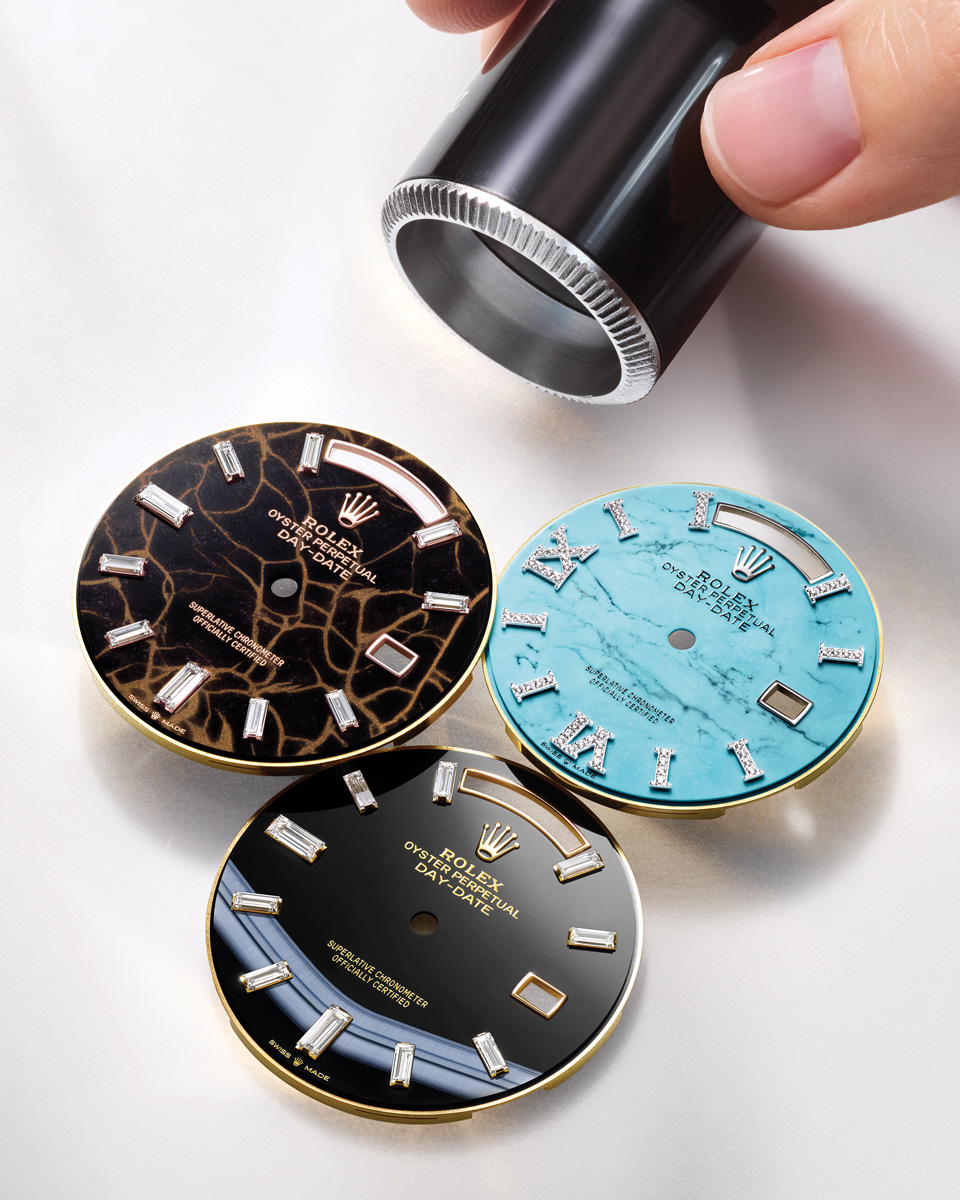
Last year, Rolex bet on cheerful colours and semi-precious stone dials among other things. The brand started using them in the 1970s to show that its production was not just synonymous with the hugely popular tool watches from the 50s like the GMT-Master, Submariner or Explorer. They graced the evening watches of the Day-Date, Datejust and Cellini collections, the latest of which Rolex discontinued last year. While today the decorative stone dials are made in-house, at the time the brand used the services of independent dial maker Stern Creations. The challenge in making them consists mainly in carving a window for the date or the day of the week into the already delicate stone discs.
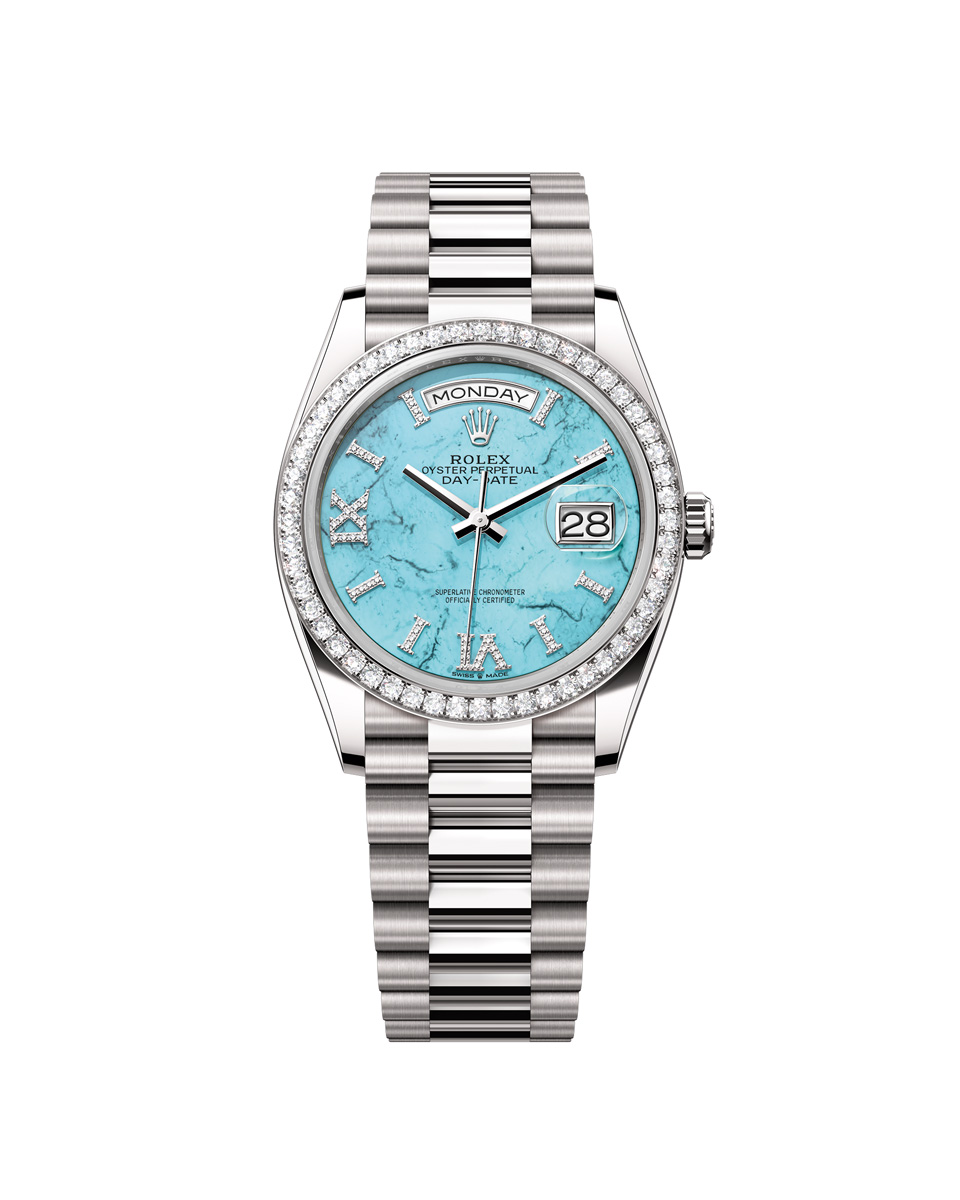
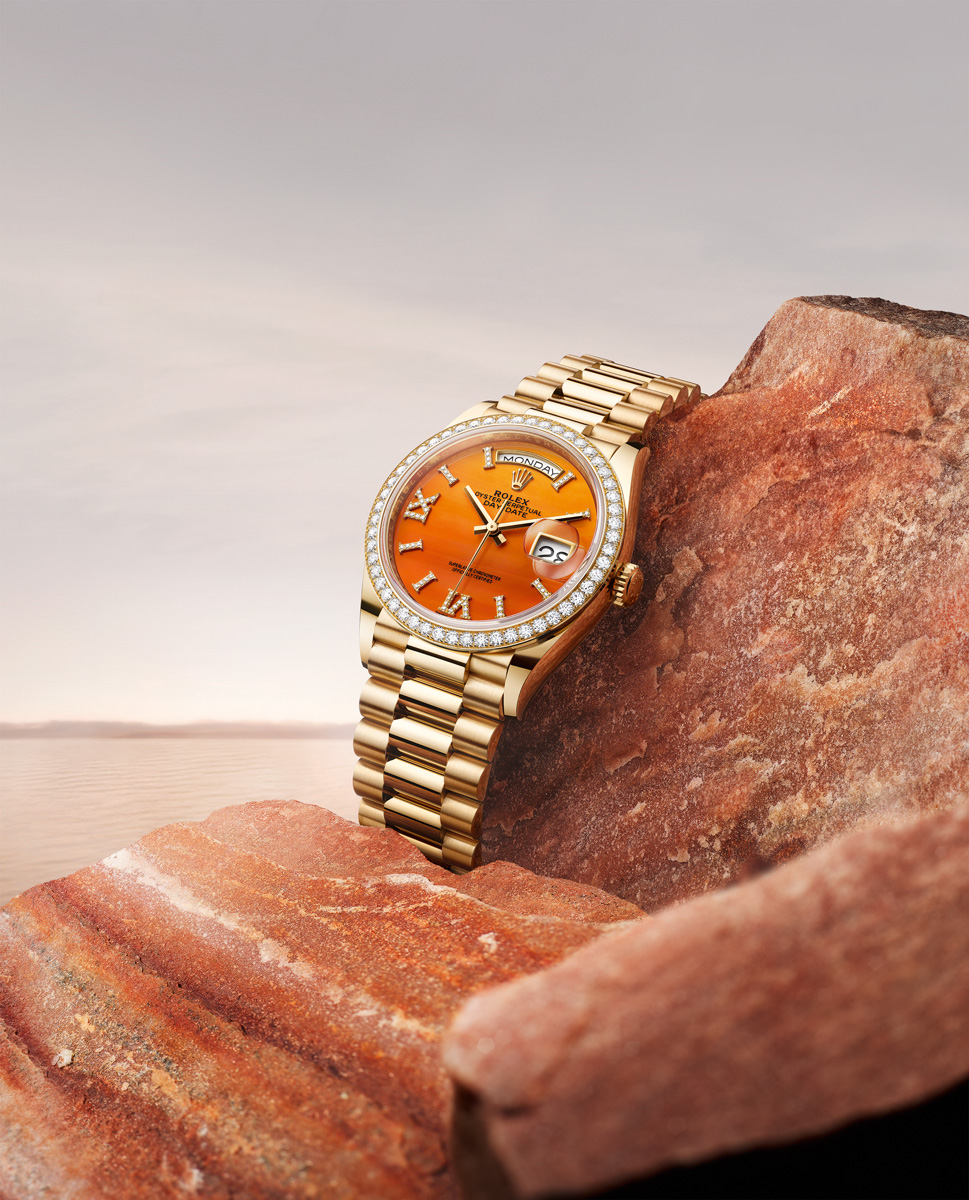
Last year, the brand updated the Day-Date collection, first introduced in 1956 and a favourite of many world politicians and presidents, with three ladies’ Oyster Perpetual Day-Date 36 models whose dials are made of decorative stones that provide a luxurious backdrop for the diamond indexes and diamond Roman numerals VI and IX. The trio of exquisite models with brilliant-cut diamond-set bezels includes a watch in Everose gold with a green aventurine dial, a watch in white gold with a turquoise dial, and a watch in yellow gold with an orange carnelian dial.
Watchmaking and jewellery
If we were to single out one brand that is very closely associated with the use of ornamental stones on dials, we would have to name the Swiss house of Piaget. The first watch with a dial created in this way was introduced in 1963 – and the reason behind this was to add colour and sophistication to the watch, something that could not be achieved with enamel. Famous for its 2mm-thin 9P movement from 1957, the brand is now able to work with stone discs as thin as 0.4mm, which it uses for its ultra-thin watches.
The disco glamour of the 1970s also fascinated Yves Piaget, a fourth-generation descendant of the Piaget family. In 1969, the brand introduced the 21st Century Collection, which combined elements typical of high watchmaking and jewellery. Four years later, a new collection was born that would become known as the Limelight Gala. The name evokes gala dinners, lavish parties and the life of the socialites associated with the so-called Piaget Society, an international community of the brand’s wealthiest and most sophisticated friends, including Andy Warhol, Cary Grant, Jackie Kennedy and Elizabeth Taylor.
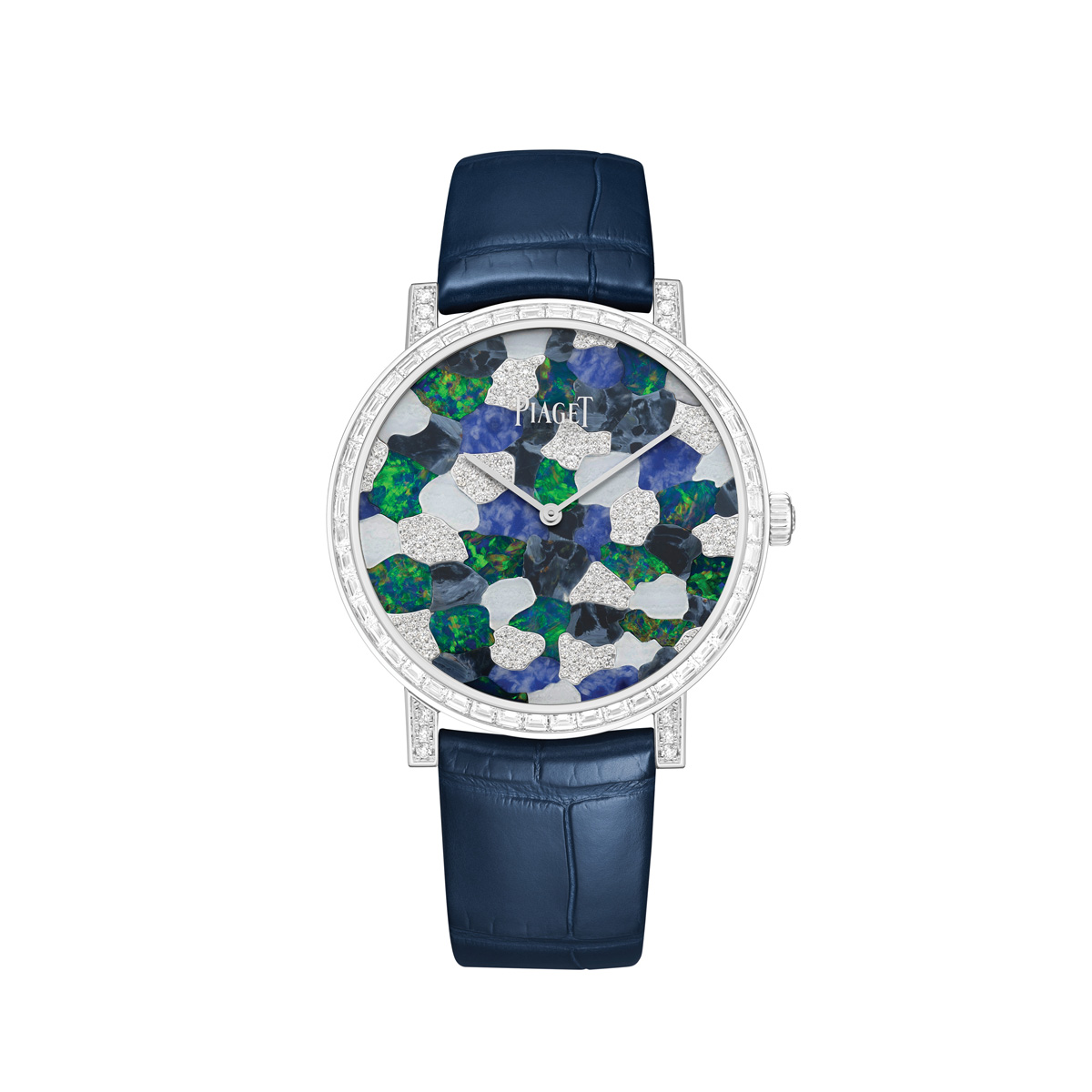
Today, Piaget also uses semi-precious stones for watches in its high jewellery collections. Thus, the Metaphoria collection, introduced last year, includes a beautiful Venilia ladies’ jewellery watch, whose black opal dial is surrounded by a waterfall of diamonds. The Alitura model, on the other hand, uses one of the crafts Piaget is famous for – i.e. marquetry – on its dial, a decoration composed of miniature pieces of black opal, chalcedony or sodalite.
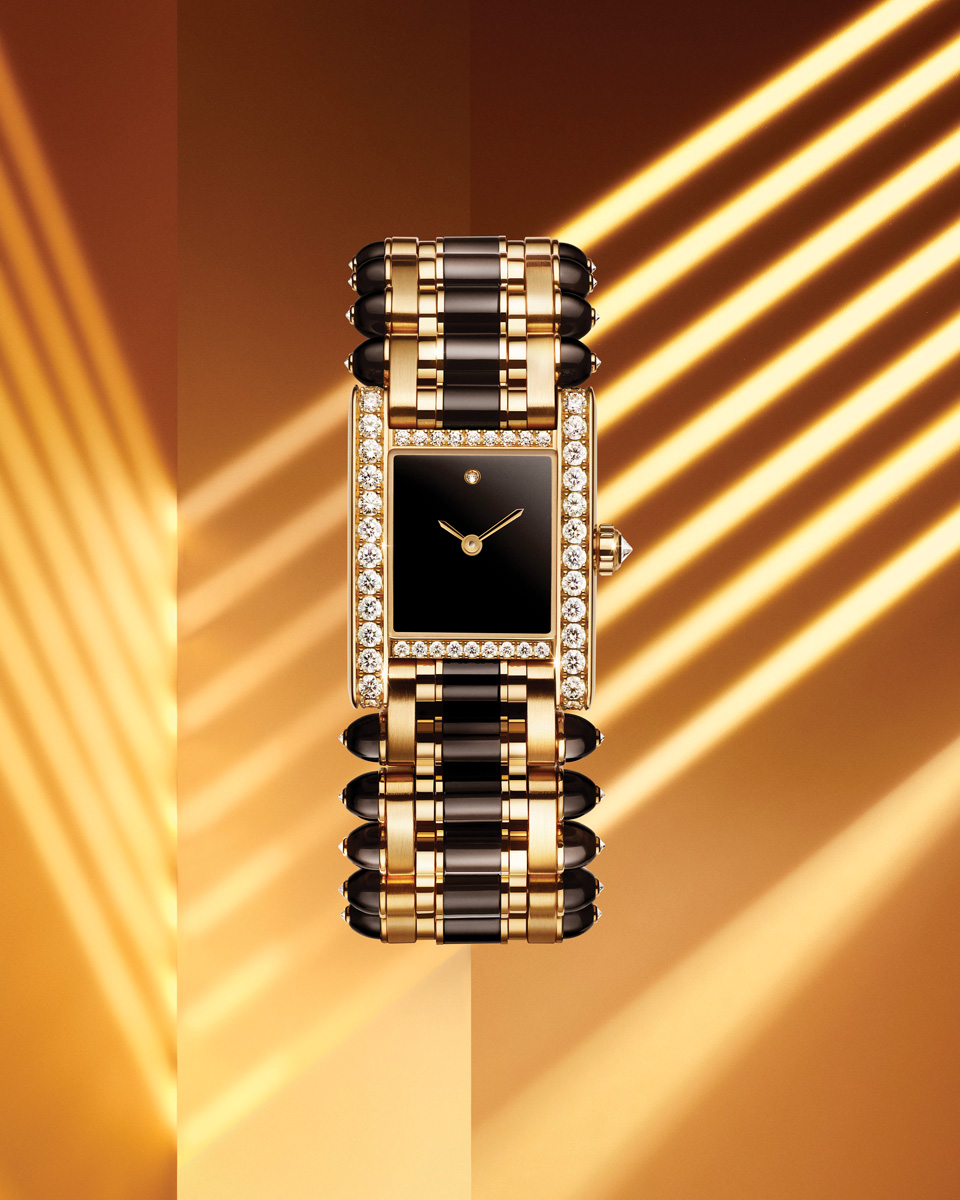
Last year, the famous Tank from 1917 was also dressed in decorative colour by the French house of Cartier. The trio of stunning jewellery watches retains the design codes of the Tank models, but the designers have given them a touch of uniqueness with diamonds and semi-precious stones, the colourfulness of which pays tribute to the famous creative director of the house, Jeanne Toussaint (1887-1976). Two models are adorned with a black onyx dial, and onyx is also used for the bracelet links. The Tank jewellery watches are not just promises, but clear proof that semi-precious stones are not just stones for esoterics, but equal partners to precious stones.
A different approach
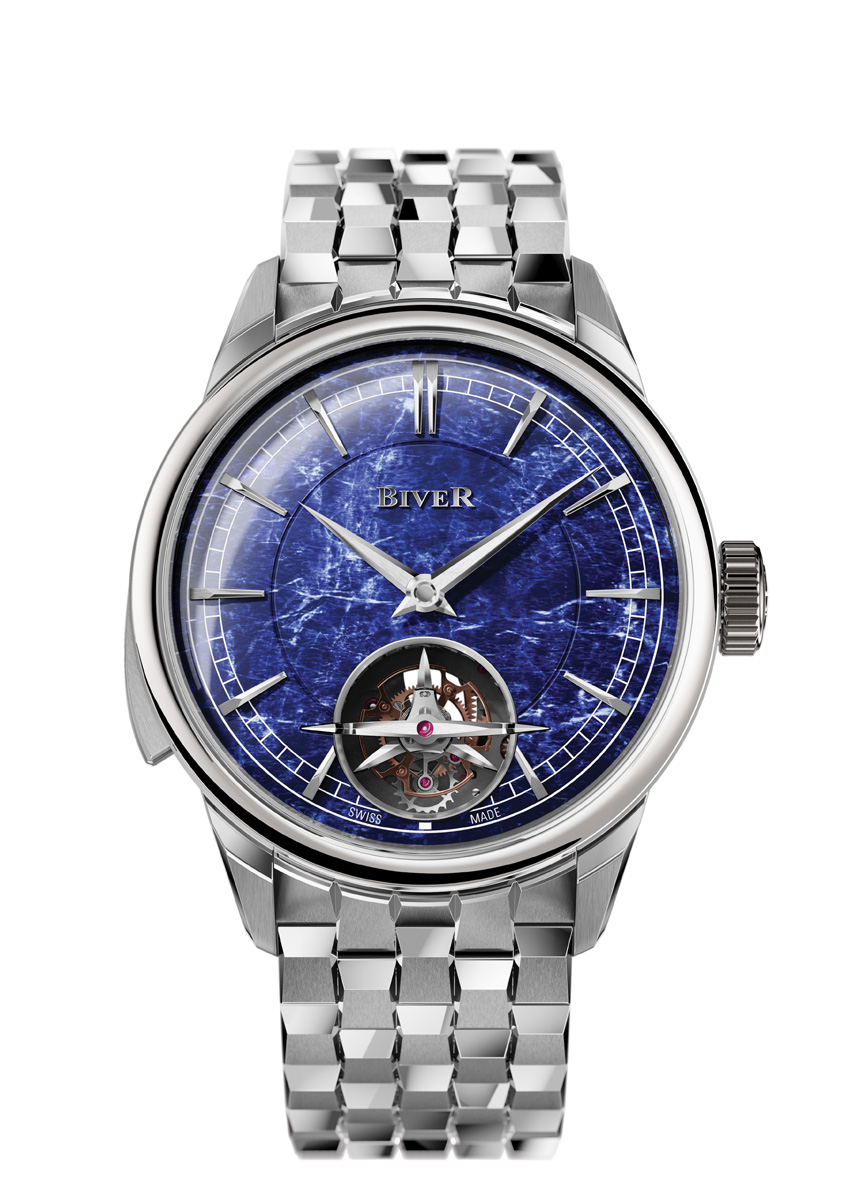
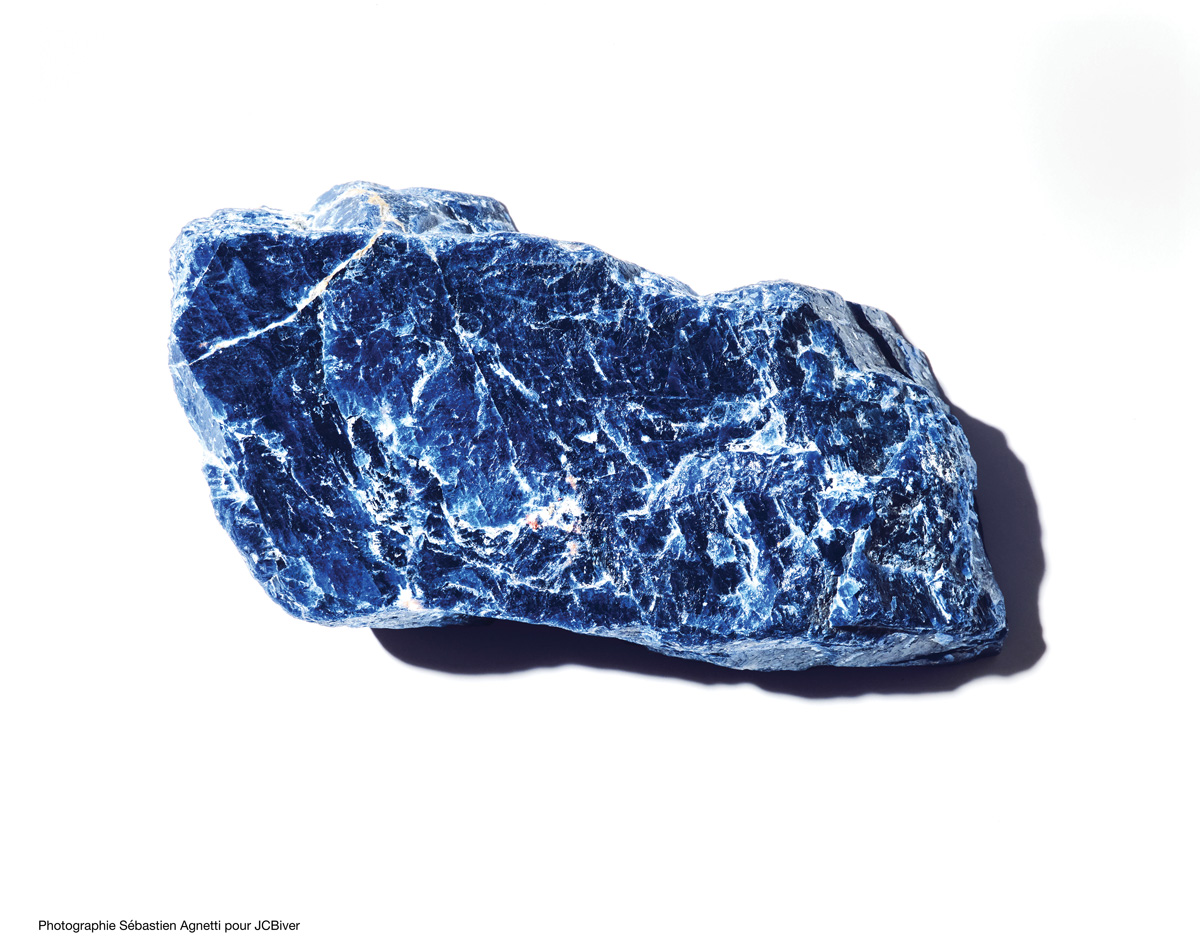
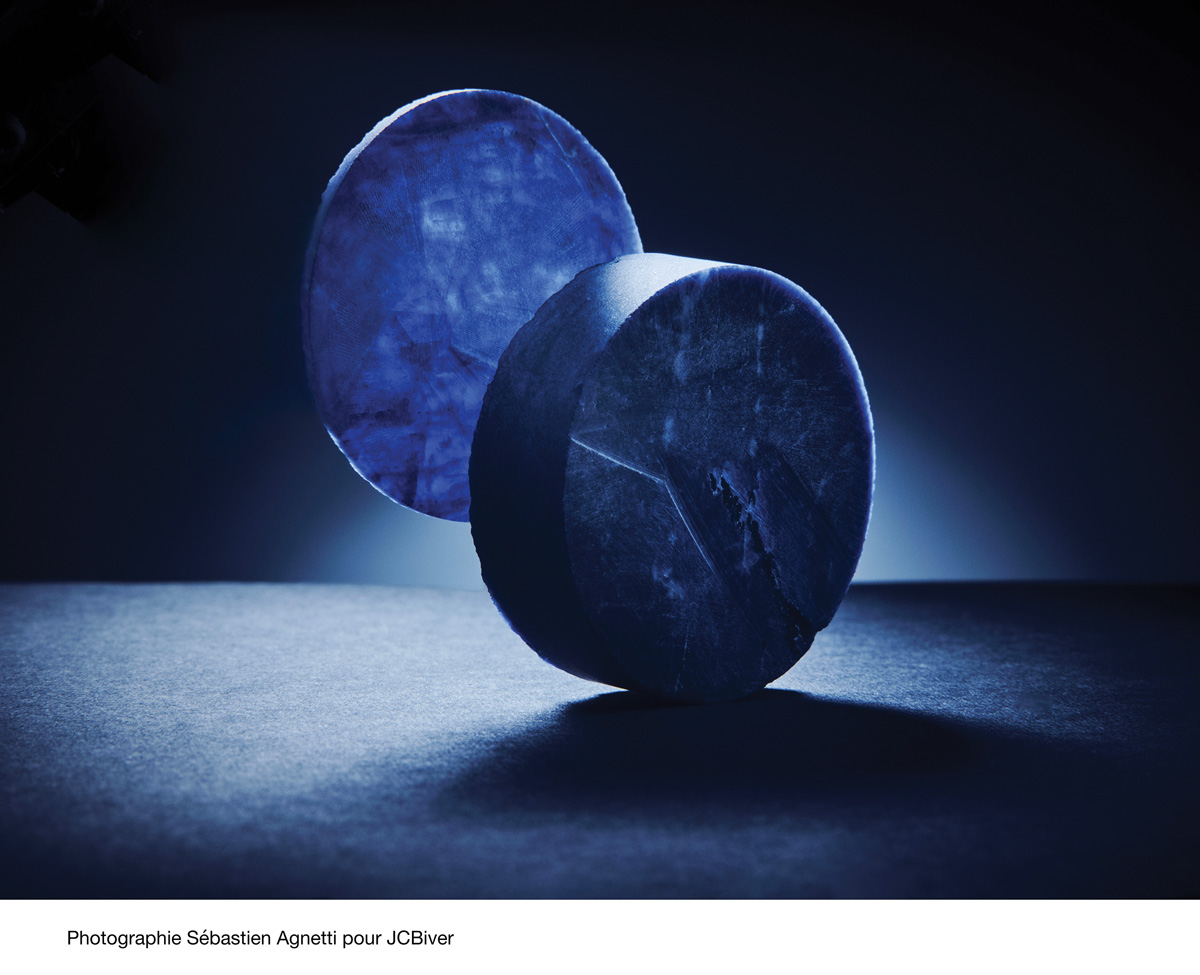
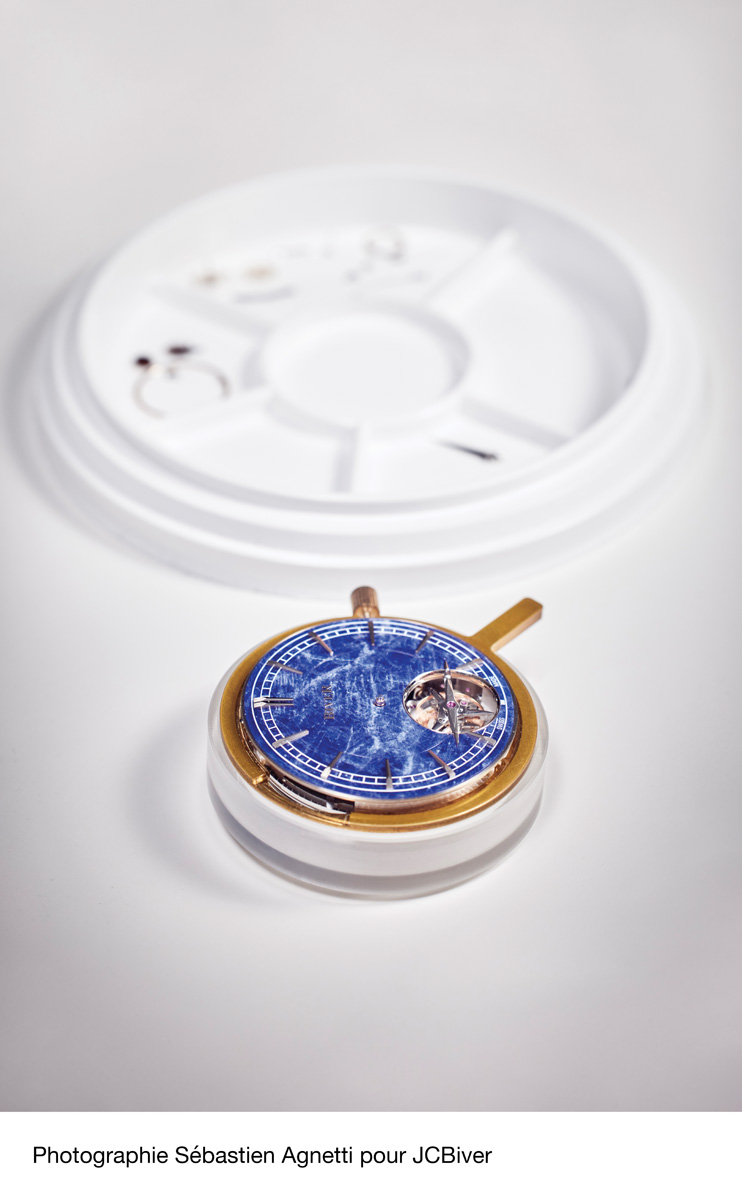
Independent manufactures do not shy away from unusual dials. One such example is the brand introduced last year by Jean-Claude Biver and his son Pierre, simply called Biver. Biver’s titanium Carillon Tourbillon Biver is adorned with a domed blue sodalite dial, which is a challenge in itself; for the rose gold watch, the brand used gray obsidian. “We chose these stones for their spiritual attributes and for what they exude. For example, sodalite has the ability to soothe and even has a protective quality,” said Pierre Biver when introducing the brand.
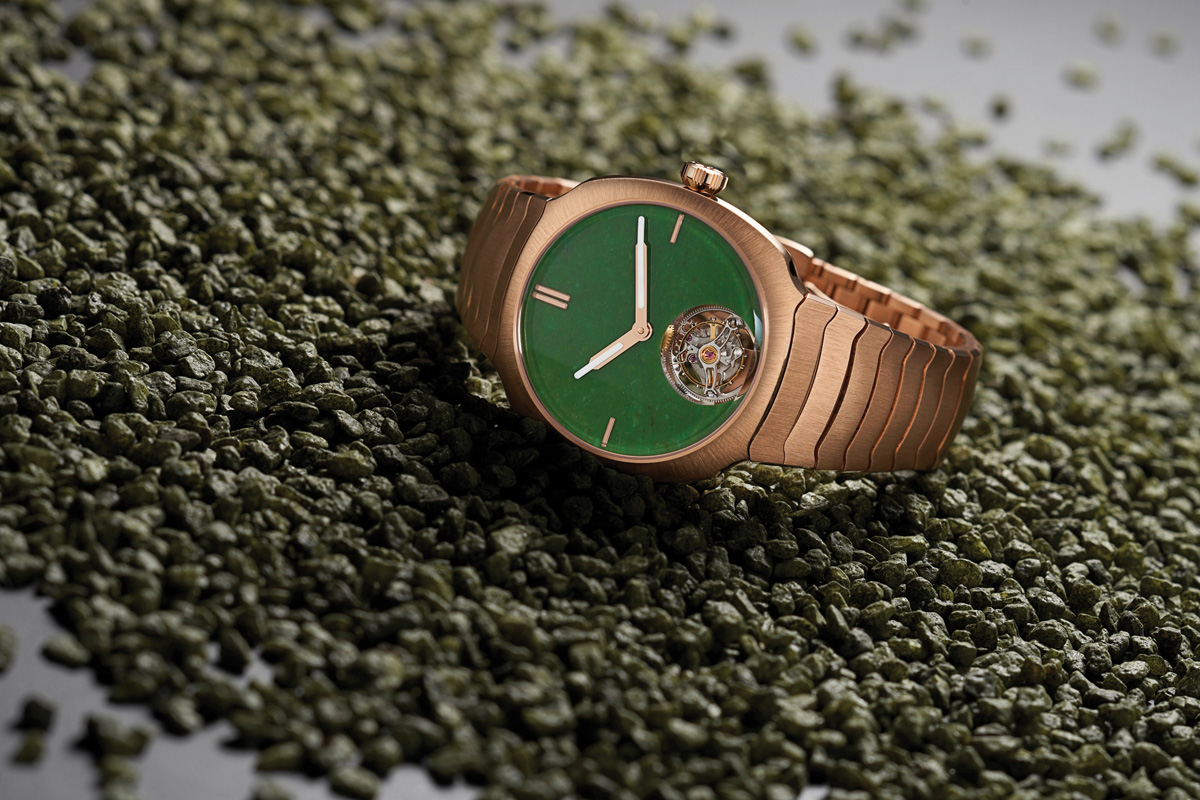
The Schaffhausen Manufacture H. Moser & Cie. made collectors’ pulses race this January with a limited edition of 100 Streamliner Tourbillon Wyoming Jade timepieces, which combine the technical virtuosity of a one-minute flying tourbillon movement with a retro design featuring an olive-green jade dial.
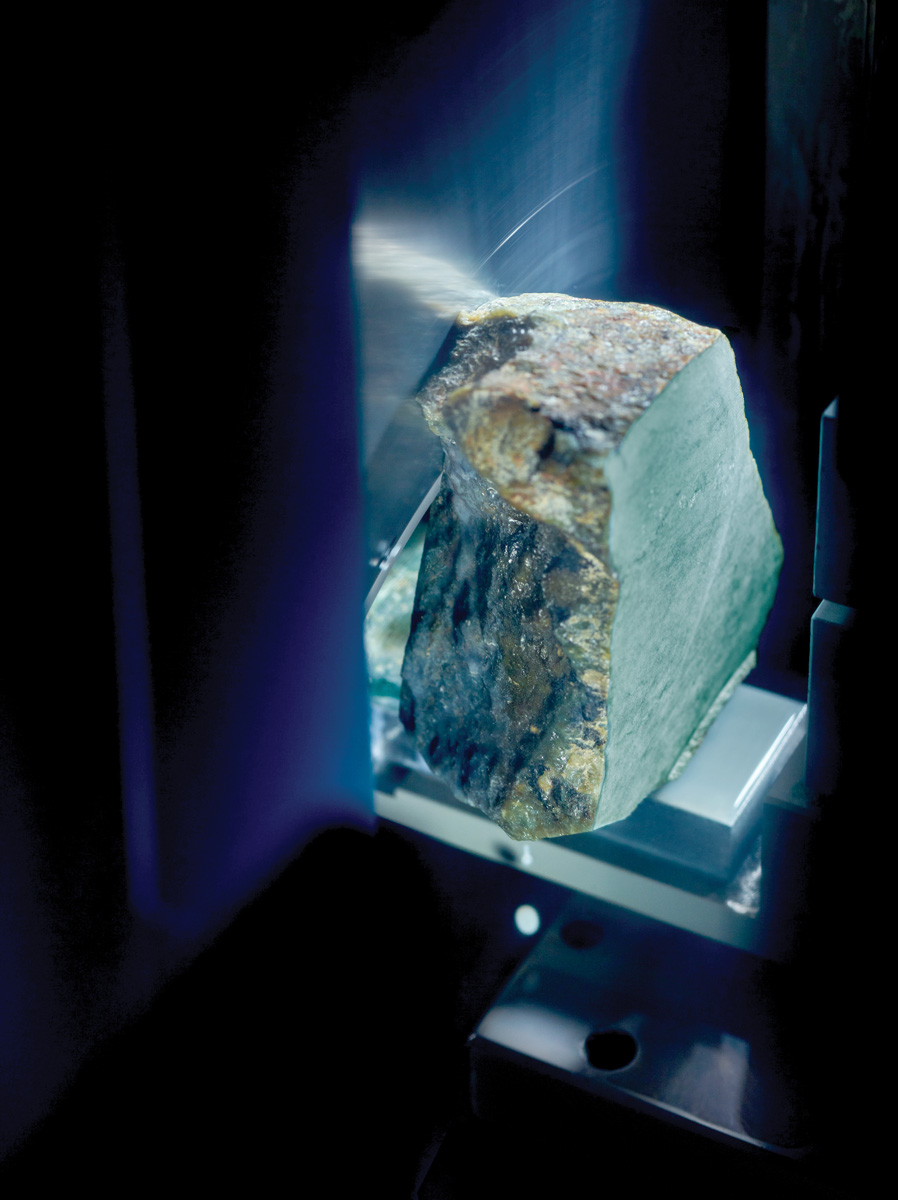
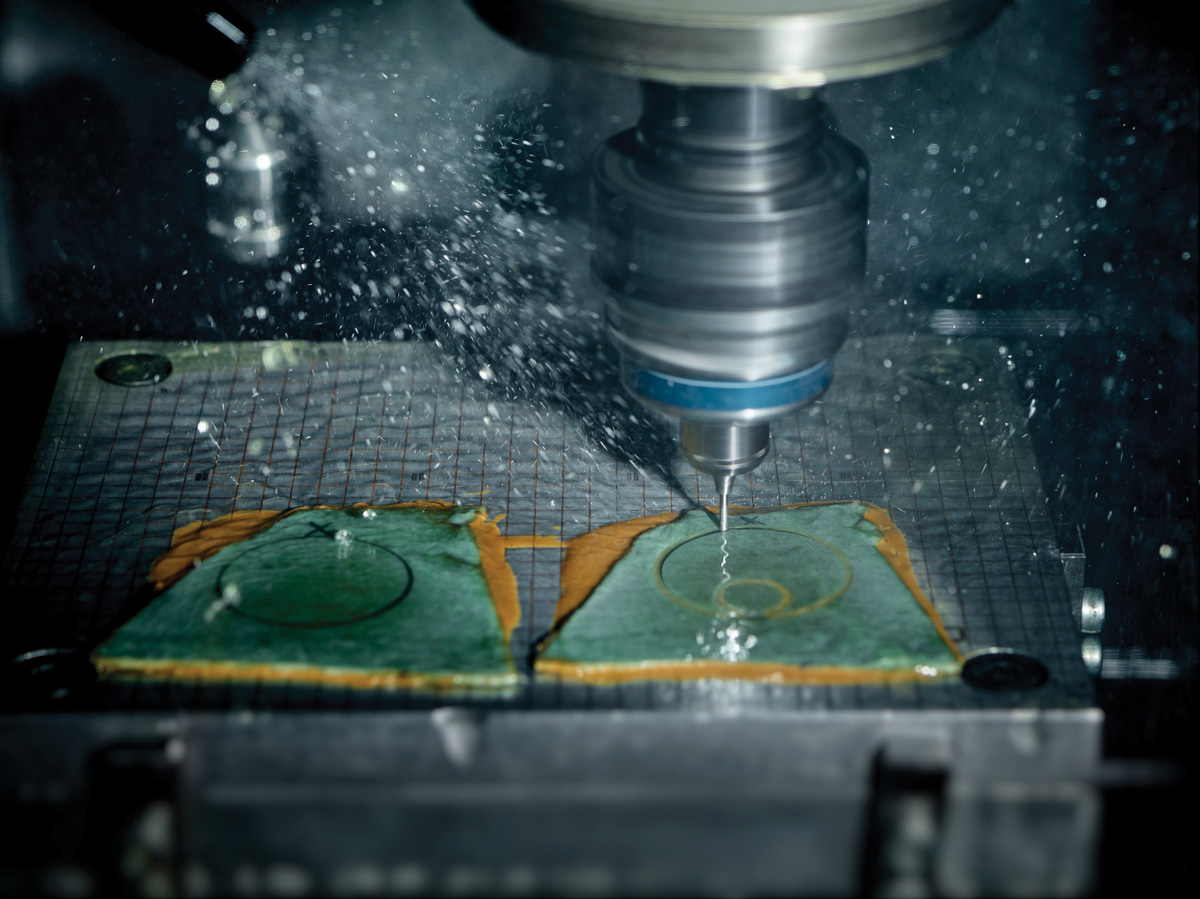
The stone used for the dial is mined in Wyoming, the United States, and is sourced from an ethical mine. The carefully selected stones are cut into slices 1 to 1.2mm thin using CNC machines. Each dial is hand-finished and hand-polished. The absence of a logo emphasises not only the beauty of the stone, but also the exceptional watchmaking complication.
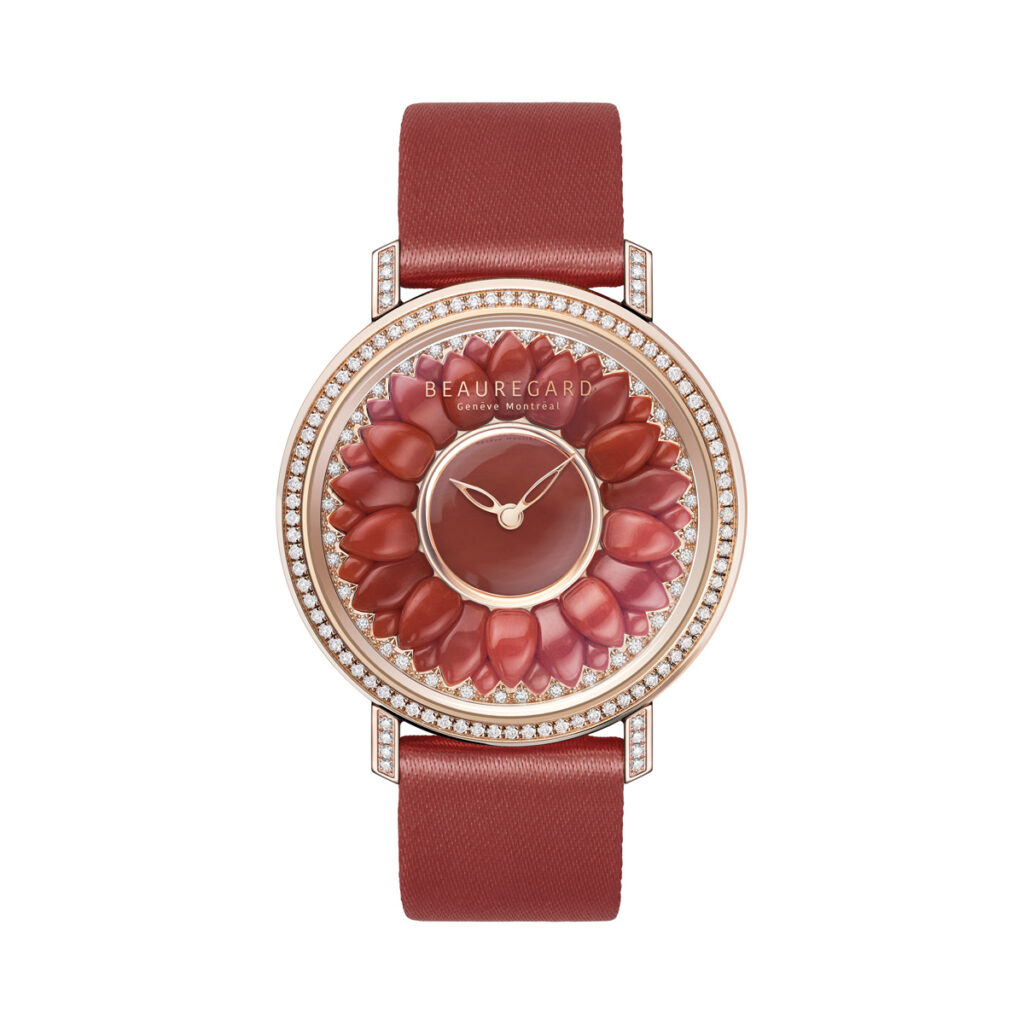
The Montreal-based Beauregard brand describes itself as the only independent manufacture producing watches exclusively for women. Its creations resemble flowers, thanks to the interesting design of the dials. In January, the brand wowed its fans with the Lili Bouton Red Coral, whose dial uses coral from the Mediterranean, which is said to bring good luck and, above all, passionate love. Each dial has 36 coral petals and is created in-house in the brand’s workshop led by Alexandre Beauregard.
Share this article


LEAVE A COMMENT
You must be logged in to post a comment.