


An old classic with a modern twist


In recent years, social networks have become a major influence in the world of watchmaking. Collectors and watch influencers such as @santa_laura or @perezcope on Instagram are gaining thousands of followers. Not surprisingly, they tend to be controversial, pointing out inconsistencies in the marketing statements of big brands, and their posts often provoke reactions in the real world.
For example, @santa_laura, the Singaporean watch and car collector, has recently begun asking various questions about the funding of the Only Watch auction. This sparked a broader debate about where the profits from the prestigious auction organised by Luc Pettavino were actually going.
Instagram has also become the domain of vintage watch dealers. One of the most influential social media personalities is Mike Nouveau, who has over 400,000 followers on TikTok and more than 200,000 on Instagram. Mike Nouveau, a bearded fellow in a baseball cap and flannel shirt, stands out at first glance from the older generation of watch experts in suits. It was he who, together with collector Philippe Toledano, became the promoter of the models that Toledano jokingly referred to as ‘geezer watches’.
So, what is a geezer watch? They are vintage models, mostly from the 1970s, with interesting non-round cases and integrated gold bracelets. They are essentially watches created by brands for their traditional, older collectors at the time – watches that, in their day, stood in stark contrast to the new sporty-elegant steel models favoured by the younger generation, such as Patek Philippe’s Nautilus or Audemars Piguet’s Royal Oak. Many of these extravagant models have quartz movements housed in their cases, because this was all about novel design and quality jewellery work, not the mechanical marvels that many, in the wake of the quartz crisis, believed to be a thing of the past. The foundation of Swiss quartz movements was the Beta-1 movement from 1966. It was developed by a consortium of 20 Swiss brands (including Patek Philippe and Piaget) called the Centre Electronique Horloger (CEH), based in Neuchâtel.
Ironically, thanks to TikTok and Instagram, the watches originally designed for older men are now the ones that the young folks of Generation Z are looking for.
Business on Instagram
Geezer watches from major brands are now quite rare, and in most cases you won’t find them at traditional auction houses such as Christie’s, Sotheby’s or Phillips, which focus either on very complicated models, famous steel watches, Rolex or some independent manufactures. Their marketing platforms are more informal, using channels such as Instagram or direct messaging (DM) on social networks.
‘Ninety per cent of the vintage watch business is done through Instagram messages,’ Mike Nouveau recently told GQ magazine. The dealer and collector only set up his TikTok account in 2022 and has become particularly famous for short videos in which he unboxes vintage watches. Also popular are posts in which he spots men on the street with something really rare and very expensive on their wrist.
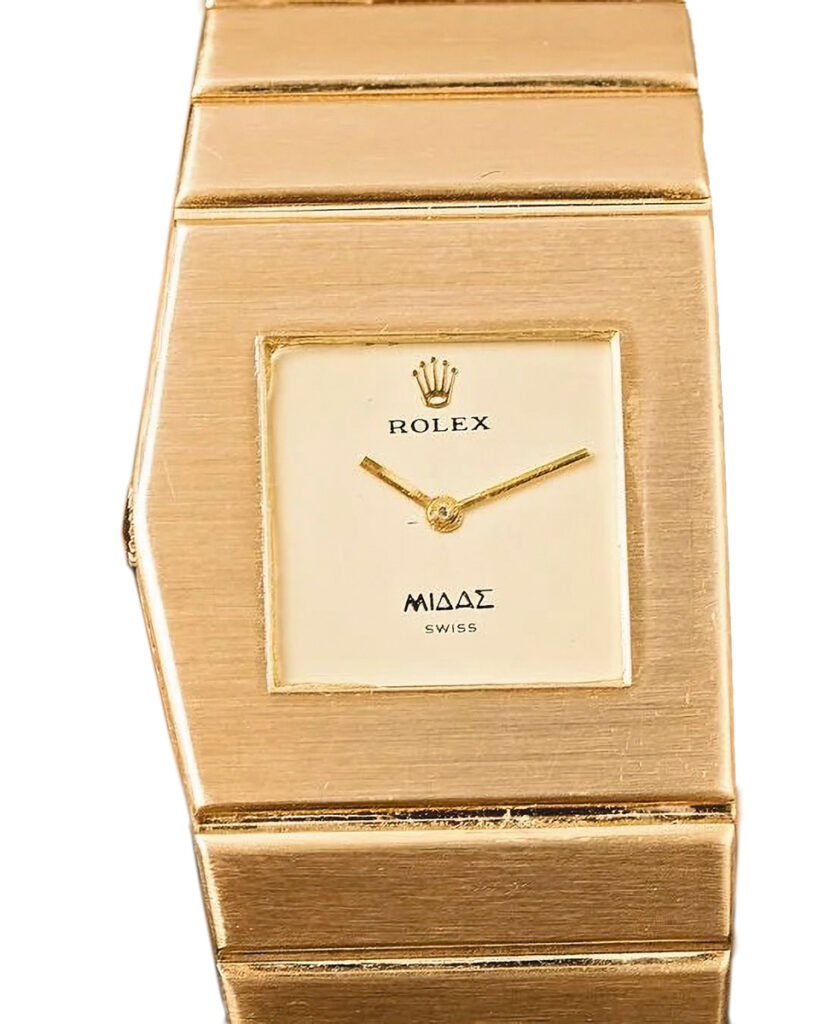
Geezer watches, of course, have their icons, which are usually as hard to find as a needle in a haystack. The Holy Grail among them is the 1964 Rolex King Midas, of which only 1,000 pieces were ever made. Among the owners is Nicholas Foulkes, the well-known British journalist and author of the authorised biography of Patek Philippe and, most recently, of a book on Rolex’s Submariner model. (Phil Toledano, by the way, founded the micro-brand Toledano & Chan, which offers a steel B/1 model, inspired by the King Midas and currently sold out.)
Other exceptional geezer watches include the 1971 Cobra model with a Polonaise bracelet, as well as the very rare Bamboo, both from Audemars Piguet. Similarly, some Rolex models, especially those not offered in the brand’s catalogue, can also be described as geezers. One example is the gold Oyster Perpetual Day-Date with hand-hammered central links on the President bracelet, which was auctioned at Christie’s last September.
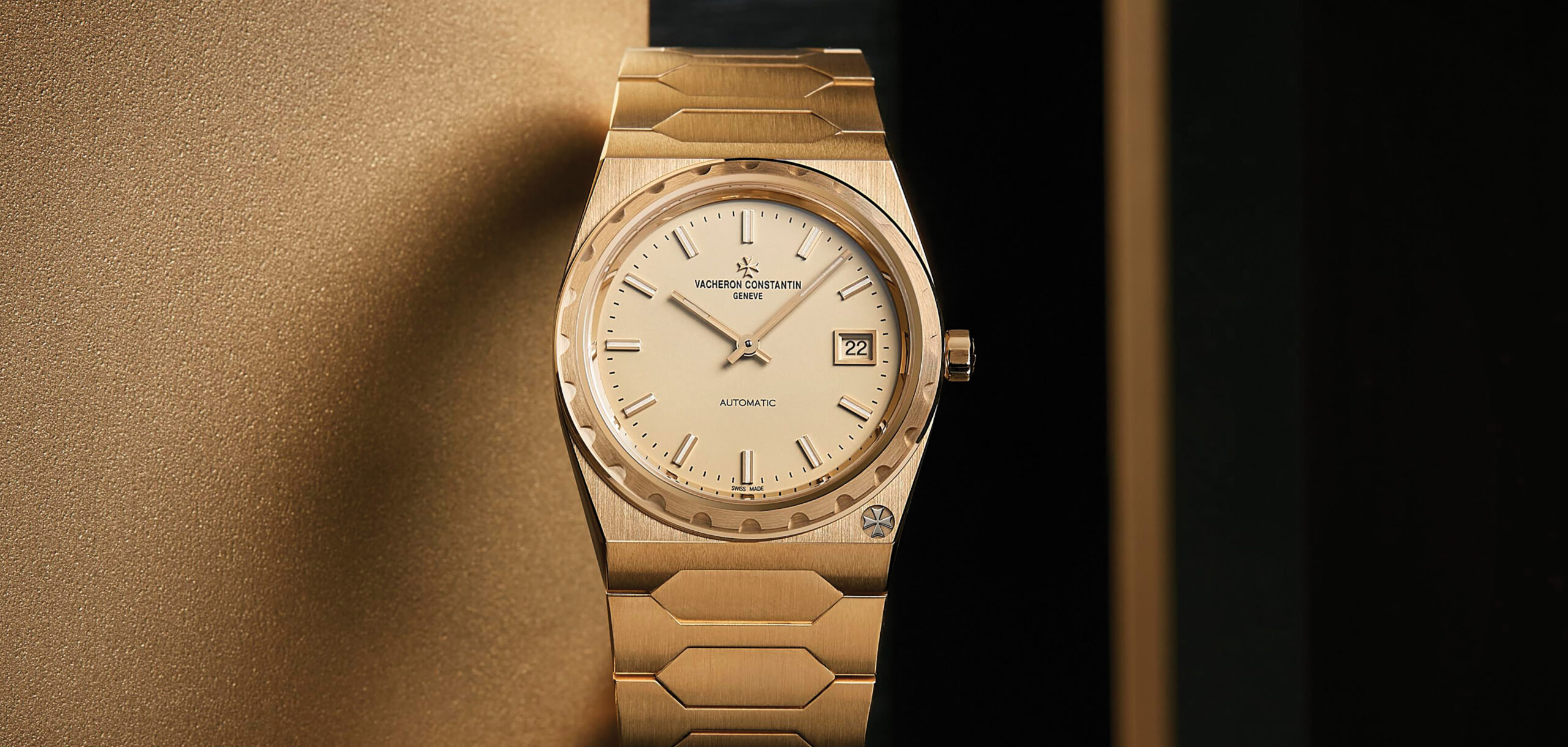
These are special watches for older gentlemen, whether they’re your cup of tea or not. And the true masters here are the trio of brands Patek Philippe, Piaget and Vacheron Constantin. They are all the more interesting because, rather than closing the chapter on last century’s trend for ‘old men’s watches’ and making the original models the favourites of young collectors, they are drawing on their heritage in the form of new models – whether it’s last year’s new Golden Ellipse 5738/1R-001 from Patek Philippe, the Polo 79 from Piaget, or the breathtaking 222 from Vacheron Constantin’s Historiques collection in 2022.


The Glamour of Patek Philippe
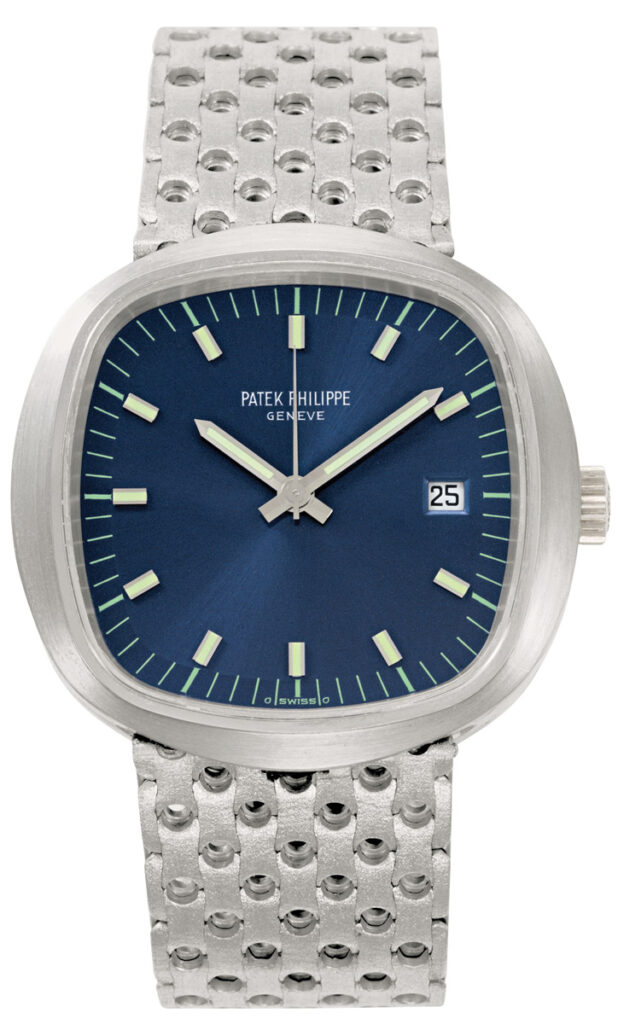
The epitome of the 1970s glamour era is the Reference 3597 by Patek Philippe, introduced in 1969. Its cushion-shaped case resembled a television screen and, at an impressive 43mm in diameter, it was huge for its time. It houses a Beta 21 quartz movement, a modified calibre created by the aforementioned CEH consortium. The gold bracelet, with its holes that have led to comparisons with both Swiss cheese and cheese graters, is another eye-catcher. It was designed by Jean-Pierre Hagman, who opened his own workshop in 1984, having previously worked in many prestigious jewellery workshops. The ‘cheese grater’ bracelet, as it became known, sturdy enough to fit a large watch case, was manufactured by a German company in Pforzheim. According to the brand’s archives, only 160 of these watches were sold.
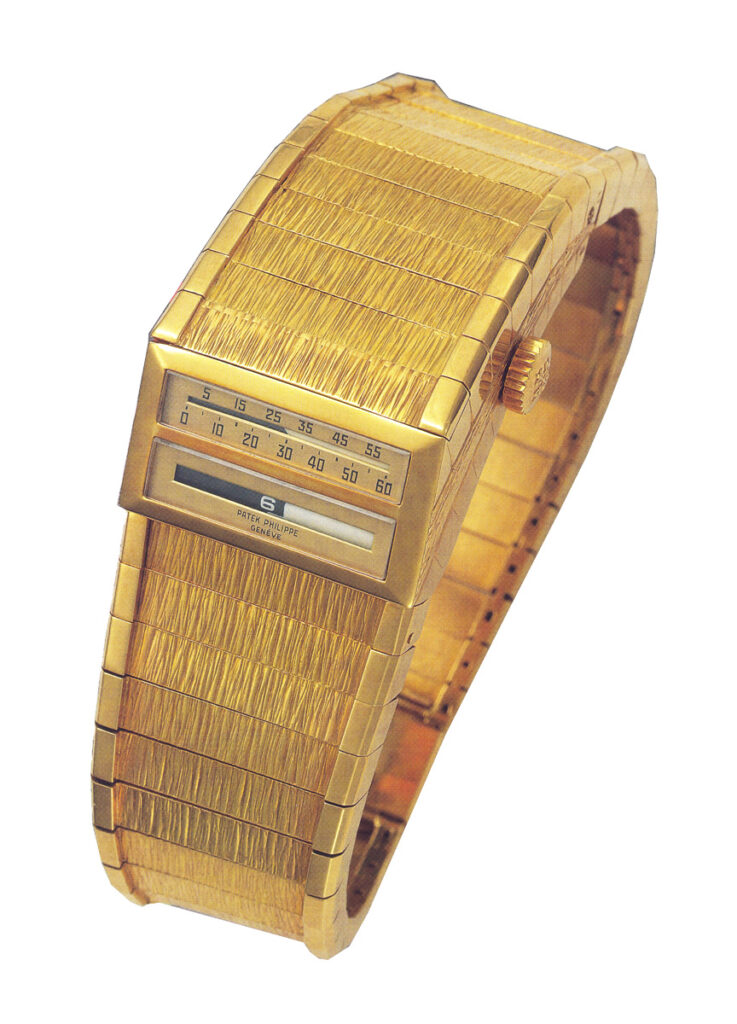
Even rarer is the prototype Cobra 3414 with a gold bracelet and linear time display, which is now housed in the Patek Philippe Museum. It was co-designed in 1958 by Gilbert Albert, who designed a number of Patek Philippe watches with atypical cases, and Louis Cottier, who enriched the world of watchmaking with his World Time models. Patek Philippe has also collaborated with other renowned Swiss names on precious gold bracelets for its watches. The jewellery workshop Gay Frères, founded in 1835, is one famous brand with whom the company has worked, and whose master craftsmen also created the bracelets for models that are the polar opposite of the geezer watches, i.e. the Nautilus and Royal Oak models. The Gay Frères manufacture was acquired by Rolex in 1998.
Patek Philippe also used gold bracelets by Ponti Gennari, which had already been bought in 1969 by another manufacture renowned for its watches with artistic gold bracelets: Piaget. The original building of this jewellery workshop in Geneva now houses the Patek Philippe Museum. Patek Philippe, in turn, bought Ateliers Réunis in 1975.It was in these workshops that the current President of Patek Philippe, Thierry Stern, began his career. ‘Everything was made without machines,’ he recalls. ‘Only goldsmiths worked on the bracelets. I could see the beauty of the craftsmanship, where the final bracelet was created with just a few tools and a piece of gold.’ Indeed, it was perhaps this experience that inspired one of last year’s Patek Philippe masterpieces based on the 1968 Golden Ellipse watch collection: the Reference 5738/1R-001.In addition to the oval case and ebony-black dial, last year’s novelty stands out for its ingenious rose gold Polonaise chain bracelet, which adapts perfectly to the wrist. The manufacture has been developing the bracelet for 15 years and all its links are hand-polished. It consists of an impressive 363 parts, over 300 of which are the bracelet links, assembled by hand, one by one.
The ‘Jet Set Era’ and Piaget
Last year’s Polo 79 model from Piaget, whose expertise in the field of goldsmithing also includes the creation of beautiful gold bracelets, won the Iconic Watch Award at the autumn ‘horological Oscars’ – the GPHG awards. This new award is for watches that have been on the market for more than 20 years, and the Polo 79 was a clear favourite, according to behind-the-scenes sources at the awards. This new piece, which attracted well-deserved attention at the Watches and Wonders trade fair, can certainly be classified as a geezer watch, just like the brand’s vintage models from the 1970s.
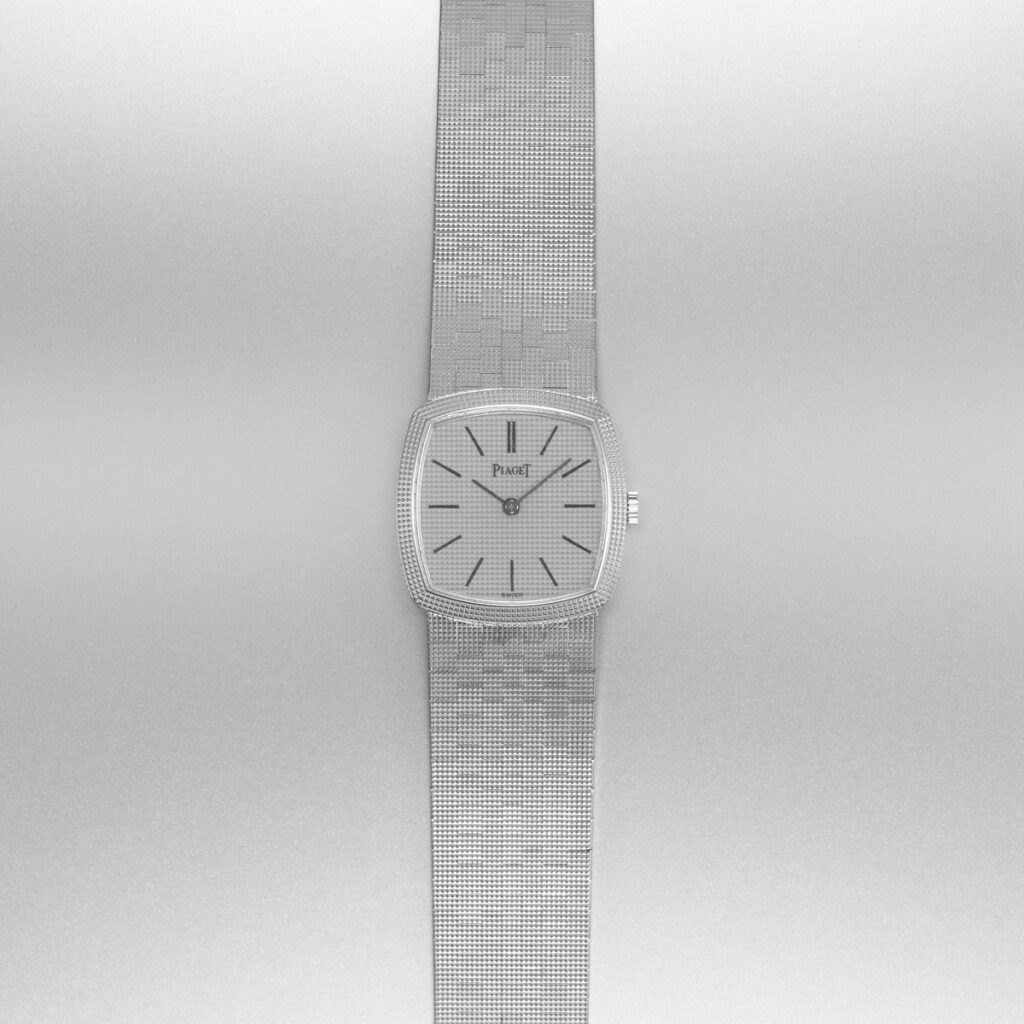
Those models were aimed at wealthy, well-travelled customers–film stars or artists who defined the so-called ‘jet set era’ and belonged to the Piaget Society–and certainly not at the young rich. The artist Andy Warhol, for example, was a member of this select club and owned seven Piaget watches. One of them was the beautiful and very rare Reference 9401 in white gold, with a bracelet that resembles artistically assembled bricks. The bracelet, case and dial are, in turn, decorated with the Clous de Paris motif. The same watch was owned by the French actor, dancer and chansonnier Maurice Chevalier.
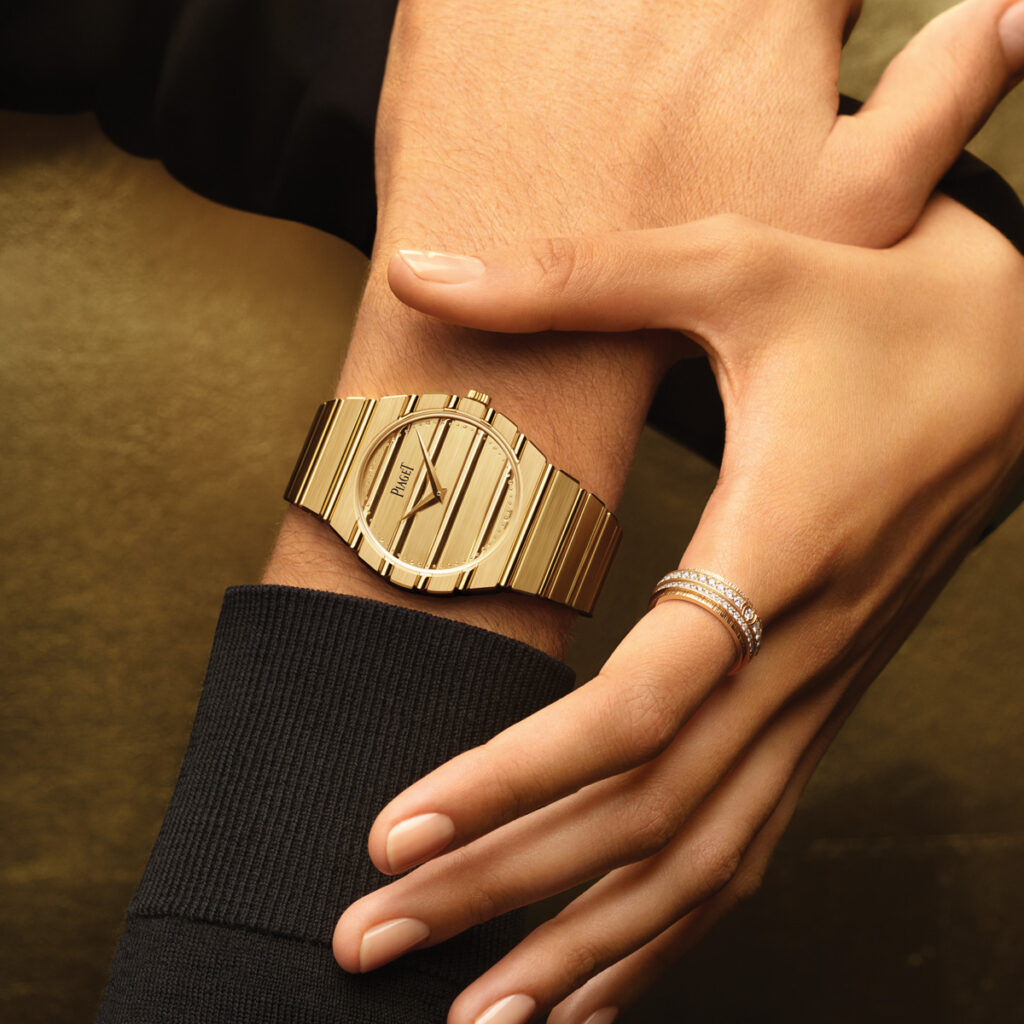
Piaget introduced the Polo watch in 1979, and its elegance defined the era of the 1980s. This iconic geezer watch was designed for customers with a new kind of lifestyle. Yves Piaget said at the time: ‘We were responding to a specific demand from our customers, who were increasingly playing sports. We wanted to create a watch that was elegant, as everyone expects from us, but also durable, so that our collectors could wear it just as much when playing sports.’
Yves Piaget was always wholly committed to elegance, and the new model line was not made of steel, as one might expect, but of yellow gold. The watch, with the horizontal stripes on the bracelet, case and dial that define its original, very novel look, housed a 7P ultra-thin quartz movement, which the brand had first introduced in 1976. Launched to celebrate the 150th anniversary of the manufacture, last year’s award-winning Polo 79 has a 38mm case that accommodates an ultra-thin 1200P1 self-winding movement, developed and assembled by the manufacture itself.
Vacheron Constantin’s Sports Beauty
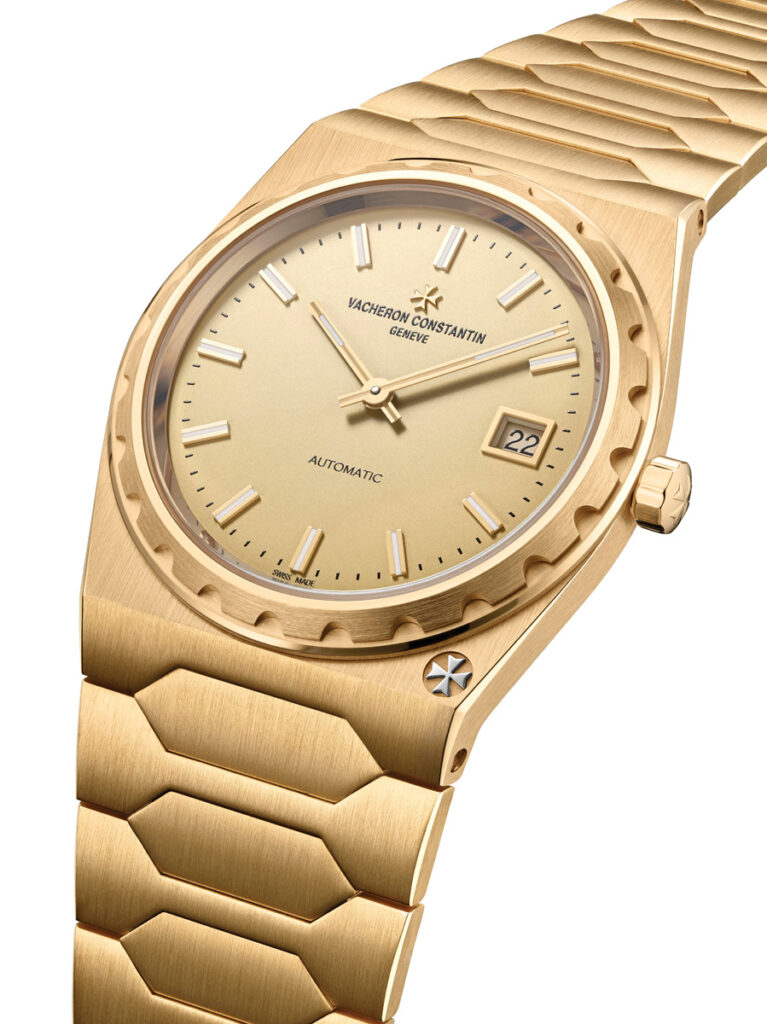
In 2022, when the venerable Geneva manufacture launched the yellow gold 222 in the Historiques collection, attendees at Watches and Wonders talked of little else. Equipped with the manufacture’s own movement, the 37mm watch is a design continuation of the original 222 model from 1977, which was launched to mark the 222nd anniversary of the manufacture. Naturally, the model has undergone some design modifications, including a bracelet with hexagonal central links, which, thanks to subtle adjustments, sits more comfortably on the wrist.
The original model was designed by Jörg Hysek. A native of East Germany, whose family emigrated to Geneva before the Berlin Wall was built, he studied at the Royal Academy of Arts in London and worked for Rolex for four years before setting up his own design studio, Hysek Styling. One of his first clients was Vacheron Constantin, which was looking for a watch designer to celebrate its rather unusual anniversary.
‘Hysek made drawings and sold them to us. The watches were actually developed in our manufacture, but in collaboration with specialists who were involved in creating certain parts of the watch,’ explained Christian Selmoni, the brand’s Heritage and Style Director. For example, the beautiful integrated movement was made by the aforementioned Gay Frères.
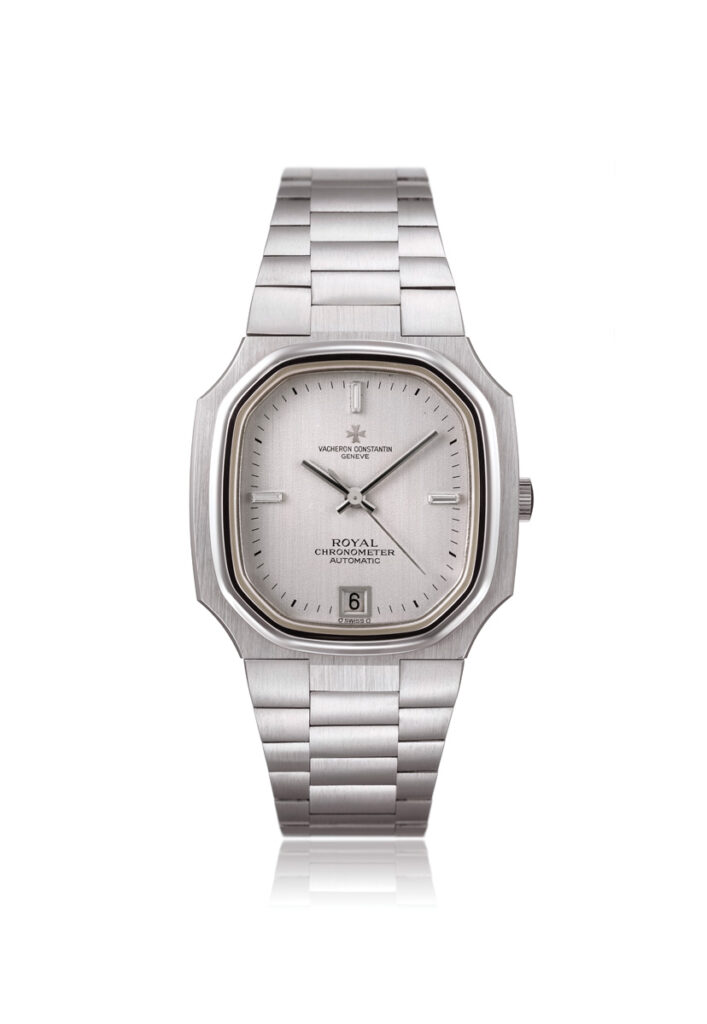
As in the case of the Piaget manufacture, the 222 model from Vacheron Constantin entered the sportier end of the market, but with the elegance typical of the brand’s previous production. The key features of this watch are the fluted bezel, the integrated bracelet, the tonneau-shaped case (which is water-resistant to 120 metres) and the elegantly thin profile of just 7mm.
‘I wanted to design an elegant sports watch, to find the right balance between the brand’s classic refined style and modern design,’ said Jörg Hysek. The original model with a 37mm case was called ‘The Jumbo’ and, according to the manufacturer’s records, only 700 pieces were produced before production ceased in 1985. In addition to the smaller ladies’ models in gold, steel and bi-metal versions, the brand also produced the epitome of the geezer watch – the 222 with a square case.
Share this article

LEAVE A COMMENT
You must be logged in to post a comment.