



Audemars Piguet: three singular creations from the Atelier des Établisseurs


Rooted in the Vallée de Joux tradition of établissage, the Atelier brings together master engravers, lapidaries, enamellers, jewellers and watchmakers to collaborate on objects where every surface and mechanism bears the mark of the human hand. Each creation is conceived with artistic freedom, executed using endangered hand techniques and assembled and regulated by a single watchmaker to preserve continuity of craft and spirit.
The Atelier des Établisseurs revives a collective approach to watchmaking in which independent specialists contribute discrete skills to a shared vision. The initiative emphasises hand‑executed techniques such as artistic engraving, traditional hand‑skeletonisation with a fine saw, stone‑cutting and gem‑setting, as well as Haute Horlogerie finishing performed by hand. These techniques are not decorative afterthoughts but structural elements of design, shaping case silhouettes, dials, bridges and bracelets. The Atelier’s process begins with a gesture or an intuition and evolves through dialogue among artisans, designers and a single watchmaker who assembles and adjusts the finished piece, ensuring that the object remains a coherent expression of human labour and intention.
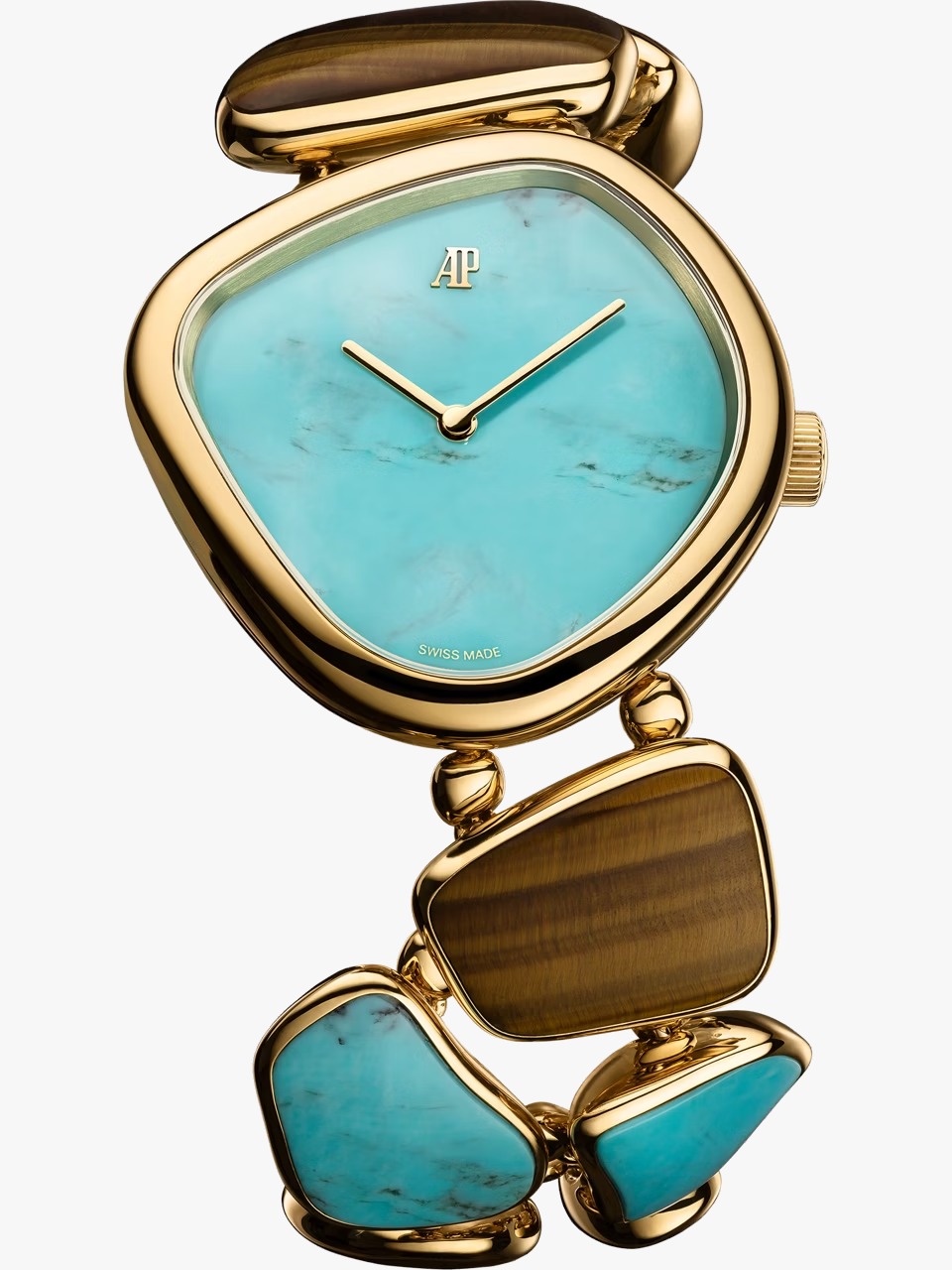
Établisseurs Galets
The Galets translates the organic poetry of the Lac de Joux shoreline into a sculptural wristwatch. The case is crafted in 18‑carat yellow gold and measures 31 millimetres across, its silhouette inspired by water‑smoothed pebbles. The dial is a natural stone selected and cut by lapidaries to reveal texture and colour that vary from piece to piece. The Calibre 3098 has been reshaped to follow the case’s curves and finished by hand with traditional Haute Horlogerie techniques that include anglage, perlage and hand‑graining. The bracelet is composed of pebble‑shaped links that echo the dial material and are joined by gold connectors to create a fluid, tactile drape. Every Galets is assembled and regulated by one master artisan, a deliberate choice that preserves the lineage of établissage and ensures that the watch’s material narrative remains intact from first cut to final adjustment.

Établisseurs Peacock
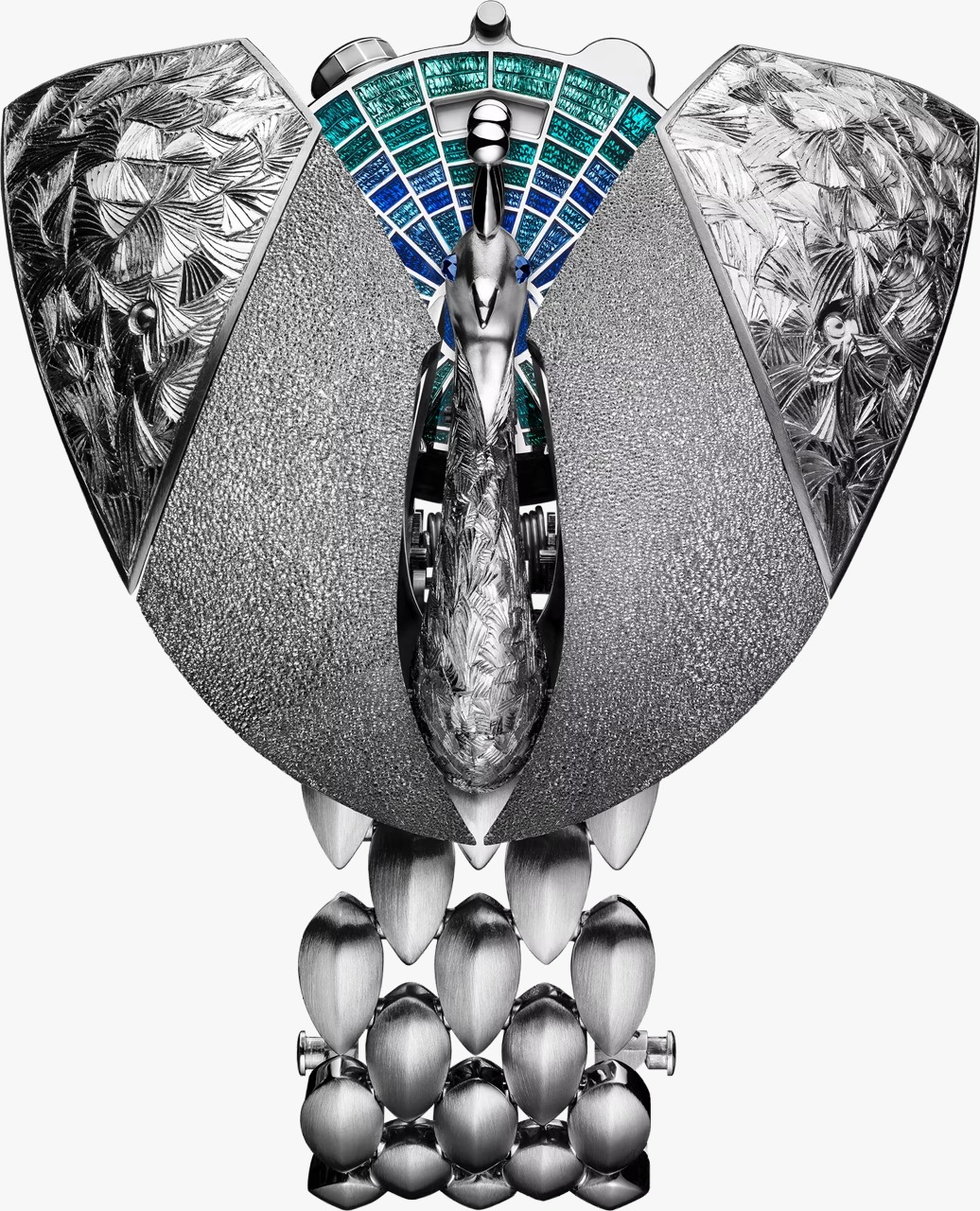
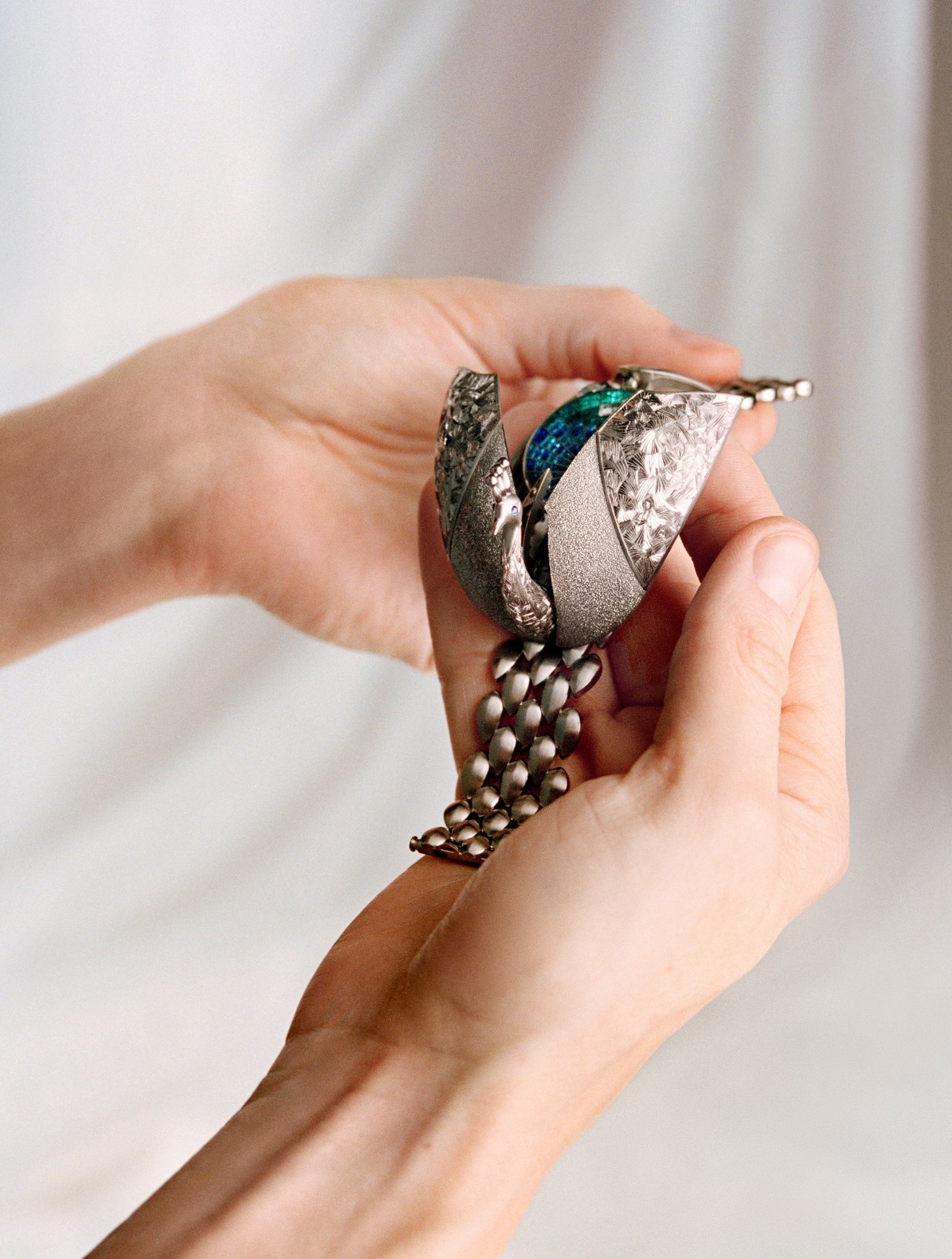
The Peacock is a mechanical jewel that fuses Haute Joaillerie, automaton mastery and refined horology. The outer shell is executed in 18‑carat white gold and takes the form of a beetle that opens with a single push to reveal a miniature tableau. At the centre of that tableau sits a hand‑sculpted peacock rendered in translucent enamel and enhanced by meticulous hand engraving. The peacock is animated above a dragging‑hour display driven by Calibre 3098.2, a movement configured to add depth and motion beneath the enamelled sculpture. Gem‑setting and feather‑inspired engraving extend across the case and bracelet, which is conceived as an integral part of the composition rather than a mere attachment. The Peacock demonstrates how automaton engineering and traditional decorative arts can be integrated into a coherent timekeeping object that reveals time through art, movement and emotion.
Établisseurs Nomade
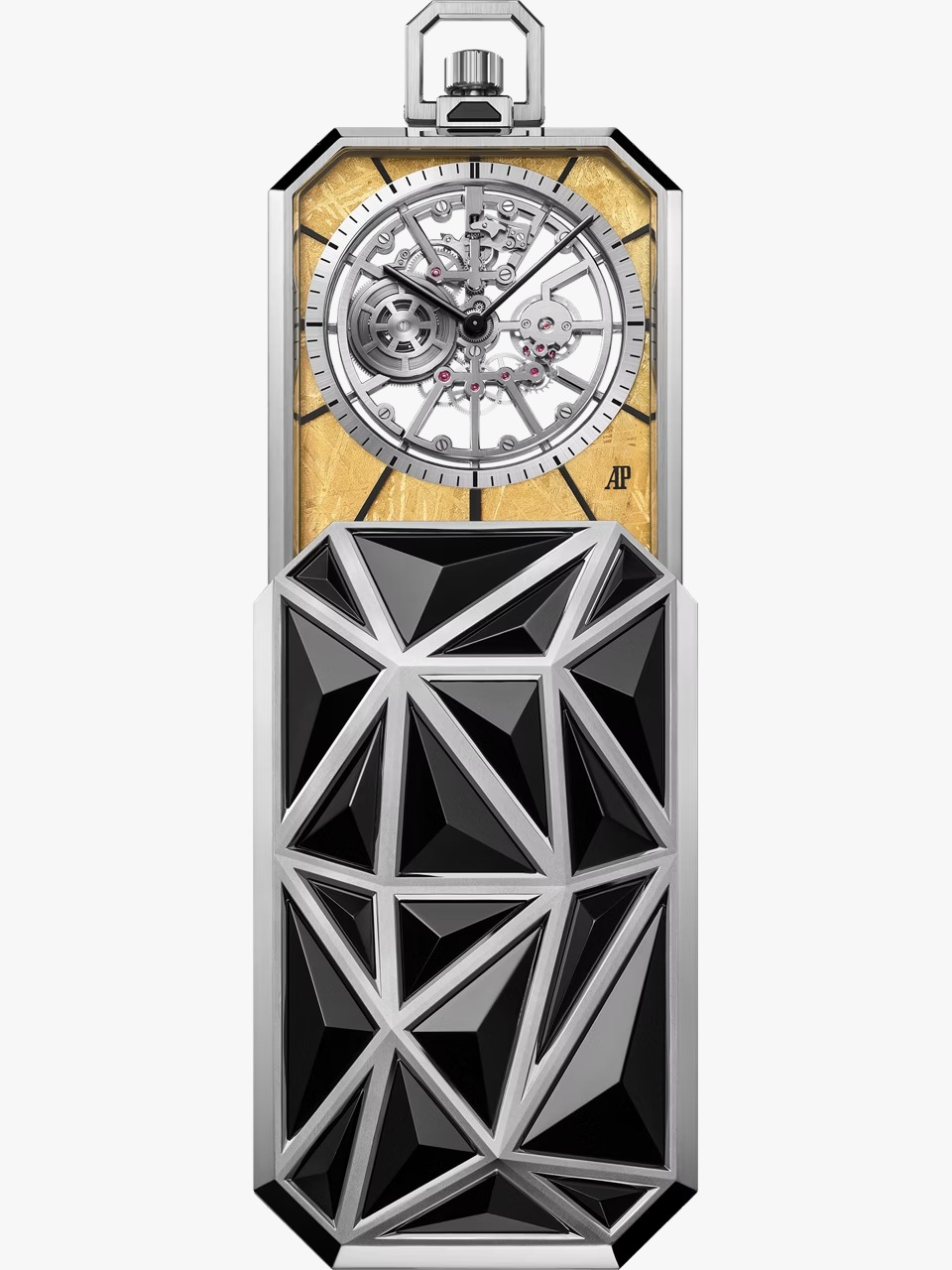
The Nomade reimagines portable timekeeping as a transformable mechanical sculpture. Its outer shell is crafted in titanium and measures 42 millimetres, concealing a sliding inner case that can be worn on the wrist, carried as a pocket companion or displayed as a miniature desk clock. A secret push‑piece releases the inner module to reveal a natural stone dial and a hand‑skeletonised Calibre 7501. The movement’s bridges are openworked using a fine saw in a process that creates a rhythmic interplay of light and transparency, turning the calibre into a visible architecture. The Nomade is offered with an artisanal chain in gold or titanium, allowing the object to travel with its owner as both a bejewelled accessory and a functional timekeeper. As with the other Établisseurs pieces, a single watchmaker completes assembly and regulation, ensuring that the Nomade’s mechanical and aesthetic intentions remain unified.

Share this article




LEAVE A COMMENT
You must be logged in to post a comment.