


The main trends in wachmaking, set by Watches and Wonders 2026


If previous years were defined by “quiet luxury” and steel sports watches, 2026 is the year of High-Definition Horology.
1. The “Mechanical Ballet”: The Reign of the Tourbillon
The tourbillon has transitioned from a hidden technical flex to the undisputed protagonist of the dial. Brands are no longer content with a simple aperture; they are building entire aesthetic languages around the rotation.
The invention of the tourbillon marked a turning point in the evolution of precision timekeeping, emerging at the dawn of the 19th century when Abraham‑Louis Breguet sought to overcome the stubborn influence of gravity on pocket‑watch accuracy. By placing the escapement and balance wheel inside a rotating cage, Breguet created a mechanical ballet that averaged positional errors and elevated watchmaking from craft to art.
His 1801 patent not only introduced a revolutionary regulator but also set a new benchmark for horological ingenuity, inspiring generations of watchmakers to refine, reinterpret, and celebrate the complication. Today, the tourbillon remains a symbol of mastery—less a necessity in the age of modern materials and more a testament to the enduring romance of mechanical innovation, where engineering brilliance and aesthetic poetry converge in a single, whirling heartbeat of a watch.
Czapek Genève showcased the Antarctique Tourbillon Titanium Cosmic Blue, where the flying tourbillon at 6 o’clock anchors a mesmerizing flinqué dial.
Moser & Cie broke new ground with the Streamliner Tourbillon Concept Ceramic, marrying their first-ever high-tech ceramic case with a minimalist Vantablack-style approach that lets the “mechanical ballet” take center stage.
2. High Transparency: The Rise of the Skeleton
“Openworking” is the buzzword of the season. 2026 sees a move away from solid dials toward architectural transparency, allowing collectors to see the “soul” of the watch.
Skeletonized watches originated in the 18th century as watchmakers began removing non‑essential metal from movements to reveal their inner workings, transforming timepieces into both mechanical instruments and artistic showcases.
Skeletonized watchmaking emerged as a bold expression of horological transparency, beginning in the 1760s when French clockmaker André‑Charles Caron introduced the first known skeleton watch, exposing the intricate interplay of gears and springs beneath the dial. This early innovation aligned with the Enlightenment’s fascination with mechanical mastery, allowing watchmakers to demonstrate their technical skill by trimming away excess metal and leaving only the essential “skeleton” of the movement. hourstriker.com Throughout the 19th century, advances in precision engineering enabled more elaborate open‑worked designs, often adorned with hand engraving and crafted as rare luxury pieces for aristocratic patrons.
As wristwatches rose to prominence in the early 20th century, artisans adapted skeletonization to smaller cases, pushing the limits of movement architecture while preserving structural integrity. Modern skeleton watches now blend traditional craftsmanship with cutting‑edge techniques such as CNC machining and laser cutting, achieving levels of precision and visual drama that earlier watchmakers could only imagine. Thomas Earnshaw International Today, the skeletonized watch stands as a symbol of horological artistry—an intricate fusion of engineering and aesthetics where every oscillation, gear tooth, and bridge becomes part of a mesmerizing mechanical performance.
Hermès debuted the H08 Squelette, a masterclass in geometric transparency that transforms their sporty cushion-case into a sculpture of negative space.
Zenith pushed the limits of their legendary high-frequency movement with the Chronomaster Sport Skeleton, utilizing tinted sapphire and openwork to show the 1/10th-of-a-second magic in real-time.
3. The Eternal Feminine: Jewellery as Masterpiece
The distinction between “jewellery” and “watchmaking” has finally vanished. The 2026 collections for women are heavy on “Metiers d’Art,” featuring intricate engraving and museum-grade gem-setting.
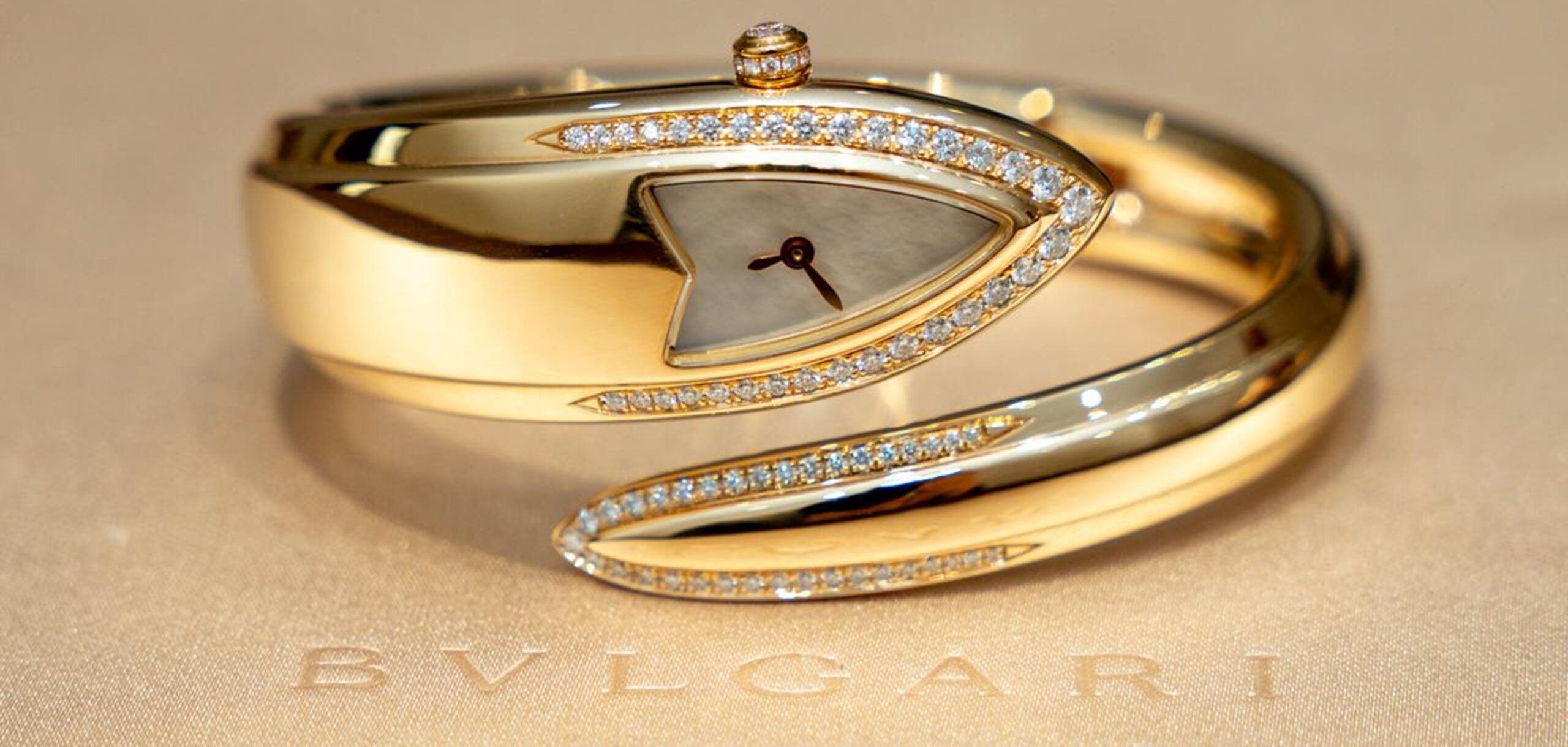
Bvlgari stole the show with the Serpenti Aeterna range, with two new iterations: a simple yet lustrous yellow gold version (represented in the cover photo), and a gem-set rose gold rendition that pulls no punches. The second model is a breathtaking fusion of high jewellery and horology featuring over 100 colored gemstones. It serves as a reminder that for many houses, the watch is a canvas for the “eternal feminine.”

4. Astro Mood: The Celestial Renaissance
Watchmaking is returning to its roots: the stars. There is a renewed obsession with perpetual calendars and moon phases, framed not as old-fashioned tools, but as “Astro Mood” lifestyle pieces. Perpetual calendars and moon‑phase displays became two of the most poetic yet technically demanding complications in watchmaking, born from the desire to track celestial and calendar cycles with mechanical precision.
Perpetual calendars first appeared in the 18th century, when English watchmaker Thomas Mudge created the earliest known perpetual calendar pocket watch around 1762, a mechanism capable of accounting for varying month lengths and leap years without manual correction . This breakthrough laid the groundwork for later refinements by Swiss maisons such as Patek Philippe, which patented its own perpetual calendar mechanism in 1889 and introduced the first perpetual calendar wristwatch in 1925, adapted from an earlier pendant‑watch movement . These innovations transformed the complication from a rare technical curiosity into a hallmark of haute horlogerie, celebrated for its ability to “remember” the calendar through a complex interplay of cams, levers, and a four‑year cycle wheel.
Moon‑phase displays, often paired with perpetual calendars, trace their origins to early astronomical clocks and later to pocket watches that sought to mirror the lunar cycle with artistic flair. While not as mechanically complex as a perpetual calendar, the moon‑phase indicator became a symbol of romantic watchmaking, offering a visual connection to the heavens. By the 19th century, moon‑phase apertures were commonly integrated into high‑end calendar watches, complementing the growing sophistication of mechanical timekeeping. As perpetual calendars migrated to the wrist in the early 20th century, moon‑phase displays followed, becoming a signature feature of many iconic models.
IWC Schaffhausen led the charge with the Big Pilot’s Watch Perpetual Calendar ProSet Le Petit Prince, featuring a new user-friendly “ProSet” mechanism that simplifies one of horology’s most complex complications.
Roger Dubuis took a more avant-garde approach with the Excalibur Biretrograde Perpetual Calendar, proving that astronomical tradition can look incredibly futuristic.
5. The Beauty Complex: Extreme Innovation
Simplicity was notably absent from the high-end halls. Instead, we saw a “Beauty Complex”—the idea that extreme technical difficulty is its own form of art.
Armin Strom seemed to dominate the physics of time with the Minute Repeater Resonance 12.59, a world-first combination of resonance technology and a chiming complication, a fully new development inspired by Masterpiece 2, expressed through entirely new proportions and mechanical architecture. Engineered in a more compact 42 mm case, with a slimmer profile, while reaching a new level of mechanical complexity. This evolution is accompanied by a significant increase in mechanical intricacy. The striking system has been expanded from two to four hammers and four gongs, while a newly developed function introduces an additional level of interaction. Through a dedicated selector, the wearer may choose between the conventional indication of time or activate the 12:59 sequence – the longest possible strike of the mechanism. At the heart of the timepiece lies the entirely new manual-winding manufacture Calibre ARR25, developed, engineered and produced in-house, which synchronises two independent regulating systems – each with its own barrel, gear train, escapement and balance wheel – operating in harmonic resonance. A further innovation lies in the integration of the 12:59 function, allowing the wearer to select between two distinct striking modes. In standard operation, the watch chimes the time indicated by the hands. Alternatively, it delivers the longest possible sequence – 12 hours, three quarters and fourteen minutes.
Jaeger-LeCoultre reached for the stars with the Master Inventia Gyrotourbillon à Stratosphère, a triple-axis marvel that defies gravity. By counteracting the effects of the Earth’s gravity, this complication guarantees the tourbillon watch’s pinpoint watchmaking precision. The new Gyrotourbillon is as technically efficient as it is visually fascinating.
Share this article



LEAVE A COMMENT
You must be logged in to post a comment.