


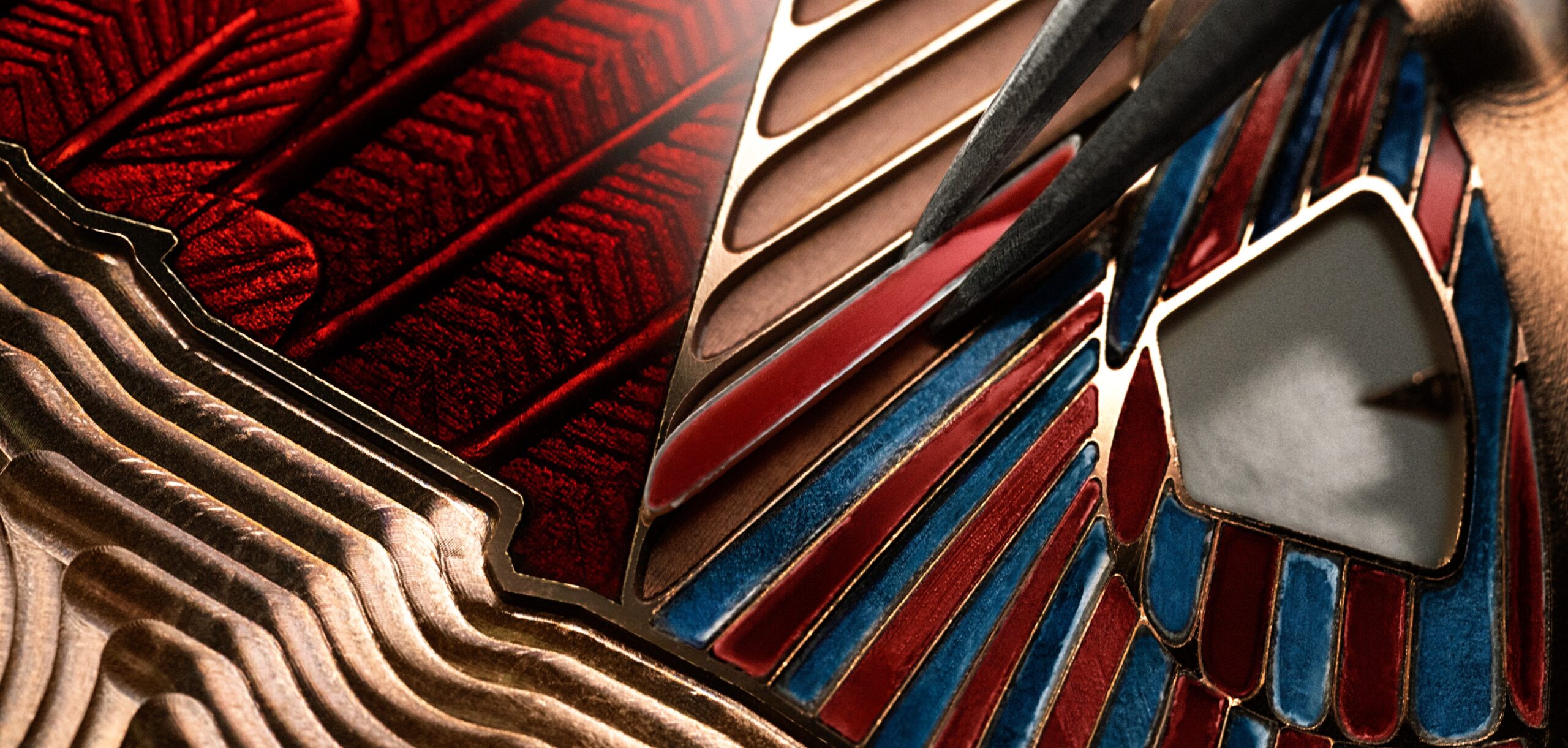
Vacheron Constantin Expands Its Métiers d’Art Tribute to Great Civilisations


Vacheron Constantin is once again proving that horology can be a vessel for cultural memory. In its latest chapter of the Métiers d’Art Tribute to Great Civilisations collection, the Maison deepens its partnership with the Louvre Museum to unveil four extraordinary timepieces—each a miniature world dedicated to one of antiquity’s defining cultures: Pharaonic Egypt, the Neo‑Assyrian Empire, Ancient Greece, and Imperial Rome. This new quartet follows the inaugural 2022 series and continues a dialogue between two institutions united by a shared mission: preserving artistic heritage and elevating traditional craftsmanship. The result is not merely a set of watches, but a curated journey through millennia of human creativity.
A Meeting of Civilisations and Craft
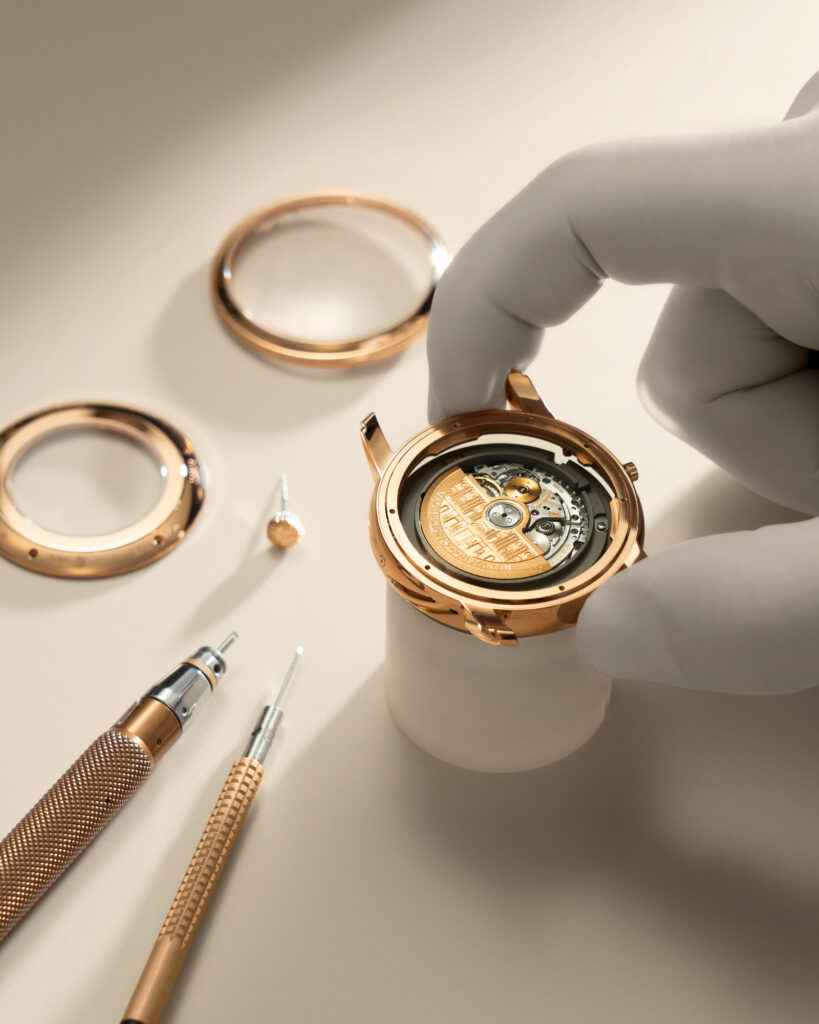
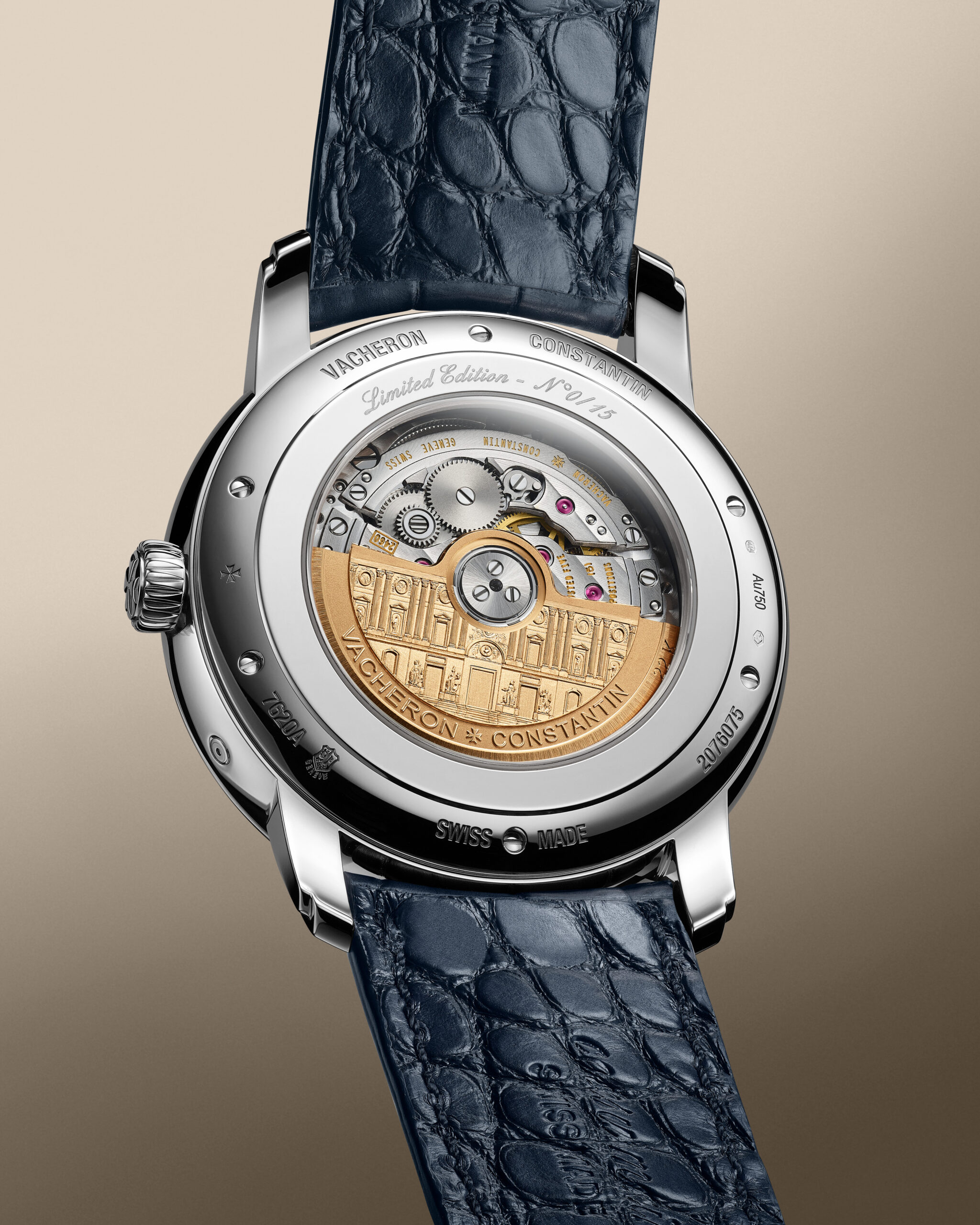
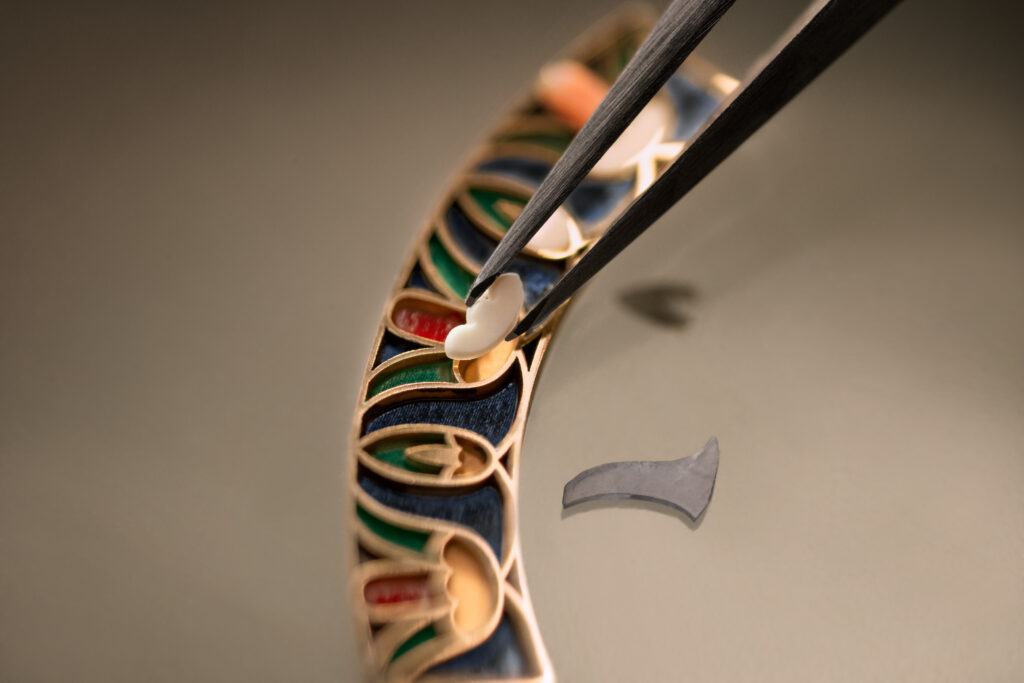
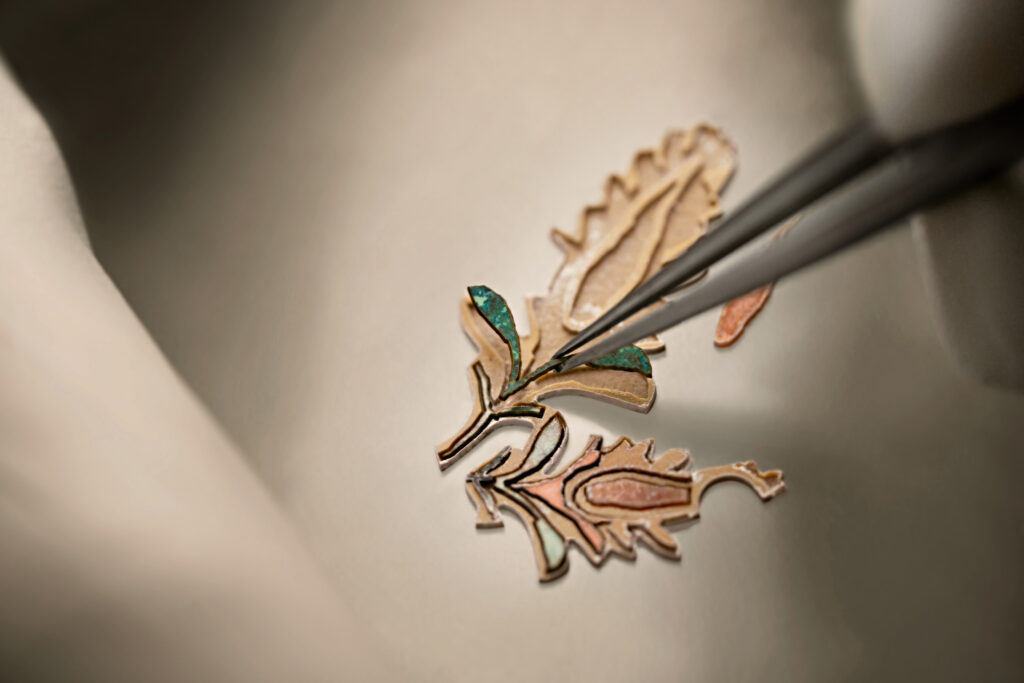
The concept is deceptively simple: select masterpieces from the Louvre’s Department of Antiquities and reinterpret them through the lens of haute horlogerie. The execution, however, is anything but. Each dial is a multi‑layered composition built like an archaeological puzzle—stone glyptics, micro‑mosaic, marquetry, engraving, gilding, and enamel all converge in a single tableau. Every material is chosen with historical fidelity in mind. Stones match the origin and nature of those used in the original artworks. Motifs are drawn from authentic artefacts. And every artisan involved—engravers, enamellers, mosaicists, sculptors—works under the same guiding principle: accuracy, respect, and beauty. At the heart of each watch lies the Manufacture Calibre 2460 G4/2, a movement designed specifically to liberate the dial from traditional hands. Hours, minutes, day, and date appear through four peripheral apertures, leaving the central canvas unobstructed for artistic expression.
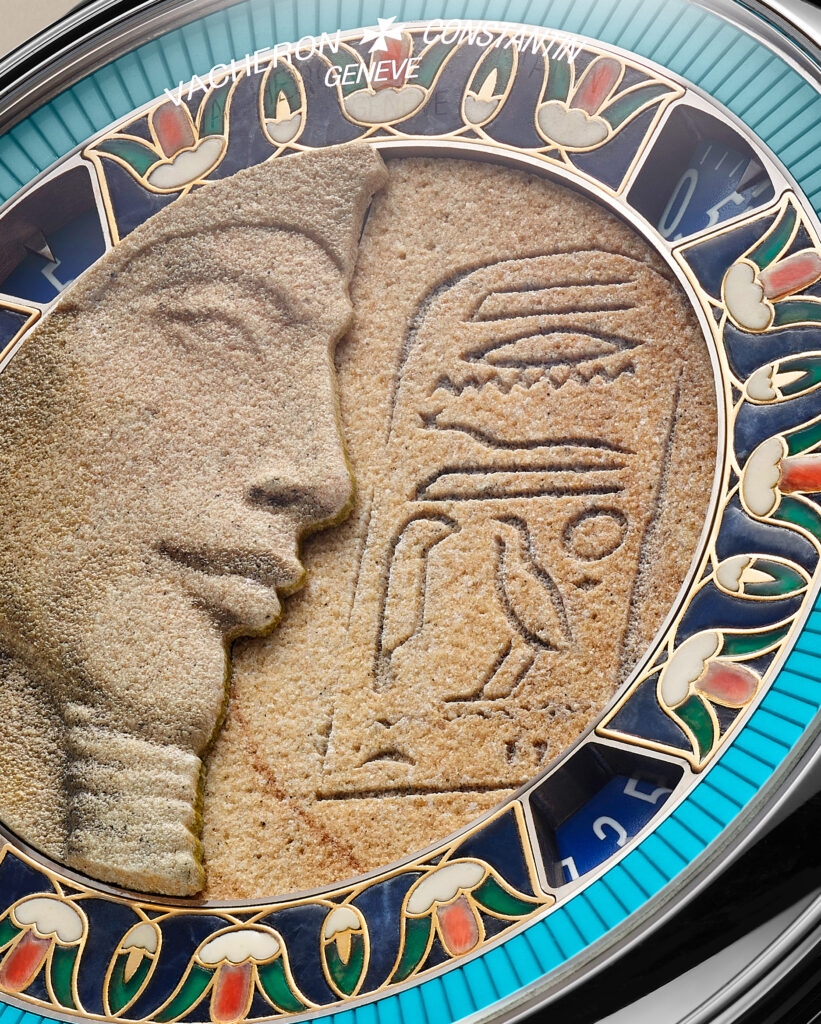
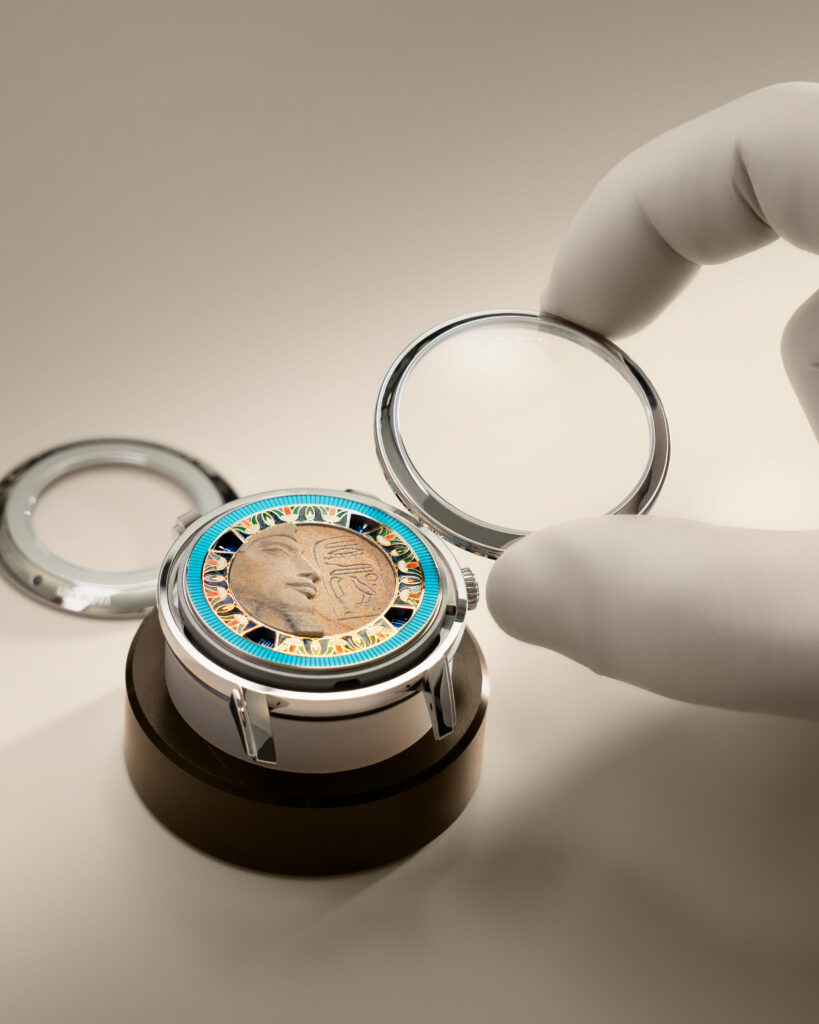
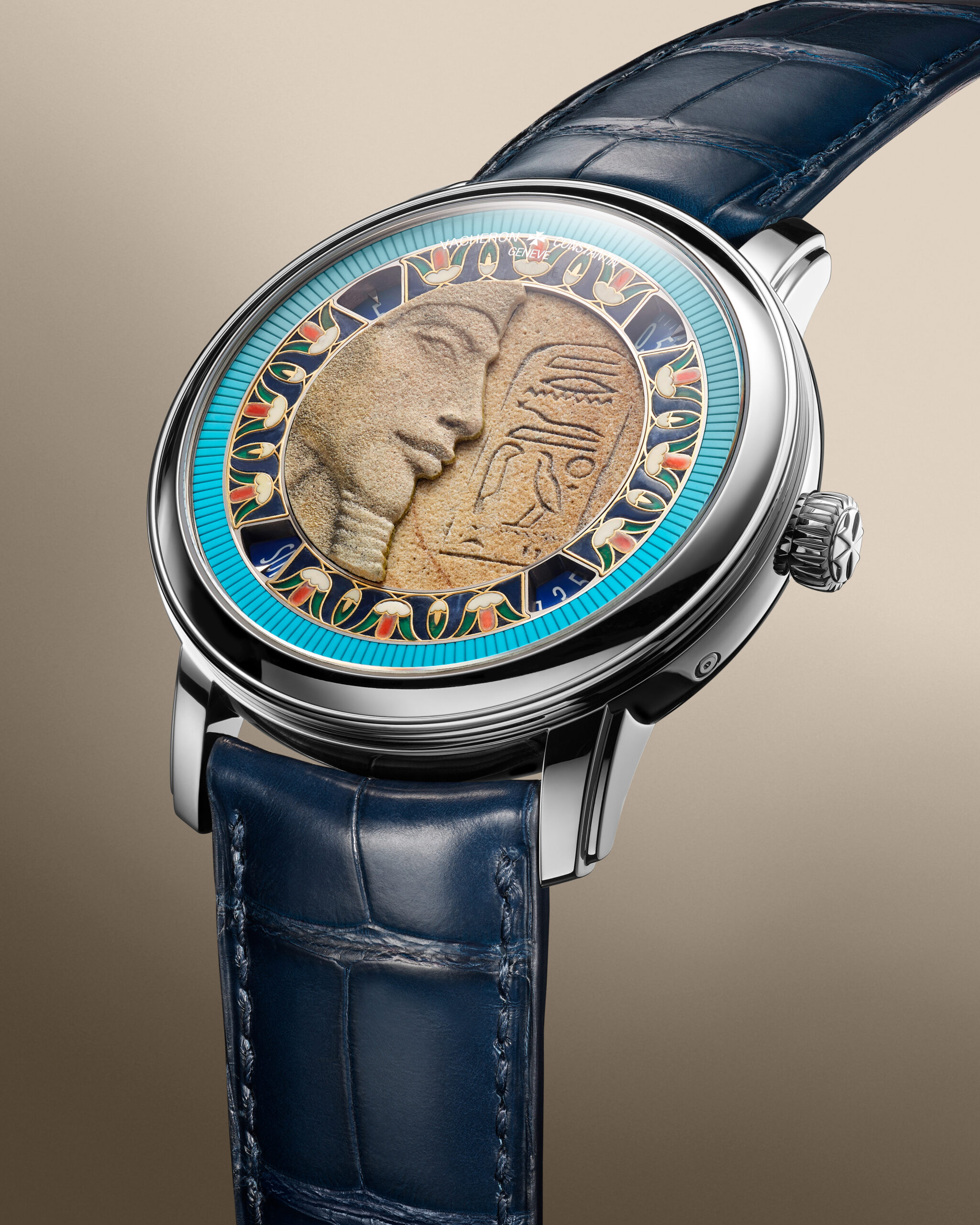
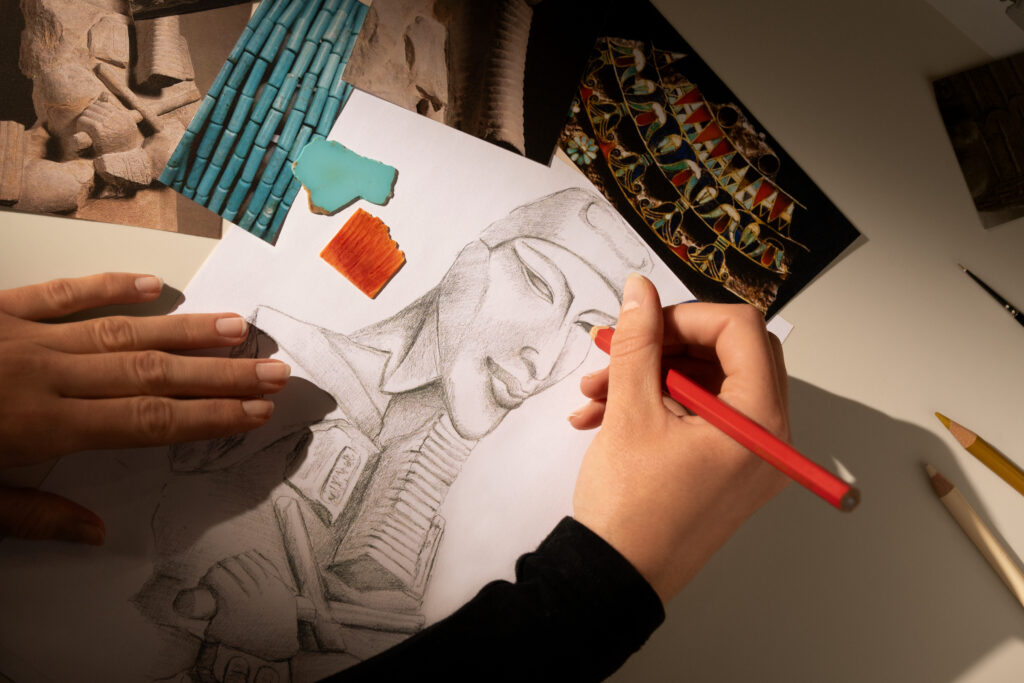
1. Buste d’Akhénaton – Egypt’s Revolutionary Pharaoh
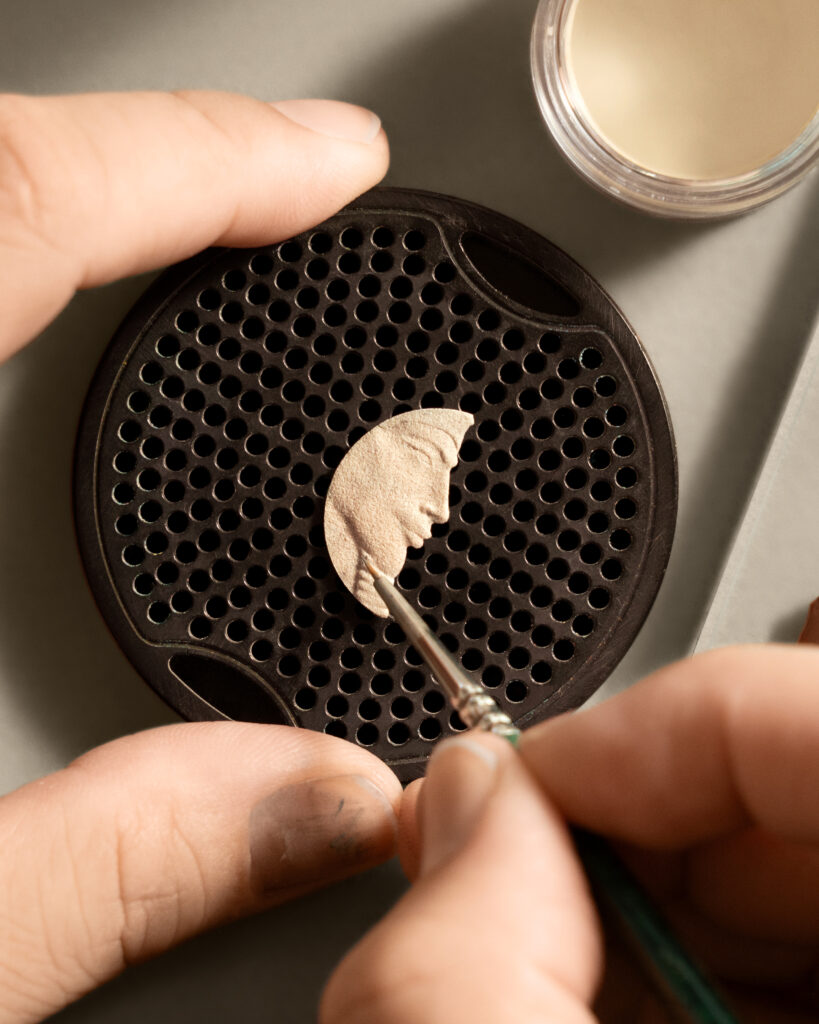
Akhenaten’s reign was brief but transformative, marked by radical religious reform and a strikingly new artistic style. The Louvre’s sandstone bust—elongated features, enigmatic expression—captures this moment of upheaval. Vacheron Constantin recreates the pharaoh in limestone sandstone sourced from the Sinai, carved in relief using traditional glyptics and hand‑patinated for depth. Surrounding him are two meticulously crafted friezes: an outer turquoise ring engraved in drypoint, inspired by the collar of Nakhti, and an inner stone champlevé mosaic echoing a 7th‑century BC pectoral. Together, they required over 150 hours of work.
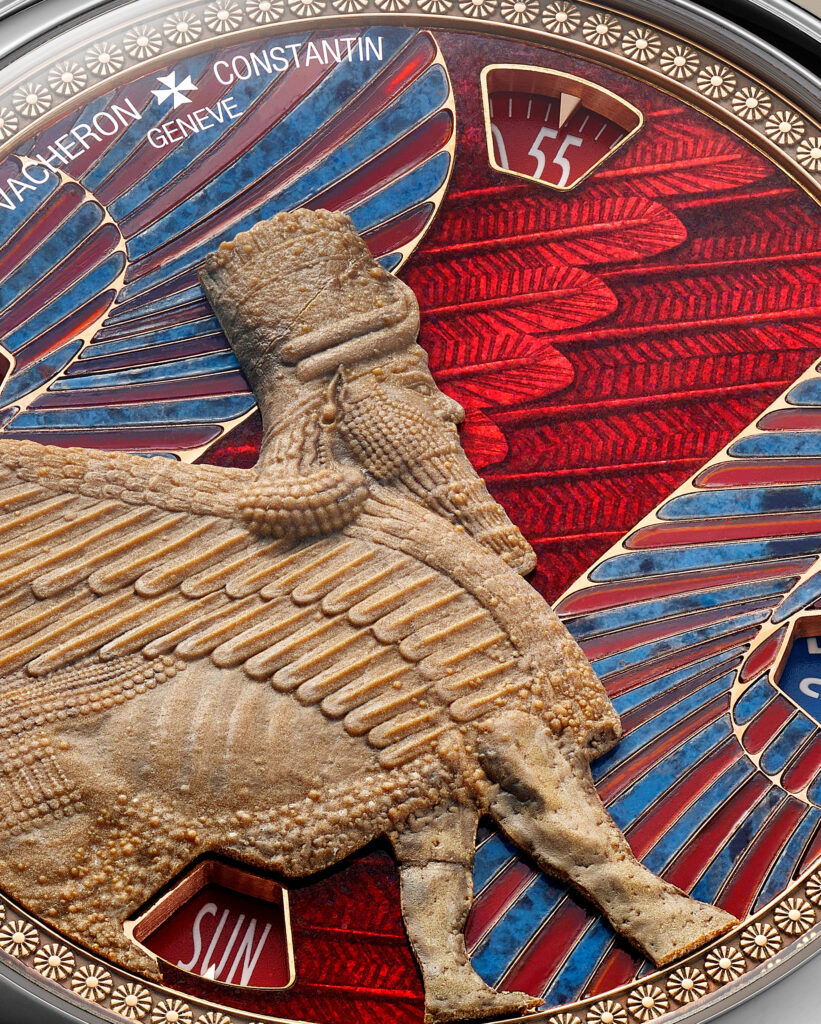
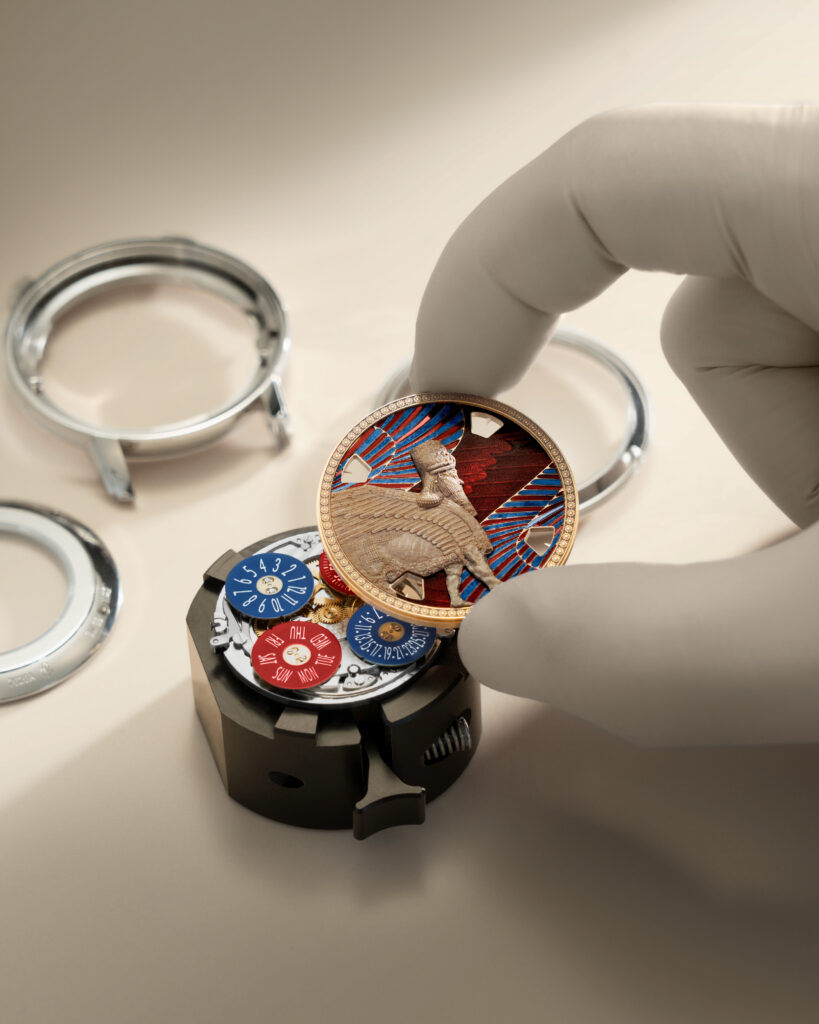
2. Lamassu de Sargon II – Guardian of the Assyrian Empire
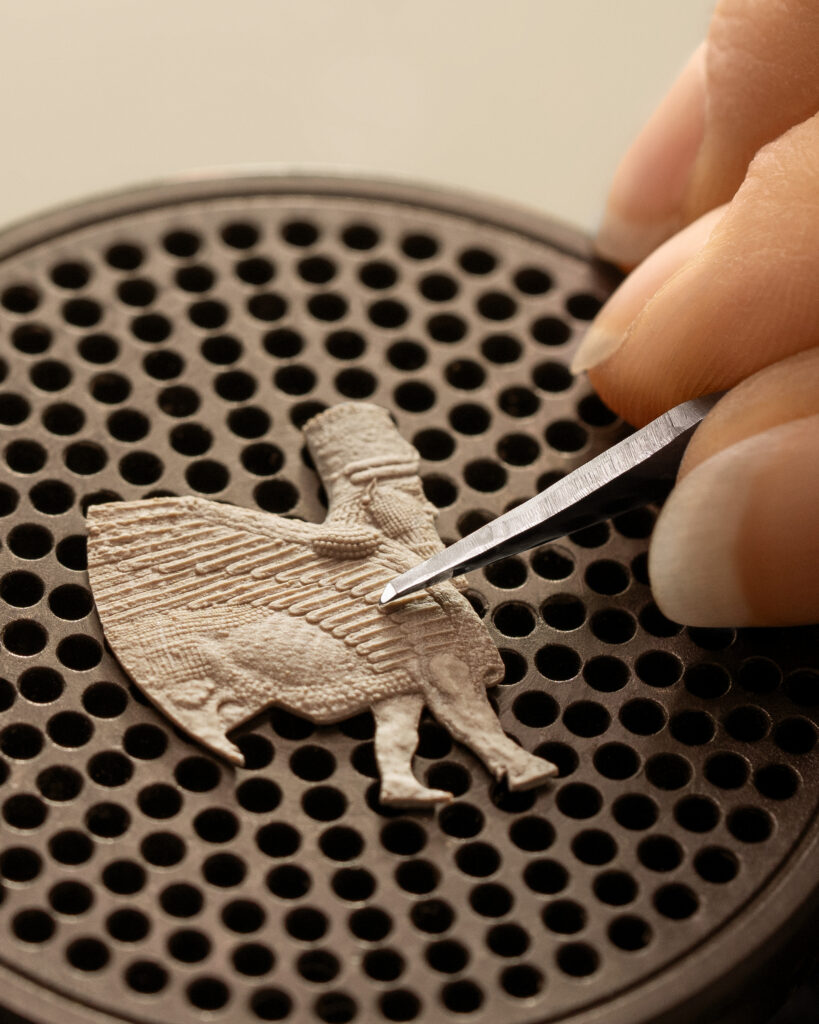
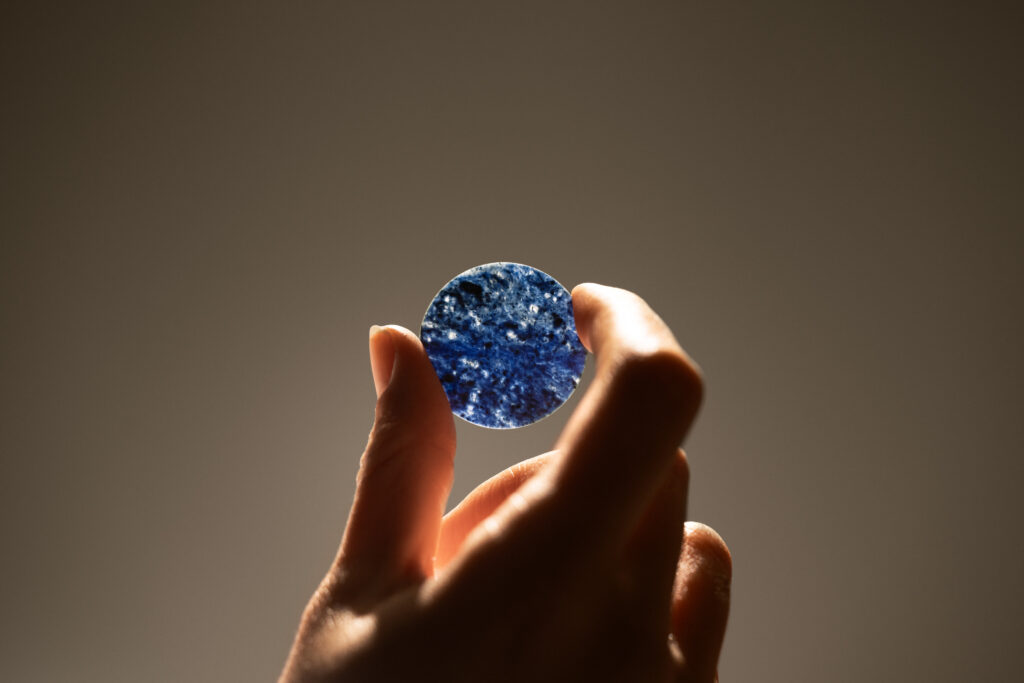
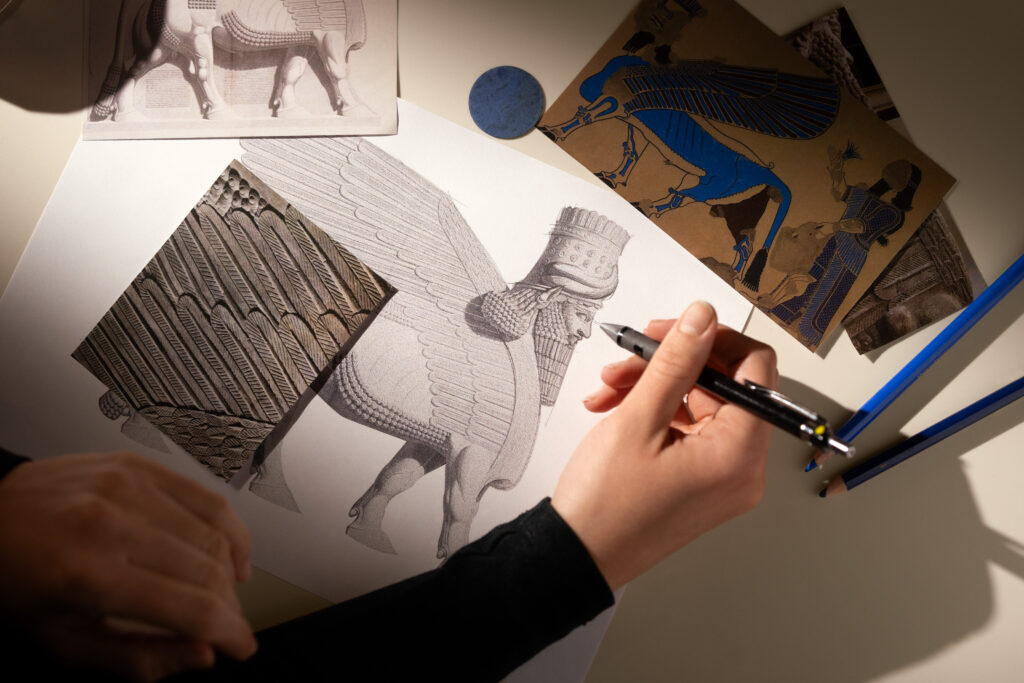
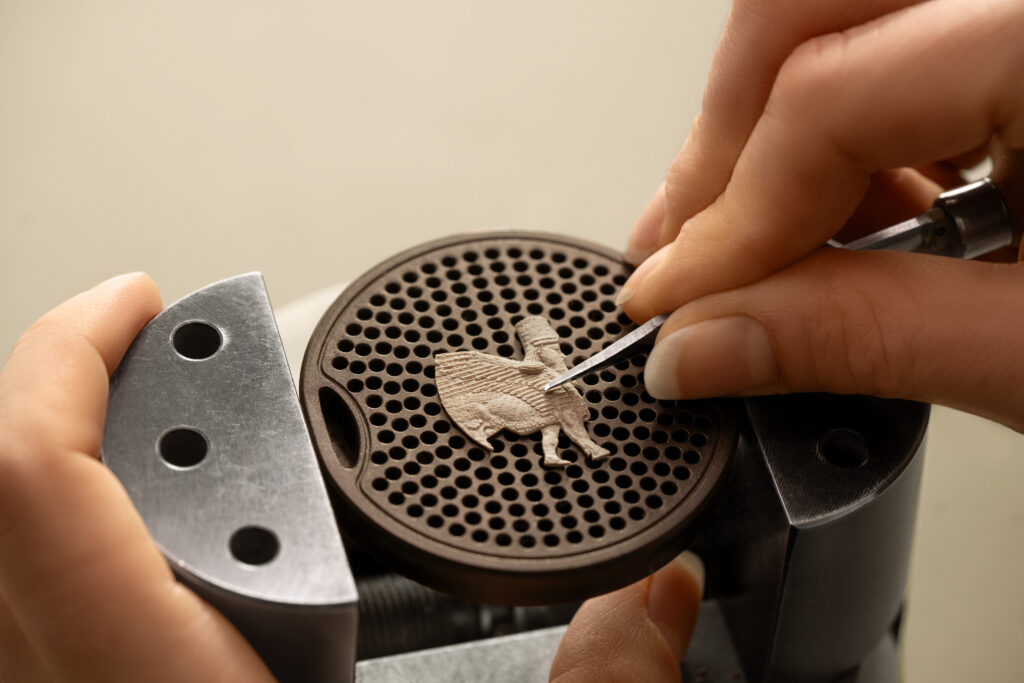
The monumental Lamassus of Khorsabad—part bull, part eagle, part man—once protected the palace of Sargon II. Their imposing presence is translated into a dial that feels architectural in its precision. The gold base is engraved and filled with flinqué enamel, its feather‑like pattern tinted in deep red. Stone champlevé tesserae of red agate and blue dumortierite form a vivid backdrop inspired by an 8th‑century BC mural. The Lamassu itself is sculpted in Italian limestone sandstone and patinated to accentuate its hybrid anatomy. An engraved gold frieze, referencing an 1863 painting of the Khorsabad excavations, frames the composition.
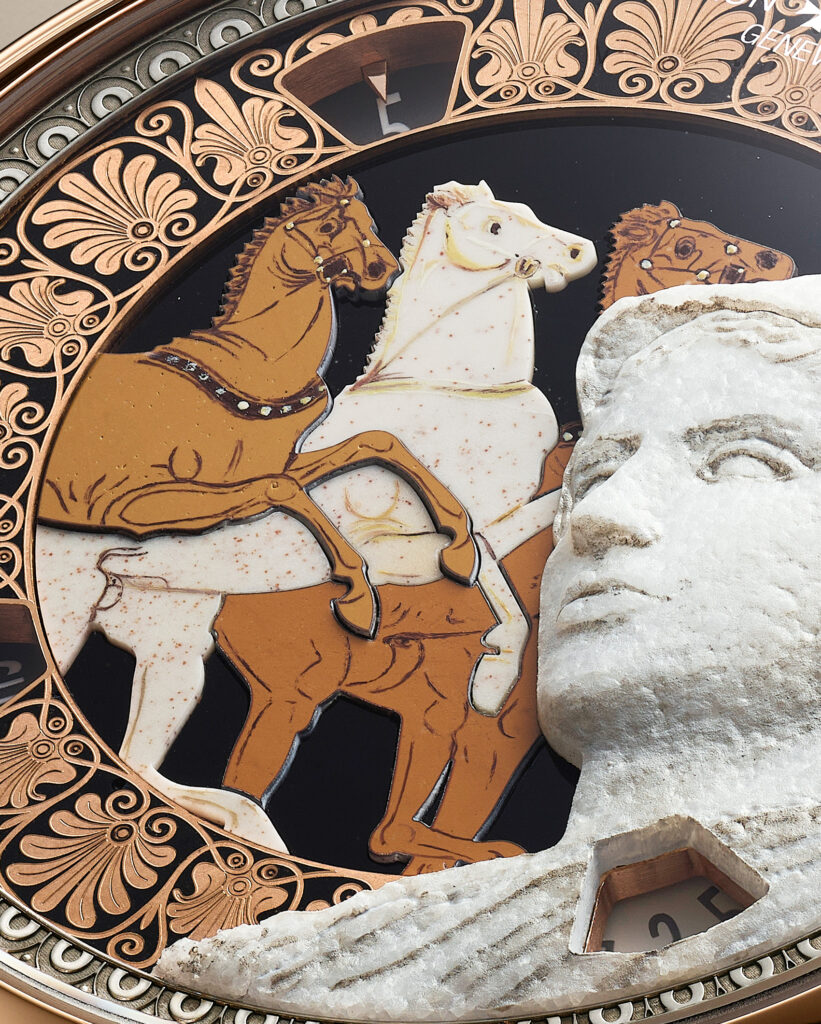
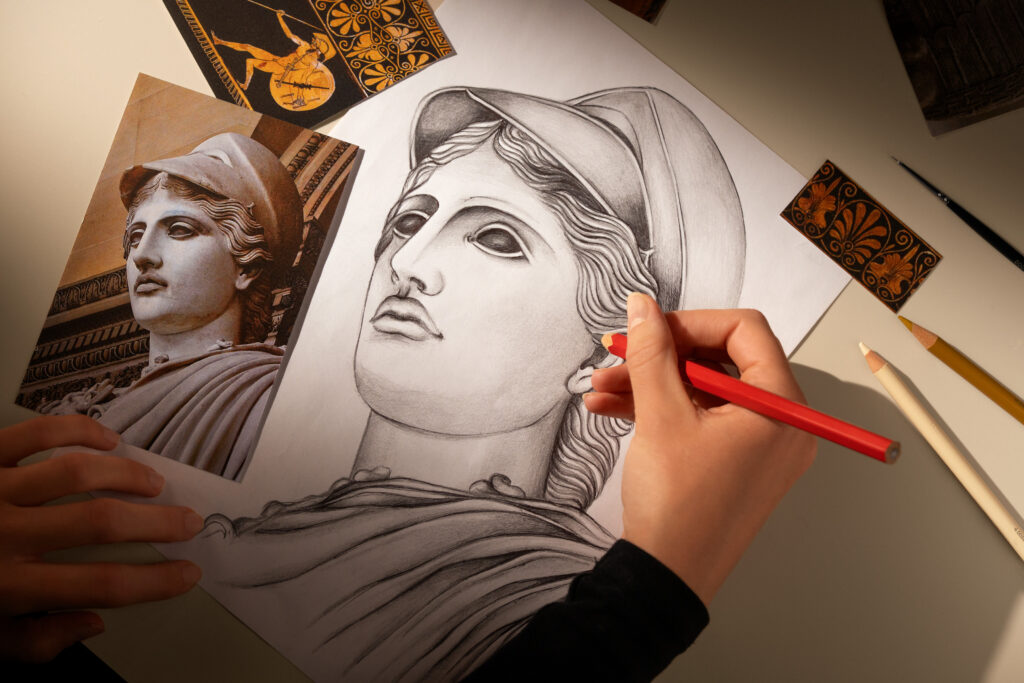
3. Athéna de Velletri – The Power and Poise of Ancient Greece
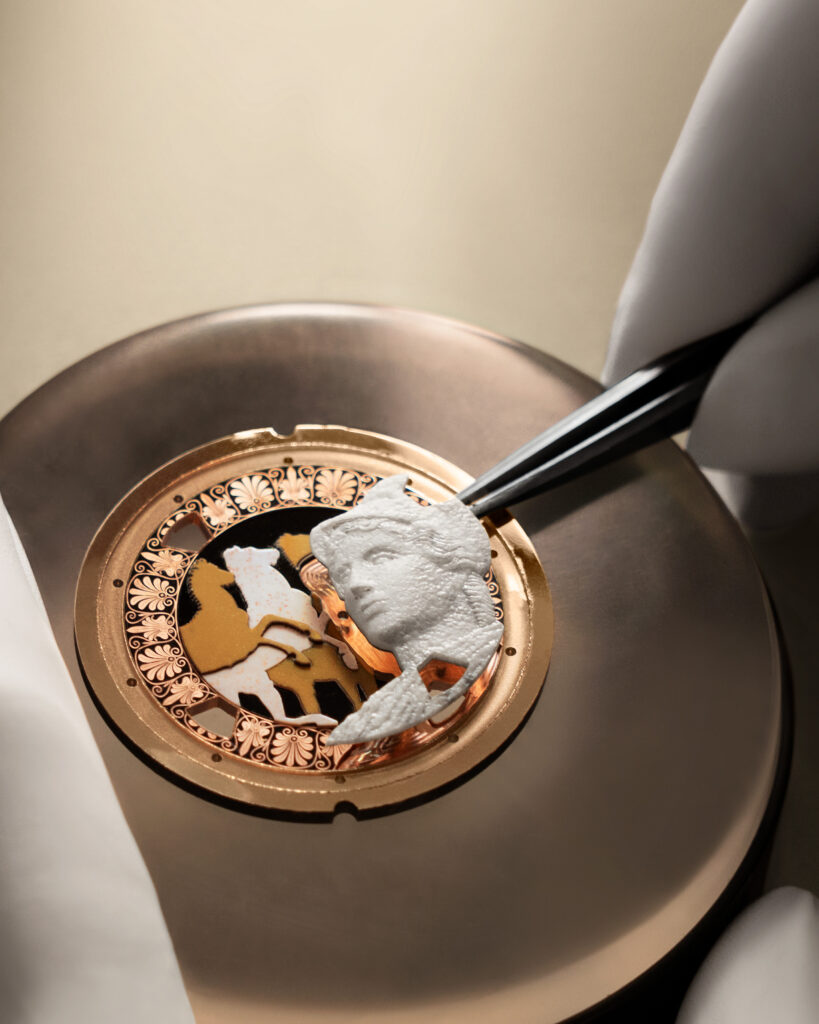
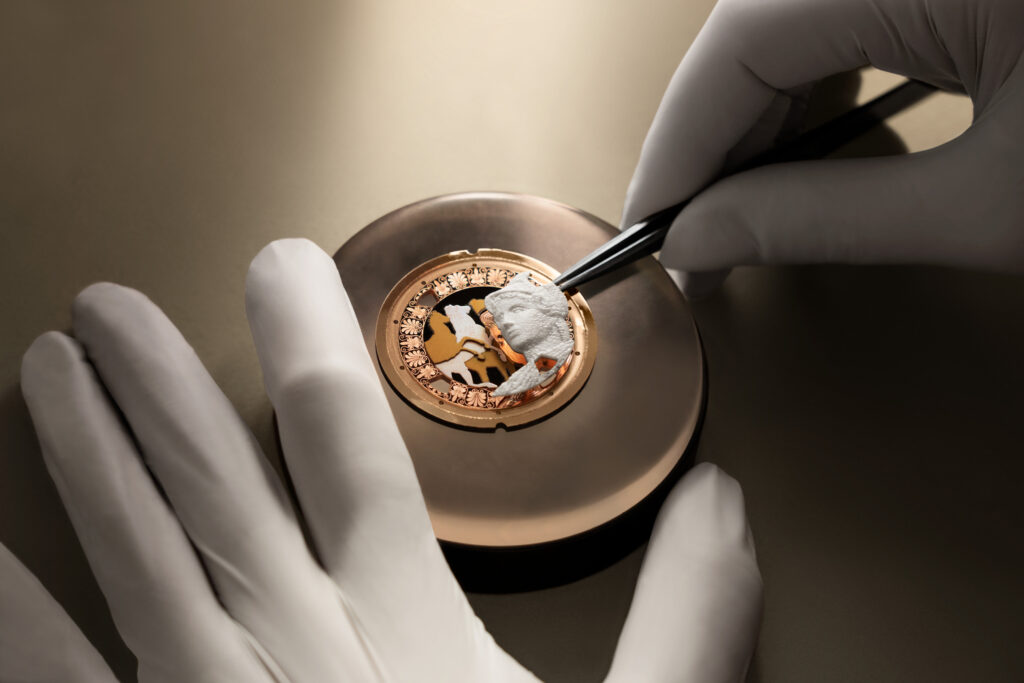
The Pallas of Velletri—majestic, serene, and commanding—embodies the intellectual and military ascendancy of Athens during its Golden Age. Vacheron Constantin captures this aura through a marble glyptic carving made from Parian marble, the same luminous stone used for the original statue. The dial beneath is a study in contrast and refinement a black champlevé enamel frieze inspired by a krater painted by Aegisthus, a second frieze in engraved white gold referencing a Dionysian scene, and a central stone marquetry panel depicting horses from a 5th‑century BC amphora, enhanced with miniature painting. The effect is both dynamic and timeless.
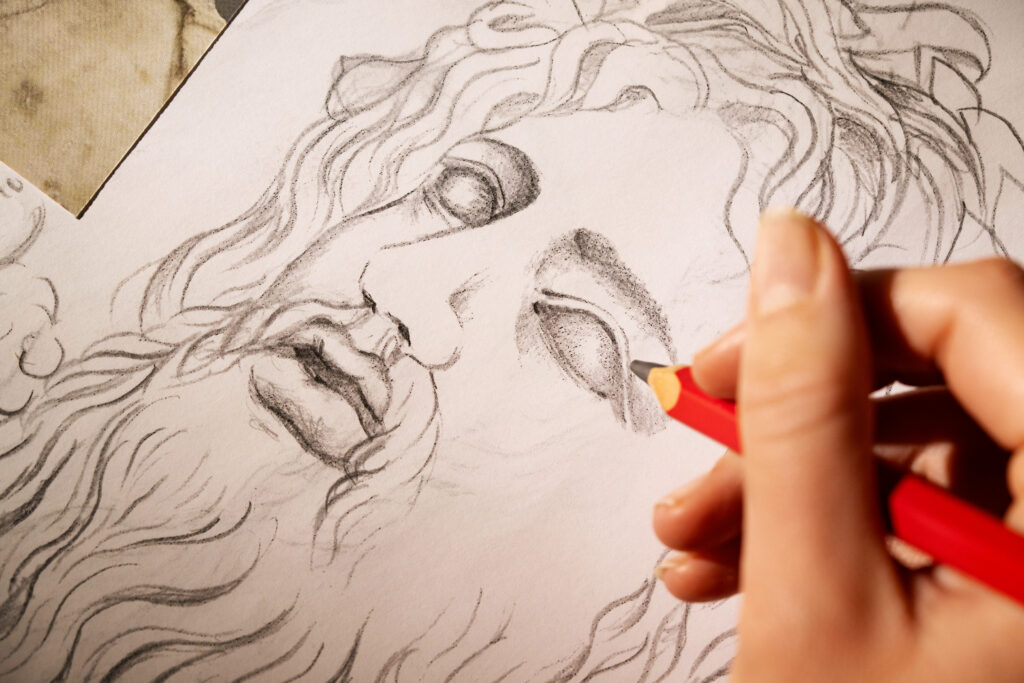
4. Tibre de l’Iseum Campense – Rome’s River God in Marble and Mosaic
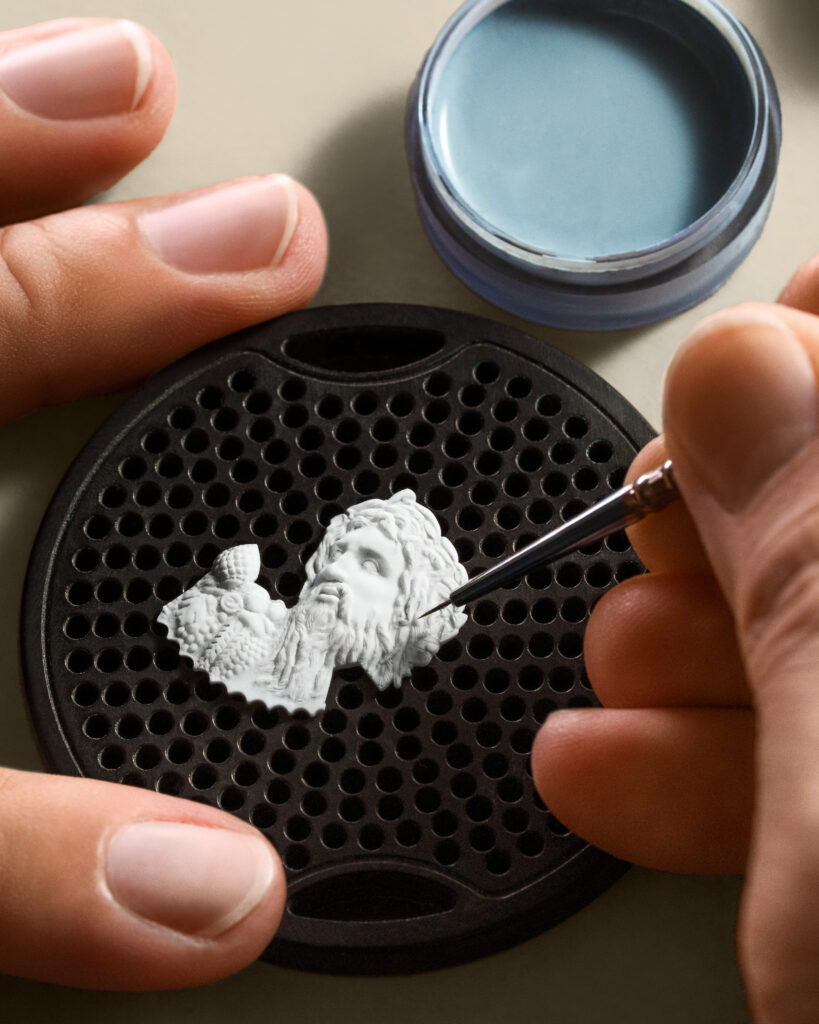
The reclining Tiber, discovered in 1512, is a sculptural celebration of Rome’s origins and abundance. Vacheron Constantin renders the god’s head and cornucopia in Italian marble, sculpted and patinated to evoke the calm authority of the original. Opposite it sits a dazzling micro‑mosaic inspired by a 2nd‑century AD mosaic from Utica. Thousands of tiny fragments—jasper, chrysocolla, opaline—are assembled with painterly precision, their joints finished with miniature brushwork. The gold dial is textured with gold leaf and covered in translucent enamel, while a mother‑of‑pearl frieze echoes a Campana plaque depicting a Dionysian dance.
A Partnership Rooted in Cultural Stewardship
Since formalizing their collaboration in 2019, Vacheron Constantin and the Louvre have engaged in projects that bridge horology and heritage. From the “Bid for the Louvre” charity auction to the unveiling of the monumental La Quête du Temps automaton clock for the Maison’s 270th anniversary, the partnership continues to produce creations that honor the past while advancing the future of craftsmanship. The new Métiers d’Art Tribute to Great Civilisations series is a testament to this shared vision. Limited to just 15 pieces per model, these watches are not simply timekeepers—they are wearable museums, each one a tribute to the ingenuity of ancient artisans and the mastery of contemporary ones.
Share this article


LEAVE A COMMENT
You must be logged in to post a comment.