


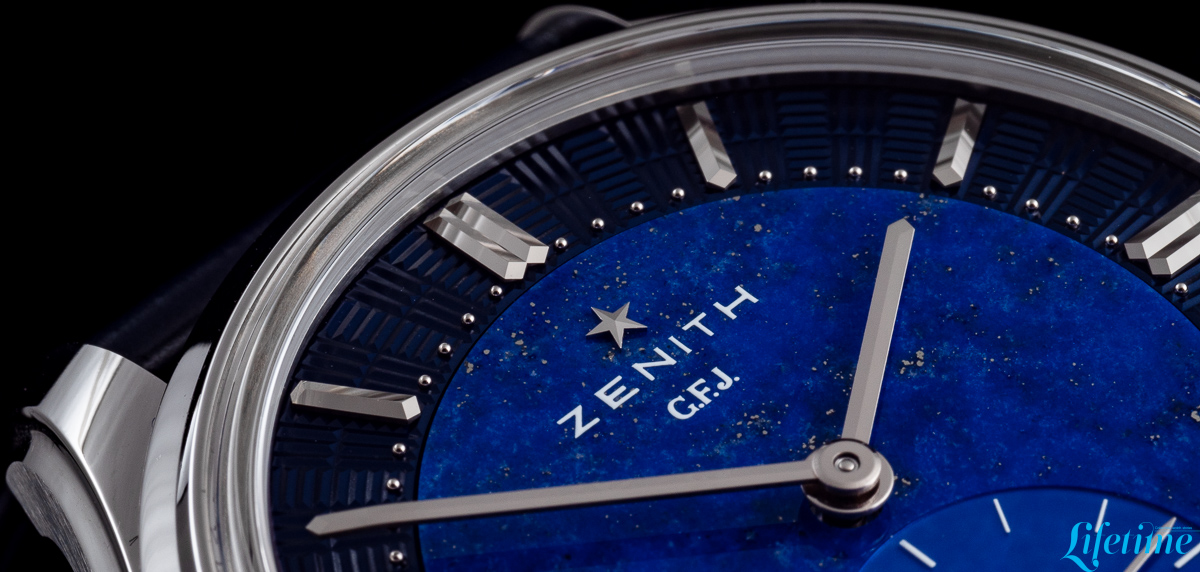
Resilience, Craftsmanship and Horological Beauty – The Zenith Georges Favre-Jacot Calibre 135


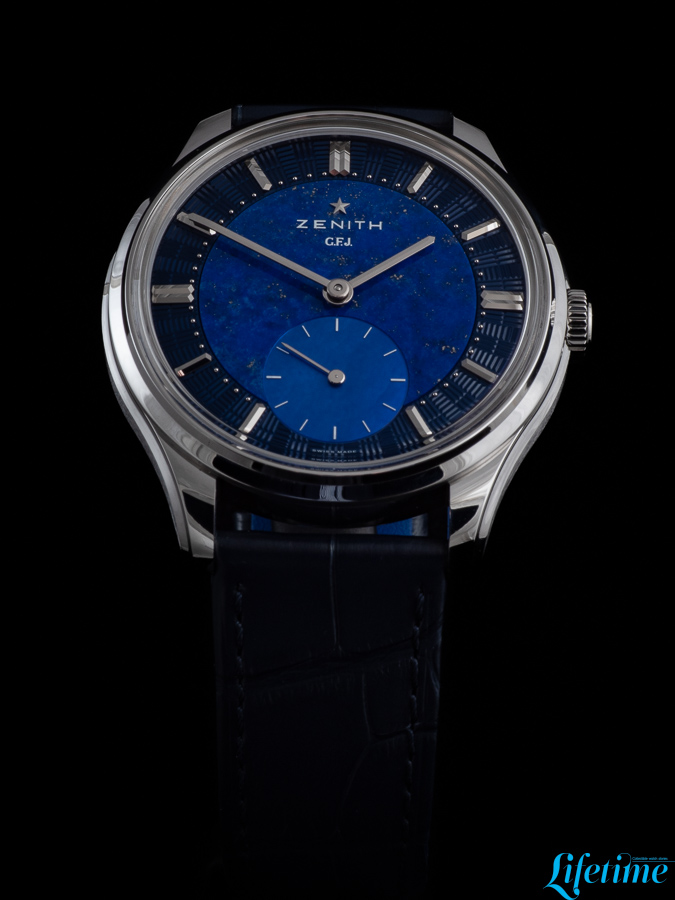
Created to celebrate Zenith’s 160th anniversary, this timepiece is named after the founder whose vision of vertical integration and relentless pursuit of precision established the foundation for the manufacture’s enduring reputation. At the heart of the watch lies the Calibre 135, a movement with a storied history in observatory chronometry competitions, now re-engineered for the 21st century. The G.F.J. is presented in a platinum case, featuring a dial that draws upon classical design codes and materials, and a movement that exemplifies both tradition and modern technical refinement.
Zenith and the Legacy of Georges Favre-Jacot
Zenith’s history can be traced back to 1865, when Georges Favre-Jacot established his workshop in Le Locle, Switzerland, at the age of 22. At a time when watchmaking was fragmented, with artisans working independently, Favre-Jacot envisioned a vertically integrated manufacturing facility that brought all crafts and skills under one roof. This approach not only enhanced efficiency and consistency, but also allowed for the rapid development of new technologies and the pursuit of precision as a core value. The name Zenith, referencing the highest point in the sky, encapsulates the founder’s ambition for excellence.
 The partnership between Favre-Jacot and architect Alphonse Laverrière further advanced the aesthetic and industrial harmony of the manufacture, culminating in the iconic red-and-white brick façade that still stands today. The principles of interchangeable components and automated production, introduced by Favre-Jacot, were instrumental in establishing Zenith as the first truly integrated Swiss watch manufacture. Zenith’s commitment to precision has been recognised over the decades with an impressive 2,333 chronometry prizes, highlighting the brand’s technical prowess and the enduring influence of its founder.
 The Dial: Classical Beauty and Layout
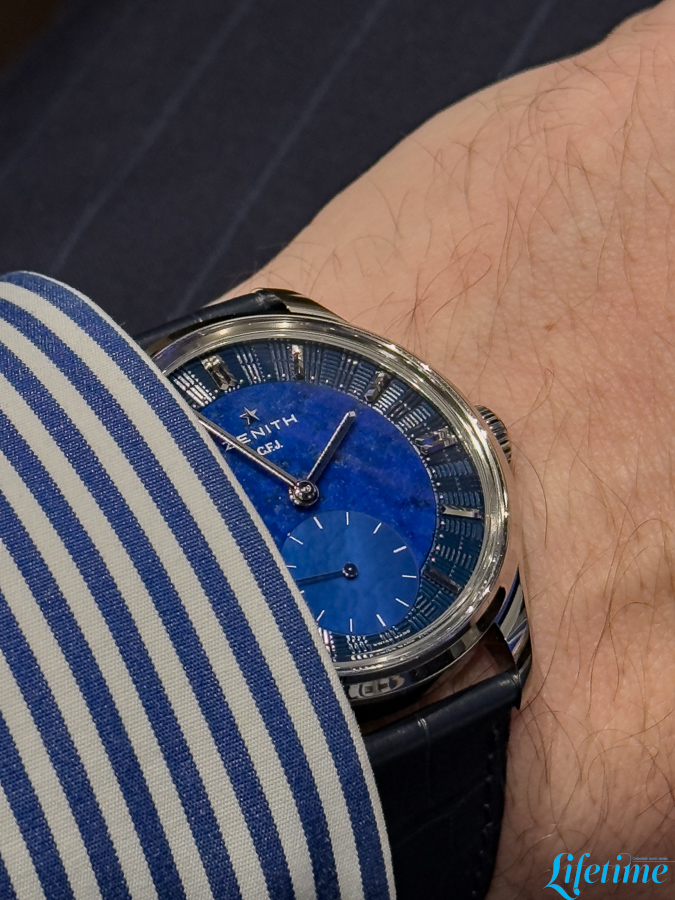
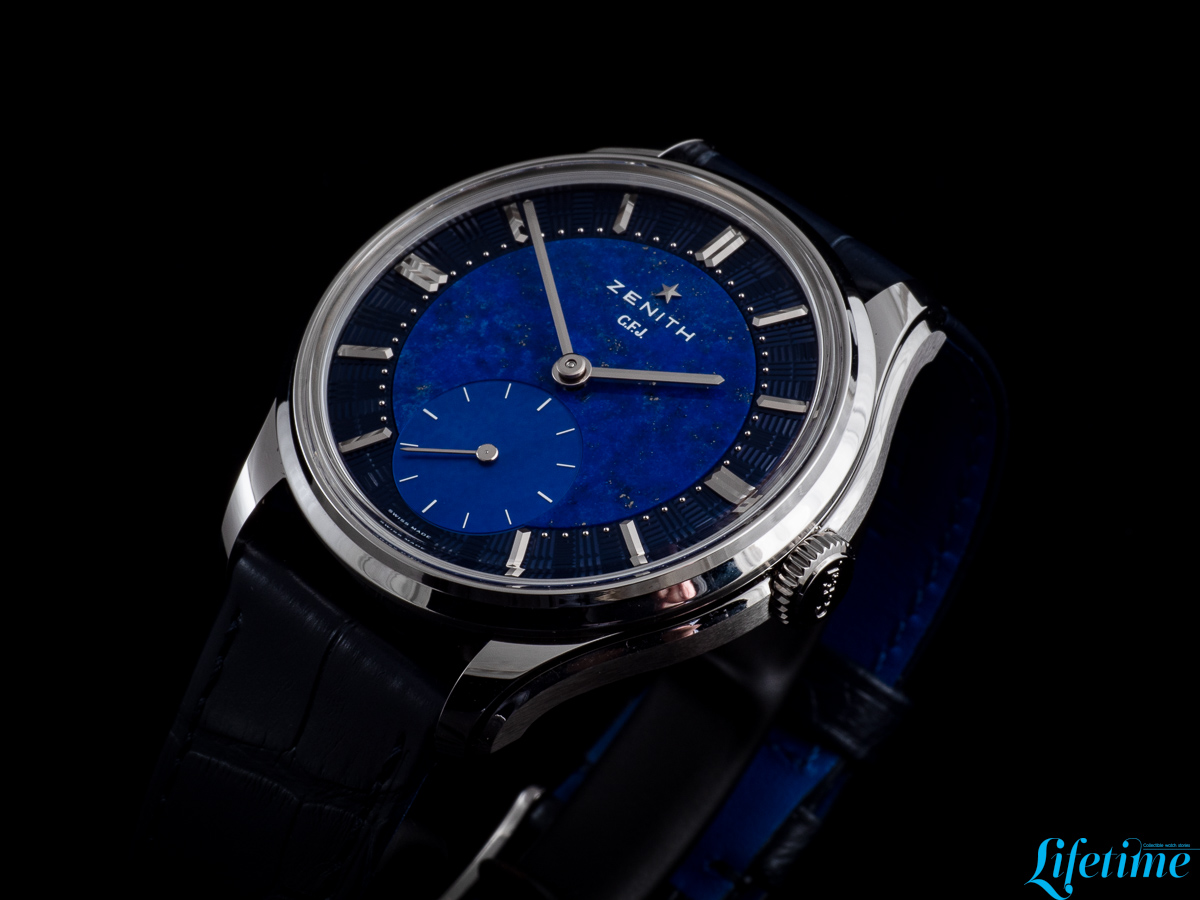
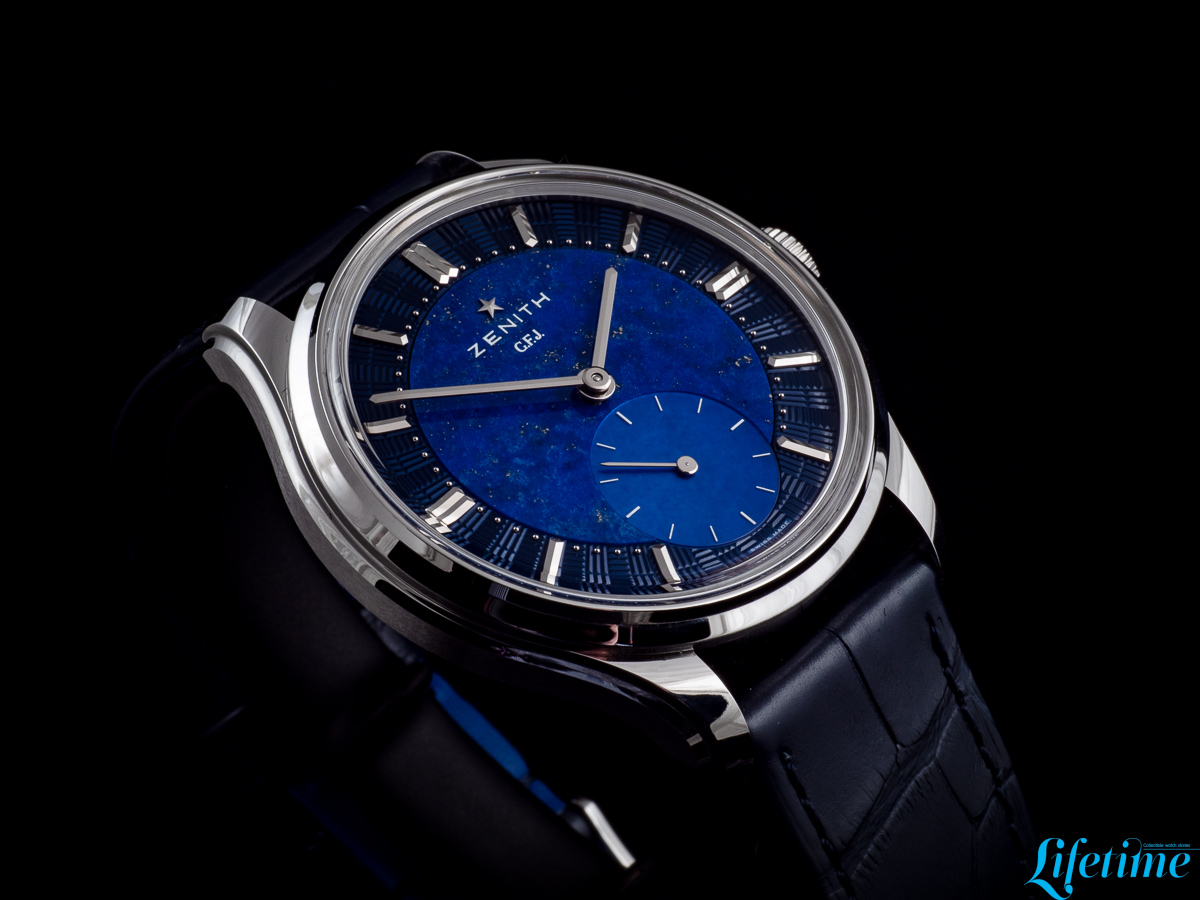
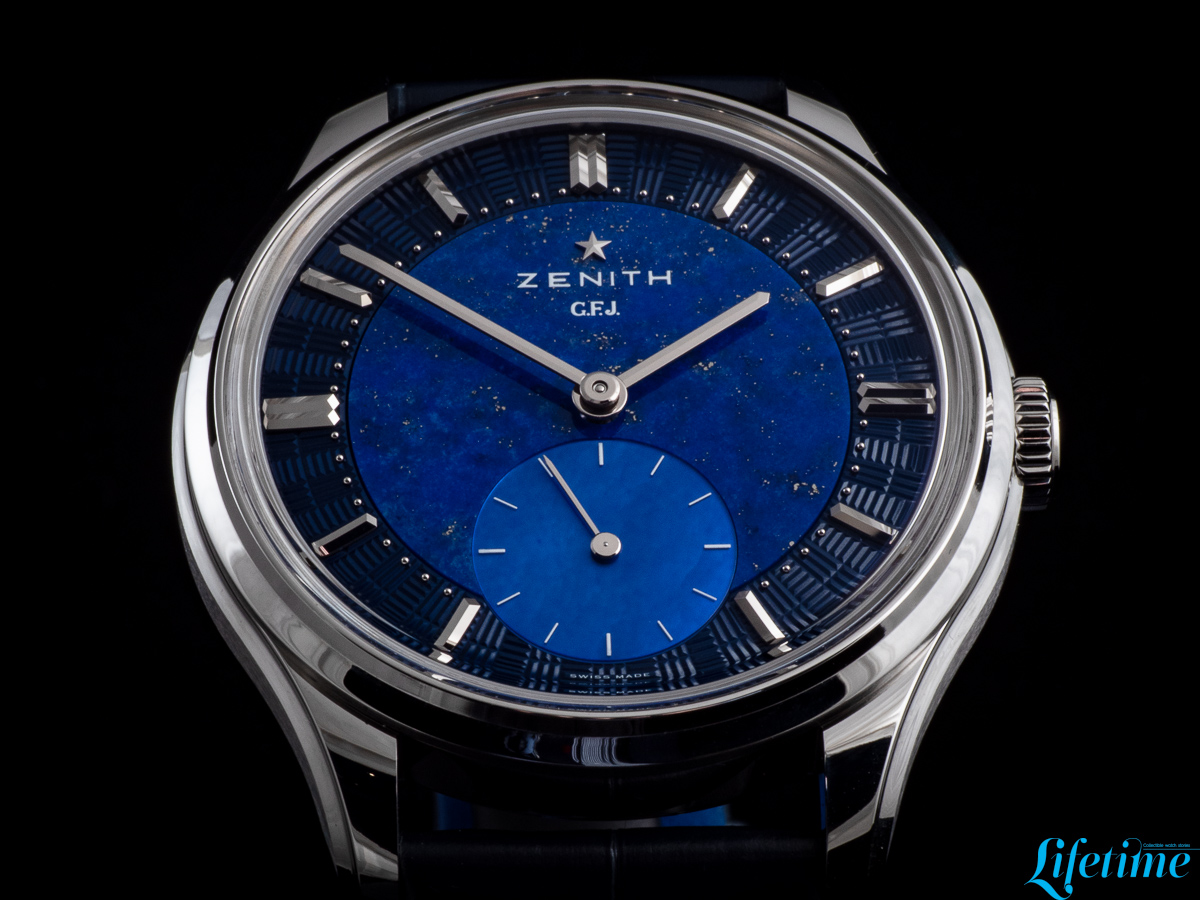
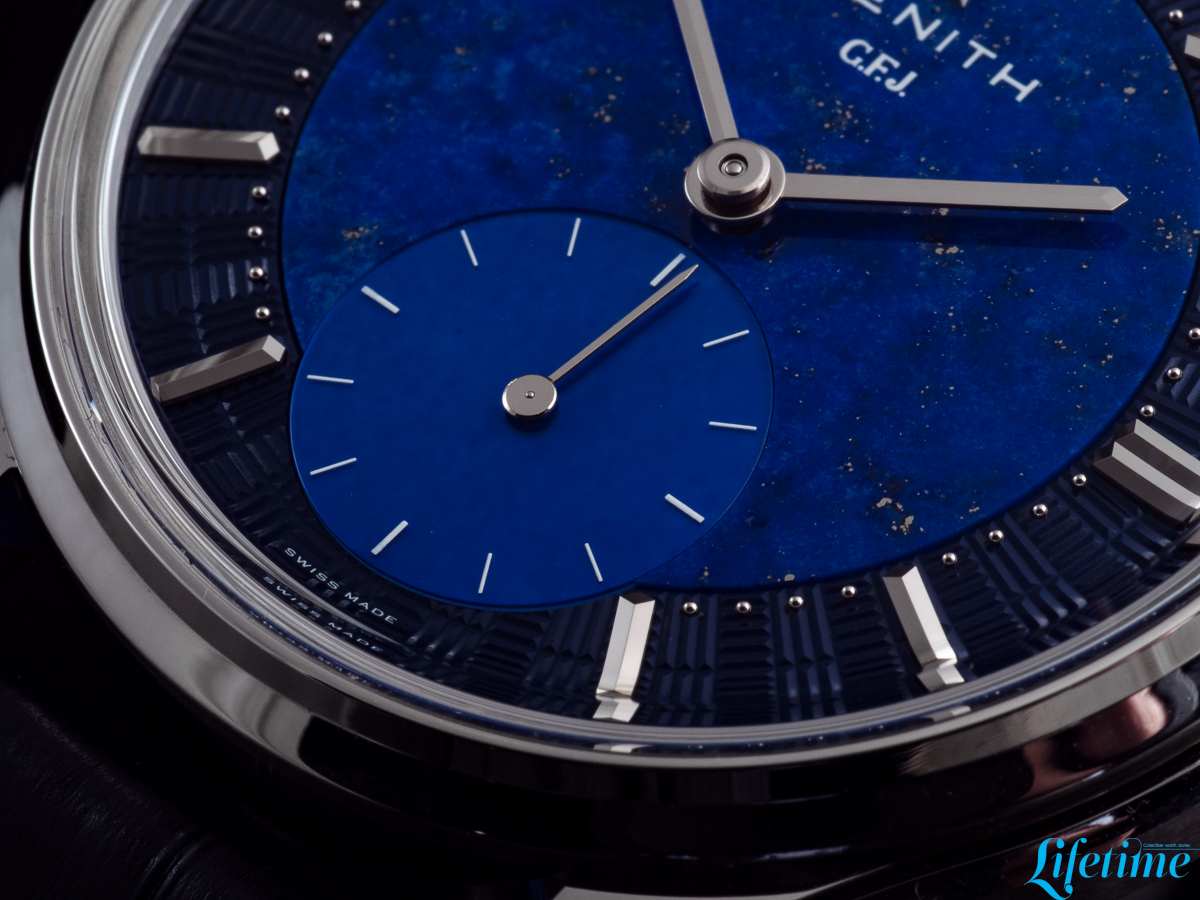
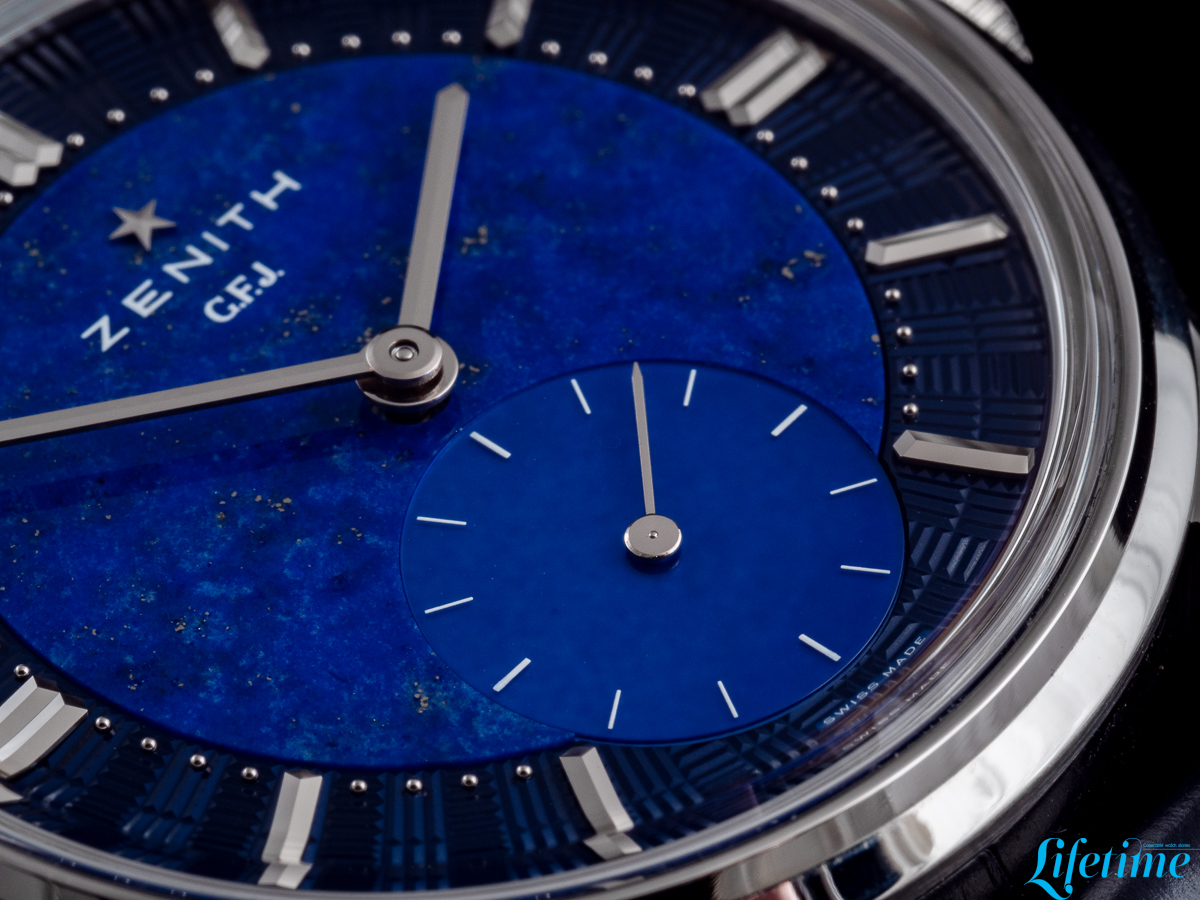
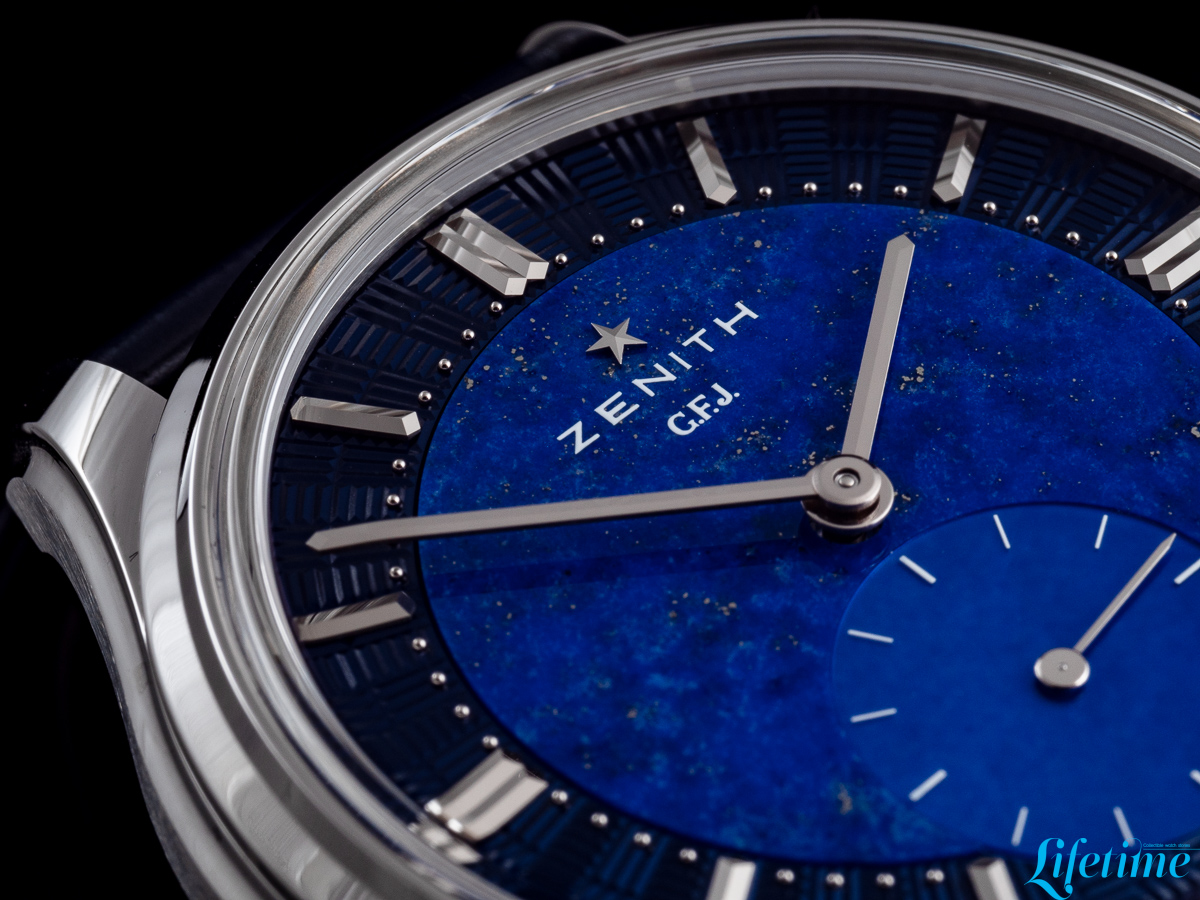
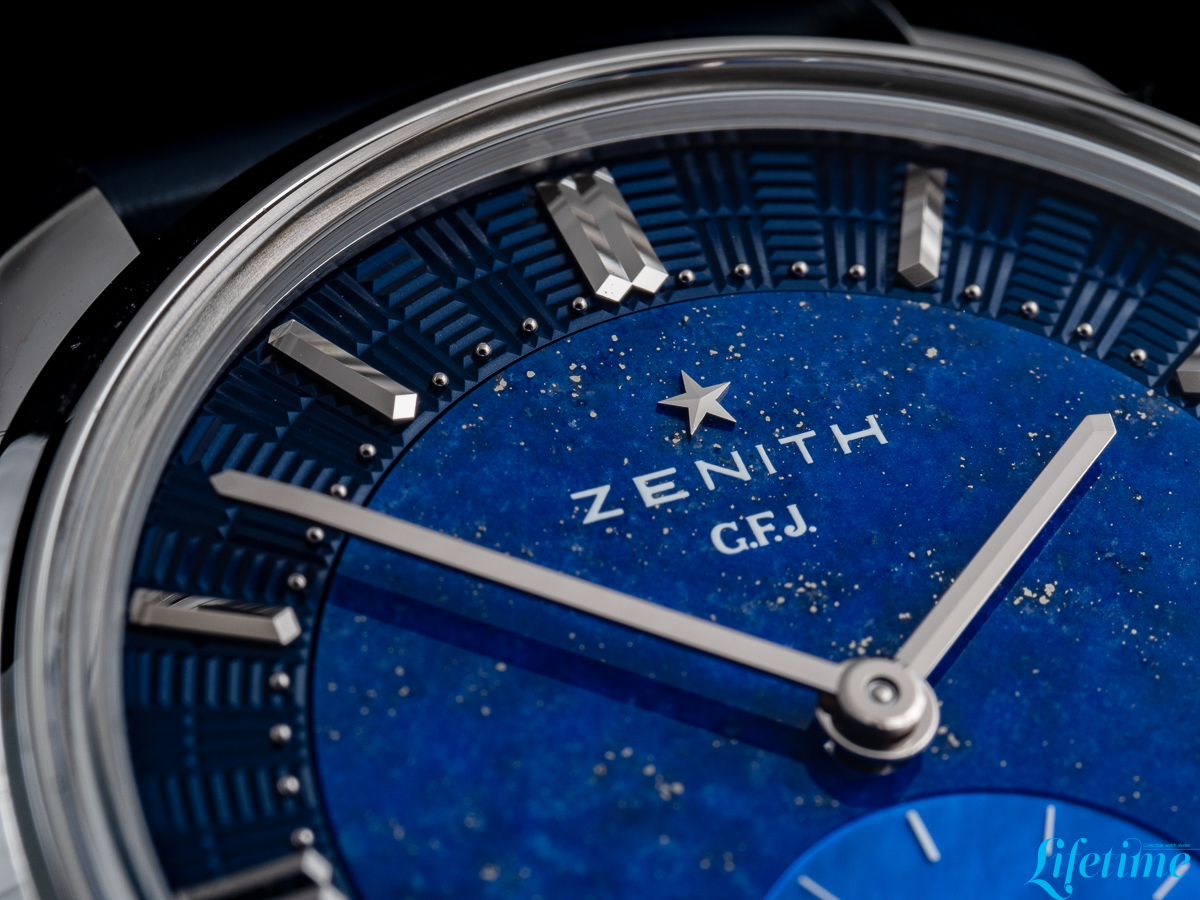
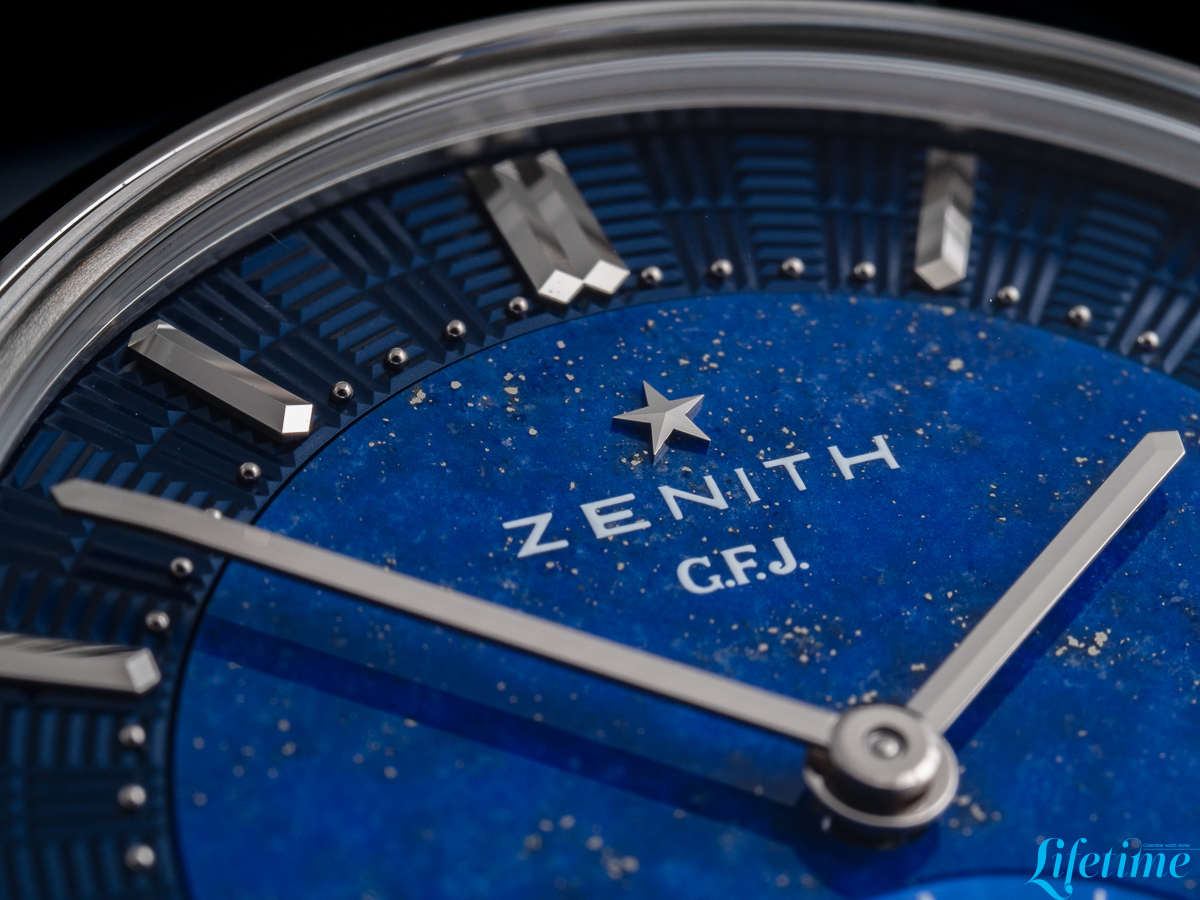
The dial of the G.F.J. Calibre 135 is a study in classical elegance, executed with a level of detail reflecting both historical inspiration and contemporary craftsmanship. Its threefold construction creates a sense of depth and visual intrigue. The outer ring is adorned with a ‘brick’ guilloché pattern, a direct reference to the distinctive façade of the manufacture. This decorative motif also serves as a subtle tribute to the founder’s vision and the architectural heritage of the brand.
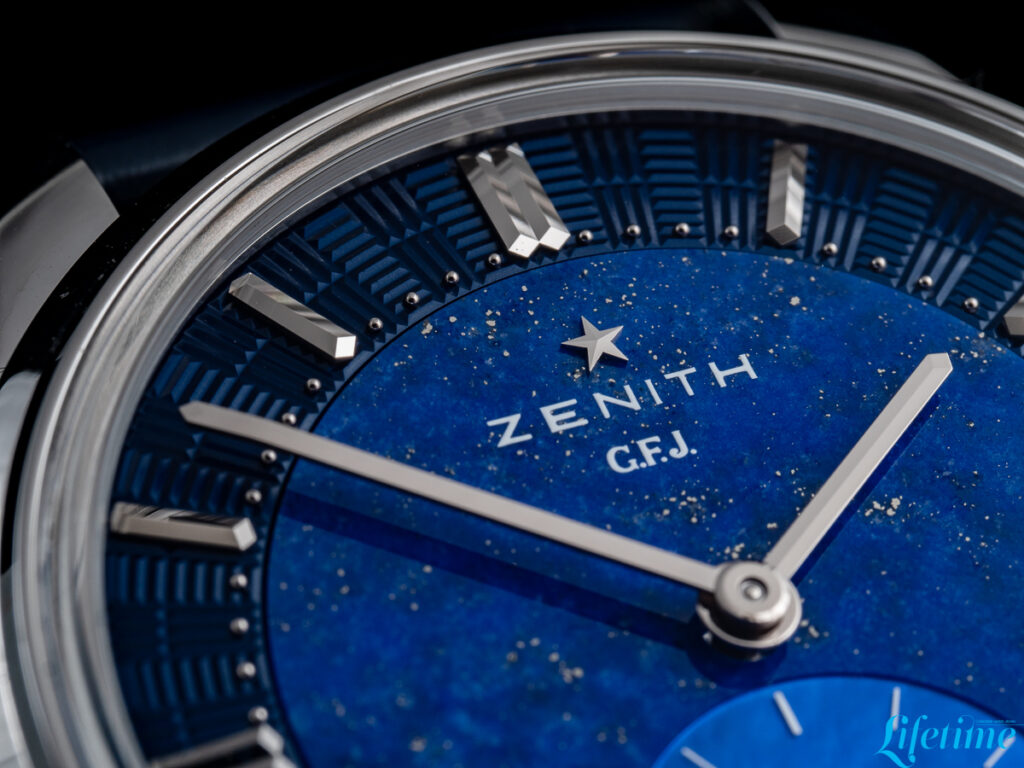 The faceted hour markers, crafted from 18-carat white gold, are applied by hand, providing a crisp and legible interface. The minute track, composed of 40 individually applied white gold beads, adds a tactile dimension, further enhancing the refinement of the dial. The central section is crafted from deep blue lapis lazuli, whose natural gold-coloured pyrite inclusions evoke a starry night sky, reinforcing Zenith’s celestial theme. Due to the unique patterning of the stone, each dial is inherently one of a kind. At six o’clock, we find an oversized mother-of-pearl subdial for the seconds, which introduces a contrasting texture and a subtle play of light. The slender, baton-shaped hands are fashioned from white gold, maintaining the overall harmony and balance of the composition.
 The interplay of materials – platinum, lapis lazuli, mother-of-pearl, and white gold – results in a dial that is both understated and rich in detail, embodying the classical codes of mid-century chronometry watches while integrating contemporary artisanal techniques.
 The Movement: Calibre 135
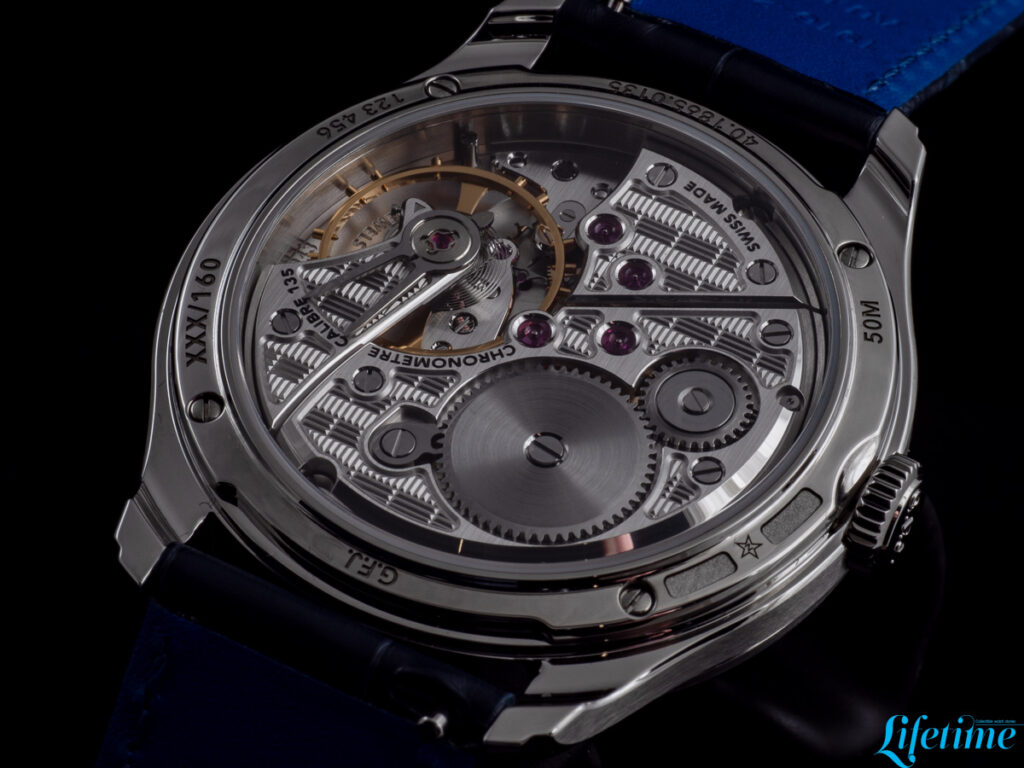
The Calibre 135 occupies a unique position in the history of observatory chronometry. Originally developed by Ephrem Jobin at the of Zenith’s technical director Charles Ziegler, the movement was specifically designed for the rigorous competitions at the Neuchâtel Observatory, among others. Its nomenclature derives from its dimensions: 13 lignes (30mm, the maximum allowed for wristwatch competitions) and 5mm in thickness. Produced from 1949 to 1962, the calibre appeared in two versions: the commercial 135 and the 135-O – the latter prepared exclusively for observatory trials and regulated by Zenith’s elite ‘chronométriers’.
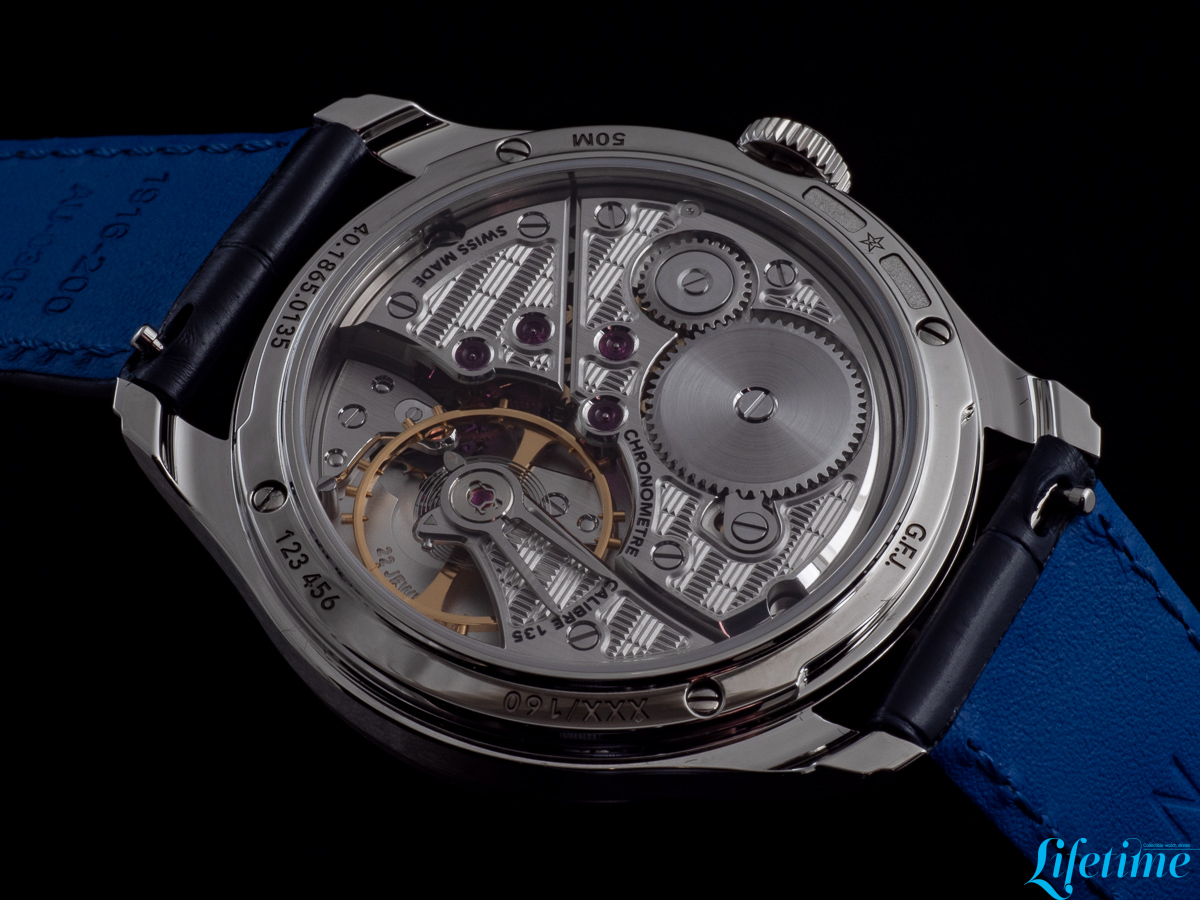
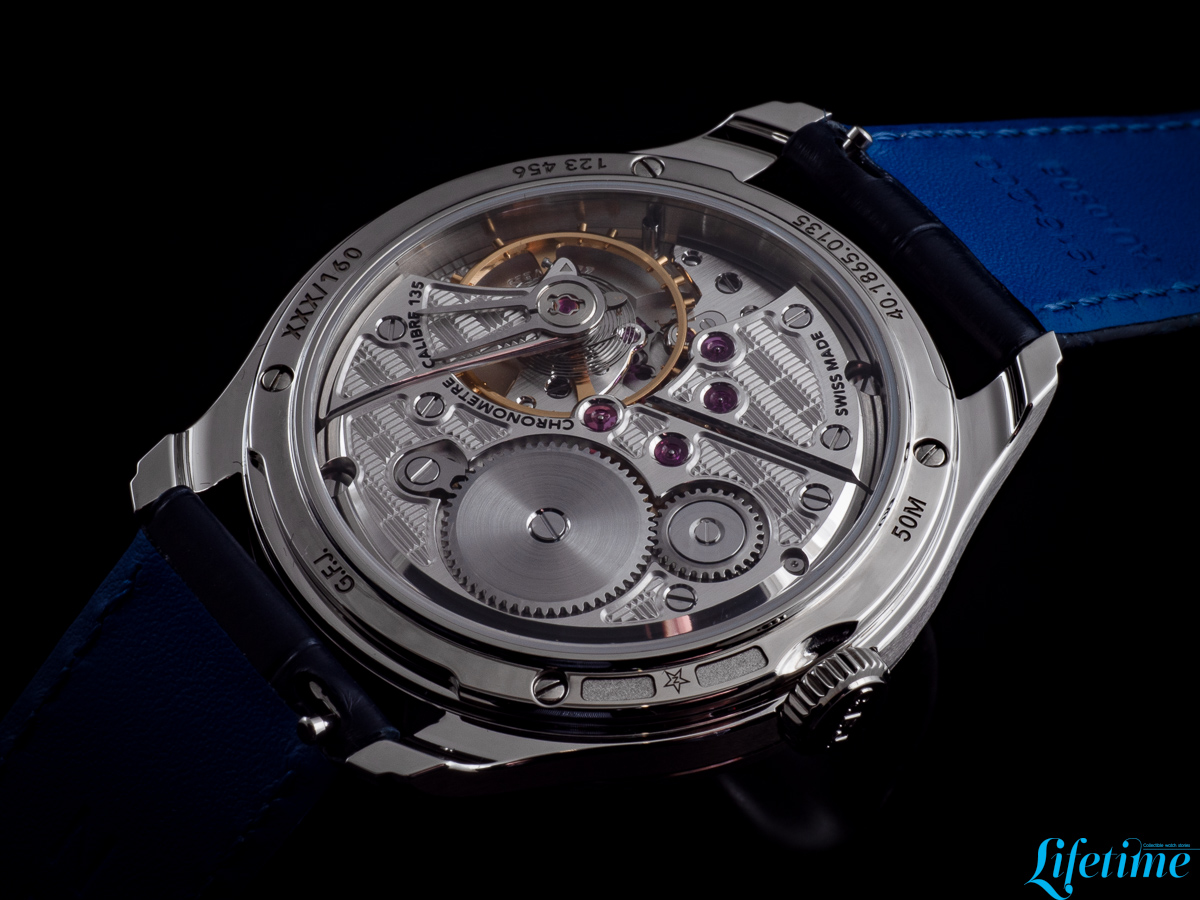
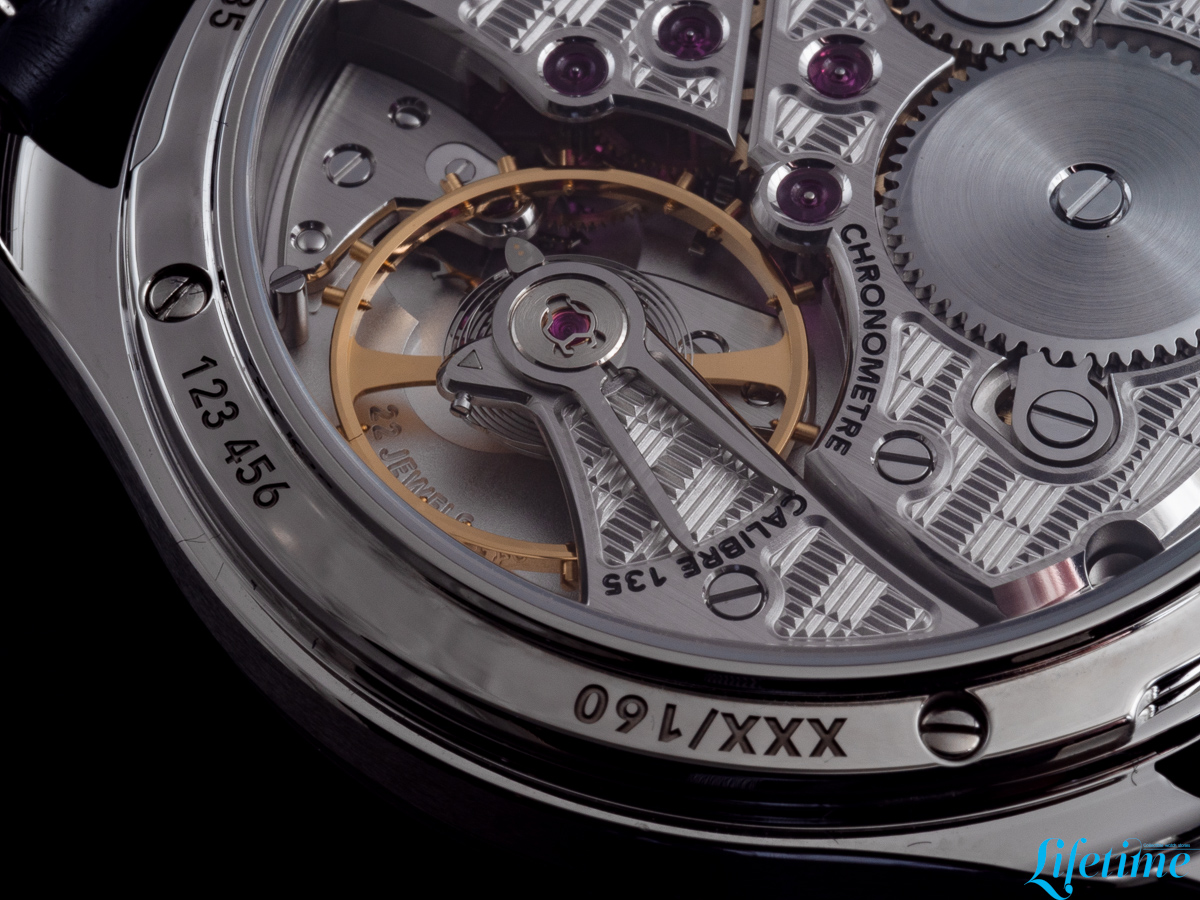
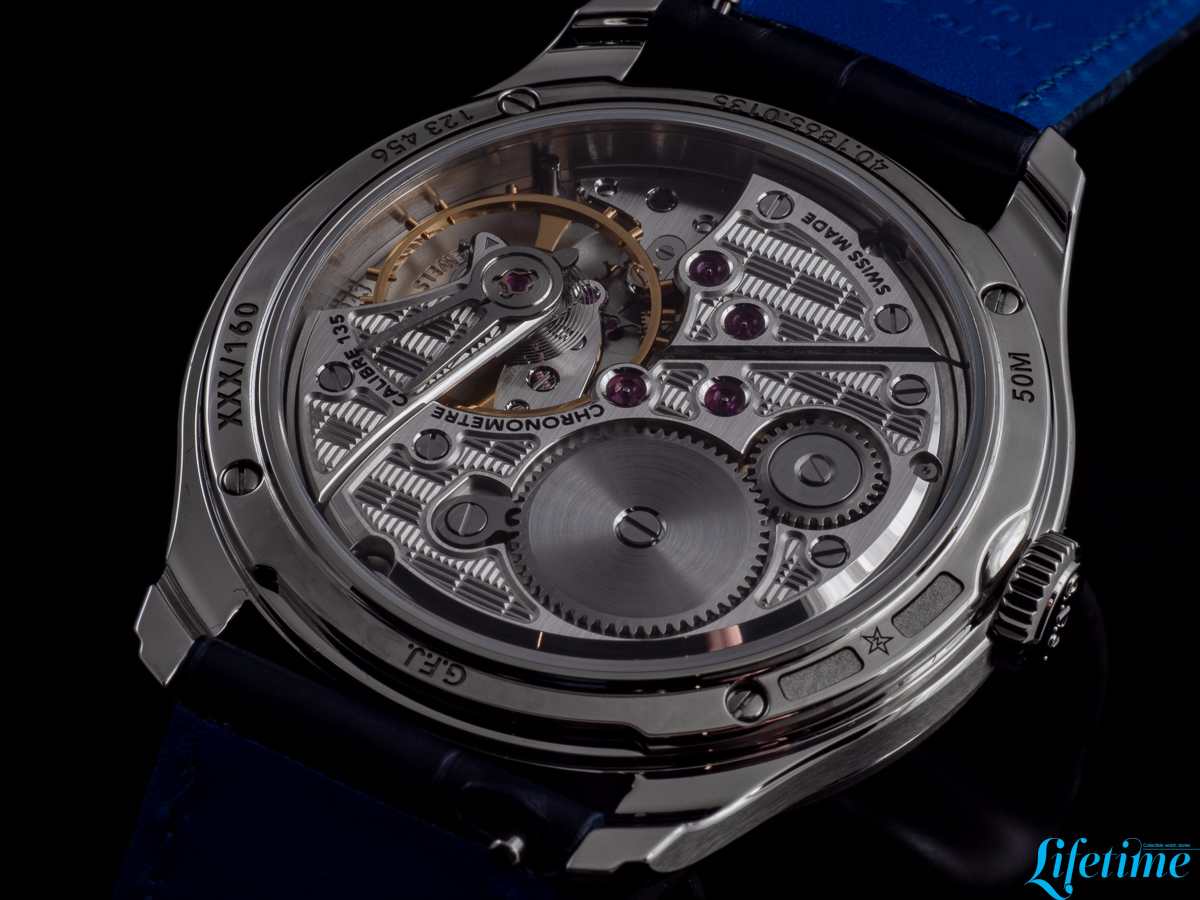
 The new Calibre 135, as revived in the G.F.J., retains the architecture and proportions of its predecessor, while incorporating significant technical advancements. The manual-winding movement, operating at a frequency of 18,000 vibrations per hour (2.5Hz), is consistent with the historical preference for lower frequencies in precision chronometers. The oversized balance wheel, measuring approximately 14mm, is fitted with regulation screws and a Breguet overcoil, enhancing both rate stability and isochronism. The double arrow-shaped regulator, a hallmark of the original 135-O, enables fine adjustment, while the inclusion of a stop-seconds (hacking) mechanism allows for precise time setting.
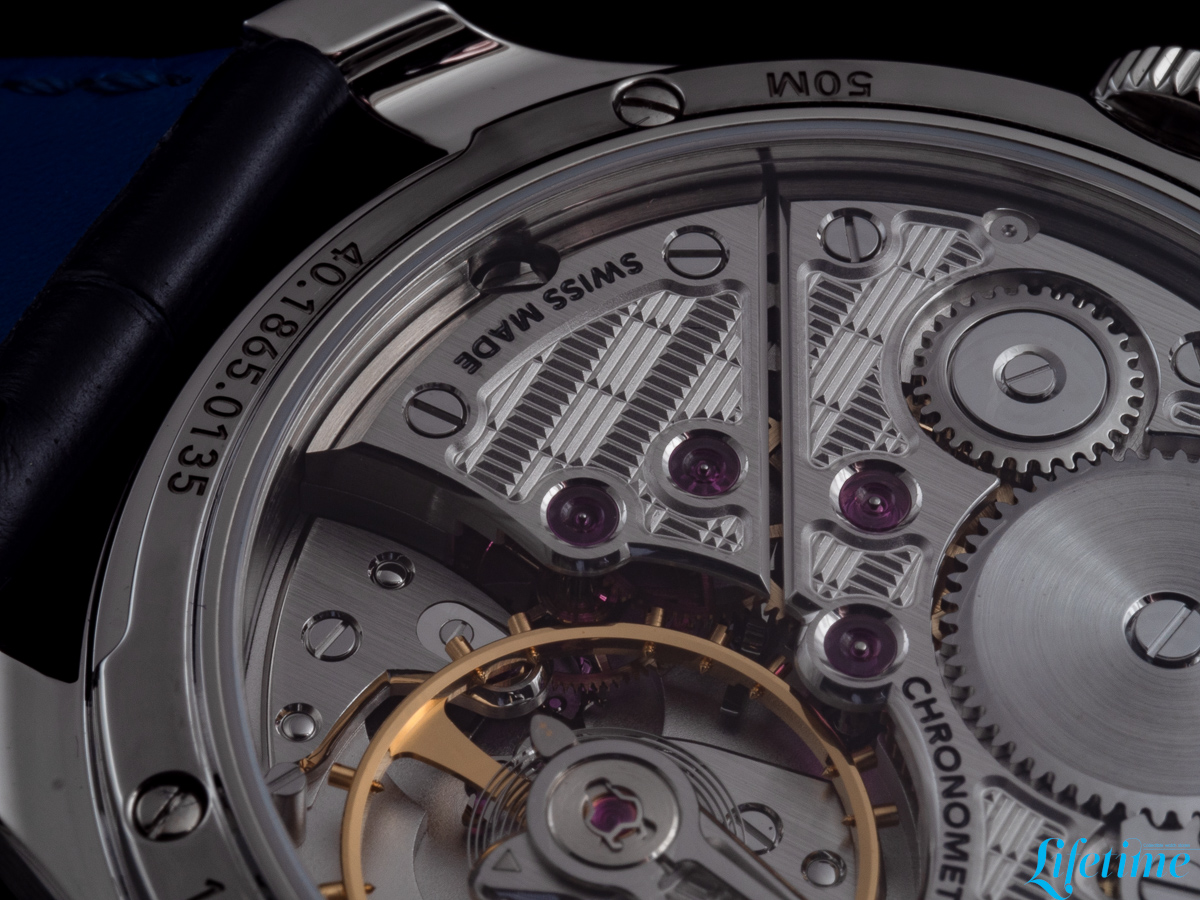
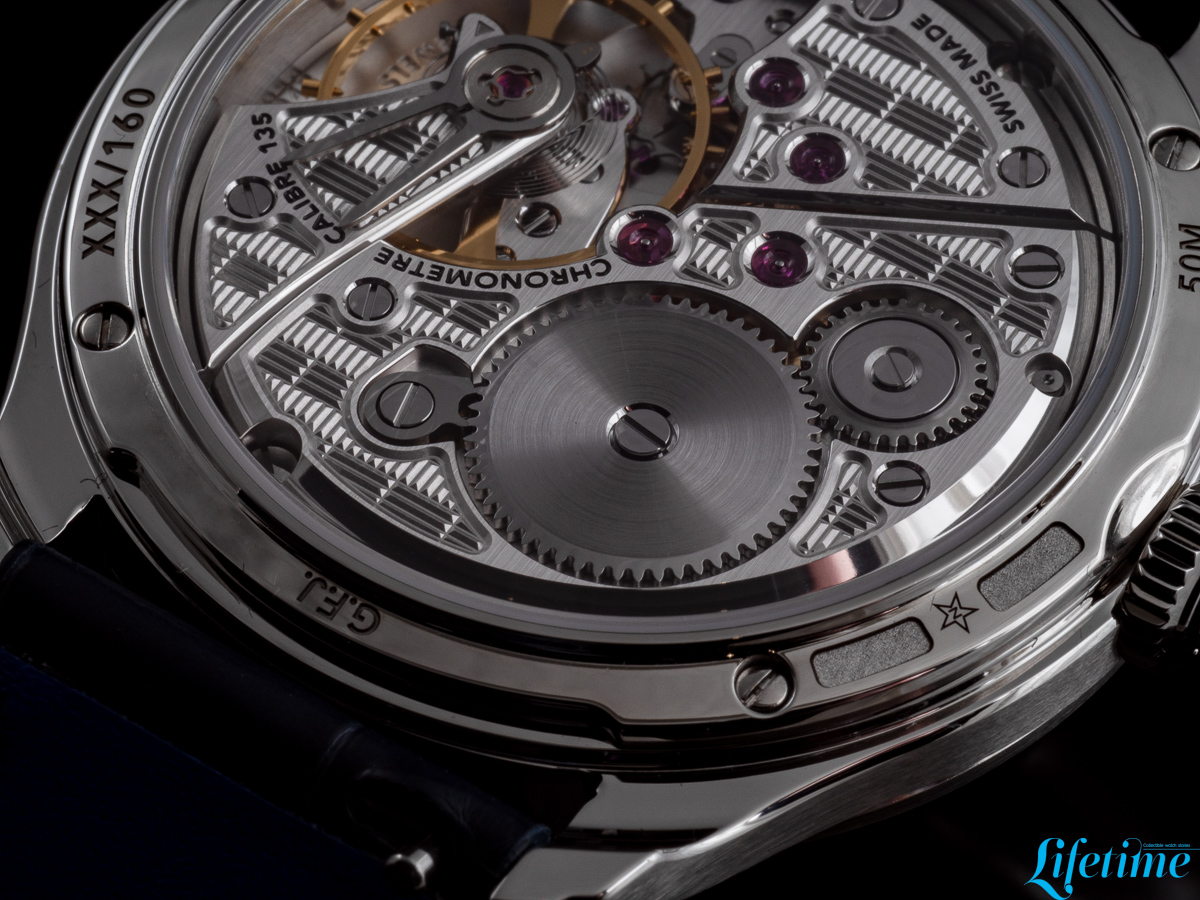
 The power reserve has been extended from the original 40 hours to 72 hours; this has been achieved by using a new mainspring crafted from Bioflex – a modern alloy noted for its elasticity and resistance to fatigue. The gear train features optimised tooth profiles for enhanced efficiency, and additional rubies have been introduced to reduce friction, bringing the total jewel count to 22. The balance staff is now protected by spring-mounted jewel settings to increase durability and shock resistance. Each movement is regulated to within ±2 seconds per day and is COSC-certified, reflecting contemporary expectations for chronometric performance.
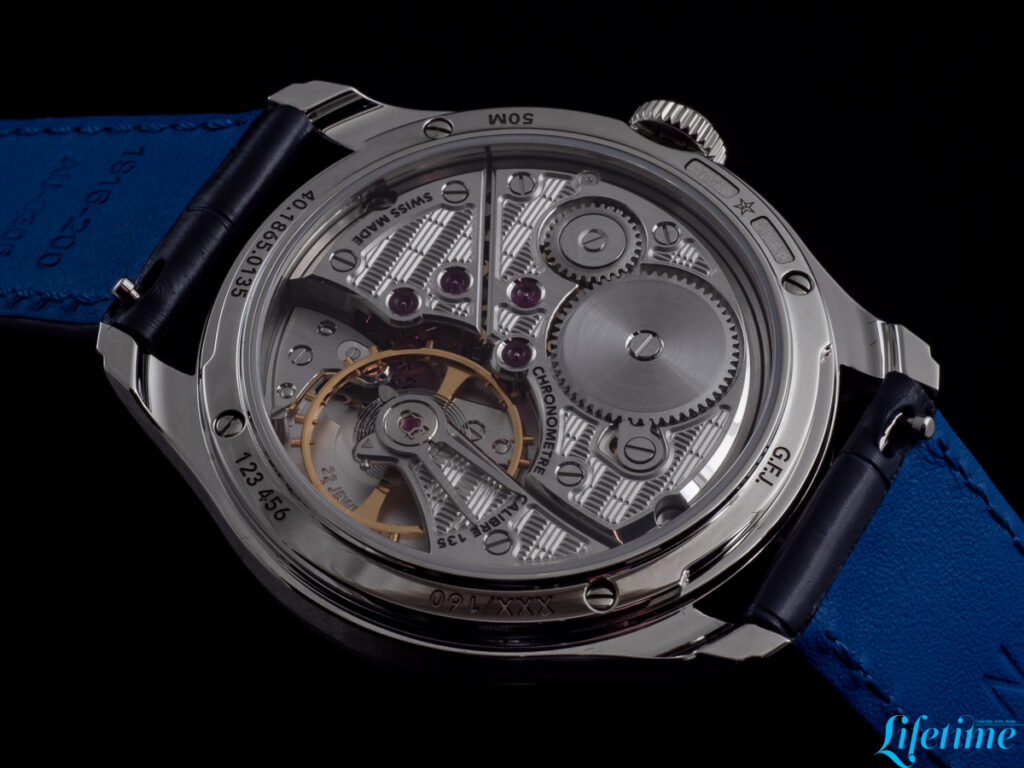 The finishing is executed to a high standard, with the bridges adorned with the same brick guilloché motif as the dial, rounded anglage, and black-polished components. The movement thus bridges Zenith’s historical tradition of observatory chronometry with the demands of modern watchmaking.
 The Case: Classical Shape, Comfort, and Wearability
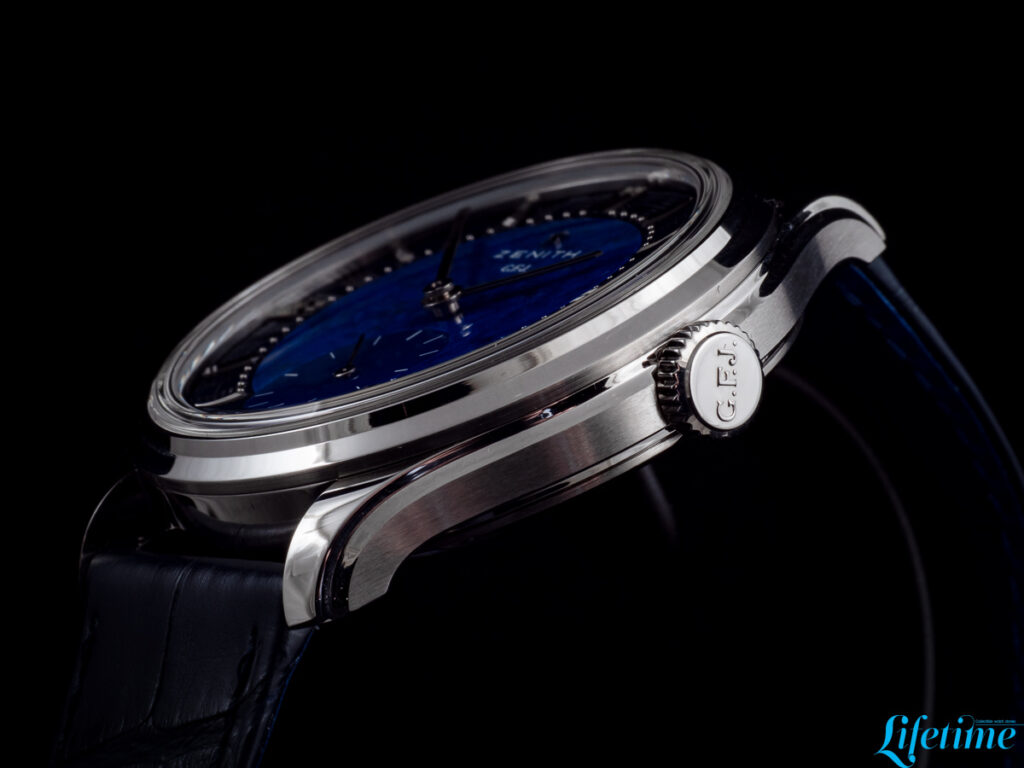
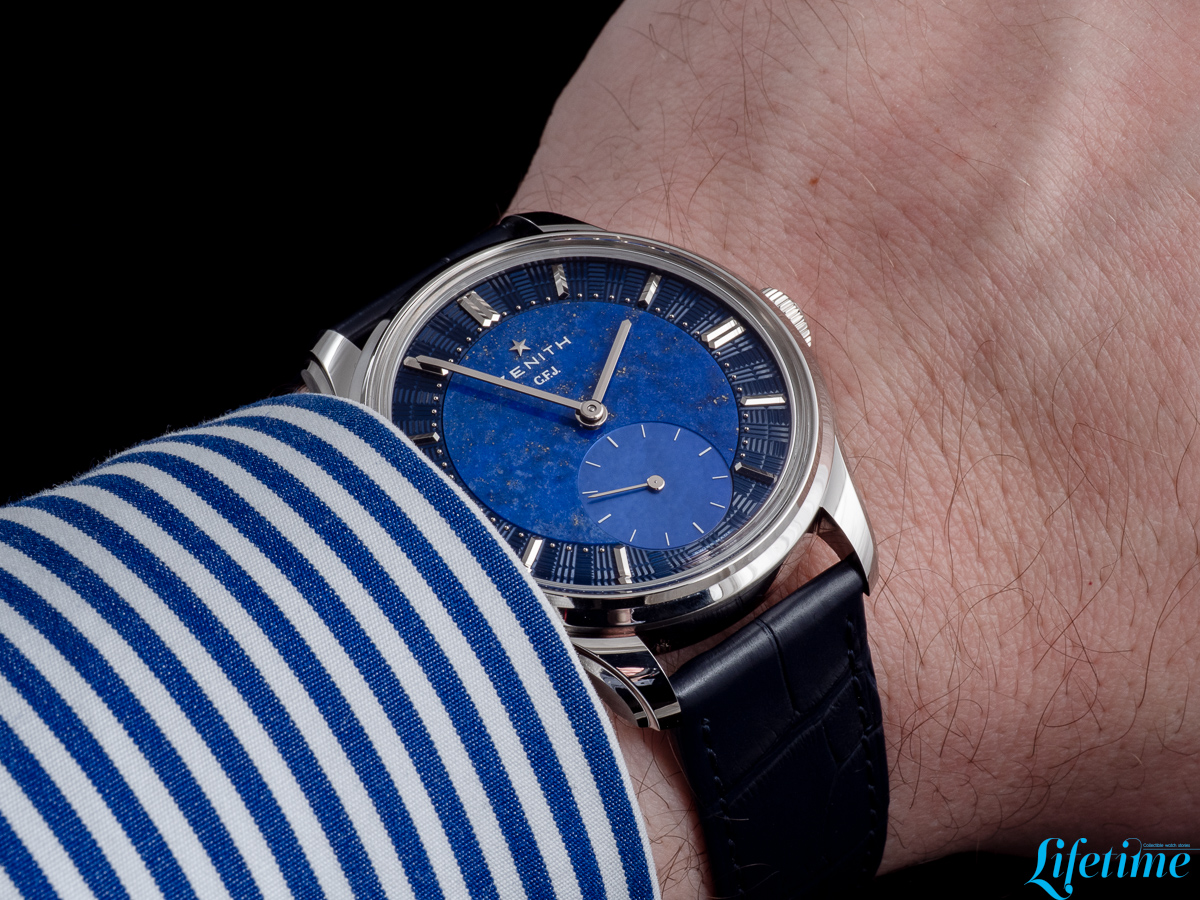
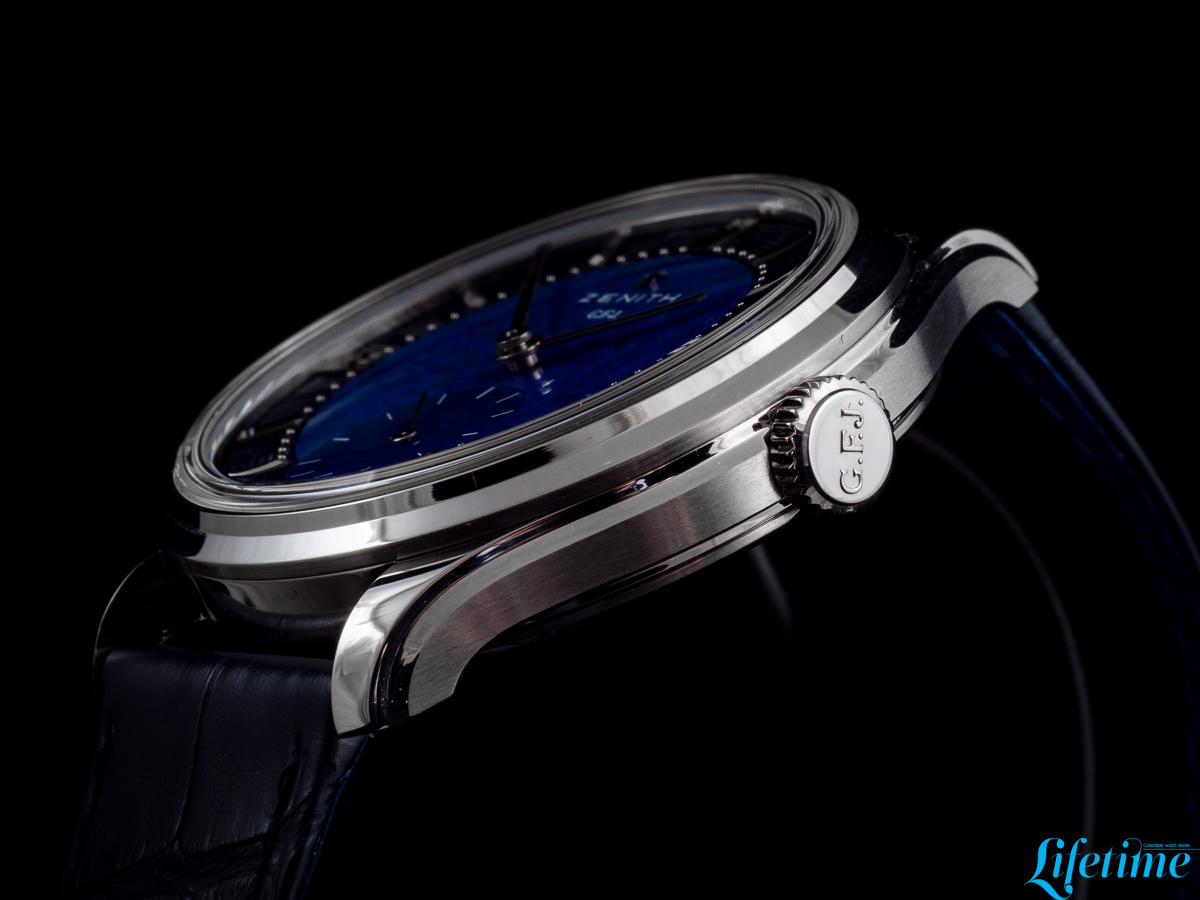
The G.F.J. is housed in a 39.15mm case crafted from 950 platinum; it has a thickness of 10.5mm and a lug-to-lug measurement of 45.75mm. Rooted in classical mid-century aesthetics, the case design features a stepped bezel and curved, stepped lugs that provide both visual interest and ergonomic comfort. Alternating brushed and polished surfaces accentuate the sculptural lines of the case, while the notched crown, engraved with the G.F.J. initials, offers a tactile point of interaction.
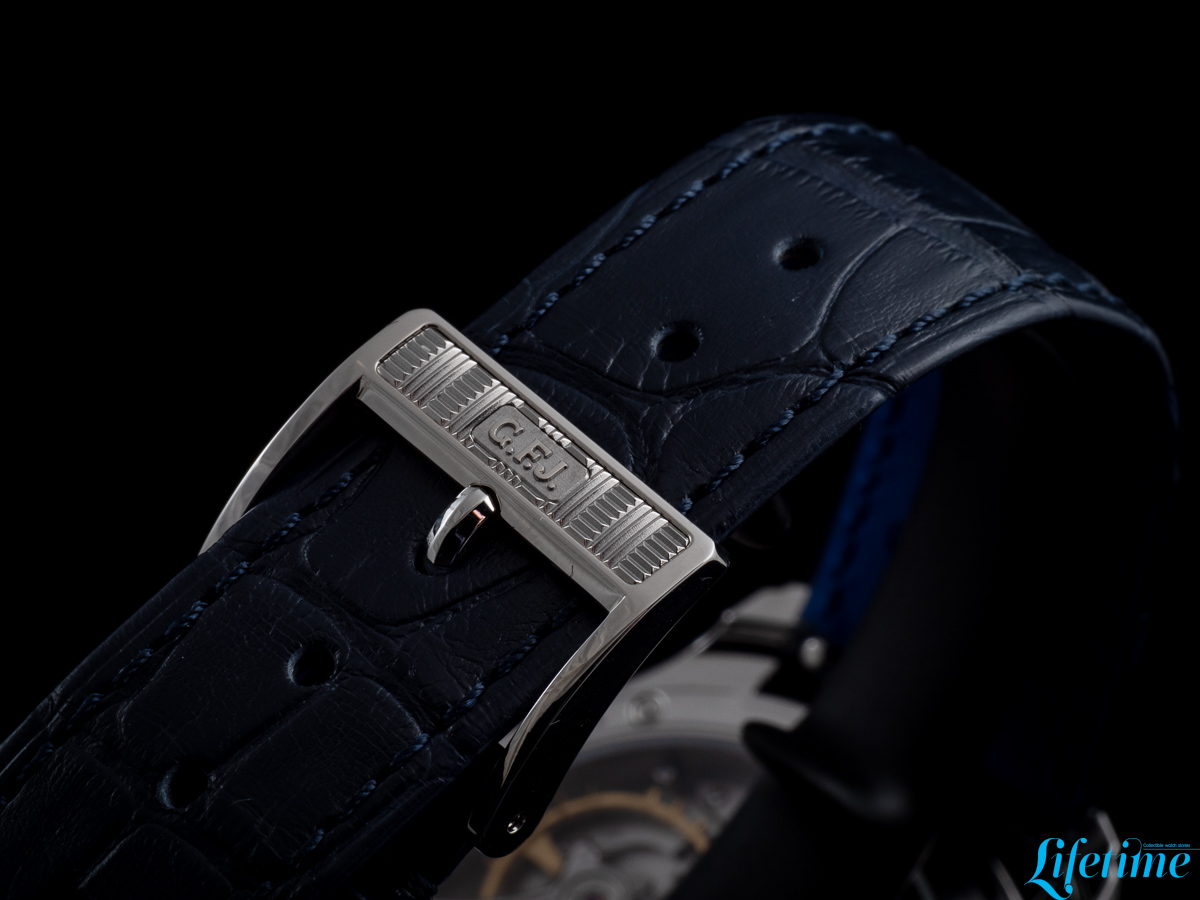
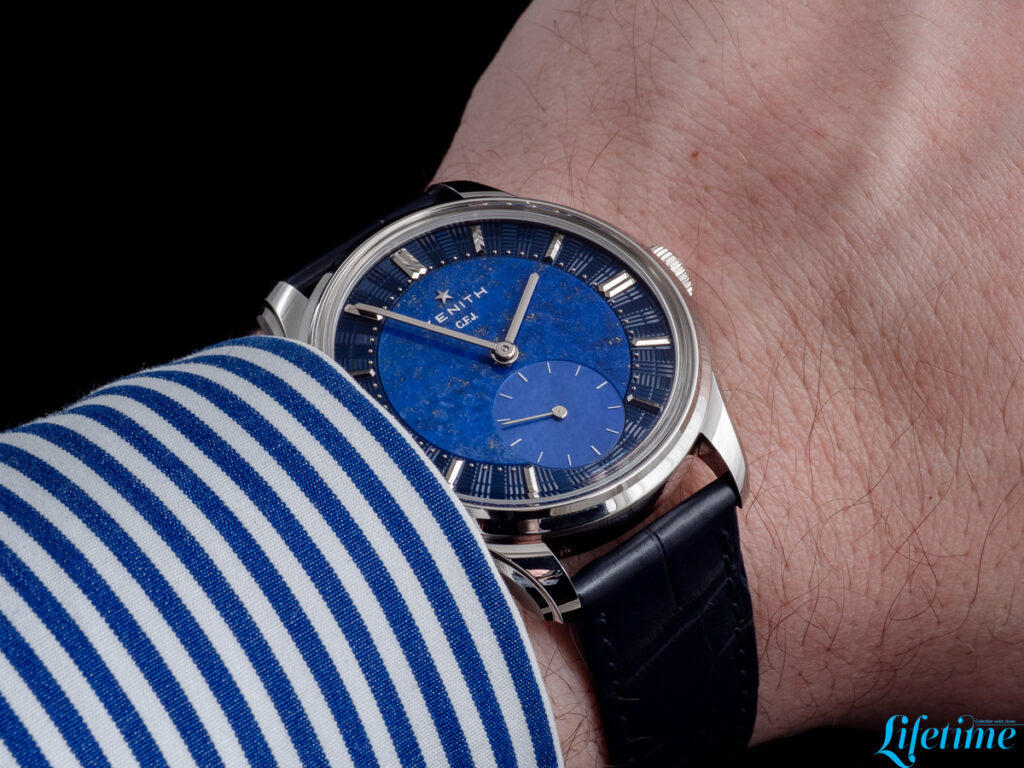 The dimensions of the case ensure a balanced presence on the wrist – neither too imposing nor too small – while the relatively thin profile enhances wearability under a cuff. Water resistance is rated at 5 ATM, which is sufficient for daily use. The watch comes with three strap options: dark blue alligator leather, black calfskin, and blue Saffiano calfskin. Each is fitted with a platinum pin buckle engraved with the brick motif. For those seeking a more substantial wrist presence, a seven-row platinum bracelet with centre links embossed in the brick pattern is available on request.
 The overall construction prioritises comfort and classical proportions, making the G.F.J. suitable for extended wear while upholding the aesthetic codes of a traditional chronometer wristwatch.
 Technical Evolution and Resilience
The Georges Favre-Jacot Calibre 135 stands as a testament to Zenith’s enduring commitment to technical evolution and the resilience of its founding principles. By re-engineering a movement that once dominated observatory competitions, and by integrating contemporary materials and design elements, Zenith continues to advance the art of precision watchmaking. The G.F.J. is more than just a revival; it is a reinterpretation that honours the legacy of Georges Favre-Jacot and the manufacture he established. In doing so, Zenith reaffirms its place at the heart of Swiss horology, demonstrating that the pursuit of precision and the spirit of innovation remain as vital today as they were in 1865.
Share this article

LEAVE A COMMENT
You must be logged in to post a comment.